
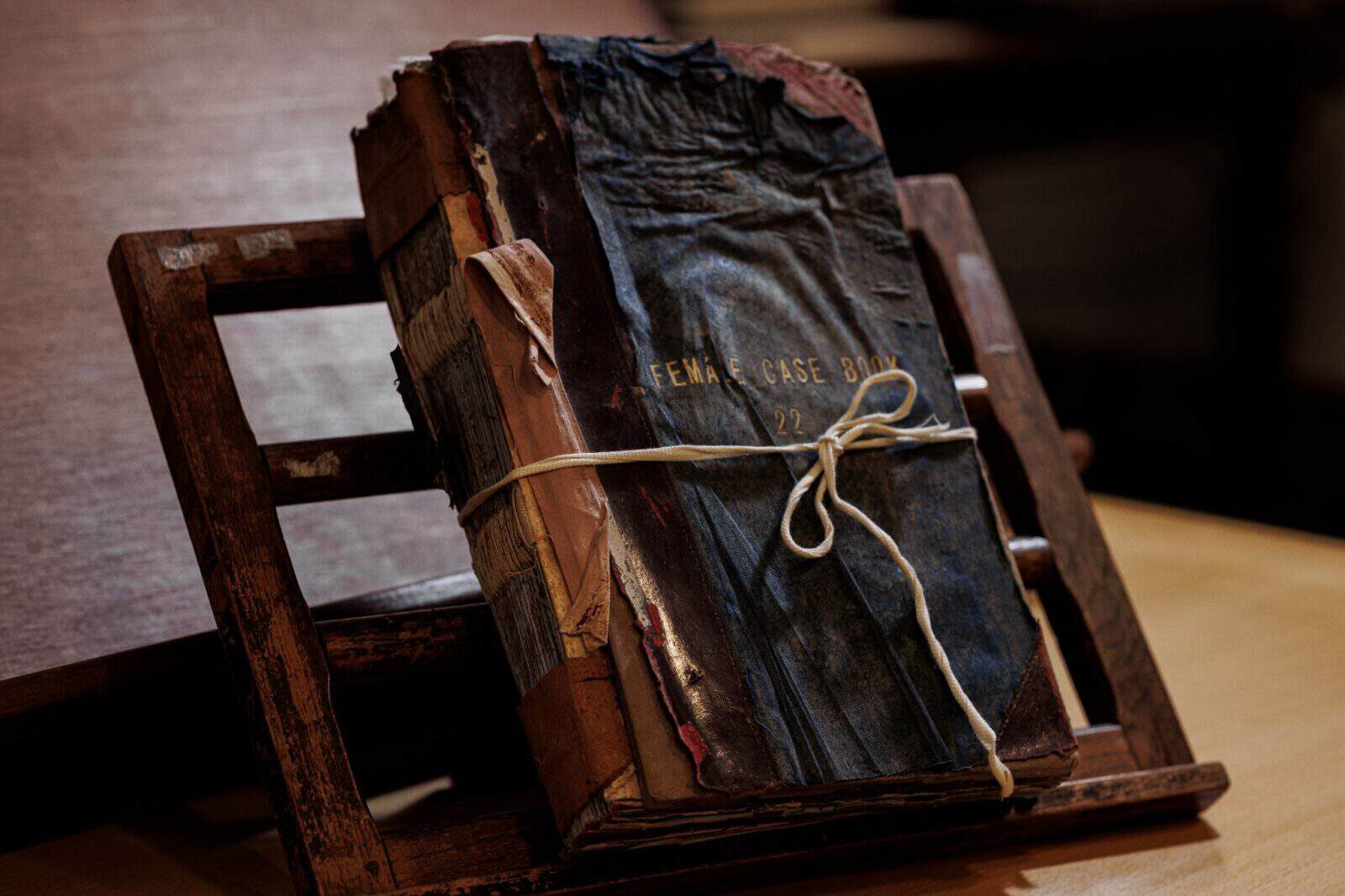
Irish writer and poet Doireann Ní Ghríof’s new release is a book about a book – one frayed at the edges, and stamped as “FEMALE CASE BOOK 22”.
This is the case book of one Dr Lucia Strangman, the first woman doctor to work in Ireland’s asylum service, who started her career at the Cork Mental Hospital in the 1890s. Throughout her career, Dr Strangman recorded the stories of countless female patients, writing down their affiliations in chilling Victorian terms like “lactational insanity” and “homicidal mania”.
But what real-life miseries do these terms obfuscate? How did these women end up here, and did they ever manage to escape?
The Reader, a modern day woman living in Cork, is determined to find the voices of these women and bring their full stories to light. In what follows, Said the Dead is a meticulous unearthing of a subterranean world – one defined by work, poverty, childbirth, and where one wrong step can result in institutionalisation.
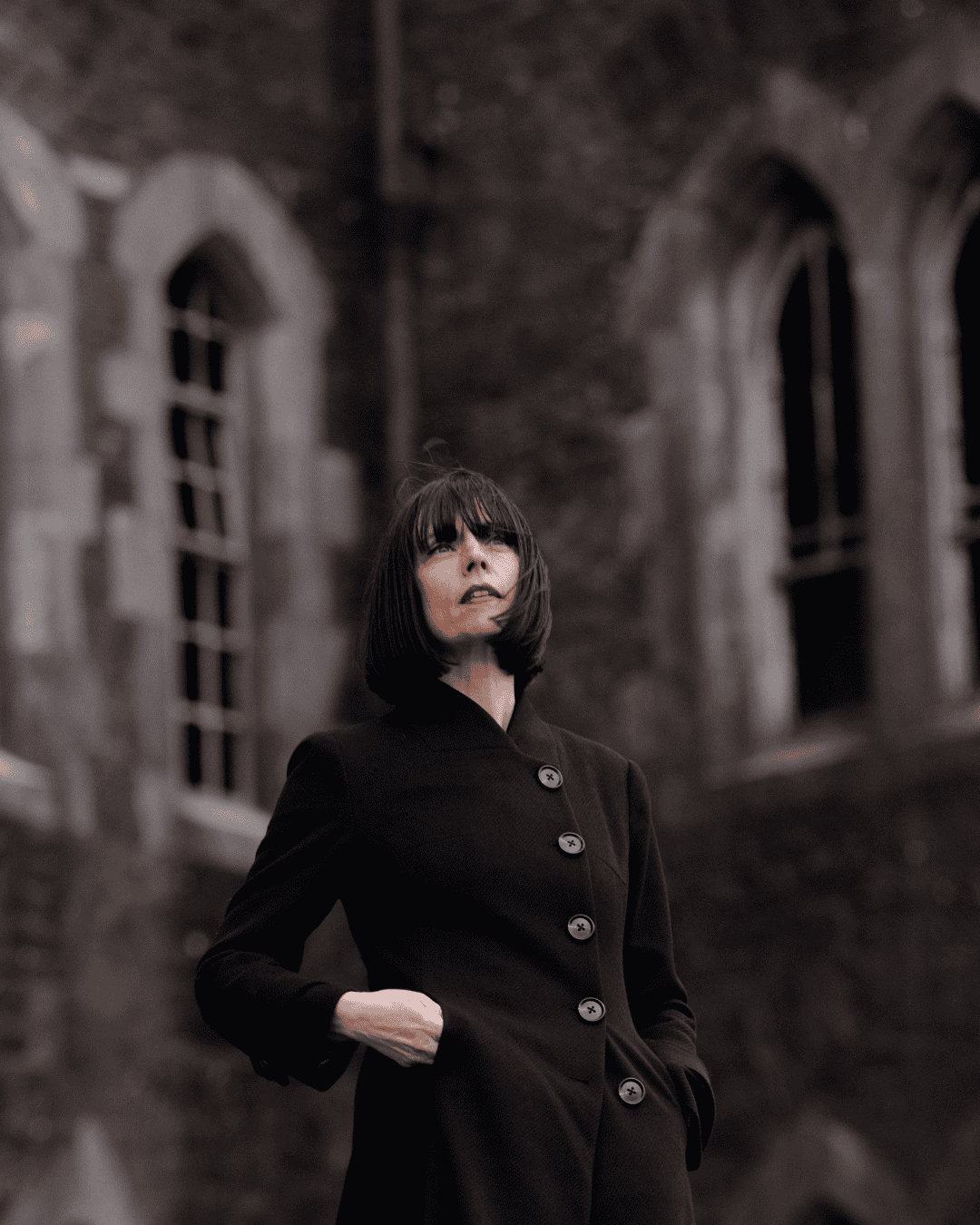
The Cold Magazine sat down with Doireann Ní Ghríofa to find out what led her to the archive, and to Dr Stangman’s case book, and how she is ‘cursed to write weird, weird books’.
The Cold Magazine (CM): I want to start off by saying that your reverence for women and women’s stories is so evident in this book. What new understandings of womanhood or female experience emerged for you while writing?
Doireann Ní Ghríofa (DNG): It felt both shocking and comforting to read these asylum casebooks, detailing the mental distressed being suffered by these women in the 19th century, only to find so much still familiar in the 21st century: severe difficulties related to premenstrual, perinatal, and perimenopausal stages, disordered eating, the traumatic aftermath of sexual assault, periods of intense exhaustion wrought by caring responsibilities to children or elders…
If there is a kind of sisterhood in that recognition, it is intermingled with a simultaneous sense of horror that so little has changed, and that women are often still so unsupported in episodes of mental ill-health. One would like to believe that women are cared for more closely now. For many, however, this is not so.
CM: As someone who was a child obsessed with history, I can sense an almost childlike fascination with the past here, and a real desire to get to the bottom of things. Were you a history-obsessed child? If so, what made you fall in love with history?
DNG: I certainly was a history-obsessed child. I grew up in rural County Clare on the west coast of Ireland, where my surroundings were much marked by the past: a 15th century castle here, an iron age ringfort there, the trace of a railway track from the 1800s ghosting through meadow grasses… and that was just on the road to school.
Growing up, my imagination became attuned to such clues. My aunt Sinéad, an archaeologist, once placed a single bead in my palm, newly discovered on one of her archaeological digs. I remember my astonishment, feeling that bead grow warm in my fist; I feel some resonance of that object in my hand still.
CM: Your writing feels inseparable from Ireland, from its landscapes, archives, histories. At the same time, Irish culture feels especially visible right now.
I’m thinking of CMAT’s breakthrough album Euro-Country, Paul Mescal’s heathrob status, that iconic Rocky Road to Dublin moment in Sinners. How does it feel to be putting out a book like Said the Dead in the thick of this pop culture moment?
DNG: Since I live in Ireland, I’m not sure that I’m as aware of the visibility of Irish culture on the international stage, maybe I’m too close to see it. I will say that I was deeply moved by Paul Mescal’s magnificent performance in Aftersun – his portrayal of the very ordinary, very painful experience of trying to parent a child while gripped in the agonies of depression has remained with me ever since.
CM: Translation has long been central to your work, but in Said the Dead, transcription and archival recovery seem to take on a similar role. Did that process of transcribing the voices of the dead feel like its own version of translation?
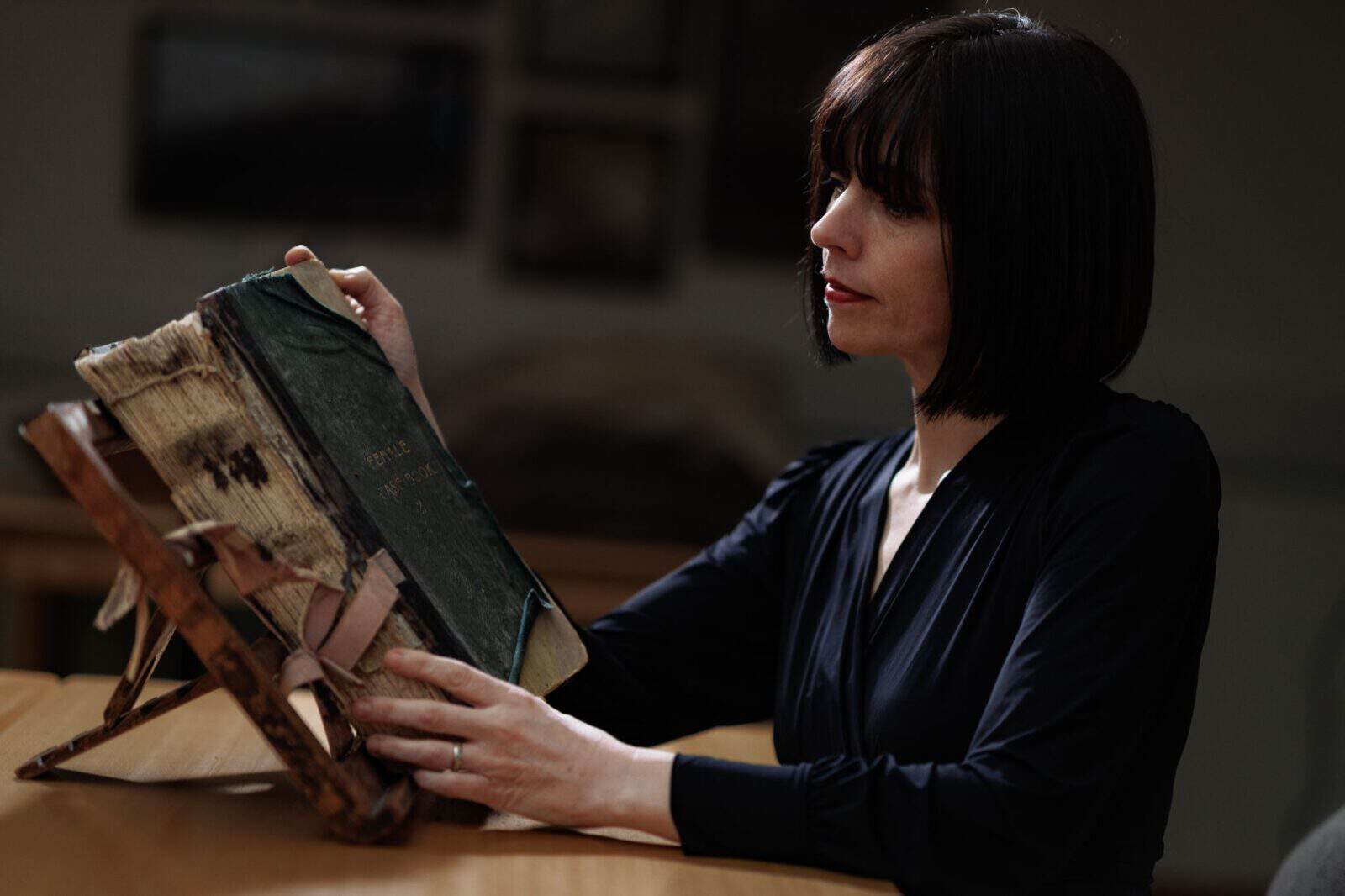
DNG: There was a physicality to this archival research that felt strangely close to the bodily sensation of translation. Something about the body’s focus on decoding slanted handwriting from a very old page, before carrying a line briefly in the mind, and then scribbling it down from memory – somehow, the back and forth of that action reminded me of translating a text.
And then there’s the twin sense of listening very closely for the human speech being spoken just beyond a page, which echoes across the translation of oral poetry and the transcription of asylum casebooks.
CM: The book is so immersed in archival research, and I imagine it will send many readers on quests through their own local records offices (I know I’m tempted…)
What advice would you give to someone new to historical research?
DNG: Do not be afraid to seek advice from the archivists. They are skilled guides to the vast volumes of documents we might attempt to navigate, and they’re experienced in interpreting information that may seem confusing to a learner’s eye. They’re eager to help, so don’t hesitate to ask for guidance!
CM: Although this book centres on a Victorian “lunatic asylum,” a place that many might associate with misery and mistreatment, you’re not voyeuristic about the patients’ suffering.
Instead, the focus remains on these women as full people. How conscious were you of resisting the pull toward horror or spectacle?
DNG: I felt driven by a sense of empathy and care towards the women once held in this institution, so I could never dream of portraying them in a way that might be seen as spectacle.
It wasn’t even a temptation I had to resist, because I never felt any inclination to portray them in that way in the first place. To me, each of these people was a wonder to be discovered; I was in awe of them, and I wanted only to honour their humanity, to the best of my ability.
CM: You say that, if you were born in a different century, you might have been a patient at the Cork District Lunatic Asylum. After having read so many patients’ stories, what do you think life would have looked like for you at the asylum?
DNG: I can only guess that it might have been like many of the women I read about in the casebooks, many of whom were, like me, dragged back from efforts to end their lives in the same river in which I’d twice tried to end my own life.
In their times, such efforts meant a person would be brought to this institution by relatives, friends, or by policemen, to be held in the hospital until they were deemed ‘Recovered’ and allowed to return to life beyond the asylum walls.
Many, however, began to show symptoms of tuberculosis or other contagious diseases in the hospital, and very sadly, many died there. Reading such tragic endings, I often found it difficult to maintain my composure in the archive, and I’d have to leave the reading room to compose myself.
CM: At what point did Dr Lucia Strangman become the gravitational centre of the book? So many of the women you encounter – Emily Elizabeth, Céleste, Muriel – feel capable of carrying entire books of their own.
DNG: Dr Lucia is in many ways at the core of ‘Said the Dead’, since she was the author of many portraits I was reading from the casebooks. Her life is the longest thread that could be traced through the tapestry of all these interwoven lives, and I was fascinated by how it veered towards and looped through the lives of such fascinating women.
Some of her patients resisted her efforts, some grew fond of her, some cursed her, but in one way or another, she touched each of those lives.
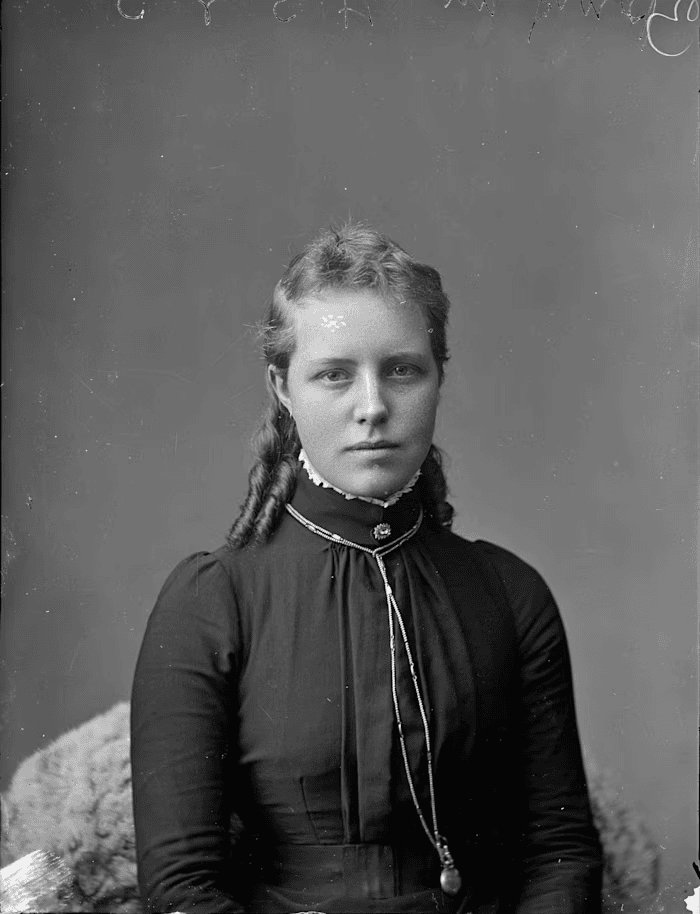
Dr Lucia FitzGerald, the first woman doctor to work in Ireland’s asylum service © Courtesy of the National Library of Ireland
CM: Did writing this book change the way you think about documenting your own life through journals, photographs, recordings, or other personal traces?
DNG: Yes. The paper footprint that will exist in the aftermath of our generation’s lives may appear to be slender, by comparison with the legacies left by previous generations (letters! photograph albums! diaries! address books!), and yet, when one considers the digital footprint we will leave – through email or text messages or photos, say – our footprints suddenly become a sprawling archive, which will give future historians plenty of material to explore.
CM: Talk me through the process of incorporating photographs into the book. At what point did you know these would interact directly, and crucially, with the text?
DNG: I always knew that the photographs belonged in the finished text, since they were such a deeply embedded element of the process of discovery behind this book. They are never held at a distance from the events on the page, instead, they are interwoven with what is unfolding in print, allowing the Reader another window through which to peer at this world.
CM: Your work frequently blurs genres: biography, memoir, fiction. Do those distinctions matter to you when you begin a project, or only later when the work enters the world?
DNG: I sometimes daydream of writing books that might be easier to categorise, but the books themselves always kick against such efforts. Maybe I am simply cursed to write weird, weird books.
The question of genre doesn’t feel so pressing to me in the moment of writing, though – it only comes to matter when librarians and booksellers need to know on which shelf the book belongs. ‘I don’t know,’ I long to answer. I really don’t!
Said the Dead by Doireann Ní Ghríofa was published by Faber on 21 May 2026.


