
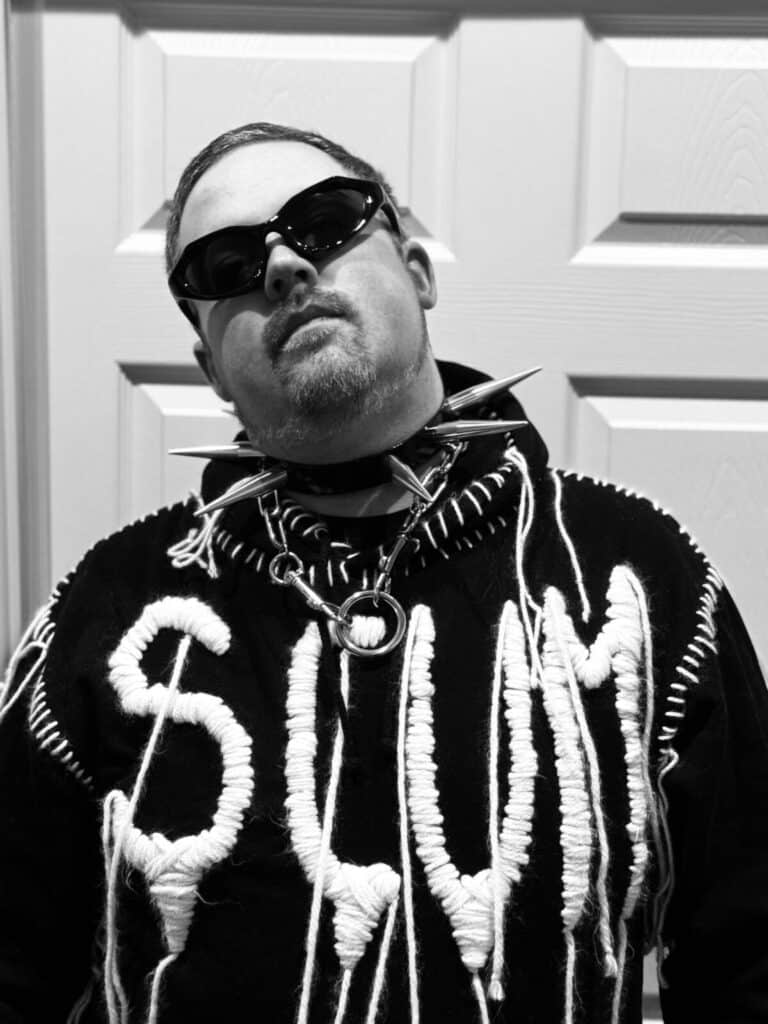
Eric LaRocca is a Bram Stoker Award-nominated, Splatterpunk Award-winning writer whose work continually expands the possibilities of contemporary horror. Each story and novel they produce unsettles, fascinates, and lingers long after you close the page.
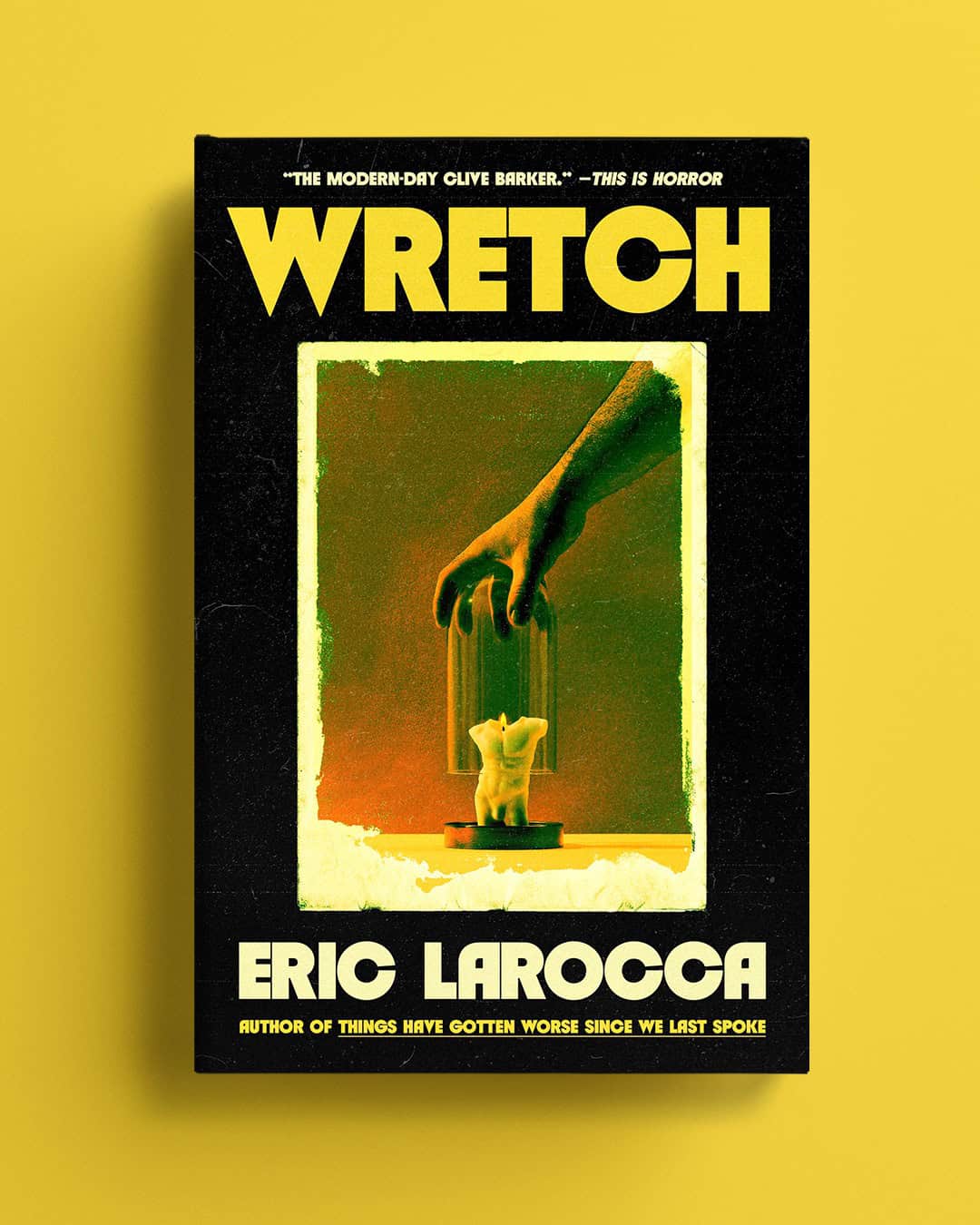
LaRocca’s writing is merciless and immersive, entwining grief, obsession and uncanny terror into experiences that are intimate, urgent, and profoundly unsettling – haunting the reader in ways that refuse to let go. Their latest novel, Wretch or, The Unbecoming of Porcelain Khaw, published by Titan Books in March of this year, is a transgressive, psychologically charged exploration of loss and longing.
In the novel, Simeon Link, paralysed by grief, is drawn into The Wretches, a mysterious support group, where he meets Porcelain Khaw – a figure who offers Simeon one final encounter with his deceased husband, at a cost that is both devastating and destabilising. Through this story, LaRocca interrogates desire, breakdown, and the ways we navigate trauma.
I sat down with Eric to examine queer horror’s unique capacity to confront grief, trauma, and sociopolitical unrest. We discuss Wretch and how horror, intimacy, and marginalised voices converge to expand the boundaries of contemporary storytelling.
The Cold Magazine (CM): In one of your recent Instagram videos, you called Wretch your best work to date. Do you mean that in terms of craft, emotional depth, or personal connection?
Eric LaRocca (EL): I think it’s honestly all of the above. What really separates this novel from my previous work is that, first and foremost, I was able to collaborate with a brand-new editor – someone I hadn’t worked with before. Tim O’Connell, who is a brilliant editor at Simon & Schuster and also works with Chuck Palahniuk, was an incredible guide throughout the creative journey. His insights and guidance were essential and deeply influential in shaping this book in particular.
I also feel that I’ve matured quite a bit as a writer over the past few years. This novel speaks directly to my ongoing obsessions with love, grief, and abandonment. At its core, it’s centered on the experience of being in a relationship with someone and realizing that they may not love you as much as you love them, which, to me, is a profoundly horrifying ordeal to live through on a personal level.
CM: So the themes of Wretch were inspired by your real life?
EL: When I first started dating my boyfriend, Ali, I was filled with a lot of angst and felt deeply unsettled, constantly wondering who loved the other more in the relationship. I was very much in my head when we first got together, as we were figuring each other out and trying to understand how being in a relationship would actually work. Luckily, it did work out and we’ve now been together for over five years.
In the beginning, everything is quite tumultuous, and it’s unnerving to be in a relationship with someone you’ve just met. That’s really the crux of Wretch. It’s why the book opens with Clive Barker’s quote: “Nothing else wounds so deeply and irreparably. Nothing else robs us of hope so much as being unloved by one we love”.
CM: Wretch feels obsessed with rot – the rotting away of bodies, of memories, of love itself. How does decay speak to the unspoken realities of grief?
EL: That’s such a good point. I wanted the world to be suffused with that feeling. Everything had to feel rotten, corroded, disintegrating. I’m particularly obsessed with Powers of Horror by Julia Kristeva, which is deeply rooted in the abject – entropy and decay. I think that’s what real horror does: it examines that space where boundaries dissolve, where the relationship between object and subject disintegrates, and where the real and unreal blur into the uncanny.
This novel is deeply focused on the decay of memory and the role that process plays
in grief. How do we remember those we’ve lost, and are those memories truly ours? Are they accurate portrayals of the people we loved?
Simeon isn’t a particularly likable or sympathetic character; he’s deeply flawed, and probably difficult to be around for more than five minutes, but I hope readers are invested enough in his plight to follow him into this labyrinth of depravity and the uncanny. I think readers will be able to go on this journey with Simeon toward something like discovery – toward understanding what his relationship with his husband, Jonathan, was really like.
CM: Simeon’s journey takes him from communal grief in The Wretches to the deeply private and unsettling promise of Porcelain Khaw. What were you hoping to explore about the limits of grief?
EL: I think grieving can be incredibly dangerous. It pushes people to limits they didn’t know they were capable of reaching. In horror fiction, believability can sometimes become an issue, because you find yourself asking, would a person really act like this under normal circumstances?
In this story, though, Simeon’s actions, while ridiculous, horrifying, and deeply upsetting, feel more believable because he’s experiencing a profound psychotic break. He’s in the agony and turmoil of grief, and that forces him down some very dark paths. The horror I respond to most – the kind that makes me shiver and truly unsettles me – is always rooted in grief. I think all exceptional horror is grounded in some form of loss.
CM: Porcelain Khaw is a deliberately ambiguous figure that exists somewhere between god, dealer, and fantasy. Do you see him as an external horror, or a reflection of Simeon’s most dangerous desires?
EL: I always think of Porcelain as a sort of cosmic incinerator – a god or, a celestial parasite, as I often refer to him. He’s everything and anything. In this novel, he takes the form of a man, but I see him as multifaceted, multi-gendered, capable of being anything and everything. I think that’s where the cosmic horror elements of the book come from. They may not always be explicitly stated, but there’s a definite Lovecraftian undertone.
Porcelain feeds by reflecting people’s desires and weaknesses. He mirrors Simeon’s transgressions and idiosyncrasies, but at the same time, he’s a mindless god, without purpose other than to consume. He’s a god-like machine, devouring anything he comes into contact with – almost like a celestial vampire, constantly feeding.
CM: Your work often refuses the idea that healing is linear or even possible. Do you
distrust narratives of recovery?
EL: I’m definitely more interested in wounds, especially when people refuse to heal, or when characters try to heal in unconventional ways. I love that you said healing isn’t linear in my work, because I completely agree.
What I love most about writing is exploring broken characters – people who have disintegrated in some way and are trying to navigate the world as best they can under their own circumstances. Much of my work does feel a little nihilistic, in that it often suggests healing isn’t fully possible. Trauma leaves a mark; we remain broken in some way.
CM: Queerness in Wretch lives in the body and is often unstable. How does writing queer horror differ from simply writing horror with queer characters?
EL: For me, queer horror is messy, complex, and complicated. Being queer in this world is also messy and complicated, full of experiences that are often difficult or unpleasant to talk about. Queerness isn’t always fun or preferable. Sometimes it would be easier to fit in, to be “normal”, to align yourself with societal standards.
Queer horror allows me to break free from those conventions and expectations. It’s grotesque, filthy, unsavory – and I want to show that queerness itself isn’t a monolith.
There are many experiences within this community; it’s not one thing. I don’t aim to be a mouthpiece for queerness in general. Its beauty lies in its variety, in the ways we are different and yet, at times, similar.
I find inspiration in other queer horror authors like Alison Rumfitt, Hailey Piper, Joe Koch, David Demchuk, and Paula D. Ashe. There’s so much to explore, especially now, in these turbulent times marked by rising fascism and societal instability. Queer horror is revolutionary; it goes against the grain, defies norms, and can be as loud, volatile, and even as problematic as it needs to be. For queer writers, disruption is innate. I am eager to disrupt. I want my fiction to be provocative, unflinching, and unsettling.
CM: Many readers describe your work as confrontational rather than comforting. What do you hope a reader sits with after closing this book?
EL: Obviously, you can’t control how anyone reacts to your work. I would never want to prescribe a specific feeling when someone closes the book. I do want them to feel upset, disturbed, unsettled, but how they react is ultimately up to them. When I write about human cruelty, I want people to see the unpleasantness and realities that many face.
There’s a section in the book where a woman dreams of delivering her child, along with an unnamed partner, to Porcelain Khaw as a bargaining tool – essentially selling their child into slavery. It’s disturbing on its own, but it’s made even more so by the context of what’s happening in America today: the Epstein files, Donald Trump, and others in positions of authority who exploit and cannibalise, literally and figuratively, the lower classes.
I want readers to realize that what I’m writing about isn’t far-fetched. It’s real. These are reflections of our culture and society. When people get upset about depictions of cruelty and brutality, I sometimes wonder: are they living in the same world I’m living in? This kind of violence and exploitation is everywhere. It’s pervasive, and it’s deeply unsettling to witness. More than anything, I want readers to sit with that discomfort – to wonder and reflect on why
they feel uneasy. That’s what I hope for above all else.
CM: And my last question: what role does horror play in articulating the unspeakable during periods of political incoherence and mass atrocity?
EL: Horror holds up a mirror to the carnage and wreckage of the world. There is so much
suffering, so much unpleasantness, and I think we’ve become desensitised because it’s constantly on our timelines. But it shouldn’t be ignored. We must not look away. We should remain unflinching when we see videos of people suffering in Gaza or Ukraine. We should not turn a blind eye, as so many do – scrolling past, doing nothing, maybe not even donating to causes that could help.
We need to sit with the discomfort of realizing how much of humanity is rooted in barbarity and cruelty. But awareness alone isn’t enough. We also have to act. Horror, in my view, unlocks the first door toward action by forcing us to confront our faults and flaws as human beings. There’s often a moral dimension in horror: the reversal in the final act, where a character receives their comeuppance, allows the reader or viewer to reflect: “I hope that’s not me one day”.
Perhaps it sparks change, though we can’t expect everyone to transform because of literature or cinema. Still, books and films can influence people, cultivate awareness, and encourage habits of paying closer attention. Horror should force us to stare unblinkingly at the wreckage and inspire us to act so that such suffering doesn’t continue.
Eric LaRocca’s Wretch or, The Unbecoming of Porcelain Khaw, published by Titan Books, was released in the UK on 24 March 2026.


