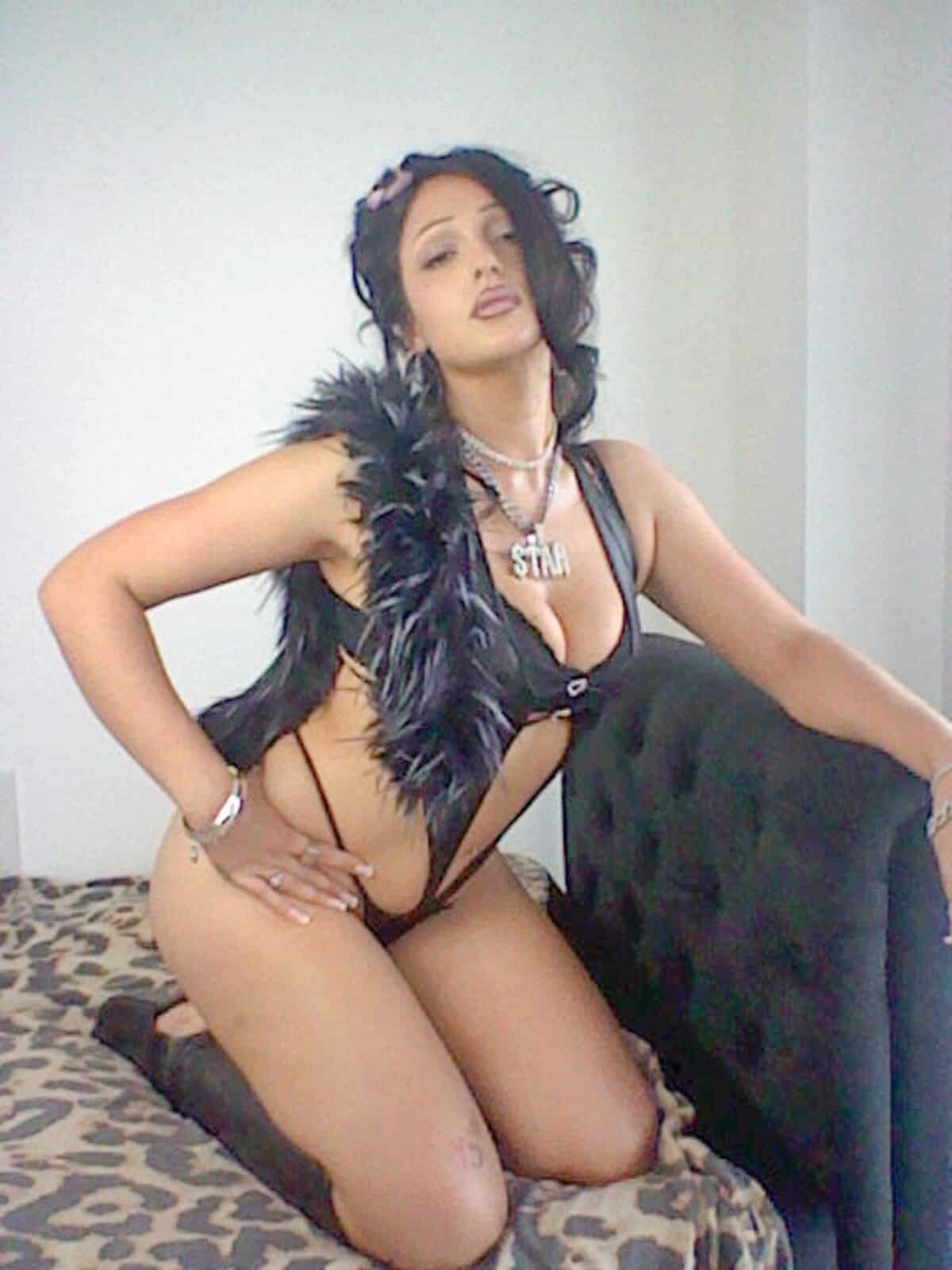
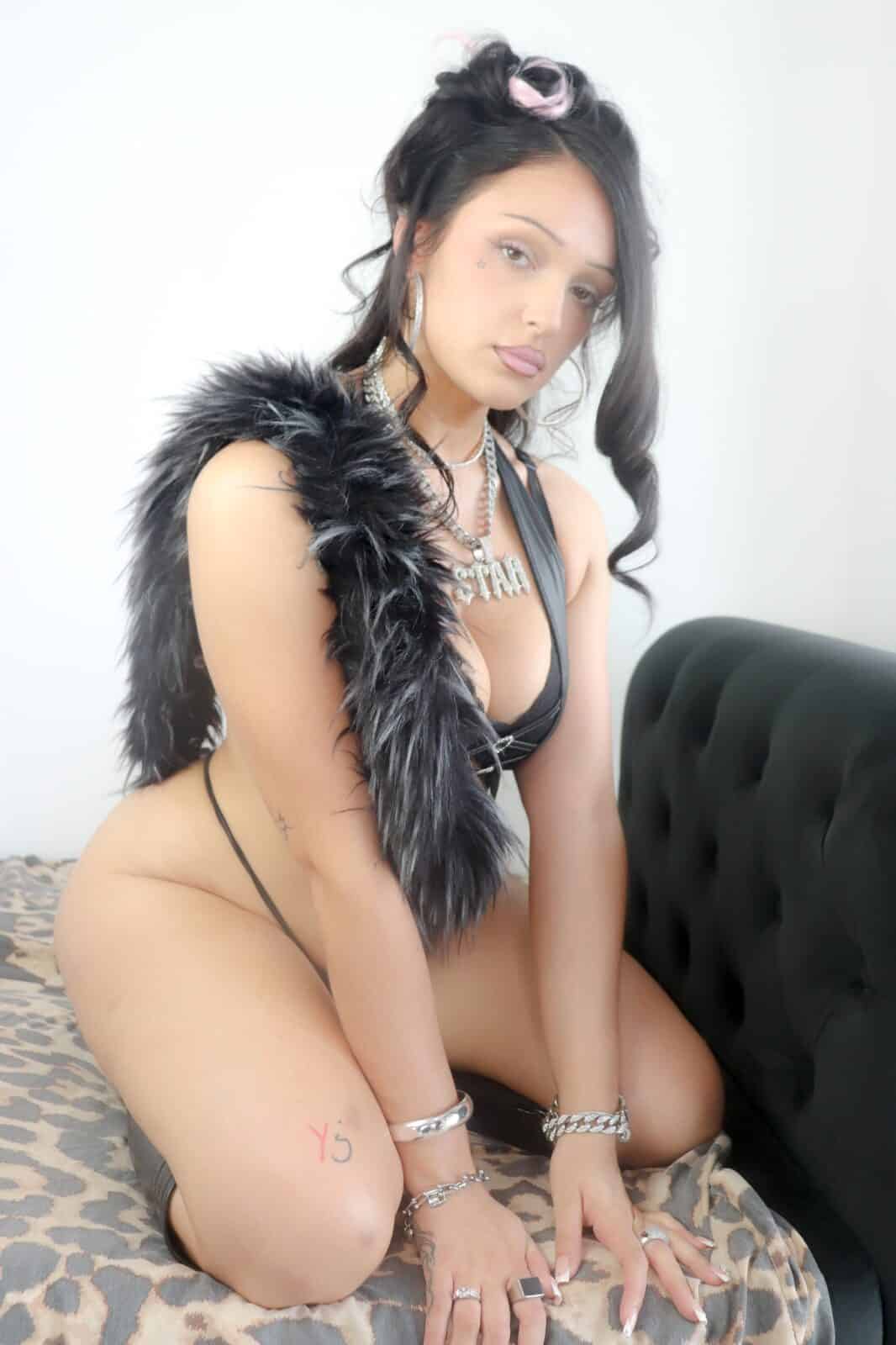
There are people who walk into a room and you immediately know without them having to say a word: they’re a star. Or in FIA’s case, it’s emblazoned in huge letters on her giant sparkling necklace that says: STAR.
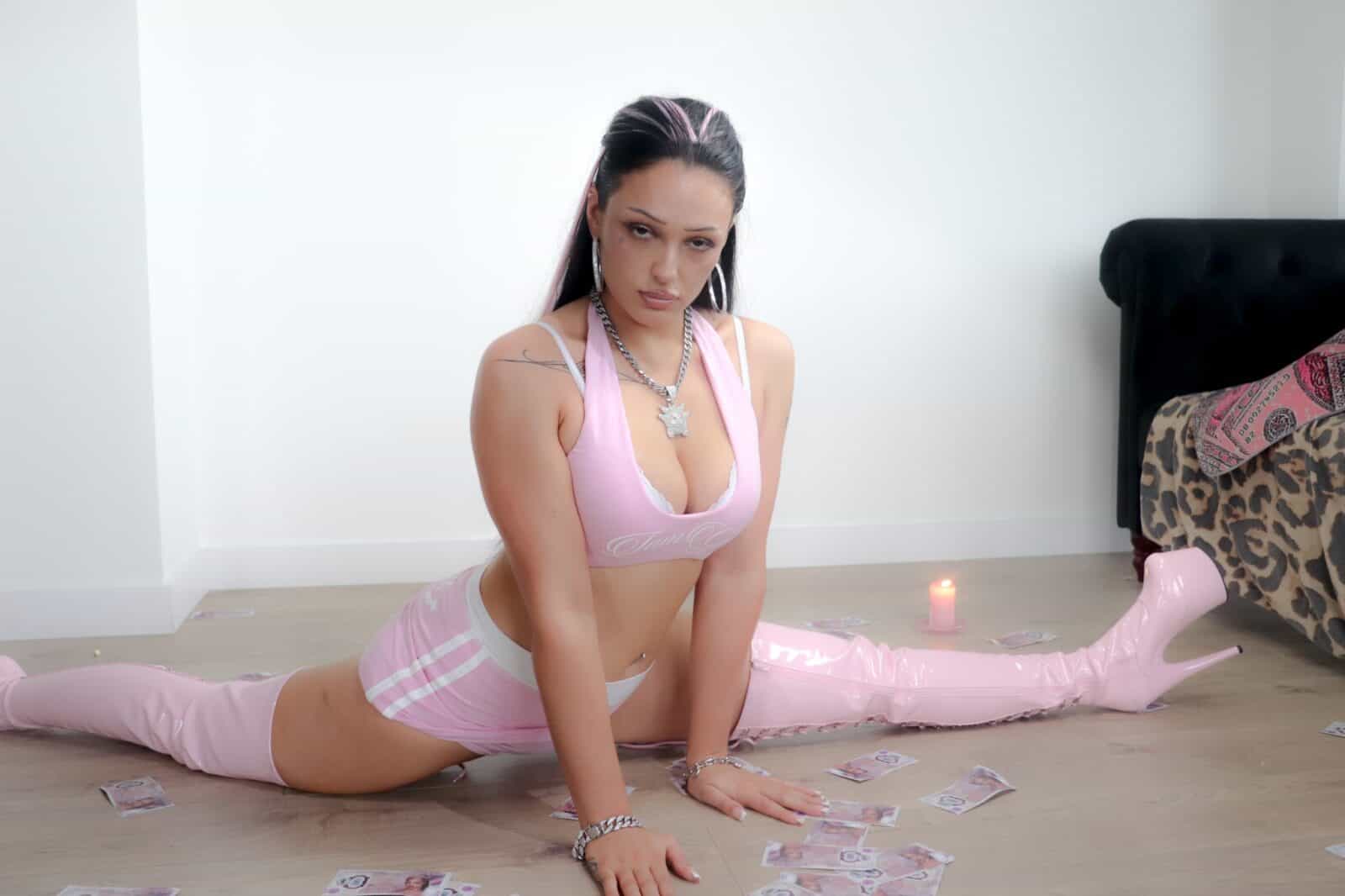
FIA is dressed exactly like I pictured based on my extensive pre-interview social media stalk. She’s wearing a matching hot pink sweat set, acrylic leopard print nails, a denim faux-fur lined Afghan, and a True Religion denim bag. “I got it in TKMaxx,” she tells me when I compliment it. The first thing she asks me is what my star sign is. Immediately I know we’re going to get on.
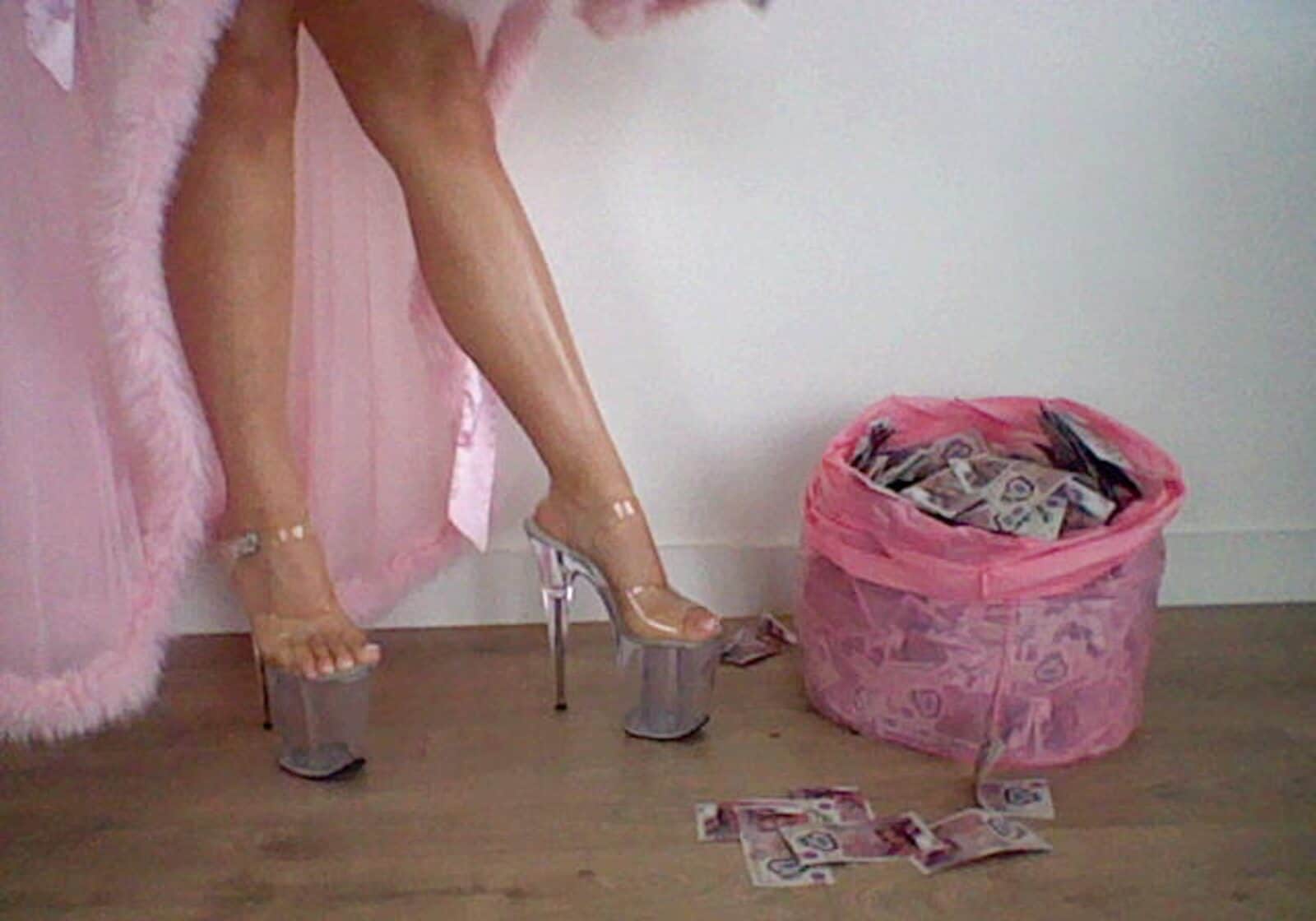
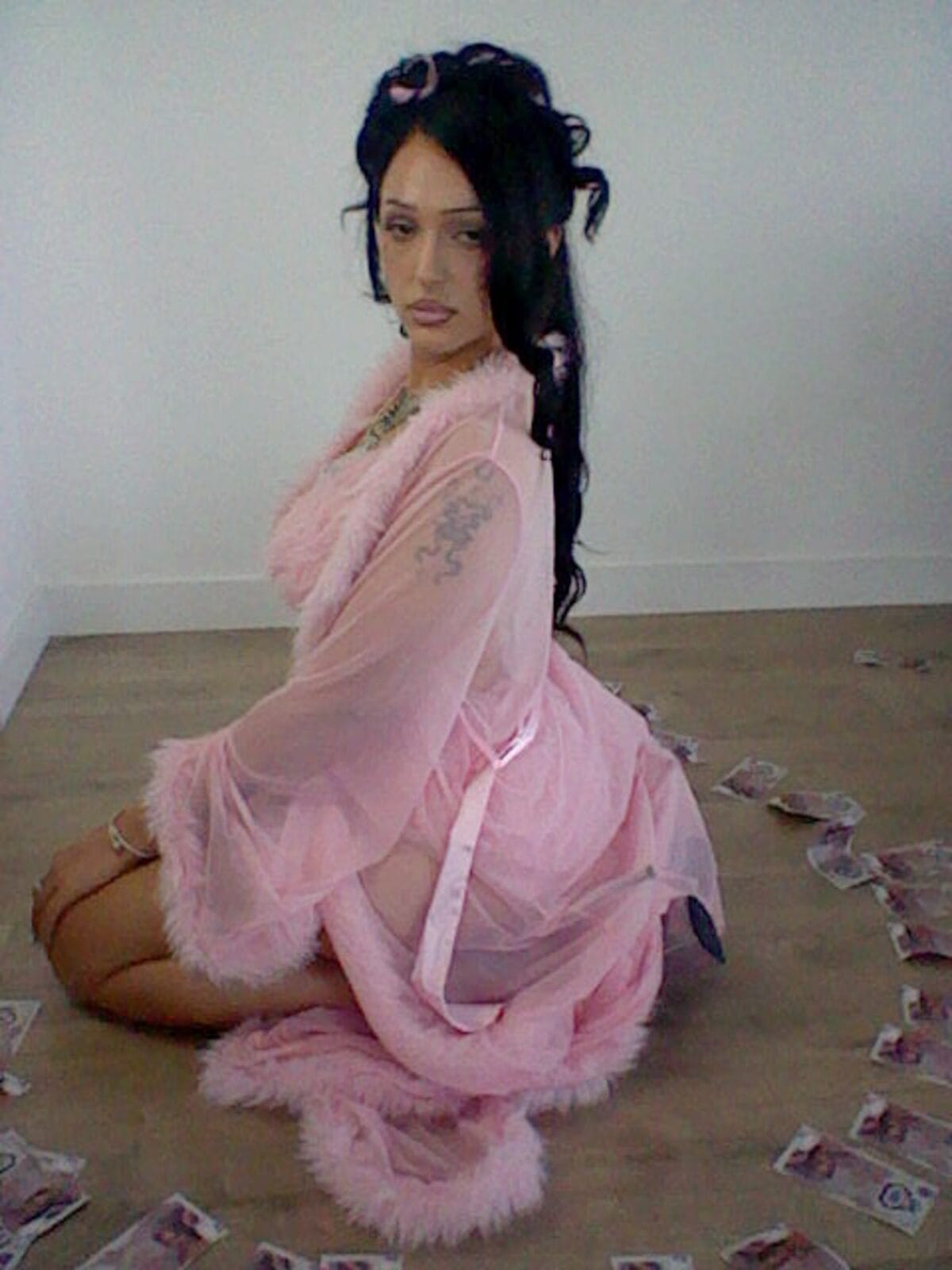
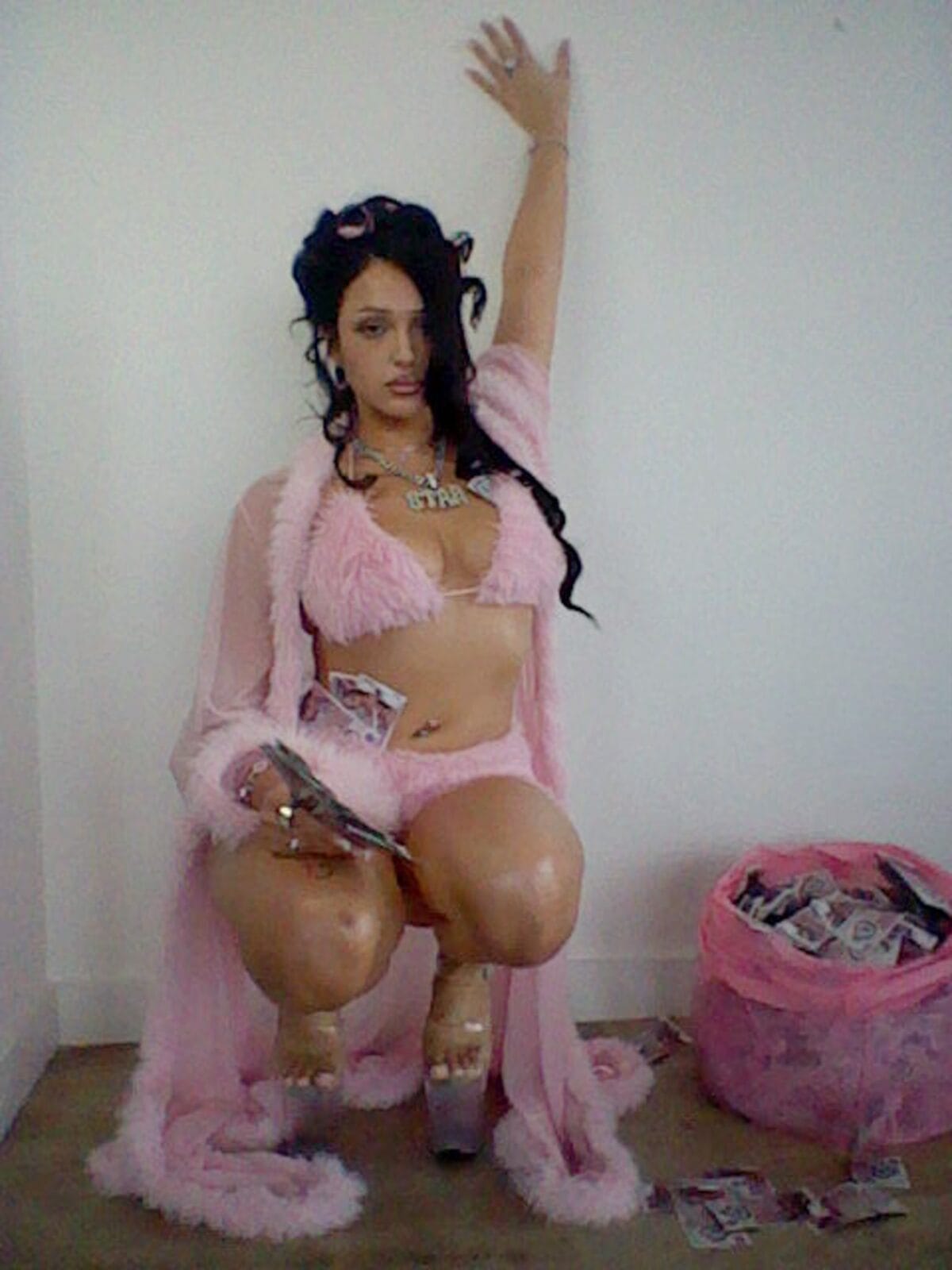
FIA makes underground pop with a blend of industrial techno – paired with Charli XCX confessional-style semi-ironic lyrics. It’s playful, it’s sexual, it’s funny at times and deeply emotive at others. Her biggest song, Candy, opens in a way that immediately snaps the listener’s attention: “went out last night, dropped acid on a boat.” It’s never too serious: at the end of her song Taste, about sugaring and scamming, she blows a raspberry. A quick scroll through her socials and you’ll see an extremely clear visual world: an explosion of Y2K, leopard print, baby pink, knee high lace up boots, booty shorts, fur trim everything.
“It’s funny,” I tell her, “I’ve spent so much time these past few days looking at your instagram, I feel like I know you already. Everything you say makes me go: that’s so FIA”. She laughs- “I’m not a persona, I can’t be arsed for that. I’m the same everywhere. I’m not even joking. I kind of wish sometimes that I could code switch a little bit more, but that’s what I got. And it’s okay.” We order our round of drinks (a spicy marg for me, for Fia a pornstar martini) and we get right into it.
“I live a lot of life. I’m dedicated to living, and experiencing things, and I’m very open to whatever. I’m very type B. And that opens me up to a lot of experiences and it opens me up to a lot of joy and a lot of pain,” she says.
“Divine feminine, I put up the adrenaline,” she sings on Eastside. It’s emblematic of FIA’s ethos: a little spiritual, a little ridiculous, a little sexy, and totally earnest. “But I guess it’s almost like living for the plot, but really it’s like living for the song. I mean, I don’t do it to get inspiration, but it’s just… that’s who I am.”
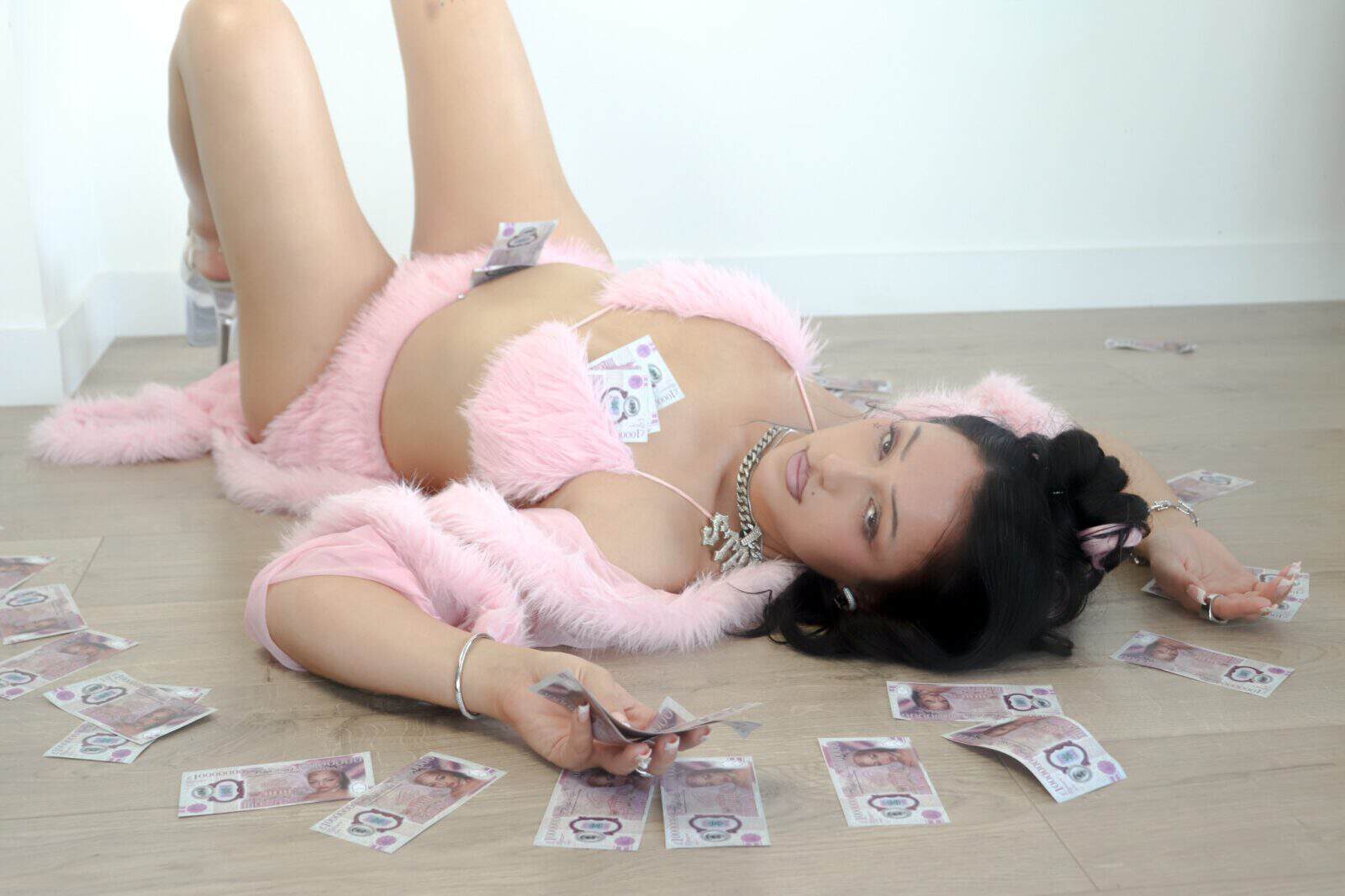
It makes sense. Her music feels deeply modern, deeply London, very “in” the scene. Her lyrics feel like opening up a chest of drawers to the taboos of modern life. Candy interpolates Kellis’ Milkshake but flips it into a queer anthem: “candy brings all the baddies to the yard”; Eastside wonders: “off of the ketamine I wonder what my life would be”; Taste talks transactional sexual dynamics: “I wanna see seven zeros, before you taste it”. There’s a raw honesty in it that makes it impossible not to feel drawn to.
It’s one of the benefits of being an independent artist. FIA has full autonomy over her lyrics, visuals, when a song is released, what singles she pushes. No label can tell her that a lyric is too much or too uncommercial. She produces her own music, builds her own visual world: in her own words she’s “a bit of a control freak.” I ask her about her production process. “I start with a bit of the beat and then I’ll be like, okay, now it’s time to sing, because you can mess with a beat for years. Because otherwise I’ll be sitting there for like 8 hours in my pants and not like brushing my teeth and shit. Like, no, sing, bitch. It’s time”.
The downside of owning everything, of course, is that everything is also your responsibility. “There’s been a couple of times where I’ve been like I actually can’t do this anymore. I’m so tired, I wanna be able to just go out, not miss things because I like doing this. But I tried to stop a couple of times and it’s just not going to happen. The most I’ve stopped for is 2 weeks, and then I get right back into it. It’s just worth it”
It leads us to some of the struggles of being a female producer. There’s a reason some of the biggest female producers – PinkPantheress, Bjork, Grimes, FKA Twigs – are artists as well. She tells me about how she used to work in sync, writing music for film and TV, with a male writing partner. “I did the vocals, but we produced the music together, and so many people didn’t realise that. My partner was getting financial opportunities off the back of our music that I wasn’t getting… It’s part of why I had to part ways and decide I was going to do it by myself.”

It’s a familiar problem for women working behind the scenes in music: being involved in the creation of something doesn’t always mean being recognised as its creator. “I’ve enjoyed collaborating with men so much, and it’s a shame that we sometimes have to avoid working with them because… It might affect us spiritually and financially to work with them.” Even now, she finds herself having to prove it. “I think I express it enough,” she says, “and then even sometimes people that I’ve known for ages, they’ll be like, ‘who produced this?’”
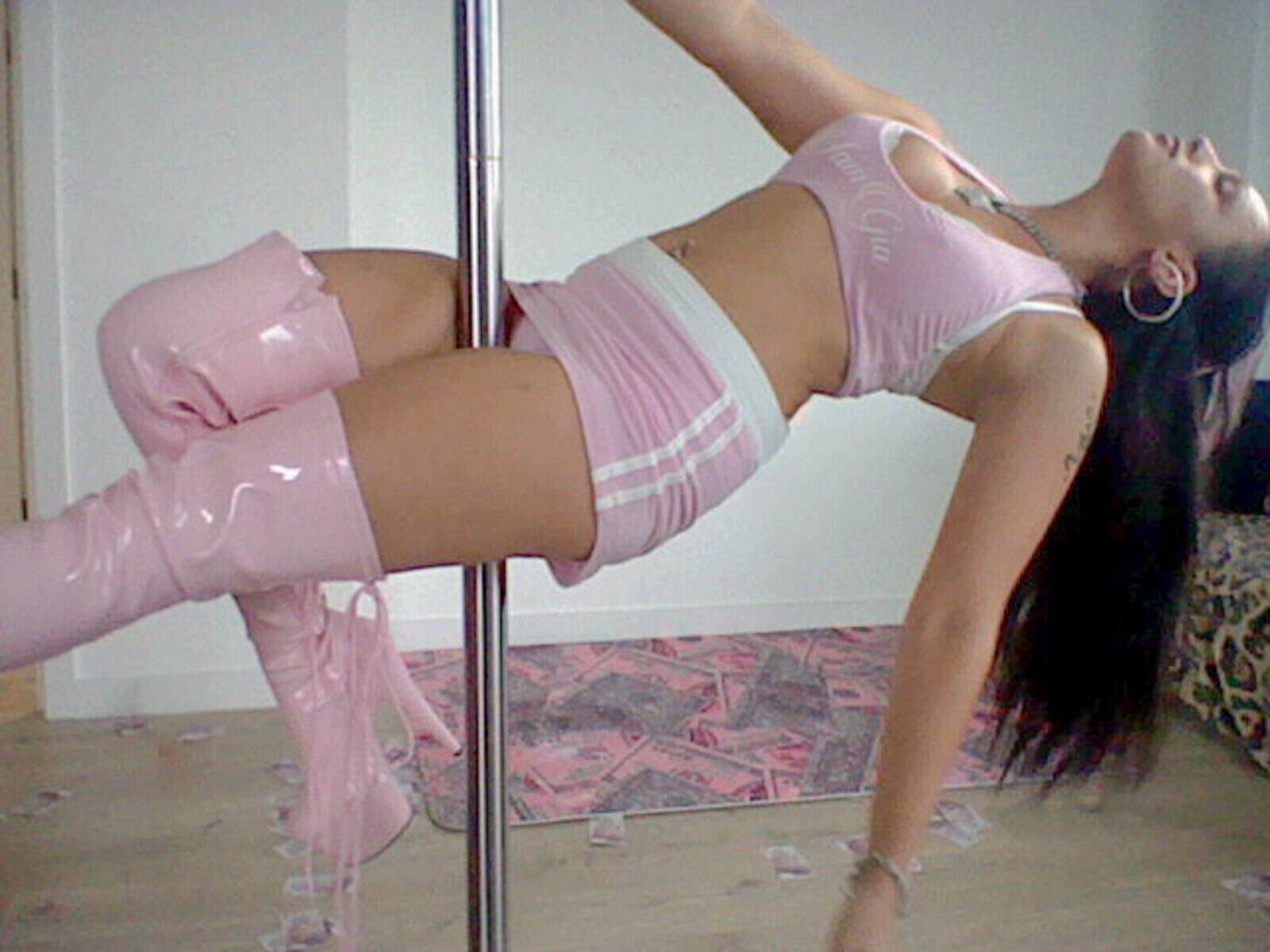
We move onto talk about how she plays with sex in her music and aesthetics. “I think now I know how to weaponise my sexuality in a way that I know how to stay safe,” she tells me. “If I have to live in a world where I’m sexualised, then I’m gonna recognise it… I need to reclaim that power as well, just to even the balance.” Dancer aesthetics feature prominently in her music videos, whether that’s in her clothes, the pole dancing, the lighting. Since starting pole dancing, she tells me, even the way she inhabits her body has changed. “I walk with my head up, like my back up. My body naturally knows how to move in a more graceful, confident way. It’s just given me so much confidence.”