
The family epic is having a moment. From Madeline Cash’s Lost Lambs to Nelio Biedermann’s breakthrough novel Lázar, to Min Jin Lee’s forthcoming American Hagwon, writers are exploring secrets, power, and inheritance.
However, Pia Ghosh-Roy’s And I Am the Arrow takes us somewhere darker, asking: how well can we ever know the people we call family?
Meet Mishu, a 20-something who has returned to India to be with her dying grandmother, Niyoti. At Chatterjee Mansion, the family’s sprawling 1940s Art Deco house in the heart of Calcutta, three generations of women begin to reveal themselves – grieving Mishu, her quiet mother Ira, and Niyoti, the formidable matriarch who lords over these women, even from her coma.
And then there’s the ghost. A man, cut in two on a railway track, who has his own story to tell.
Who was he? What did he mean to these women? And who are Niyoti, Ira, and Mishu once the roles of daughter, mother, and grandmother fall away?
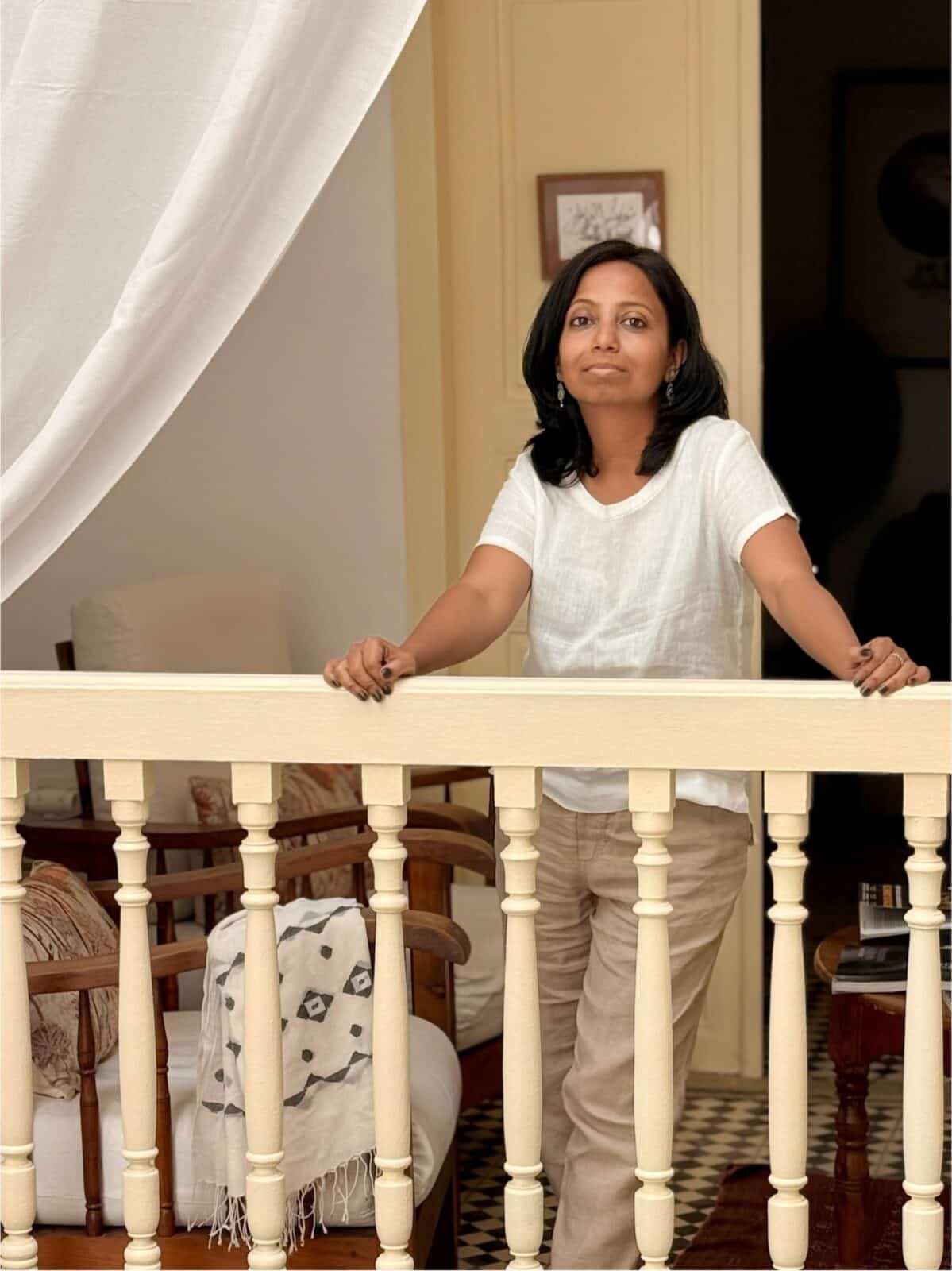
In my conversation with Pia Ghosh-Roy, we talk about maternal relationships, how Sylvia Plath inspired her, and why female power is the ultimate muse.
The Cold Magazine (CM): And I Am the Arrow is so sprawling. It covers generations of one family, moves across decades and incorporates history, politics, memory, and these almost supernatural elements. When you first began writing it, did you know what shape it was going to take?
Pia Ghosh-Roy (PGR): Not at all. I think that was one of the reasons it took so long. I had this enormous thing that suddenly had ten arms and ten legs, and I didn’t know how to shape it into the story I wanted to tell.
I actually walked away from the novel after writing the first chapter for six months. And then when I came back to it, somehow, without thinking about it or having any intention, it had laid itself out.
I often find that happening even with my short stories. I’ll block somewhere and leave it for a bit, and when I come back to it, it has somehow sorted itself into some coherence without me actively working on it.
CM: How did you manage your complex cast of characters? Were they competing for the spotlight?
PGR: They didn’t need managing. It all just fell into place.
Mishu was the character who was supposed to carry the majority of the story. At one point I realised I didn’t really know her and I didn’t really like her much. She was a bit annoying, a bit self-centred.
So I thought, okay, wait. I need to get to know her, because otherwise I’m not going to be able to do this. It’s such a sustained marathon, writing something like this. You want to enjoy the process as well.
Mishu shifted gear at some point and started to say, Look, this is who I am. Part of that came through her journal, which she writes in throughout the novel. That’s when I heard her real voice.
And then Mishu’s mother, Ira, shifted gears midway through the novel too. I suddenly felt that she was not this quiet, motherly, sacrificing, obedient woman.
When Ira came into herself and started to speak, things started to come together in a way that was interesting for me to write.
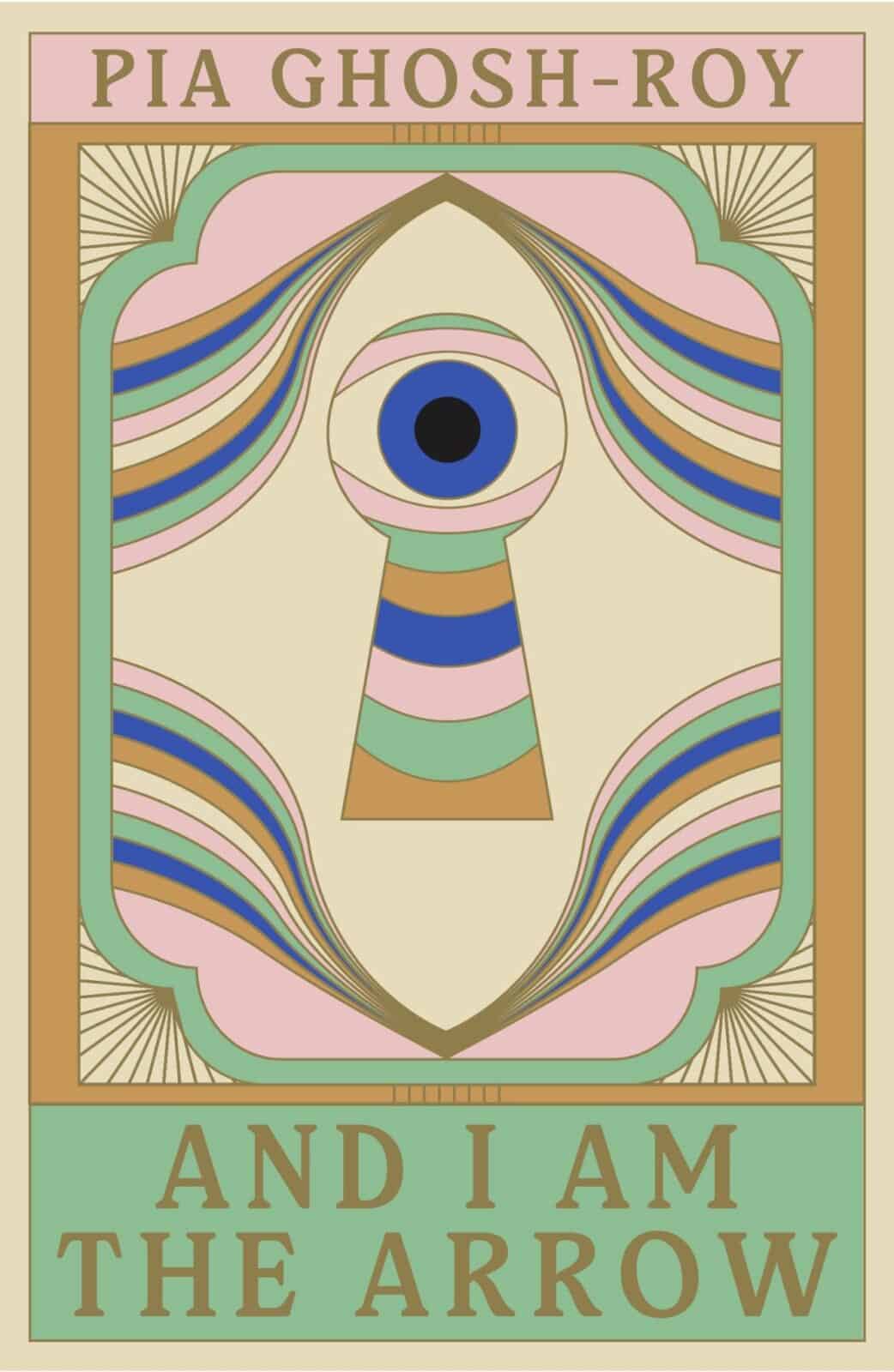
CM: I felt the shift in Ira, and I feel like the same can be said for all of the characters in some way. Nyoti is so unlike the average maternal grandmother figure – she’s a firecracker. Were you consciously trying to unpick these family roles while writing?
PGR: Yeah, that was important to me.
When you meet strangers, you somehow blend them all into this canvas of unknowns. And if you were to scratch at the surface even a little bit, everyone has a story that would leave you astounded.
We don’t think about that when we’re walking down the street or when we’re in a room full of people we don’t know. But everyone is as important, and has a story as important and as profound as the story that you’re living yourself.
Fiction, for me, is such an exercise in empathy. It cannot have you in your own shoes. It absolutely forces you to understand others in a way that nothing else does.
The ten years of writing this was also an exercise in that – in understanding others better, looking at the lives of others rather than being absorbed in the life that I received.
CM: That idea of fiction as an exercise in empathy is interesting to me. I’ve never been to India and so, while I was reading, I wondered if there was anything I might be missing because of that. What do you think a Western reader might not see in the book?
PGR: Ultimately, I wasn’t thinking about who was going to read it. The reader was never in the room with me. But I feel that if you are speaking from a place of universal truth, you should be able to connect with anyone from anywhere.
When I grew up in India, we read literature from everywhere. There was snow we’d never experienced, foods we’d never eaten. We were immersed in British literature, American literature, French literature.
Who I am as a reader and a writer is because I had to stretch myself like a bridge to reach those places – to access those places, to understand those lives that I’d never witnessed.
And that is such a powerful thing with fiction. All of us have that resource in us if we want to access it: the ability to understand people who are unlike us, cultures that are unlike ours.
If I can introduce you to India in a way that makes you feel like you know the country a little bit, you know its people, you understand something more than just the textures and colours that you see in photographs or films – if you can actually get to the grain of the country a little bit – then I’ve done my job.
I just wanted to write something that was authentic without ever thinking about whether it would be easy for the West to understand. That was never in my mind.
This book will have its own tribe, and it will have its own tribe who will connect to the truths of the story, and everything else will disappear.
CM: I completely understand that. The more genuine something is, the more universal it becomes. I was thinking about how, growing up queer, I was constantly reading straight books and watching straight films and doing an internal translation to make them fit into my life. Now, when queer writers create something, straight readers have to do that translation themselves.
PGR: Absolutely. That’s what I did all my life growing up.
I was reading about scones and London fog. But if you have imagination, that’s all you need. As a reader, that’s the only thing you need, and an open heart.
Then everything opens up to you in a way that you don’t have to work hard at. I hope And I Am the Arrow translates itself into multiple lives, no matter where they are.
CM: The novel also spans the 20th century. I learned about the Bengal famine of 1943 while reading it, which was, frankly, an embarrassing gap in my education. How much research went into the historical elements?
PGR: There was some amount of research involved, but a lot of it also involved anecdotes and stories that I’d grown up with.
Of course I had to delve deeper to get all the facts and the history right. But I already had the shape of it.
The history actually came into the story not by design, but just by the breadth of time that I had to cover.
One of the most interesting things for me while writing the book was that the politics of the city and the country were in the background. What I wanted to do was explore politics through intimate relationships. How do those sit parallel, and how does one affect the other?
When your city is fragmenting politically, how are your relationships reflecting that fragmentation?
We’re constantly absorbing the world around us in ways that we don’t often see in the moment, but can see when time has passed.
CM: Do you believe in generational trauma? Is Mishu still dealing with her grandmother’s trauma?
PGR: I think that the idea of inheritance loomed large while I was writing. It wasn’t just the inheritance of a physical home, but also the traumas that you inherit.
In a way, we’re a mosaic of all the people in our family and everything that they’ve gone through. They’re often passed down to us before we even start having memories.
How does that then form who we are?
We’re made up of elements that we don’t even know, histories that we don’t even know. When Mishu starts getting into the nooks and crannies of her grandmother’s life, she suddenly realises, I am who I am because of everything that she was, without even knowing the details of Niyoti’s past.
That’s true for anyone, anywhere. The parts of your parents you carry, the parts of your grandparents you carry – their migrations, their movements, and not just physical but mental – all of that you carry in you.
You are not one person. You are made up of all the people that you come from.
CM: The family secrets in the novel are so intricately laced throughout that when something is revealed, you think, of course. That makes complete sense.
PGR: I remember sitting with thousands of pages, trying to see the whole picture and shifting things around. And when it all came together, I was like, That’s why that had to happen.
Even when you’re writing, you’re not really fully aware of the mechanism of it.
When I started writing it, I didn’t know the story at all. I wrote it as I went. It was like a forest that I made my way through, chopping down bits.
For me, it was a learning experience as much as it hopefully will be, for the reader, a discovery.
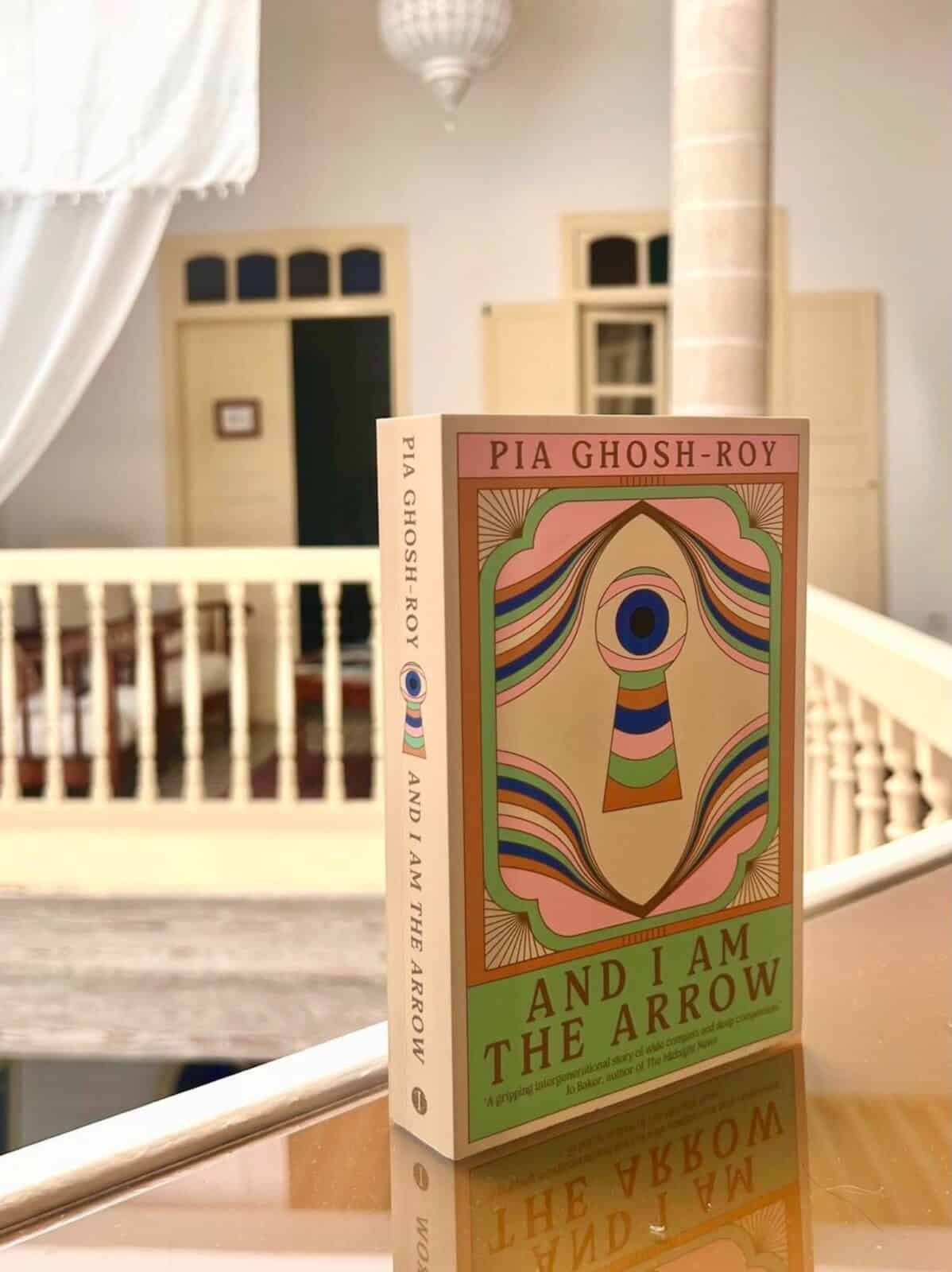
CM: That brings me to the title. “And I am the arrow” is a famous line from Sylvia Plath’s poem “Ariel”. How did you land on this as the title?
PGR: I had a different title for the book at first and it never quite sat right. Then at some point I was sitting and reading “Ariel”, and this line just lifted itself up off the page.
I knew instantly that it summed the book up. Each character is the “I”, and the largeness of the “I” shifts constantly in the book.
For me, the arrow felt like the movement through the novel.
Within that movement, each person comes under the spotlight, then moves away into the shadow, and then comes back into the spotlight.
Who is the “I”? Everyone is the “I”.
CM: There are important sections of the novel that feature the ghost of a man who has been cut in two. While he’s in this otherworldly afterlife, he encounters famous writers and figures. These sections made me wonder: What were you reading while you were writing the novel?
PGR: It was tenuous. I was reading so many books.
I remember some being really important – The Farseer trilogy by Robin Hobb, Michael Ondaatje’s Running in the Family, and I remember reading Magda Szabó’s The Door, which was interesting at the time.
So many books. Poetry as well, throughout the writing of it. Virginia Woolf’s diary, which I read while I was writing this. They were all there.
It’s this force that you feel of everyone who’s done this work before you. Because that inheritance is also in there, right? When you’re writing any fiction, all of that inheritance and all of that ancestral storytelling is there.
Cm: I love the first line of the book: “Men are bastards”. Do you see that opening as indicative of the novel as a whole?
PGR: The interesting thing is that I edited and re-edited the novel, shifting things around a hundred times.
But the first chapter that I wrote ten years ago – not a word of it changed. That first line, and the whole first chapter, was the only thing that wasn’t changed through the hundred edits that the book went through.
For me, it gave me this shove into the story. It propelled me into the story in a way that meant I knew how to move with it.
So much of the story is about movement and pace. Because it was such a large, complicated thing, I wanted it to move with lightness even though it had a heavy body.
CM: The book is also, in many ways, a story about what gender means. Mishu, Ira, and Niyoti all have to contend with their expected roles as women and the role men play in their lives.
PGR: To me, the book had a certain shape, and the shape came from the power of women. Sometimes the power is quiet, sometimes the power is loud, but it is there.
At least the way I grew up, there was the force of women and the force of their intuition, the force of their emotional attachment to things, but also their ability to evaluate things with often a clinical, practical eye.
Those two things seem to be at odds with each other, but they’re very much in sync in us as women: an attached attachment and a detached attachment.
We shift as and when, according to the requirements of the time, of the moment. We’re constantly shifting.
CM: Talk to me about the characters’ names. Many characters undergo a name change throughout their lifetime, and throughout the course of the book. What happens to a character when you push them through this process of changing their name?
PGR: I hadn’t actually thought about it in those terms until now, but it’s very interesting.
When I was young, my name was spelled P-I-Y-A. I remember that spelling just making me feel uncomfortable all the time.It didn’t feel like me.
And sometime in my teens, I think I was around fourteen or fifteen, I took the Y out and suddenly it was me.
I don’t know if some of that name-shifting, shape-shifting comes from that.
You are, in a way, the carrier and the shape of your name. The sound, the resonance of it does form you in some way, I feel.
I still remember the experience of that Y coming out and suddenly thinking, That’s me.
CM: There are names we’re given that we don’t want to own, but they can still own us.
PGR: Absolutely. There are some that we’re given that we don’t want to own, but yet, in some way, they own us.
When multiple people start calling you something, all of that control, all of your narrative, shifts to others.
And so, in a way, when Ira really comes into her own self, the name “Ira” becomes more powerful through the book. She starts to inhabit her name, live inside her name more.
Whereas in the beginning she’s constantly in the fog, asking, Who am I?
CM: And that makes so much sense for her because her daughter has left the house, her husband is dead, her mother-in-law is dying. She’s suddenly asking: who am I if I’m not mother, if I’m not all these other things?
PGR: Right. Before, she hadn’t even thought about these structures that helped form her.
Then suddenly, in the middle of her life, she thinks, Okay, I’ve been many things to many people, but who am I to be?
Sometimes you take years to find out who you are.
For most of us, I think the journey is just a long one to come to ourselves, because we’re constantly living through others.
And then we lose ourselves, I think. Especially for women, it takes time to finally stop and say, Wait. Who am I?
CM; You’ve mentioned that you’ve never formally studied writing. Do you think that helped you in some way?
PGR: I think the joy in fumbling, in figuring it out, makes you explore things with so much more depth than you would otherwise be forced to.
You’re literally learning as you write. I think I learned as I wrote. Definitely with the short stories. And suddenly I felt like, I am a storyteller. There are different ways of doing this. Let me see what this means.
It was beautiful because it was difficult.

CM: There’s something liberating about not knowing the rules. You’re able to develop your own language rather than accidentally writing your version of Hemingway or whoever.
PGR: Absolutely.Because the fact that I didn’t have anyone tell me, This isn’t something that you can do with grammar. This isn’t something you can do with structure, meant that what I had was this lump of clay.
I had to figure it out. The nose isn’t quite right, so I have to reshape that. The ears aren’t quite right.
But that finally gives you this whole thing that is a fingerprint of you. And I enjoyed that process much more because it makes me learn new things about myself.
CM: Are you in the process of moulding anything new?
PGR: I’ve started a second project. I have no idea what it is, but it’s very different from And I Am the Arrow.
I want to do something completely different.
I want to do something different every time, because that then throws me into the unknown and makes me absolutely terrified. But from that fear comes stuff that I wouldn’t otherwise have discovered.
CM: The beauty comes from the fumbling.
PGR: Yeah, absolutely.
CM: So, what do you want readers to feel when they finish And I Am the Arrow? What do you want them to take from Mishu, Ira, and Niyoti’s stories?
PGR: I want readers to see the world a little bit differently, and that the book has made them see the world through someone else’s eyes.
And I Am the Arrow by Pia Ghosh-Roy was published by The Indigo Press on 20 August 2026.


