
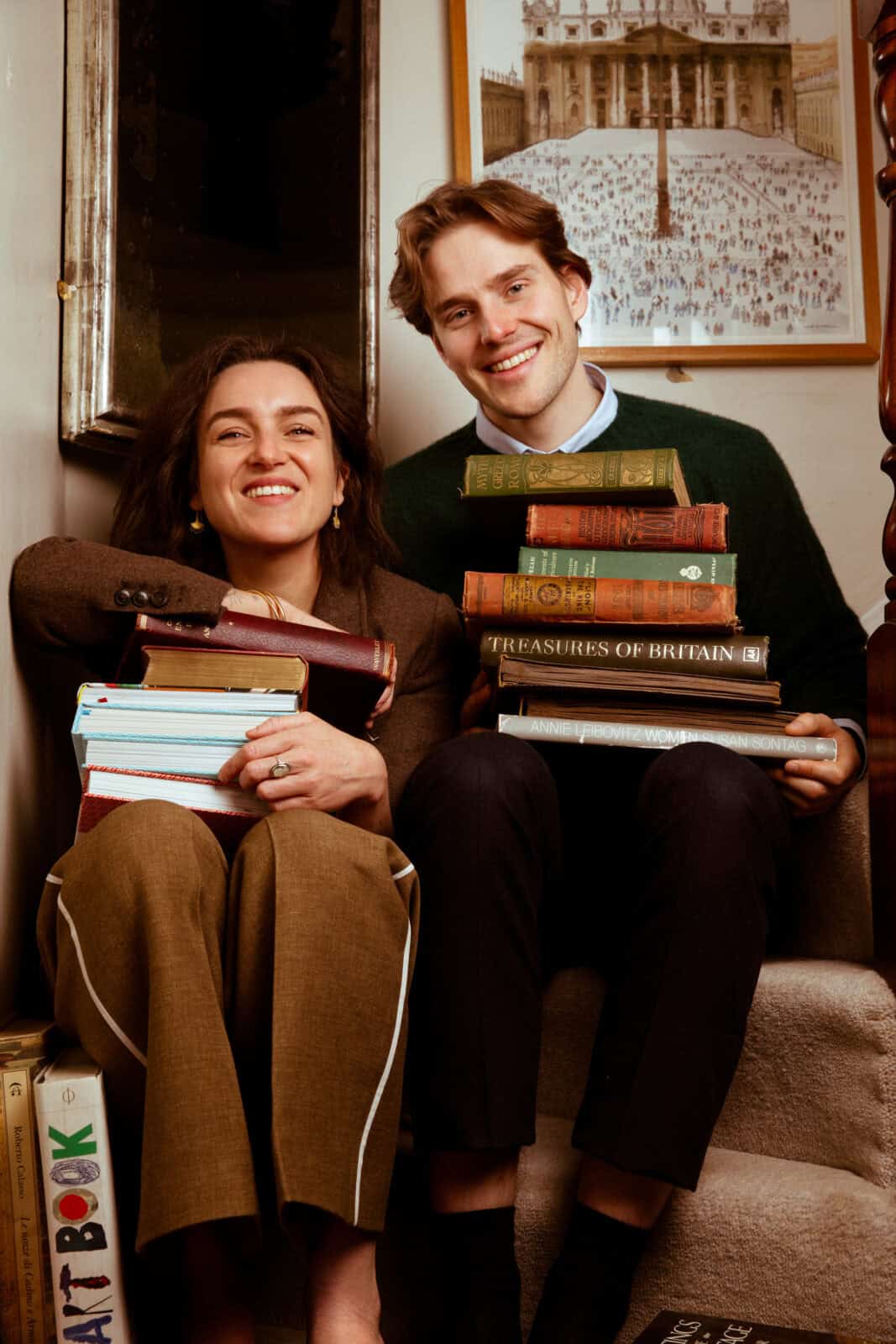
When was the last time you opened a dictionary and looked up the meaning of a word? Chances are, it’s been a hot minute. Mabel Evans and Ben Aston, the team behind the new literary podcast Wodcast, want to change the way we interact with language.
In 2025, a survey from the The National Literacy Trust revealed that reading for pleasure may just be a dying artform. According to the survey’s findings, reading enjoyment among children and young people in the UK had fallen to its lowest level in two decades. In 2026, the crisis is ongoing.
Mabel and Ben want to take it back to basics: how do words shape how we think, connect, and understand one another? With AI-generated music and fruit Love Island tugging on our attention spans, can we still find beauty in words like numinous, epistrophy, effervescent?
A sort of Desert Island Discs for words, each episode of Wodcast invites a guest to share their beliefs on language and explore the words that have influenced their lives. Season one guests include Elif Shafak, David Larbi, Stephen Fry, Tim Rice, Waad Al-Kateab, and more. They’re just getting started.
The Cold Magazine (CM): Mabel and Ben, welcome! I want to start at the beginning. Where did your obsession with words begin? And why Wodcast?
Ben: I initially started sharing the word of the day, which I called “Mr Only Words”. After a summer in America, I’d heard so much about OnlyFans and this entrepreneurial spirit around starting an OnlyFans account. I came back to the UK thinking, this feels a little one-dimensional. So I created this fictional character, Mr Only Words – a play on OnlyFans – and started sharing a word every day.
Through that project, I became much more aware of the power of words and how much beauty is hiding in plain sight. My personal Instagram account grew to more than a million followers quite rapidly. Then Elif Shafak, the Turkish novelist, found my work, got in touch, and invited me to her book launch, which is where I met Mabel.
Mabel: I grew up surrounded by words. Both my parents were in publishing and the literary world, and my grandfather was an author, so writers, authors, and stories were part of my childhood.
Then, when I was 17, I started an arts collective which eventually became a leading UK charity supporting women and women’s rights. A lot of the work I did there was about language, particularly the way language defines our reality. I was then invited by a friend to Elif Shafak’s book launch at the British Museum, and that’s where I met Ben.
CM: And the name itself: Wodcast? I hear this has an interesting origin story.
Ben: I was living in Zurich at the time, and shortly afterwards I had an opportunity to speak at Tate Modern and recite poetry. That same weekend was the winter weekend of the Hay Festival in Wales, and Mabel invited me to join her.
We met Sir Tim Rice there. I told him about the word-of-the-day series and he said, “You should call it Wodcast”.
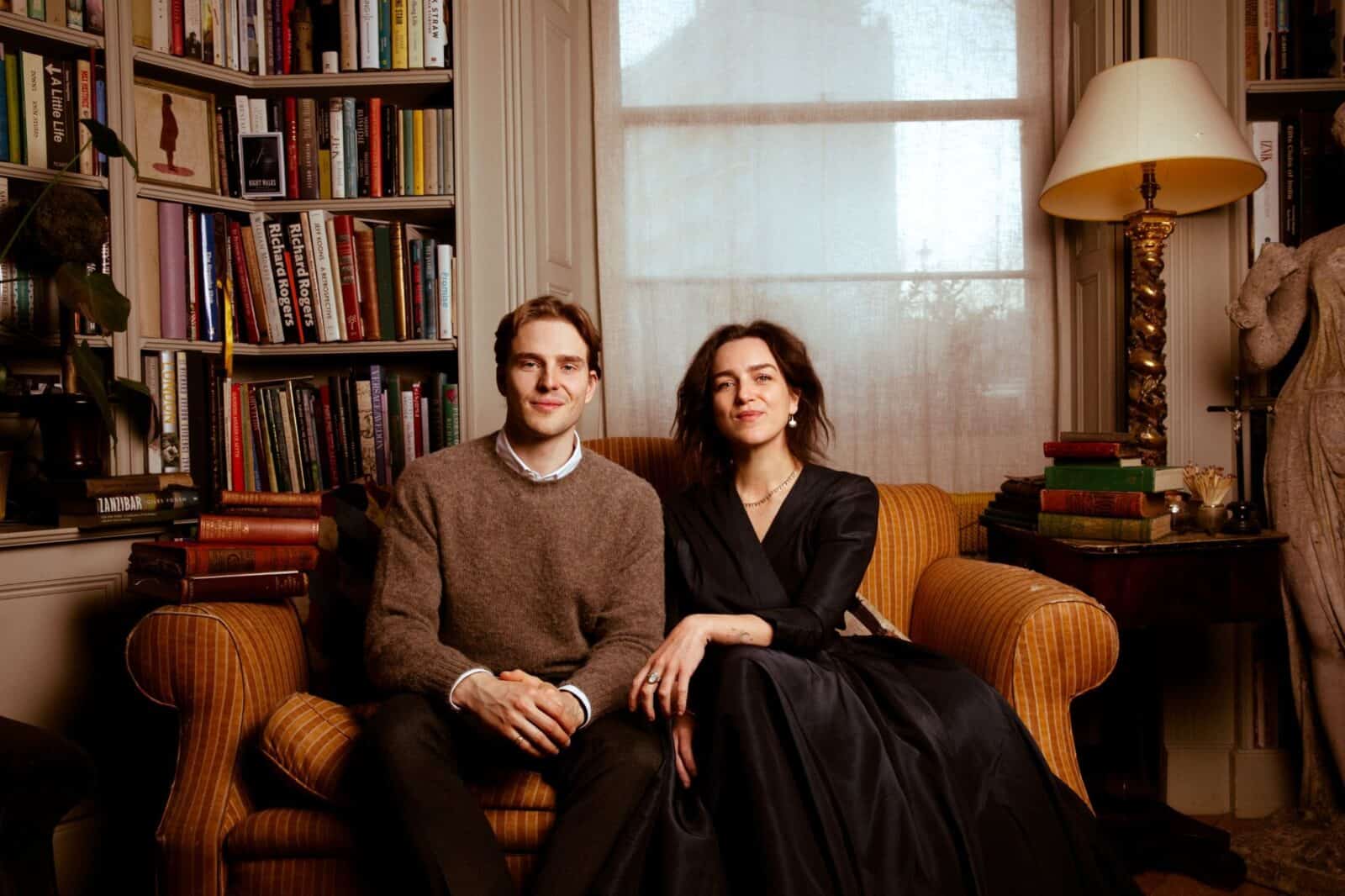
Mabel: And we thought that sounded incredible.
Ben: I asked Mabel if she would consider being my co-host, and that’s how it started. It’s funny because we were talking about this yesterday: every moment of Wodcast coming into being has felt incredibly fragile. Complete kismet.
We asked Elif if she would be one of our first guests and she said yes. Then we asked Tim Rice, and he said yes. Then Stephen Fry, and he said yes. So our first three pilot guests were these incredible literary world all-stars.
I think they said yes, mainly, because they’re so passionate, like we are, about sharing with the world that words – these tiny little things we use every day – hold such incredible potential when you actually just tune in to them. Words can become doorways or portals into understanding and deeper connection.
CM: It sounds like so much of your journey has been about combatting the state of online culture – the commercialisation and objectification of experiences and people. Do you see Wodcast as a political project?
Mabel: I believe everything is political. Arundhati Roy has said that to write is to be an activist, because by writing you are standing for something and sharing stories that create people’s realities.
Ben and I have these funny moments where I’ll be editing something and say, “These are unprecedented times for humanity”, and Ben will say, “No, chill out”.
But my background is as an activist, particularly in women’s rights and refugee women’s rights, so I’ve seen very directly how language can be used to dehumanise people. That kind of othering is part of the basis of genocides and mass violence. We want to use language to create bridges because, right now, language is being used to create walls.
Ben: My mother tongue is Swiss German. My dad is English, and I have a very English name, but I didn’t really speak English that well growing up. Learning English unlocked an entirely new world for me.
Swiss German is primarily a spoken language, whereas English carries so much history and culture within individual words. Learning it broadened my horizon and allowed me to redefine my identity. I think when you expand your mind, you also expand what feels possible in your own life.
So, for me, the question is less whether Wodcast is political and more whether we can encourage people to listen. A love of words also brings a love of listening – listening to yourself, listening to the voices in your head, and then listening to other people.
CM: Do you see the podcast as an engine for change?
Ben: I’d say it’s more of an invitation.
Mabel: Yes. Rather than saying, “We’re trying to change X”, we’re inviting people into nuance.
With the podcast specifically, we want to create space around words and space for reflection. We release an episode every other Wednesday, and then on the following Wednesday we host a livestream on Substack where we reflect on three words that were present in the episode. We share writing ideas and questions that people can sit with.
There’s so much of the internet that tells you to consume, consume, consume. We want Wodcast to be an invitation towards creation, reflection, witnessing, and noticing the beauty that’s hidden in plain sight.
Ben: One of the big reasons for Wodcast existing is to invite people to recognise their own agency through words.
I think we’ve become somewhat blinded to the power we each hold. Knowing the words that stand true to you, knowing your values and principles, recognising that you are someone who can create as well as consume – it’s incredibly empowering.
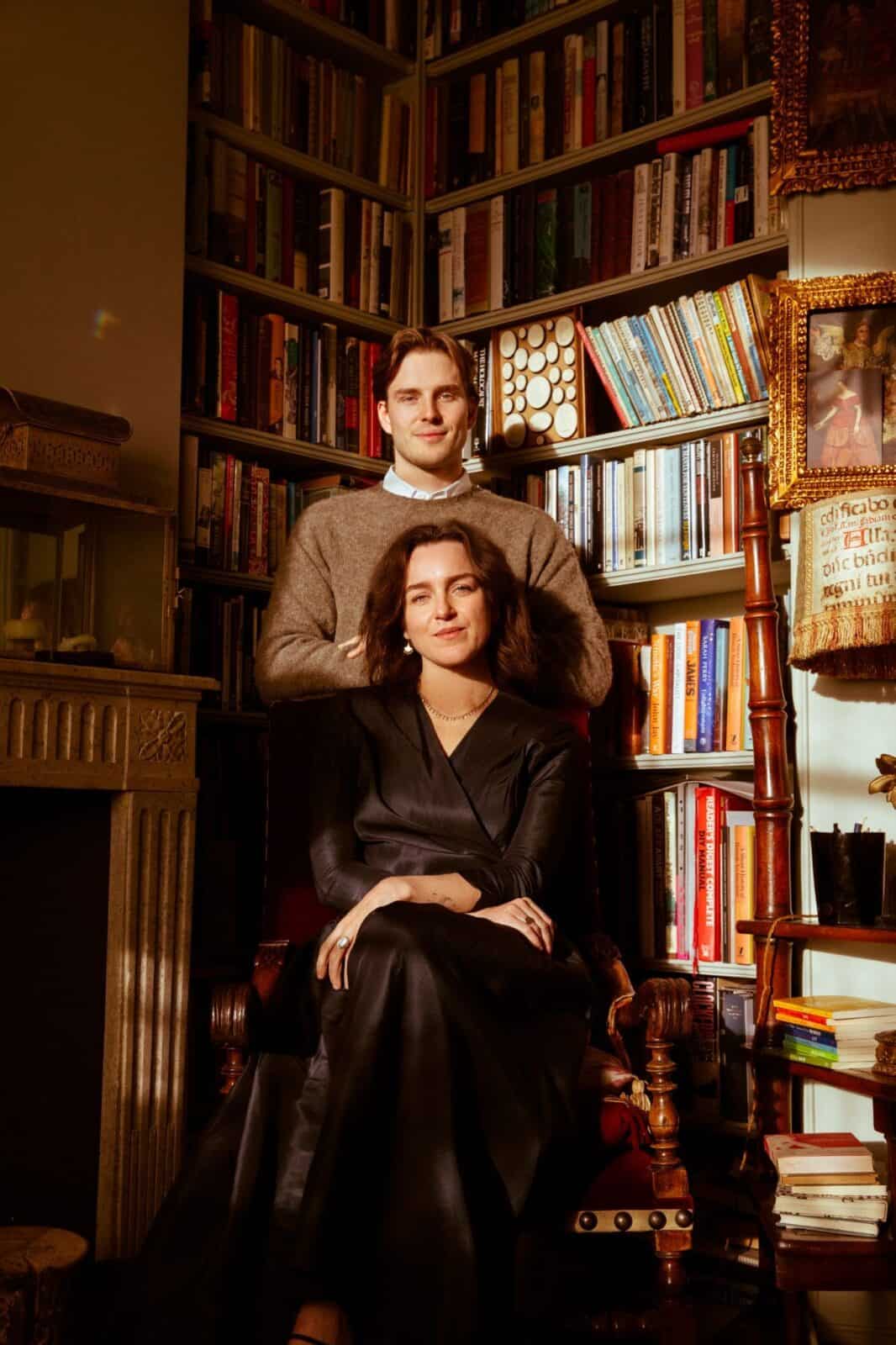
Mabel: We also hope the podcast feels nurturing and reflective rather than dogmatic.
There’s so much mainstream podcast culture built around optimisation and biohacking: if you’re not doing this, you’re not good enough. We’re trying to offer the opposite. Just come and sit with a word.
CM: I agree. So much digital content seems designed to activate your nervous system. Everything is an emergency, everything is “run, don’t walk”. Wodcast feels deliberately slower and focused on creation. Are you both writers yourselves?
Ben: I haven’t published anything, although that’s something that lies in the future. But I equate writing with thinking.
I think there’s something quite alarming about how we’re outsourcing writing today, because I think that’s one step before outsourcing thinking. When I first started choosing my words, I came across the quote, “The world has music for those who listen”. I began moving through my day asking myself: what could be the word?
It might be on a restaurant menu, on a bus, on a billboard. Sometimes it would be a word that came from within. “Discombobulated” was one that was very present for me at one point because I was so confused about what was happening in my life. It was always about writing first and then extracting the key word or idea from that writing. So writing and creating content became completely intertwined.
Mabel: I love writing too. When I’m at a loss for words, when life becomes too heavy, writing provides support. It’s an analgesic. The best thing about writing is that it collapses time. Suddenly, I have access to my thoughts from two years ago or yesterday. I get to know myself through the practice of writing.
Writing is a channel between me and my deepest parts. I can start writing and suddenly a part of myself comes out onto the page.
Speaking and using words to connect feels much more communal. That interior process has to be nurtured first so that I can speak from somewhere that feels congruent with what’s actually happening inside. I think writing is a way of holding myself accountable to myself.
CM: You’ve both mentioned support and care several times, which brings me to the word I wanted to give you: succour.
I was thinking about coming from Georgia, and about rural Southern language, and somehow ended up with “honeysuckle”. Then “suckle” became “succour”, which was much more interesting to me.
Ben: We loved hearing the path to the word because that’s always interesting. Succour comes from the Latin succurrere, meaning to run to help or run to rescue. It’s about providing support.
The word that immediately came to mind for me was kintsugi, the Japanese art of repairing broken porcelain with gold. It celebrates the brokenness rather than trying to hide it. When I was going through a difficult emotional period and felt broken myself, learning that word provided me with so much support. It felt like a moment of succour.
Mabel: The word became the succour!
For me, it immediately made me think about human nature. The idea of running to someone’s aid, of being compelled to support and help. I really believe that our truest nature is that when we see another human being in need, we respond. It also made me think about love.
When you love a person, a place or a thing, you don’t necessarily think twice about the desire to provide medical succour, emotional succour, or whatever kind of support is needed. You just go towards it. So I think succour is almost a product of love.
CM: I love that you both went towards the idea of running towards someone. I was initially thinking about “suckle” and the image of a baby being nourished.
Mabel: That’s beautiful. Someone we spoke to about the word had exactly that response: the suckling of babies, because you’re providing nourishment and relief.
CM: Do you think words themselves can provide succour?
Ben: Definitely. When you have a word for a feeling, it can give you such relief. By learning the words that match your internal world, you feel less alone. You realise that this is a human experience that other people have experienced before you and will experience after you.
Mabel: I think we all have an insatiable desire for meaning. Someone was talking recently about living in a “meaning famine”. I think that’s where words can provide succour.
Ben: I love that idea. There’s also something interesting about the relationship between “depression” and “expression”. Words are one of the easiest ways to express yourself. Of course, you can paint, cook, sing, or dance. But words are constantly around us. If you tap into them, they can alleviate something.
CM: That “meaning famine” feels connected to the culture of constant consumption you were talking about earlier.
Mabel: Completely. I think it extends ecologically and into the entertainment industry too. Our soil is becoming depleted because of the way we treat the topsoil. Sometimes I feel that mainstream music has become similarly depleted. I don’t feel nourished by a lot of it in the way that I do by Leonard Cohen, Carole King, or Aretha Franklin.
Everything is about output. Look at the fifth, sixth, seventh, eighth Marvel movie. The question becomes: as our capacity is stretched, how do we make sure we continue deepening our understanding of words, language, and literature rather than spreading ourselves so thinly that nothing we create contains the nutrients we want to give our audience?
Ben: Fast food, fast fashion, fast content. Everything is disposable. But words have been travelling for centuries and have deep roots. Succour entered English around the 13th century.
CM: Is there such a thing as “fast-food words”?
Mabel: One that comes to mind is “rizz”. I didn’t know what it meant until recently.
Ben: Apparently the Oxford English Dictionary’s Word of the Year in 2023 was “rizz”. And then 2024’s was “brain rot”. There you go. It’s all in the words.
CM: I’ve been thinking about how we can put this appreciation for language into action, and the most powerful act I can think of is reading – specifically reading works in translation. August is Women in Translation Month. Do you have a translated book you’d recommend to Cold readers?
Mabel: Taiwan Travelogue would probably be my first choice. It won the International Booker Prize recently and is fascinating because it’s a book about translation that actually contains characters who are translating. It becomes very meta.
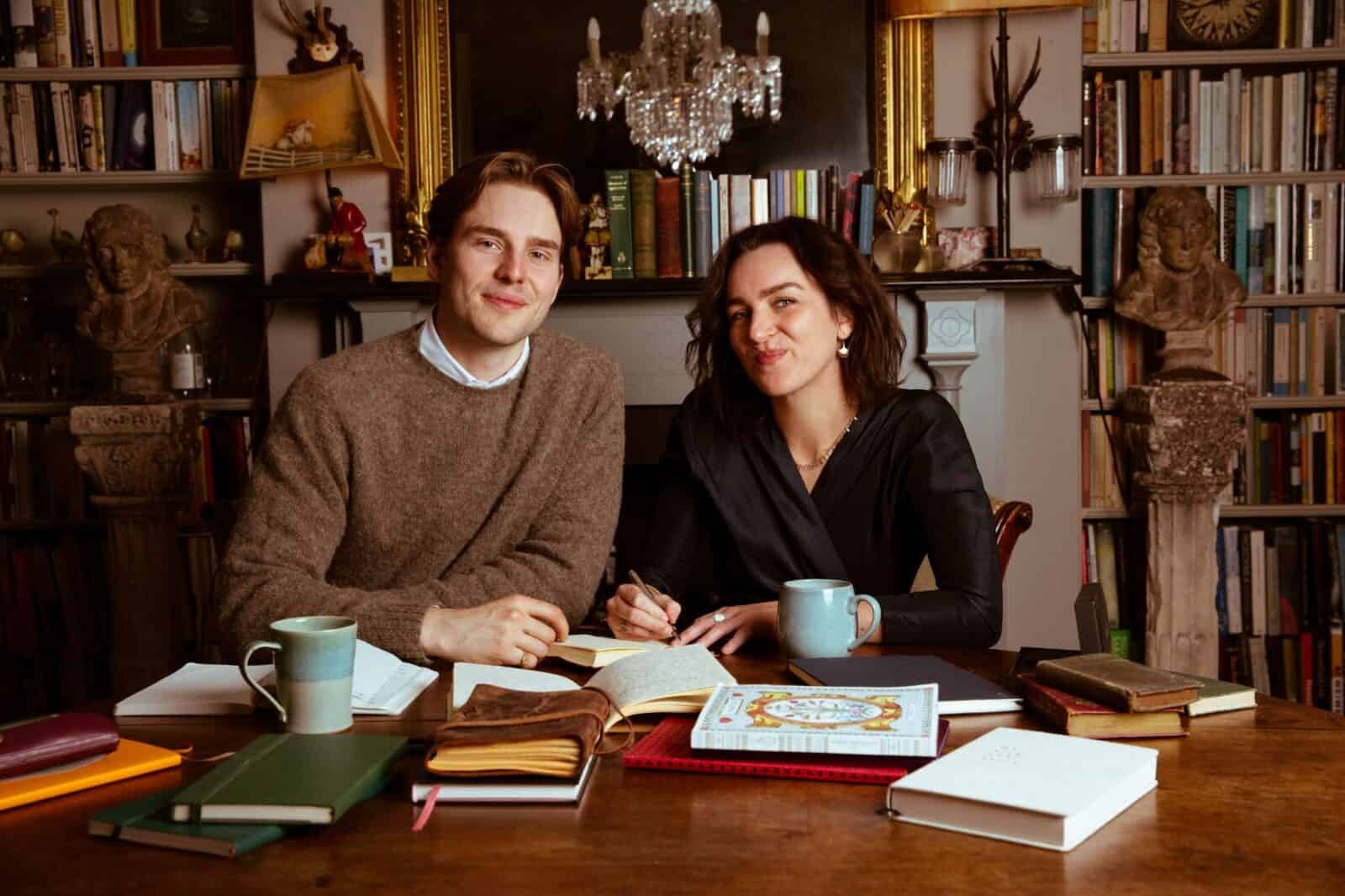
CM: Finally, what’s next for Wodcast?
Mabel: Season two. We have some amazing guests confirmed and we’ll start filming in the autumn. We also have our first Wodcast Live event coming up in London. We’ve hosted several in Zurich, but this will be our first in London. The events are always centred around one word.
Ben: And then the big dream is the Wodcast World Tour. We’d love to go to Japan, Mexico, New York, Africa, Australia, wherever we can go, and learn about untranslatable words, words that are dying and words that are being lost.
We could create episodes around each word or perhaps one longer-form piece. Essentially, we want to do cultural heritage excavations through language.
Mabel: It connects to my grandfather’s work, too. He was an oral historian and folklorist who collected stories during the industrialisation of East Anglia. Farmers who had a deep connection to the land, soil, and animals were suddenly being overtaken by machines. There was a dilution of language and, again, a dilution of meaning.
So the idea of taking one word and spending half an hour or an entire day exploring it – understanding what it means and how it lives – feels very connected to that work.
Ben: If we can travel the world doing that, collecting stories around words, that would be incredible.
You can find episodes of Wodcast on YouTube, Spotify and Apple Podcasts.


