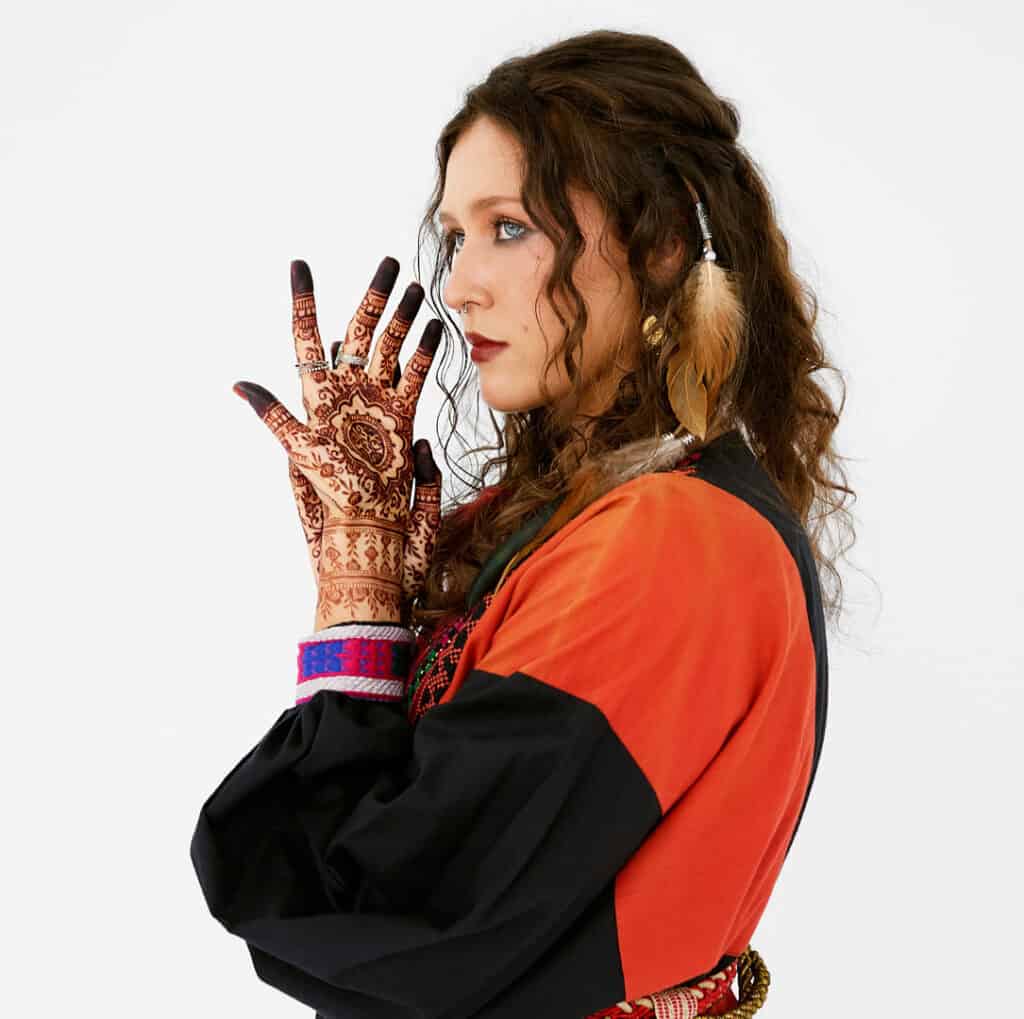
In 2022, Vanity Fair dubbed then 19-year-old, Slovak-born Karin Ann an “LGBTQ+ icon for Eastern Europe” for her outspokenness about identity and sexuality in a region where neither is common. Her career thus far, spanning genres, countries, forms of art and languages, exemplifies a deliberate refusal to be anything other than what she is.
Born in 2002, Karin Ann came to music through graphic design while still a teenager and hasn’t stopped pushing her creative boundaries since, in any direction that felt right in the moment. Several singles in both Slovak and English, the cohesive and ambitious debut album through the telescope in 2024, a European tour and stints in London and Los Angeles are just a few of the stops that have characterised her journey. Earlier this year, the dreamy and cinematic single “i was never yours” made her the first Slovak-born artist to ever appear on a Billboard chart. In the meantime, she is working on what she calls her “best work to date”, unbothered by pressure to release every few weeks to supposedly remain relevant, unconcerned by the two-minute ceiling that tracks should avoid trespassing to be marketable on TikTok and uninclined to soften her stances on the causes she passionately advocates for, which include mental health, sexual freedom and gender equality.
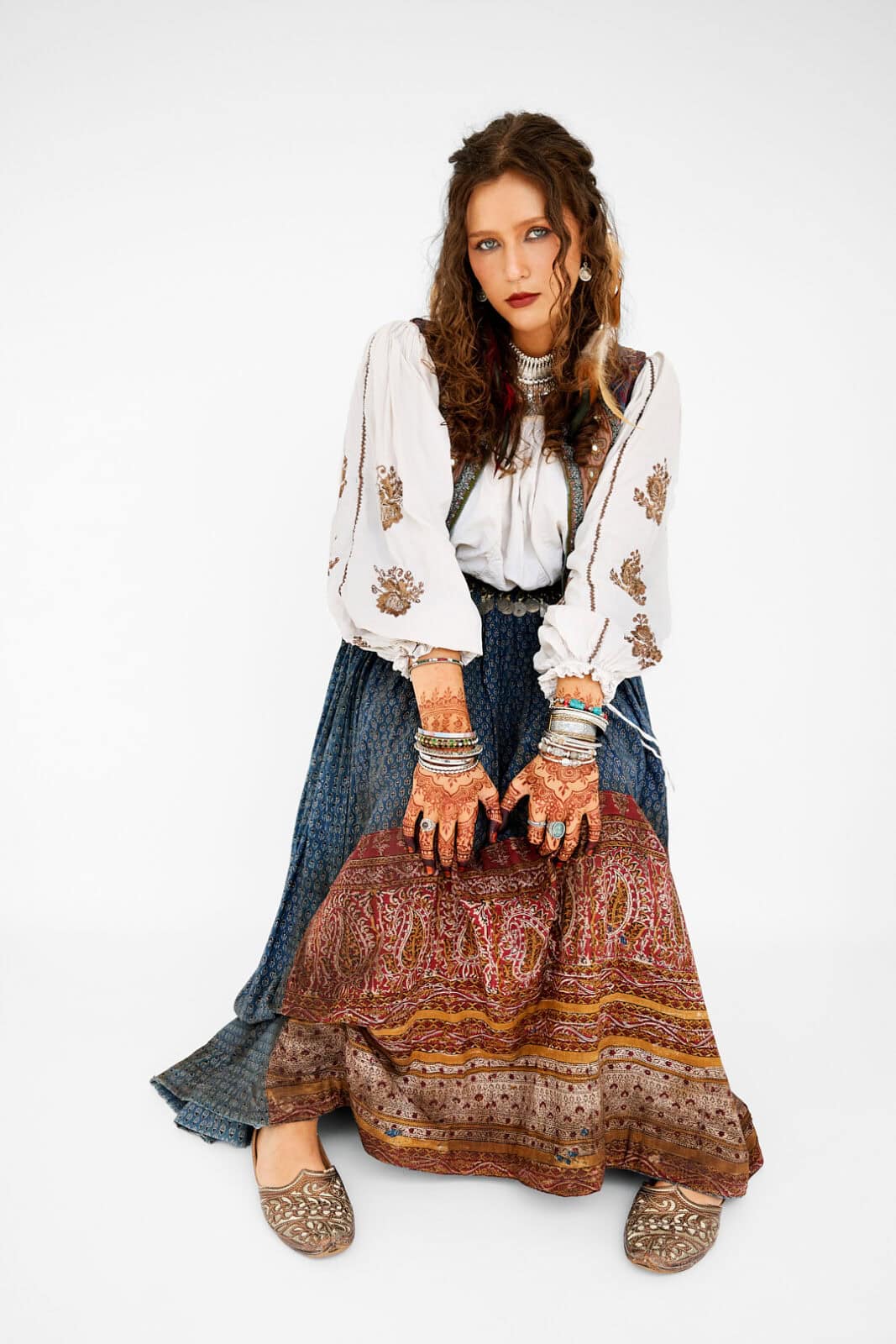
In 2025, her home country amended the constitution to recognise only two genders, a move that Prime Minister Robert Fico described as “a constitutional dam against progressive politics”. In such a context, Karin Ann’s stances and her rejection of any categorisation carry a meaning that goes beyond music or art. As she puts it, in characteristically straightforward fashion: “It would be much easier if I didn’t do these things, but that’s never been why I do it.”
Early in our chat, Karin Ann describes herself as “a big introvert” who tends to prefer expressing herself through art rather than conversation. Her initial engagement with my questions is seemingly consistent with this self-image. She considers each with poise and care and approaches every sentence as if she wanted to be sure that no detail she cites goes unexplained or uncontextualised. She repeatedly gives me the impression that she is more comfortable with forms of expression in which explanations and context are not expected to be explicitly articulated. As the interview progresses, though, the sense of relaxation that comes naturally with conversation opens up space for the conviction that runs deep through her music – the conviction that everything she writes, sings, says and does is an honest, unfiltered record of who she is at that moment. Repeatedly, I find myself thinking that she would be making art with the same candor and defiance even if she hadn’t made a career out of it.
The Cold Magazine (CM): You started your journey through the arts in graphic design, then pivoted to music and now you’re also acting. To what extent are these different forms of expression separate in your experience and to what extent are they part of one coherent journey?
Karin Ann (KA): For me all forms of art go hand in hand. For a long time, my main way of expressing myself was drawing: I was a shy kid, so drawing allowed me to express what I needed to express without having to interact with other people. I also grew up doing sports that incorporate music, like figure skating, and around a lot of musical theater, so expressing myself through movement was always part of it too. So for me it was always one big thing: I never thought of it as “oh, I only do one thing and I’m not interested in the other mediums.”
CM: You grew up in Slovakia and your first releases were in Slovak, but at some point you transitioned fully into writing and singing in English. Is there any difference in how you approach writing in either language?
KA: Actually, I always wrote in English. The songs I have in Slovak and Czech were first written in English and then translated. I always found English more freeing. It might be because it’s not my native language, so I don’t have certain boundaries in my head. In Slovak, everything is gendered and I find it harder to express what I want to say freely. I feel like there are just more words for certain things in English. Interestingly, producers I’ve worked with have told me my English lyrics are striking precisely because I say things in ways they would never think of. That’s probably because my native language gives me different rules about how language works. So maybe that constraint actually becomes a signature.
CM: In your music you engage with themes like mental health, LGBTQ+ rights, gender equality. You’ve been open about what it was like to grow up in Slovakia with those themes, and you moved to London a few years ago. How did that move change your perception both of where you are now and of your home country from a distance?
KA: I haven’t lived in Slovakia full time for a long time, so I don’t really know how things are there now. I think it’s better than when I was growing up, and I’d attribute a huge part of that to social media and people being able to get more of a world view. Even when I was growing up, social media helped me not feel so out of place, because I could see how things were in different places and what was normalised elsewhere. The moment that really crystallised it for me was being in London at 15 on a school trip: I had blue hair, a red tracksuit, chains around my neck, and a couple just stopped on the street to compliment my look. That had never happened to me. Back home, if anyone stopped me, it was to insult me. It completely blew my mind. I think it’s really important for people to experience places other than where they’re from, it helps you find what feels right for you.
CM: How comfortable are you with the label “artist-activist”, and do you think artists with a platform have a responsibility to use it for the causes they care about? How does someone who has a platform avoid the activism itself becoming a kind of performance, to attract a certain public?
KA: I think anyone with a following has that responsibility, and if they don’t act on it, that’s just lazy and stupid. I’m not going to claim I’m an expert on every issue, but the things I think are important (mental health, the environment, people’s rights) I’m going to talk about. I think it would be much easier for me not to talk about any of this. It would make me more palatable and more marketable. But that’s never been why I do it. And I think people can tell quite easily when it’s performative versus when it actually comes from somewhere real. The one thing I do push back on is the pressure for people who speak about these things to be perfect: that pressure is a little toxic, because none of us can live flawlessly in today’s world.
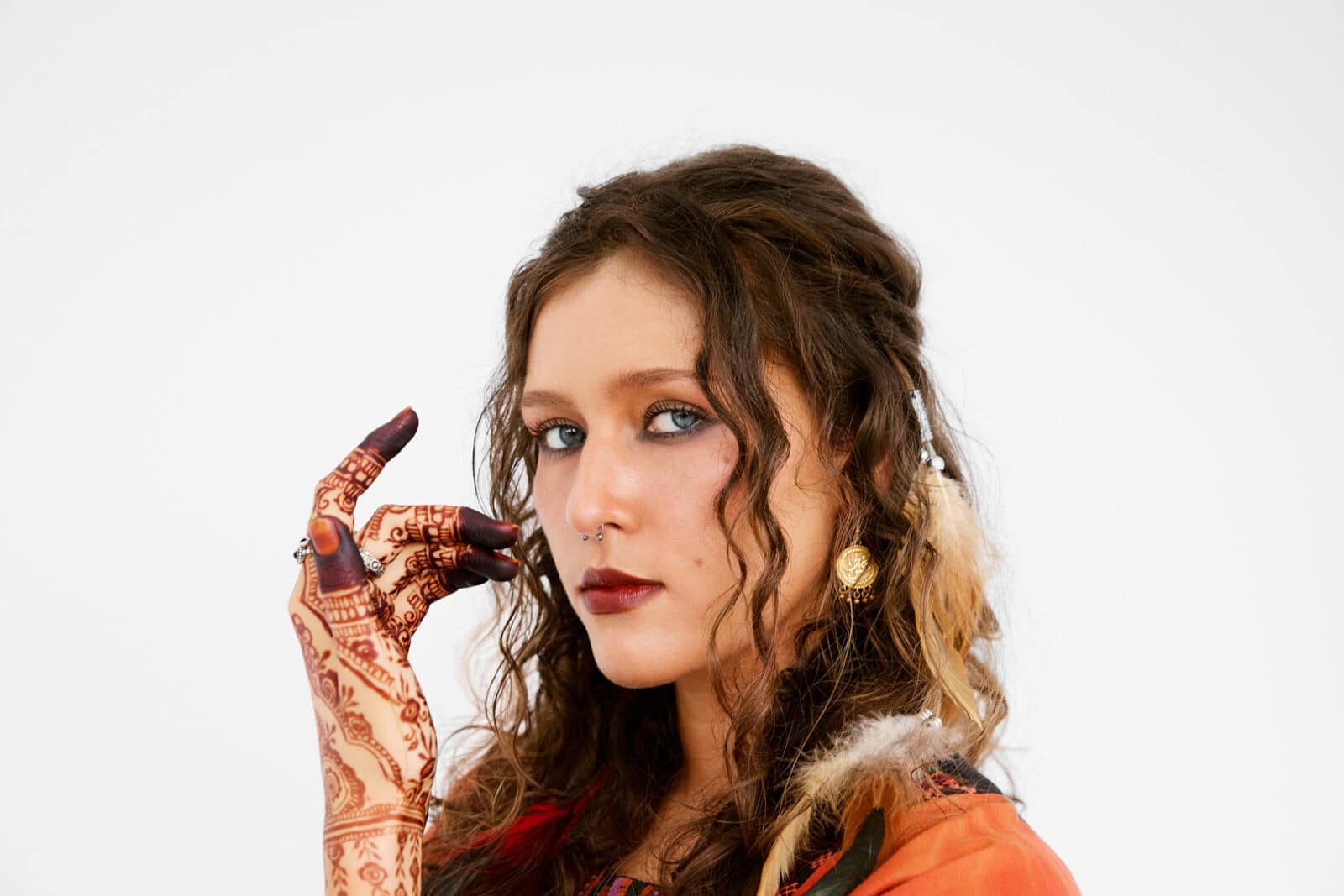
CM: Your recent work is more distinctly folk-inspired. Is this where you’ve landed or are you still searching for the right musical language?
KA: Anything I’ve ever done represents me at the moment of doing it. I don’t want people to listen to my music because they like a specific genre. I want them to connect with what I write about and with me as an artist. I can’t say whether what I’m doing now is what I’ll do forever, because any time you grow as a person, your art changes with you. The most important things are to be authentic to myself and to the moment, and to feel inspired, because if I’m not inspired, I can’t create.
CM: How do you know when a song is finished and ready to be released versus when it’s just a private moment that isn’t meant to be shared?
KA: It mostly comes down to a feeling, it just has to feel right. I do actually appreciate deadlines at a certain point in the process, because if something feels ready and doesn’t get released, I’ll go through life, change, and come back to it thinking it needs to be different. “I Was Never Yours” is a good example: we wrote it and it came out roughly a month later, which almost never happens. I didn’t have time to overthink it or get bored of it.
CM: What can we expect from you in 2026 and beyond?
KA: I’m trying to set boundaries around my creative process: there’s an expectation, partly shaped by social media and COVID, that artists should release something new every month, two minutes long, optimized for TikTok. I don’t work like that. I’d rather wait until something is right than release it before it’s ready and end up resenting it. What I’m working on is in the same vein as my recent releases. I think through the telescope was the bridge from my older work to where I’m going now. I genuinely think what I’m making is my best work to date. Also, later this year I will be releasing four songs as a soundtrack to the film Orion, which I wrote two years ago but fits very naturally with where I am now.


