
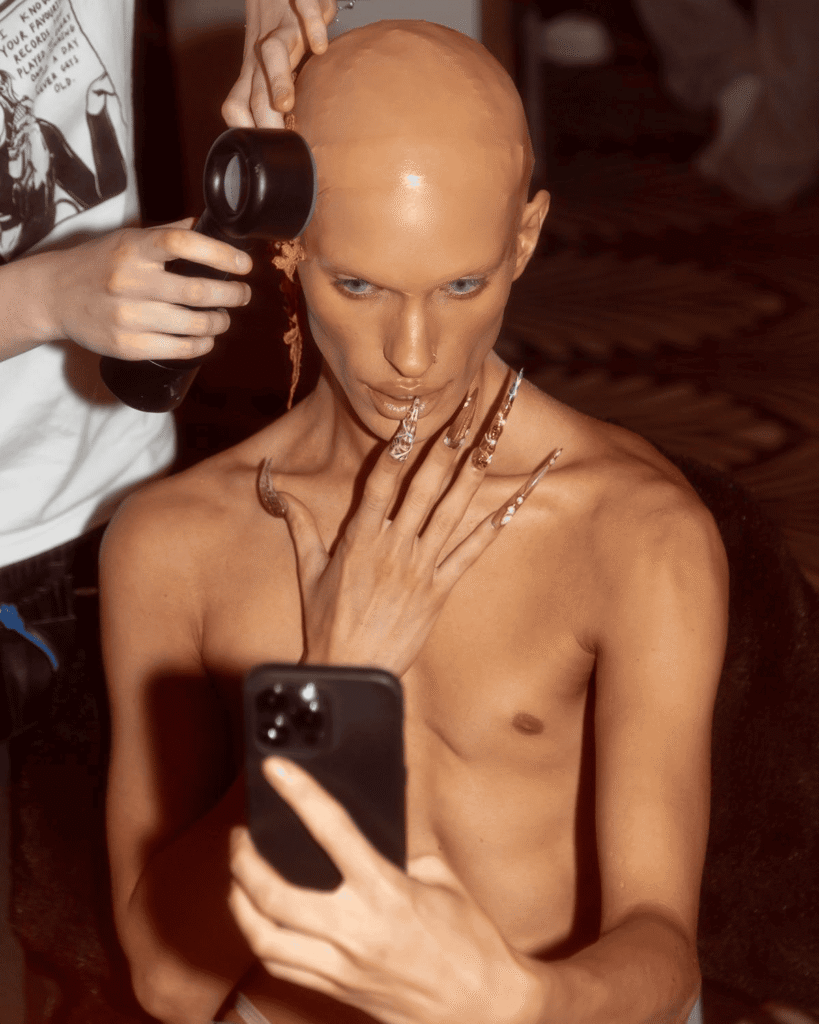
Part of the magic of getting lost in Berlin is that no one’s on their phone. With a bit of luck, it’s not because they’ve misplaced it along with their keys, marbles and sense of time and space. It’s because German club culture has been synonymous with camera bans for at least two decades, long before the advent of smartphones and mass surveillance.
Five years ago, only a handful of techno clubs had that dark, mystic void after the point where the queue reached the entrance. Now, it’s 2026: the year of analogue. London is following in Berlin’s footsteps, with no-photography and no-phone policies at FOLD, fabric, Lost, playbody, Palais, Farrago and Mascara Parties.
“A city should be allowed to have its secrets,’’ the East London club collective playbody told Cold.
In 2010, Berghain was among the first to whack stickers on visitors’ phone cameras, having already prohibited photography when it opened in 2004. Ninety per cent of Berlin clubs now enforce the policy, from KitKatClub to Sisyphos. The origins can be found in the German “right to one’s own image” law, which makes it illegal to take or publish photos of people without permission. The ban gives guests the freedom to strip off their latex and slip into the darkroom without fear of their privacy being invaded. What happens in the club stays in the club. It upholds the sanctity and mystery of the dance floor as a space for personal experimentation in a techno scene that exploded after the fall of the Berlin Wall in 1989.
Photography bans have roots in sex-positive queer nightlife – indeed, Berghain’s predecessor Ostgut was a men-only sex club. In the play party scene, leaving smartphones in the cloakroom is nothing new (lest a voyeur surreptitiously films a porno). And in countries like Georgia, Iran and Russia, where the LGBTQ+ community is stripped of rights, such rules have not only long kept the dance floor raw, but have been indispensable to its survival.

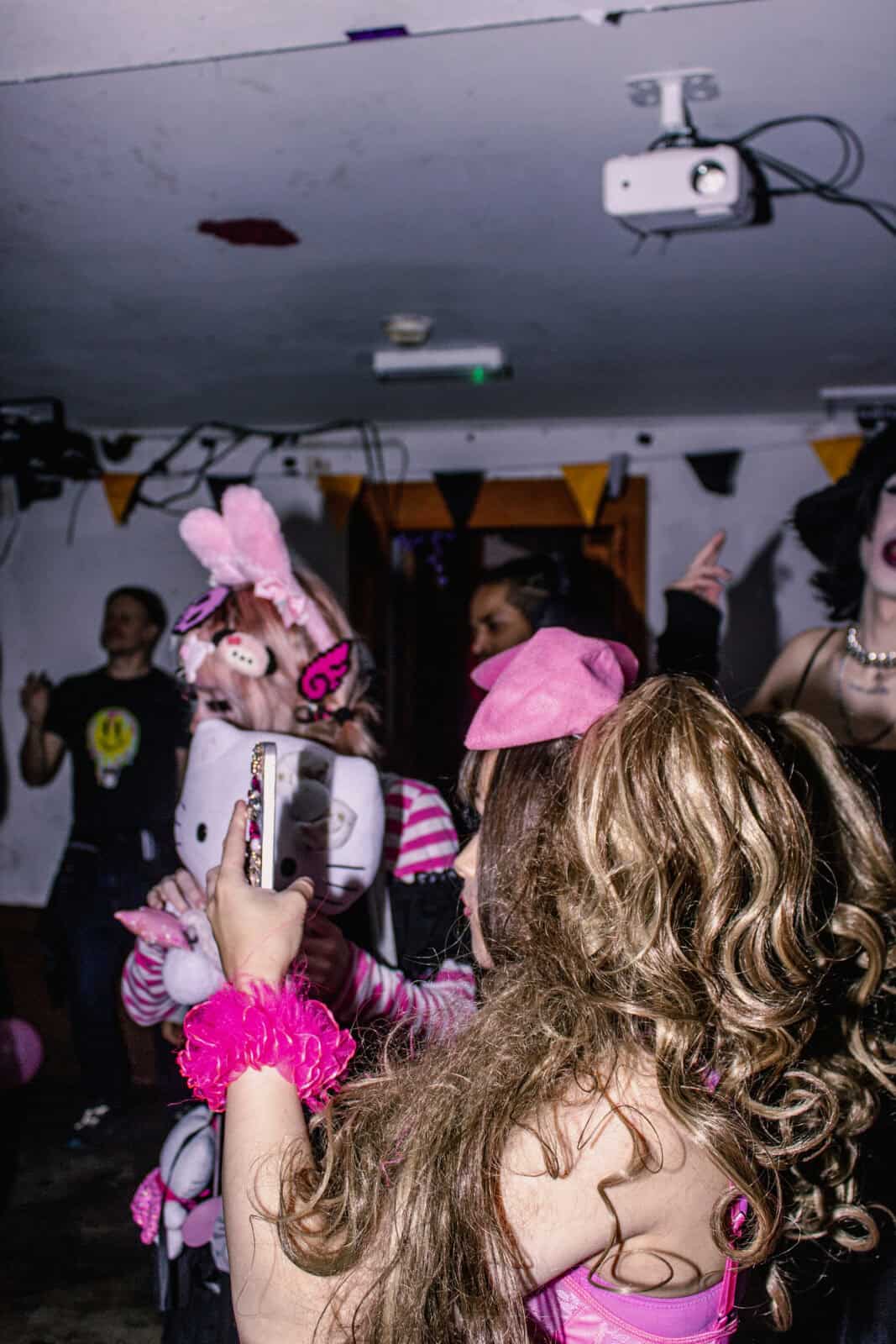
In mainstream London nightlife, however, it’s relatively new. When FOLD opened in 2018, it introduced Berlin-style phone stickers, then fabric followed suit in 2021. Lost nightclub took it a step further by locking phones in Yondr pouches when it opened last October, sparking a trend – indicative that society has plunged even deeper into social media dependency. While we grown-ups find pouches liberating, today’s schoolchildren (who were born with a phone in their hand) feel the opposite. Yondr made headlines in April for sparking outcry among pupils whose schools implemented this lock-away method, including a PowerPoint presentation claiming it breached their human rights.
“Phones have fundamentally changed live performances,” Yondr writes on its website. “Artists look out on a sea of smartphones instead of faces, and audiences are busy recording rather than truly engaging.”
It’s not limited to clubs. A Mayfair restaurant called Punk Royale locks diners’ phones in a box so they can enjoy a 20-course fine-dining experience uninterrupted. The French House, a pub in Soho, discourages phones to encourage old-school, off-the-record mingling. I’ve never had my device swatted out of my hand at The French, and the practice is not embedded into some gimmicky marketing campaign – there’s simply an implicit expectation that if you choose to be there, you won’t be lame (take notes).
The same magic is in the air at camping festivals everywhere, albeit by accident. By day two, everyone’s phone battery is dead. No one bothers to hunt down a charging station because there’s no signal, and your friends promised to meet at the tent at 6pm anyway. The digital detox and unbridled human connection in those immersive, summery fields is the feeling these club nights hope to channel.
Painstakingly capturing the perfect 10-second clip of the beat dropping for the sake of saving the memory in your phone for later is officially out of vogue. For those who know it, here’s a round-up of nightlife where you’ll meet dancers living in the moment.
Lost nightclub, W1
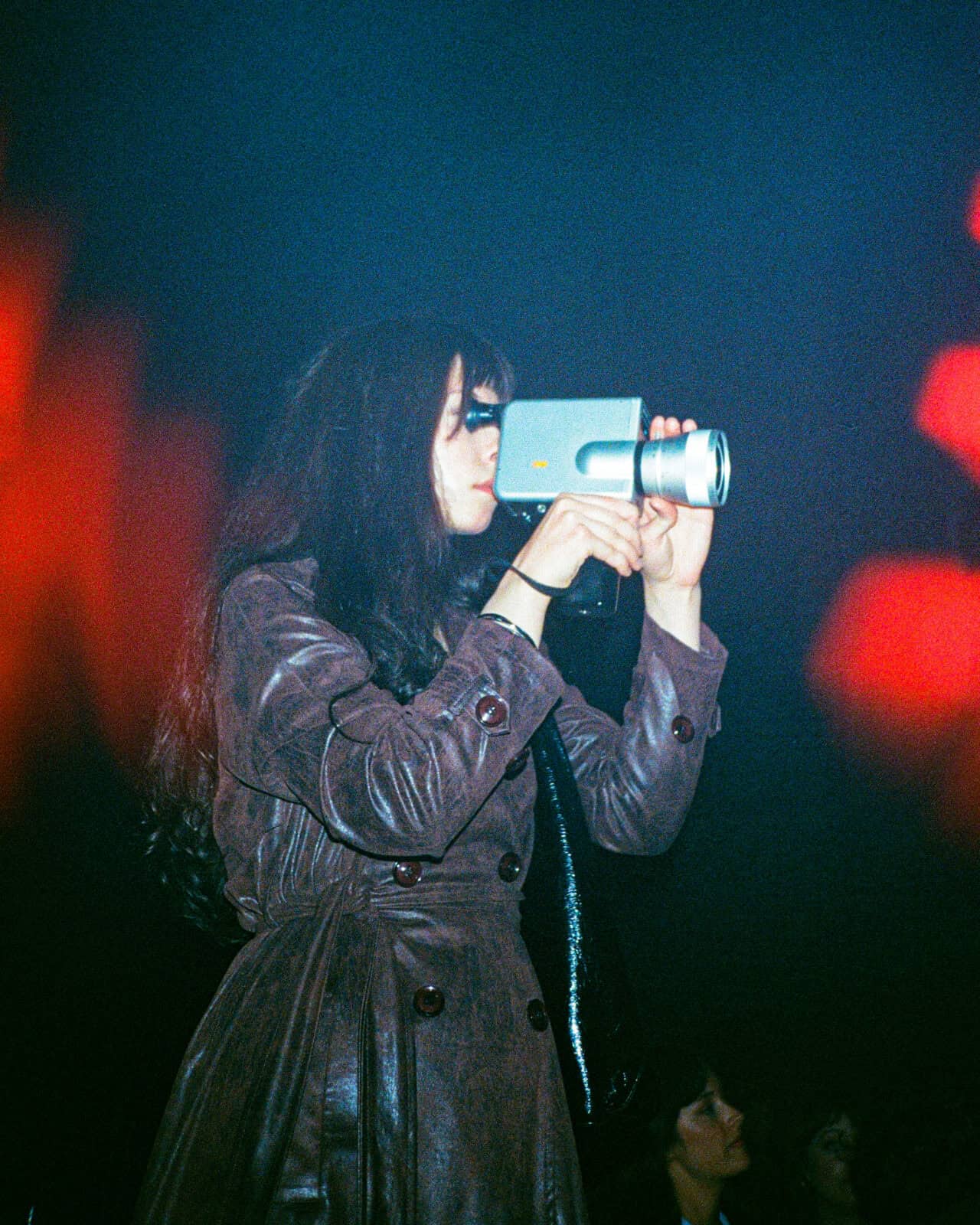
Opened in October, the cinema-jazz-bar-nightclub began as a mysterious space for artists, spread by word of mouth. The £30 nights are curated, the films have hints of soft porn and thriller, and the performers are kept a secret until you see their names written in chalk on the blackboard inside.
It was meant to close down at the end of December then got a five-month extension. Now, it’s departing the Saville Theatre for real at the end of May. “We have found our next building,” Lost wrote on social media. “We would like to build it with you.”
softclub by playbody, Dalston
playbody studio, the design practice behind the playbody club night and the recently opened Dalston social space, STÜCK, prioritises “radical human connection”. Phones have been stickered since the 2023 launch. “Things that happen at playbody aren’t meant to be documented in that way – it’s our responsibility to create an environment in which people are safe from overexposure online,” playbody told Cold.
This year, the collective launched softclub: a monthly Sunday daytime gathering for clubbers who want a chill one. It’s held at its new social space, STÜCK, opened in Dalston together with BDSM club Klub Verboten. Built around ambient music, thoughtful curation and slower social rituals, softclub brings playbody’s body-centred design practice into a setting designed for conversation and collective presence.
“People that come to our places are pioneers that long for being playful, open and connected,” playbody told Cold.
The next softclub is on Sunday, June 14.

Palais, Peckham
Palais opened its doors in February this year, delivered by the team behind Night Tales, Hackney. After Corsica Studios was forced to close in March, this venue with a 6am license is a big win for South London. Upstairs is a 1970s-style cocktail bar, and downstairs is a 500-capacity no-phone basement with mandatory stickers over cameras.
The building was originally a 19th century department store, then was a dubstep and techno club in the noughties before getting abandoned for 12 years. During that time, it got squatted and fell into serious disrepair. Nonetheless, the new owners kept most of the layout intact to pay homage to the previous generation.
FOLD, Canning Town
An article about Berlin-inspired club culture can’t miss out FOLD. It opened in 2018 in a disused factory as one of the few clubs with a 24-hour license, and often prioritises booking DJs who are resident at Berlin clubs. Phone stickers protect the immersive in-the-moment experience, privacy and freedom.
FOLD describes itself as an artist-led, community-driven nightclub and arts space committed to building – and protecting – safer spaces for all. UnFOLD every other Sunday from 2pm to midnight is a day-rave ritual in queer nightlife.
Farrago, Bread & Butter Lounge, Shoreditch
Farrago is a creative collective of friends hosting midweek “house parties”. Like Lost, in January 2026 Farrago introduced Yondr pouches. It describes itself as “not a gig, not a club; something in between, and better than both”, with grassroots performers like live painters, tarot readers, magicians and dancers.
“The hardest part is replacing the phone’s place in everyone’s attention,” Farrago founder Alan Hughes-Hallett told Cold. “The moment you walk in, instead of reaching for your phone, you’re handed an icebreaker game that nudges you to meet someone.”
He added: “The phone policy isn’t the point; it’s what it makes possible. We do this because we think being present is the whole point. No one’s filming, no one’s half-there. What we’ve found is that the room gets warmer, conversations go deeper, and people actually leave with new friends.”
The next event is May 27.
Mascara Parties at Mascara Bar, Stoke Newington
Mascara Bar, an Irish pub in Stoke Newington, is hosting a series of live music gigs headlined by the Exeter-born, Brighton-based alt-rock, atmospheric band Die Twice. The bouncers give guests a camera sticker. “I guess people can hide behind technology if feeling awkward or bored,” Die Twice told Cold. “So we wanted to strip away the comfort blankets we all use, and be present.”
The third and final edition is on May 22.
fabric, Farringdon
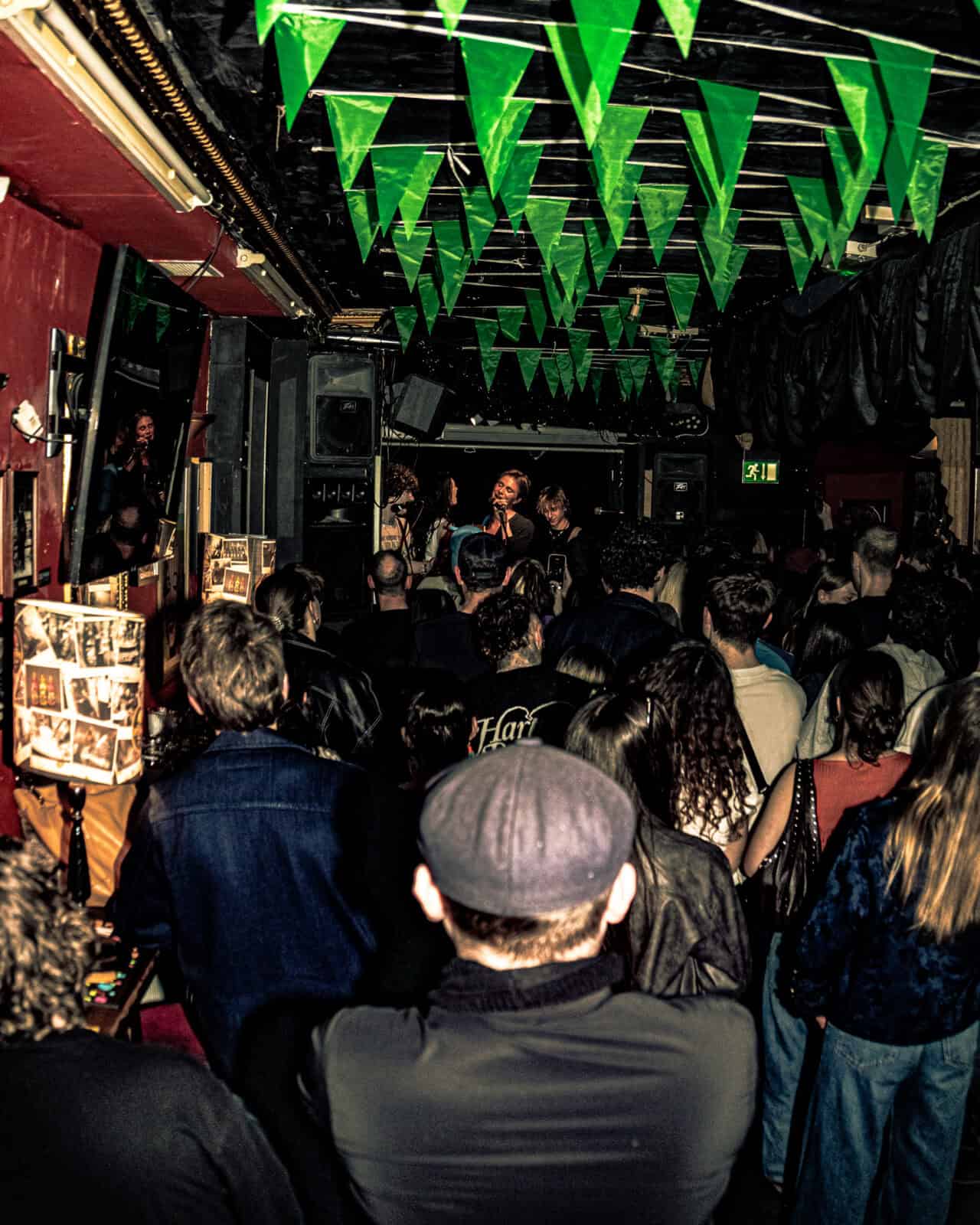
Back in 2021, fabric was one of the first in London to ban unauthorised phone photos and videos. An editorial on the club’s website recalls how times have changed since it first opened in 1999, back when Nokia 3210 was king. Twenty-seven years later, no one cares about your high score on Snake anymore.
The co-founder Cameron Leslie said: “Fabric has always had a no camera policy, but as camera phones proliferated that became harder to enforce and we got a bit lax about it.”
The White Hotel and Amber’s, Manchester
Further afield, The White Hotel is perhaps Manchester’s most well known no-photos nightclub. The venue takes the policy so seriously that they have been known to request that magazine articles be deleted for featuring photography from inside.
Amber’s in Manchester is a 1000-capacity club that opened in 2024. Like Lost, it’s a multi-room space with an unannounced lineup and a total ban on filming and photography.


