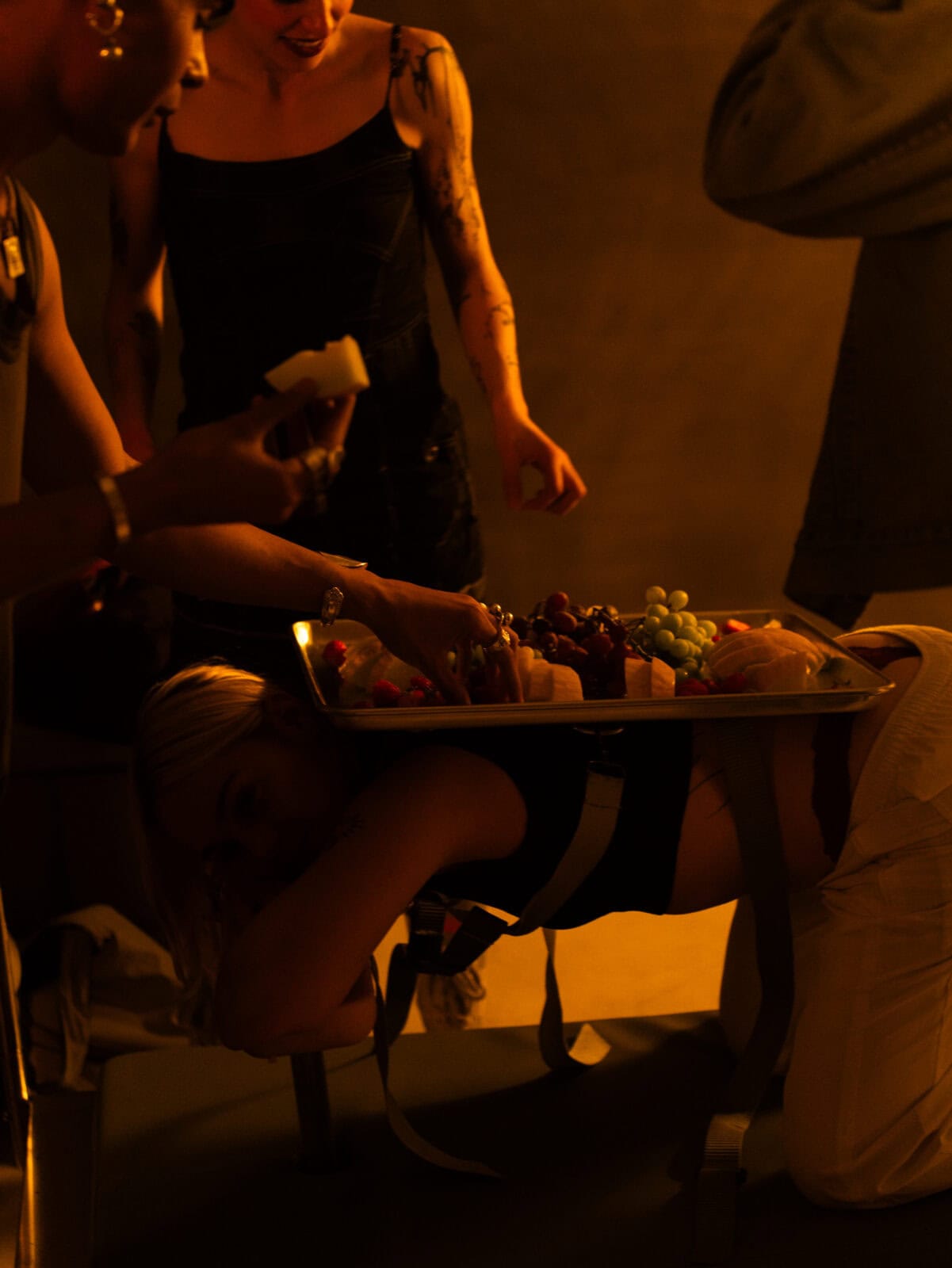
A woman in latex on all fours has a fruit platter balanced on her back and is being wheeled around on a trolley to the gentle beat of ambient music. I giggle and help myself to a juicy slice of melon. In a room as warm as a cannabis farm – but more sober – it’s a refreshing boost. I’m at softclub at STÜCK: Dalston’s new radical human connection HQ and third space.
STÜCK is a members’ club designed by the party collective playbody and co-run with the fetish club Klub Verboten. But you won’t be doing a line off anyone’s feet at this social and coworking space. It’s built for everyone chewed by heavy nightlife culture, providing an interim space for wellness between home, work and the club. I check out softclub, its monthly daytime gathering that’s a lighter alternative to the harder parties that birthed this community.
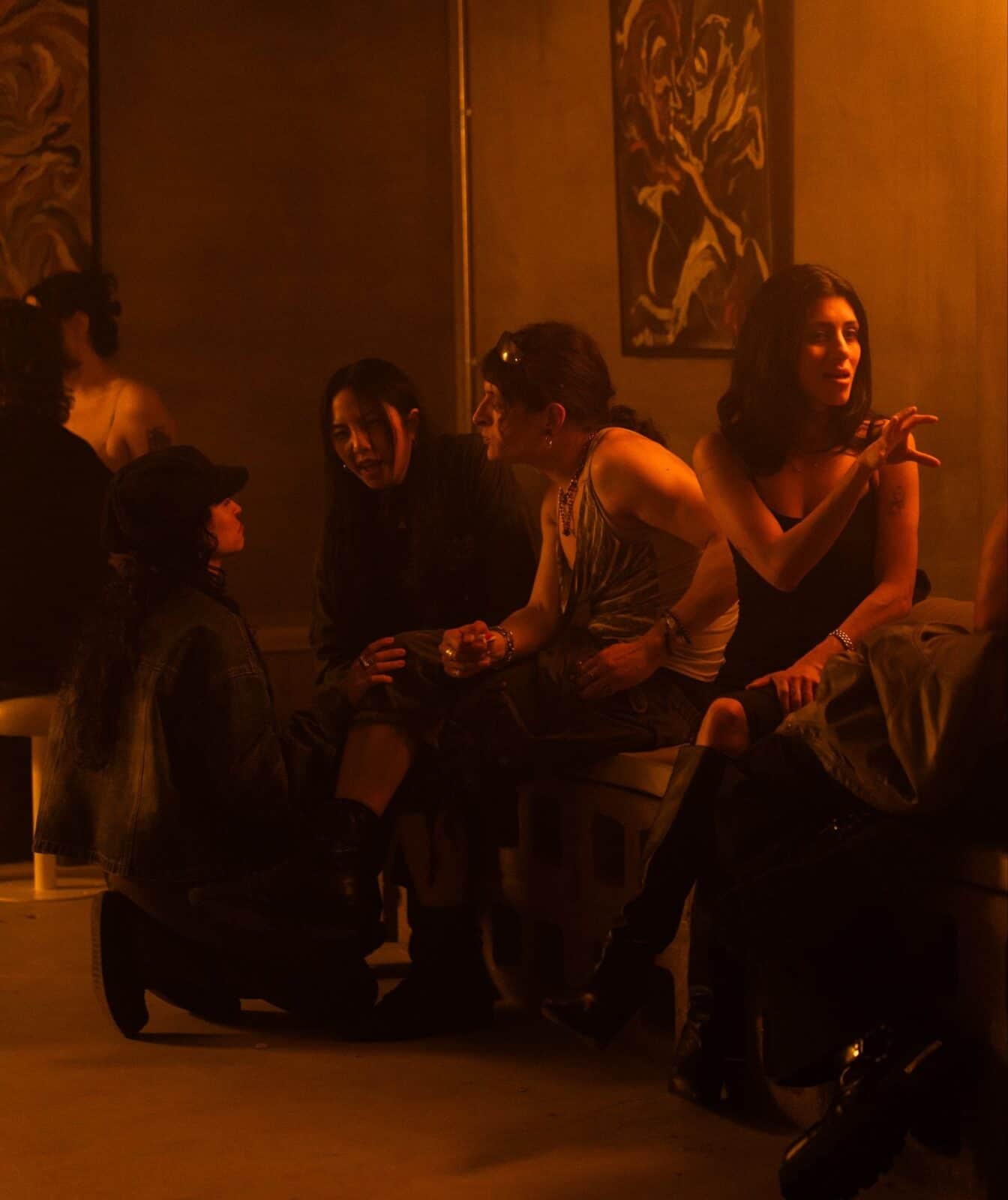
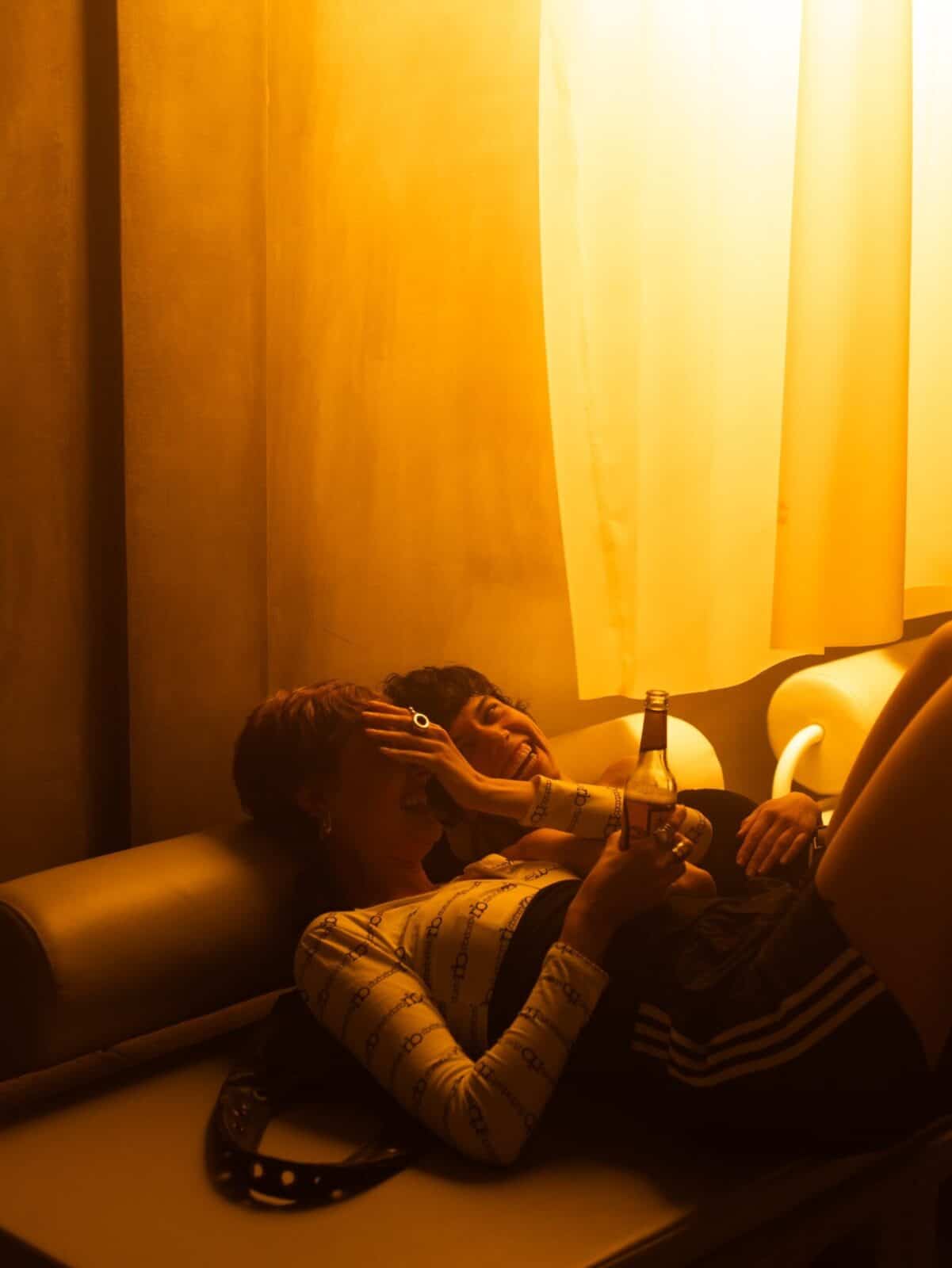
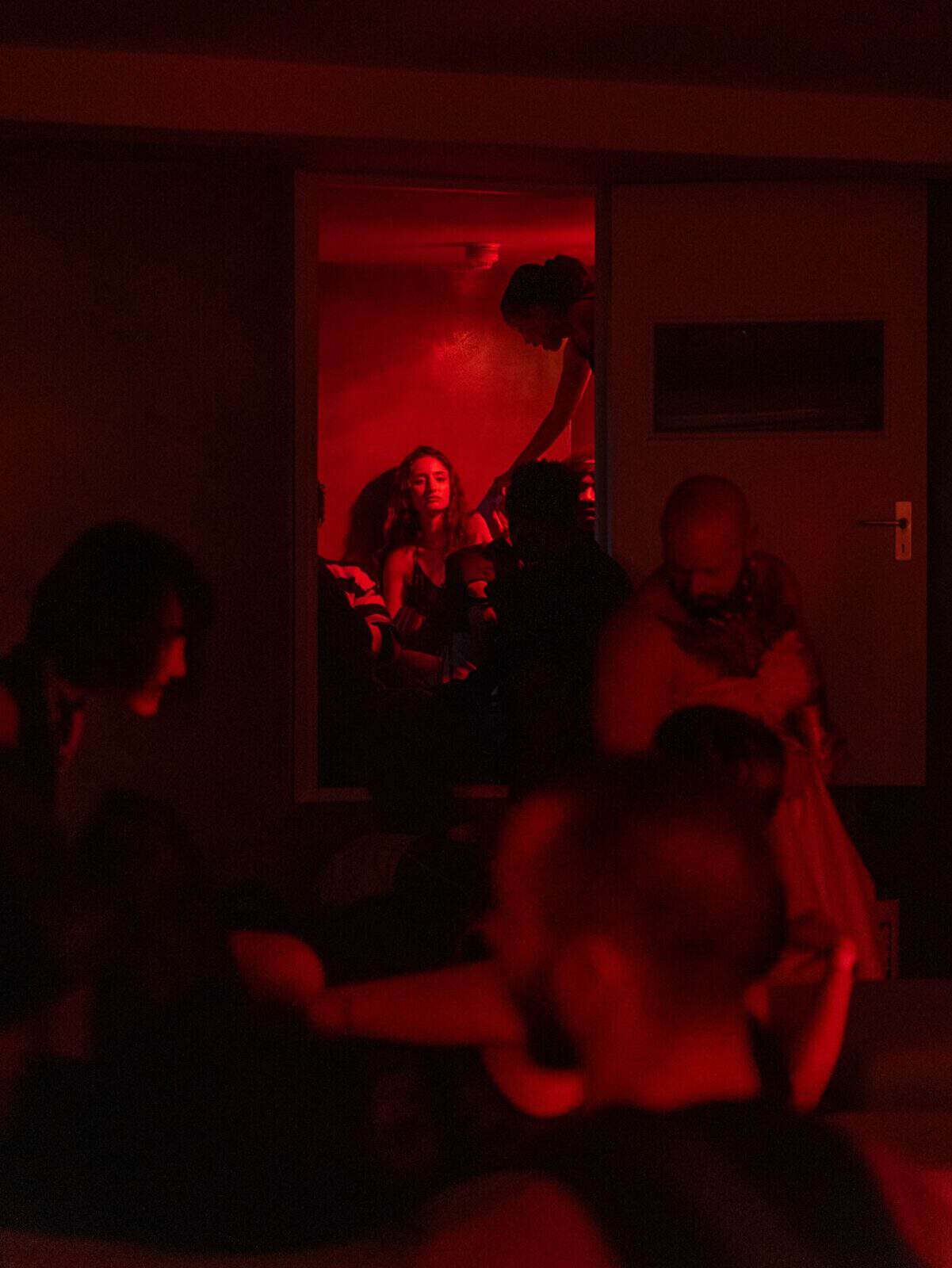
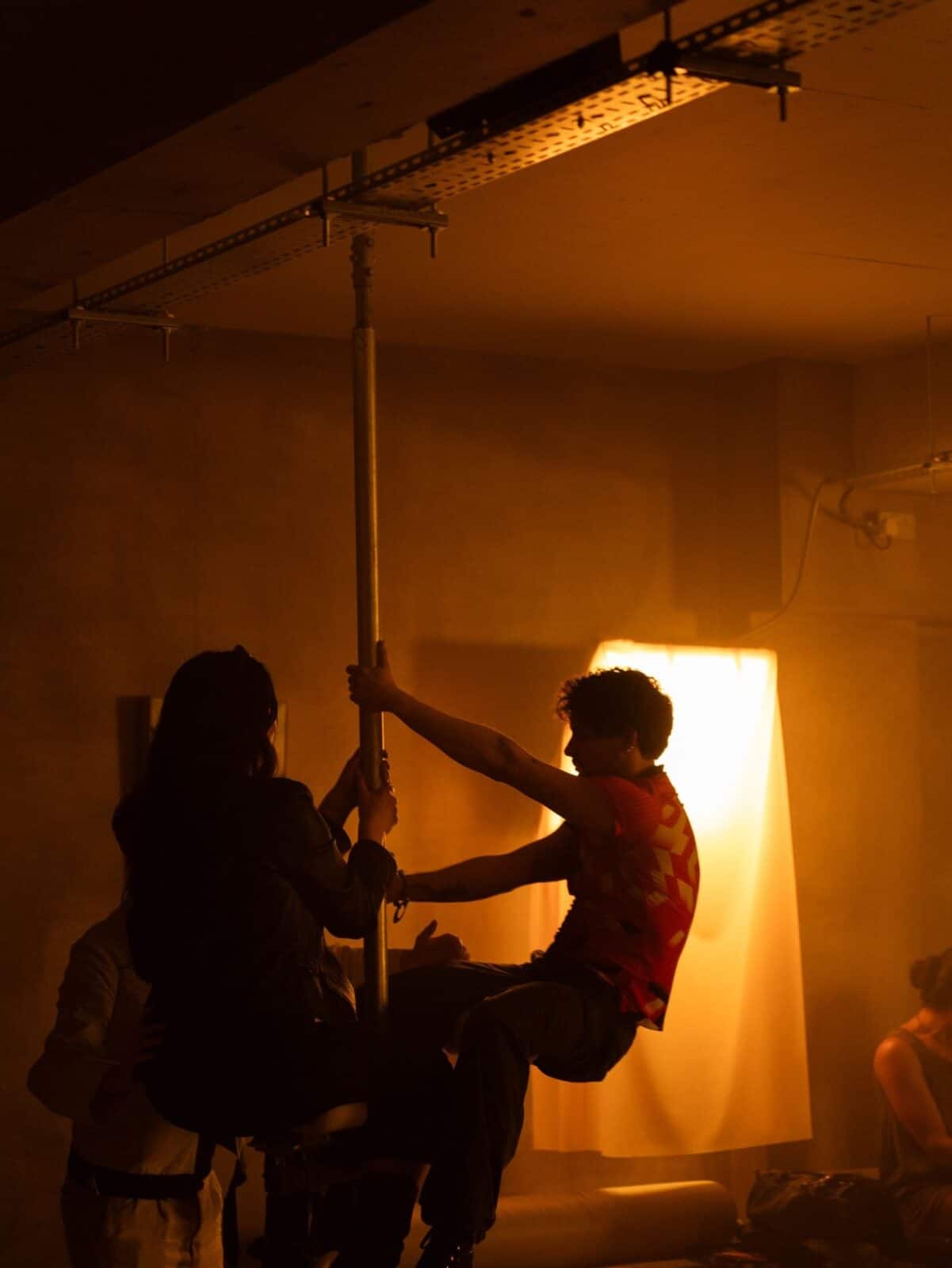
Arriving at softclub that Sunday, my first observation is that everyone is sexy, queer and bathed in dusky, red-orange light. Some devout club kids are rolling over from Saturday night, and others are fresh as a daisy. Photography is banned (but Alexander Ekholm is permitted to document it for Cold) and dress code applies: “Every single person plays a part in creating the atmosphere,” the team tells me. “We put in so much effort to create this space for you – and then you’re gonna come with your white t-shirts? Just think about it.” You need a password to get in, which means the crowd is curated, protected and sitting down with a kombucha in a techno fit.
“Soft clubbing” was coined in 2025 by the Substacker Yusuf Ntahilaja to describe “the desire to experience a curated sonic atmosphere without being confined to a traditional event space, let alone a full-on club experience.” Parties haven’t disappeared, but are evolving alongside a change in mindset: we don’t have to crawl home dehydrated from a crusty afters to put on a gaggy fit, shake our hips, make friends and chase that same musical chemistry. We can be hedonistic and healthy at the same time. But soft clubbing is not exactly new. The concept broke into the public eye with Morning Gloryville in 2013, who pioneered sober, early-morning wellness raves in London to prove that a state of ecstasy can come from music and atmosphere alone.
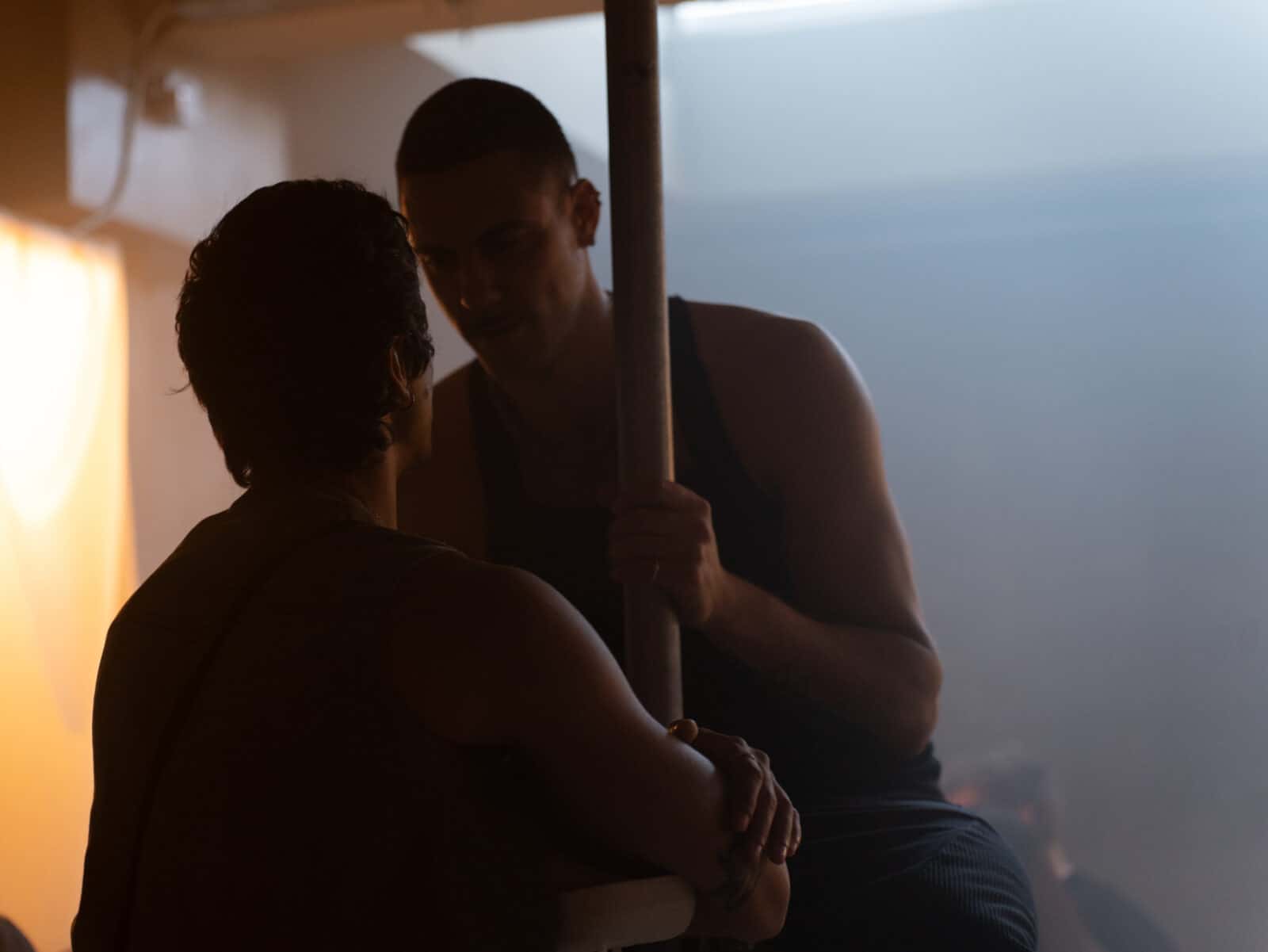
This is a common thread running through my conversations. At softclub, the music is quieter. People can hear each other. No alcohol is served at the bar. It’s a slower social ritual. It’s the same club kids but cranked down to half speed. You are welcome to BYOB, which the bartender, Jules P, notices people do with the intention of tenderly offering someone a glass as a way of connecting.
playbody, at its core, is a design studio. Every metre of STÜCK’s cast concrete and aluminum structures has been conceptualised with human connection in mind. “The whole party is about connection,” the team explains. “Spatial design is used as a vehicle to help humans do that, essentially.” Its day raves at the sun-drenched Algha’s Plantroom in Hackney Wick since 2023 were just the first iteration of this. “The ethos always stays the same, but you could apply it to a myriad of situations, spaces and ideas. We’re exploring how architecture and sound can shape social behaviour.”
Play is everywhere. There’s a playground with a silicone merry-go-round and scaffolds to climb, swing, spin, chat and dance on. Connection cards with prompts to introduce yourself to strangers are handed out. playbody likens its events to foreplay: “It’s almost bordering on sex. It’s like foreplay, essentially, the entire thing. The tension in between that point and actually having sex is the most exciting bit. And that’s where we sit.” We chat about the delight of play as grown-ups, whether it’s climbing a tree or being silly with a friend or lover.
For comparison, I check out playbody’s (more psychoactive and loud) day rave in an industrial building in Hackney Wick during a heatwave. It starts at 2pm at Algha’s Plantroom, a queer cultural venue currently fundraising to secure its future.
It’s said that the bulbous silicone structures are designed for human connection, so I put it to the test. There’s a new one hidden under a cloth, which is unveiled in a darkly euphoric fashion show with Liza Keane: a subversive designer of sensual second skins and psychological armour who I randomly met once at a sushi birthday years ago and fancied her sister. It’s a swing that two people can mount like a dragon or rocking horse. The grand reveal is completed by a playbody team member playing electric guitar on it, then I rush to ride it with a fleeting flame. The club also has scaffolds that two people can stand on, allowing you to lock eyes and dance together.
“The queer scene turns the idea of a party on its head – it’s community,” the playbody team says. “It’s everybody knowing each other, it’s them looking out for each other. People need that now more than ever.”
It seems a truism that we can have a raging social life while also choosing wellness, but until recently it wasn’t so obvious. For many millennials, spending their twenties in a drinking culture where a pint was the inescapable default social lubricant took a heavy toll. To decline made you weird, rude or boring. Gen Z, who brought therapy speak like “boundaries” into everyday language, are unafraid to turn down splitting a bottle (even if they can afford it). When it comes to alcohol (but admittedly not other substances), Gen Z is the most sober on record.
The desire for intentional, curated IRL experiences has prevailed, giving rise to third spaces like STÜCK. Iconic queer art rave Inferno, too, hosted its first community social last week to create a “softer space for queer and trans people to connect outside of nightlife”. Nowadays, cacao ceremonies and ecstatic dance are popular alternatives to conventional nightlife, in Parisian bakeries you can dance to DJ sets surrounded by pastries, and in New York you can get naked at a sauna dance party.
The next softclub is on Sunday, July 12. Each one adds something new: “I don’t think it will ever be complete,” they tell me. “I think the whole ethos of Playbody is that everything’s always building, evolving, experimenting.”