
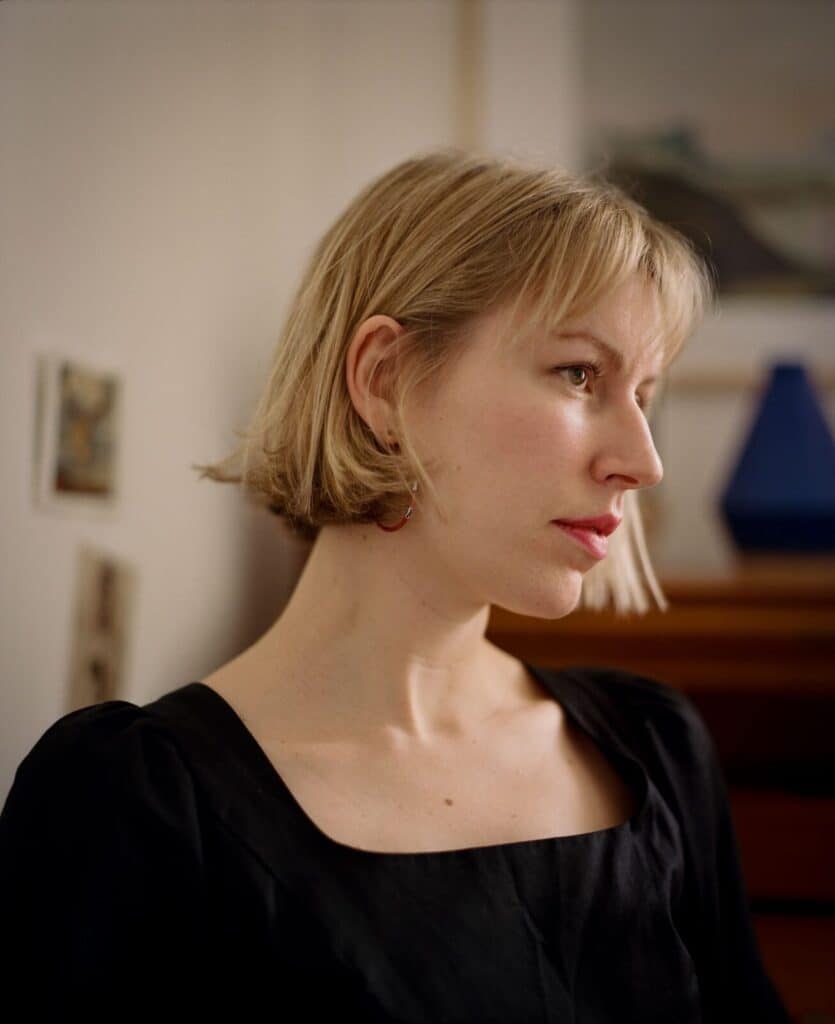
Sophie Mackintosh is an award-winning writer whose novels have been nominated for the Man Booker Prize and the Women’s Prize for Fiction. In 2023, she was named one of Granta’s Best Young British Novelists. The visual imagery and themes of girlhood in her first novel, The Water Cure, drew comparisons to the dreamy, atmospheric work of filmmaker Sofia Coppola.
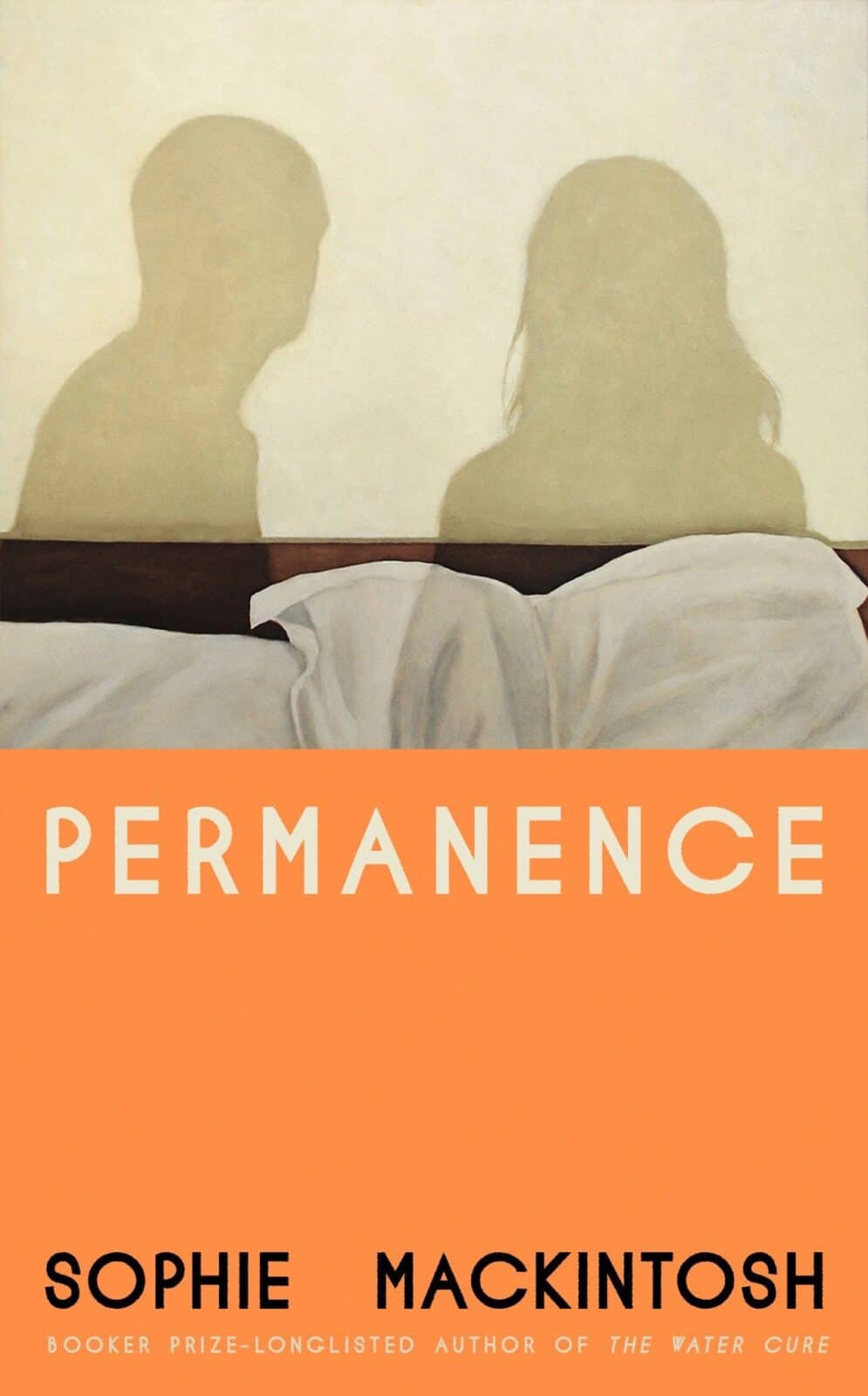
I had the pleasure of speaking with Sophie Mackintosh in advance of the release of her fourth novel, Permanence, an exploration of the liminal spaces affairs exist in. One day, lovers Clara and Francis wake up in a room they don’t recognize in a town they have no connection to. What could be paradise could also be much more sinister. This novel centers around two characters, but this odd geographical placement feels like a character as well. The city they inhabit is dependent on their health, and vice versa, like a parasitic relationship, or perhaps any dynamic that requires care and intention.
Sophie and I spoke about the idea of forgiveness as a perpetual commitment, how far humans will go for connection, and how to live when desire is your belief system. I left the conversation like I left her book, feeling like I had a deeper understanding of humanity.
The Cold Magazine (CM): In this book and others, I’m struck by how much of a gentle observer of life you are. You have this rare ability to be incisive and thought-provoking while formulating sentences that read with such ease. Through restraint you are able to explore humanity. Does this resonate?
Sophie Mackintosh (SM): I think so. I think especially in this novel I’m really interested in the little things we might miss, the little ways that we show care to one another. I’m texture oriented. It’s funny because sometimes I read back on my writing and it feels a little bit – not overdone, but quite lush. I think that the quality of zooming in on things and choosing what to focus on feels important to me as a writer.
CM: Absolutely. I think that translates. I do really pick up on your characters’ restraint. They will be feeling such strong emotions, but then can’t fully articulate the feeling.
SM: I have to take out a lot of crying. Sometimes my editor is like “more crying?” and I’m like “yes!” You know, I’m a crier, my characters are criers, but I like reigning it in and having characters act in ways that are mysterious to us as readers. So sometimes taking out the crying is useful.
CM: In Permanence especially, Clara and Francis mystified me as a reader. How did these two characters come to you? I’ve heard authors say they were doing the dishes and all of a sudden, their character was standing next to them.
SM: I would actually love that. It’s definitely more a process of iteration and really consciously thinking about who I want them to be and how can I make them less insufferable or more engaging. I feel very fond of my characters. I definitely have the kernel of them that feels quite fully formed, but I like the process of spending time with them and developing them. I think I need that time with them, seeing how they react in different situations. It sounds silly because I’m literally writing them, but I feel like you’re kind of learning stuff about them as you write. You do feel like you carry them with you even when the story or the novel has been finished. It’s funny because when I finished this book I felt so bereft. I really felt for the characters and missed them when I wasn’t writing the novel. It’s taken up so much of my time. In a way, anything else I had to do was so inconvenient. I just wanted to go back to the world. I definitely have that with all my novels I think but this one more than others maybe.
CM: And the same way you kept coming back to the characters, Clara and Francis keep coming back to each other throughout the novel, but they have to forgive so much. Forgiveness is this perpetual commitment.
SM: I love the idea that it’s a perpetual commitment. I feel like their entire relationship is this kind of process of imagining and remembering and making. It feels a lot more active than in a relationship that is out in the open where we can go about our days and buy the milk and hang out with extended social circles. Because their relationship is hidden, they’re constantly in this process of working at it, engaged in this active commitment. I really like how you’ve put that.
CM: They’re world-building together. Every small thing is so exciting. It’s so sacred in a way that maybe outside of those constraints it wouldn’t be. They’re like children, playing and making this fantasy world.
SM: The world building of all relationships is that you’re spinning something out of hope. That was something I really wanted to capture in a more literal sense. At the same time, I really like what you said there about there being a kind of sacredness of this enclosed world. That was something I wanted to capture too. The beauty of something secret. Sometimes it is beautiful to have a secret, to create something that no one else can see or take away from you but at the same time that can become stifling. I’ve thought of the city as existing in a snow globe. It’s something you can’t access.
CM: In most stories, adulterers aren’t someone we’re rooting for, but I’ve never read a book about an affair that was so full of care.
SM: That sense of care was really important to me because I didn’t want to moralise moments and I didn’t want it to be a straightforward story. There was a time when I was thinking they would end up together and I experimented with that in some different endings too. I even went through a phase where I was like maybe there could be like three different endings. Maybe we pick the one we like best. I guess it flipped the novel from being a novel about love and an affair – which it still is – but it’s also about that question of how much harm are we willing to put up with? How do we live with integrity in the world? What if it’s more important to put our own self first?
CM: Speaking of world-building, your novel is split between two major settings: the “real” world and this liminal “other” city. Did you have a different writing environment for when you were writing each section?
SM: I pretty much wrote it all at various desks but I didn’t really differentiate between the two. I felt like the flow between the two was fairly consistent; I didn’t feel it was like a kind of hard break. I did find myself sometimes really impatient to get back to the other city because it was just so much – not that it was more fun to write but it was something about really getting sucked up in that space of imagination. It was actually just the act of imagining that I found really beautiful in the creation of this novel. I’ve loved writing all my novels but I think because this one was so immersive, it was just a really great experience.
CM: Your last novel was 2023’s Cursed Bread, a historical fiction novel set in a French village. Permanence is very different in that it’s set in contemporary times, and has this speculative fiction quality. What inspired the genre shift, and how would you categorise Permanence?
SM: I think I would call it a love story, maybe a speculative love story. I’ve never really written about the modern world as we know it in a novel before so it was funny being like “okay, phones. Cool.” I don’t think I’ve ever put a mobile phone or the internet in a novel before. I was like, why would I? because I’m dealing with that stuff all the time.
I found it really freeing with this one because I didn’t feel the need to explain the other city. In really early drafts as I was fleshing out the concept, I was like, do I need to explain it? Does it need to be like a real city? Is there some kind of special journey you take? I was making it very complicated and then I thought: what if it just exists? What if they just find themselves there and then the responsibility is on me as the writer to make it compelling enough.
There were obviously some baseline rules in terms of how time works, but those things are so tied to what is happening in a real relationship that again it kind of fell into its own logic. That was a relief because I feel like with writing a more speculative novel in a traditional way, you’re trying to figure out what to explain. So maybe I would say it’s also magic realism because that feels softer than speculative or sci-fi, but a love story would be my favorite way to put it.
CM: I like your choice to not name the other city, this liminal space where Clara and Francis find themselves stuck in. I think I have my own vision of where I think it could be.
SM: I hope readers bring their own vision of the city to it when they read it. I think it’s just a composite of so many places I’ve seen or even never been to but just have an idea of. It’s a city of whatever the reader needs it to be.
CM: Clara and Francis, of course, are secret lovers. So much of their relationship has been about stealing away from their respective lives, and they take great care to leave no trace of their relationship behind. Throughout their journey, they have to choose between remaining in the other city forever or intentionally cutting each other. I’m interested in these themes of harm in relationships, and also of marking another person. What made you want to tackle these ideas?
SM: That’s a really good question. I think it kind of comes back to the idea of forgiveness that you’re talking about as well and how that ties into the idea of harm. How much harm can they forgive the other and how much harm is acceptable? I think within the parameters of this world, and I guess in a larger context of relationships generally, a degree of harm is inevitable.
There’s a generosity in forgiving someone, and there’s cruelty in causing someone harm even if you don’t always mean to do so. They’re really testing out the limits with each other. Definitely the city’s playing with them, but they’re playing with the rules themselves too.
I’m always really interested in petri dishes as well, worlds that are petri dishes. In my first novel, The Water Cure, it had a family secluded on an island with their own systems of belief, and this [novel] is two people secluded in a relationship which is its own little world. The systems that work within this become warped and there are actually real elemental effects on the world and on themselves.
CM: It seems like cults or mass hysteria are a throughline across your works. What was your entry point to this as a theme?
SM: I don’t think I’m super interested in cults in a traditional sense but I think I’m interested in a pressure cooker environment and obsessiveness. I suppose that lends itself well to things like mass hysteria and a really enclosed family unit. I felt I could actually write a whole book of short stories about different couples in the city. I would love to go back to some of them. Maybe I will just for fun. These couples have renounced the world in favor of their love. I really enjoyed thinking about what happens when we put desire at the forefront of our life, when we make it a thing to live by.
CM: I was really rooting for Clara the whole time, while Francis was more difficult to root for. As a reader, I struggled with having equal empathy for both of them. Did you feel like you had equal empathy for them as you were writing them?
SM: I think so. I was tending to Clara because we follow her point of view more but also, Francis is in an impossible position. It’s really hard to love two people at the same time and I was thinking about how to not make him villainous. I’m not sure if I succeeded because some people are like “I’m so annoyed at Francis” and I was thinking “oh, I can totally see why Clara would be in love with this man.” I can see the complexity in their relationship but I can also see how it would be really hard for her to tear herself away from him and why the city continues to be compelling. Exploring those complexities is for me like where the story comes alive.
CM: Clara and Francis first meet each other at a museum, and paintings become an integral part of their relationship. Talk to me about this fictional “mouse and cherries” painting.
SM: It’s kind of a composite of various paintings. There’s an artist who’s called Clara Peeters and she painted still lives, and that was the main one. In her paintings are pretzels and cherries and fish and kind of everything mentioned basically in the picture, but I sort of took bits from each one. It was fun to imagine a made-up one as well. I wanted to do still life because of the focus of objects throughout the novel and how they function as containers or touch points. To Clara, it’s the painting she met Francis in front of. That’s what it’ll always be to her, it doesn’t matter about anything else and something about the lavishness of these still lives – gorgeous draperies and colors – it felt fitting as a beautiful object in itself that would act as a portal for them.
CM: Do you have a painting in your life that has the same draw to you?
SM: Above my desk, I’ve got a print of a self-portrait by Dorothea Tanning. I remember going to see it at a retrospective at the Tate, oh it must be like seven years ago now. I remember I’d been away for quite a while. I’d come back to town and I was working on Blue Ticket and I just remember going to see it. The Water Cure had come out the year before and I had a bit of a strange time personally. I remember coming back to London and feeling so discombobulated, then looking at this painting and feeling like my life is going to change. For some reason, I’ve held on to that painting as something that takes me back to that moment where everything was up ahead.
Sophie Mackintosh’s Permanence was published in the UK on April 2, 2026 by Hamish Hamilton.