
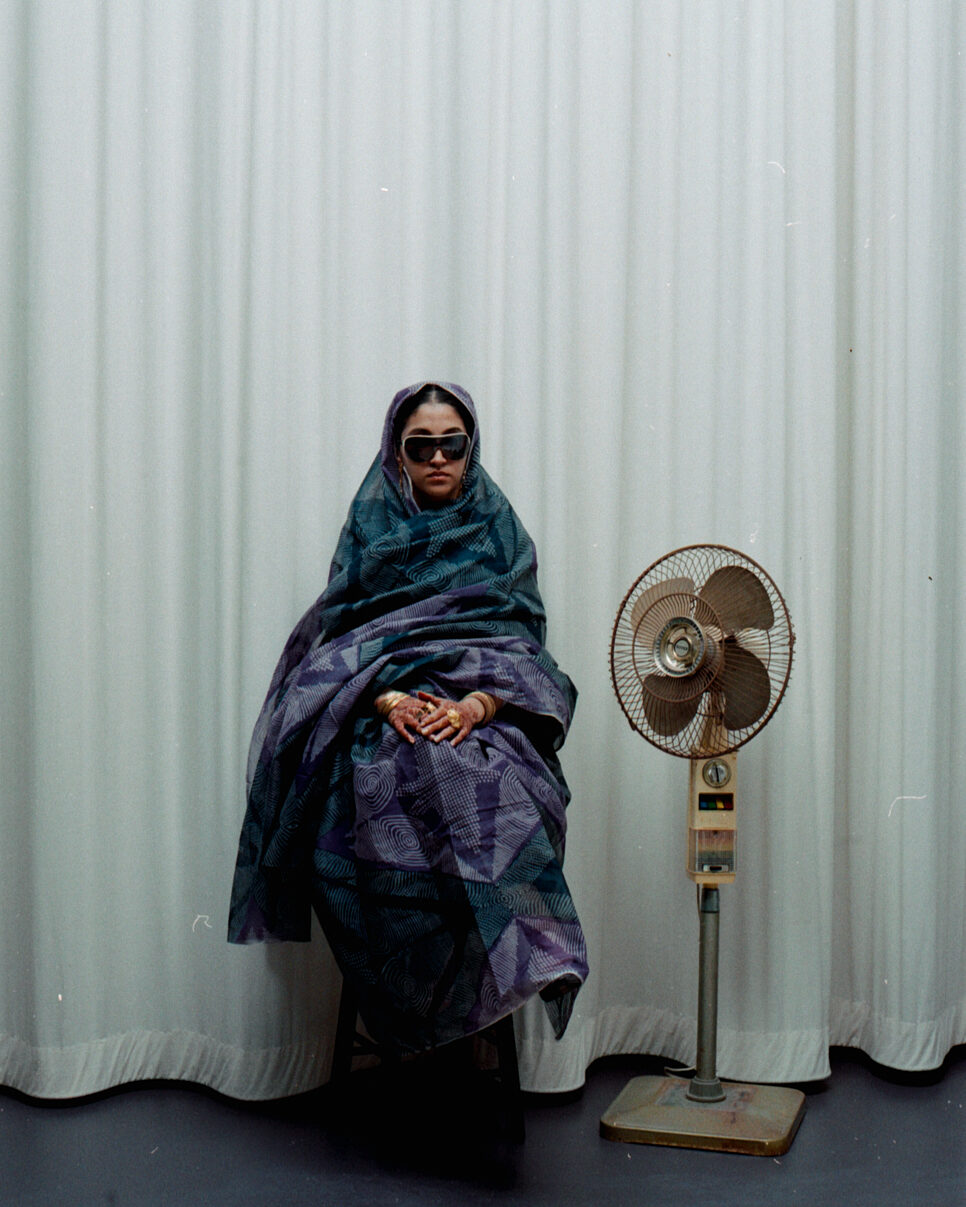
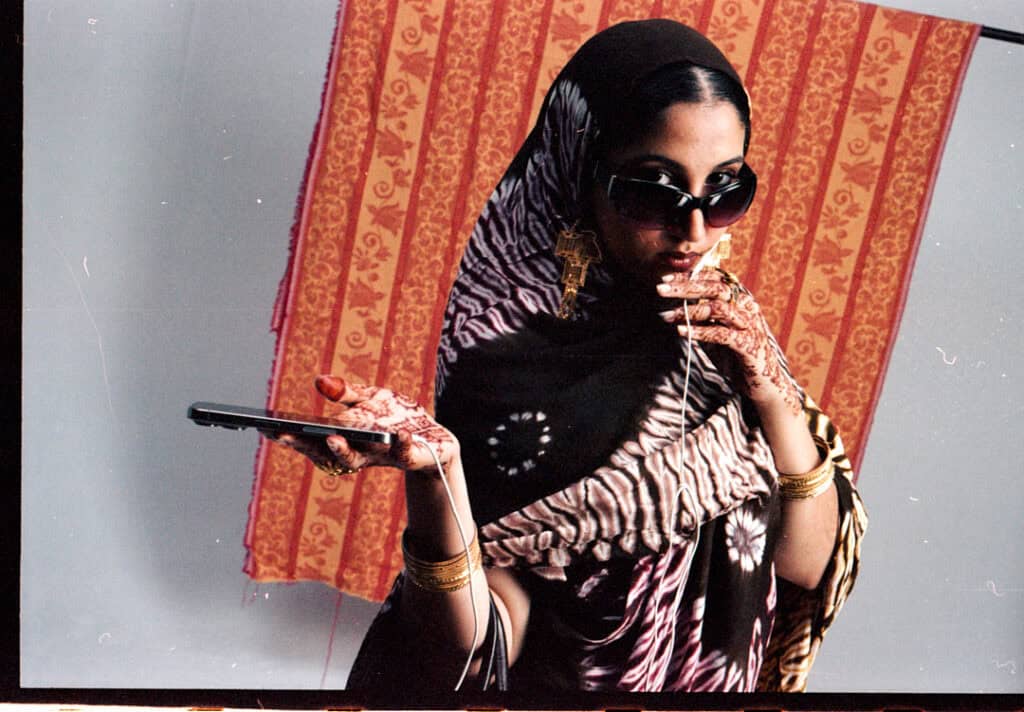
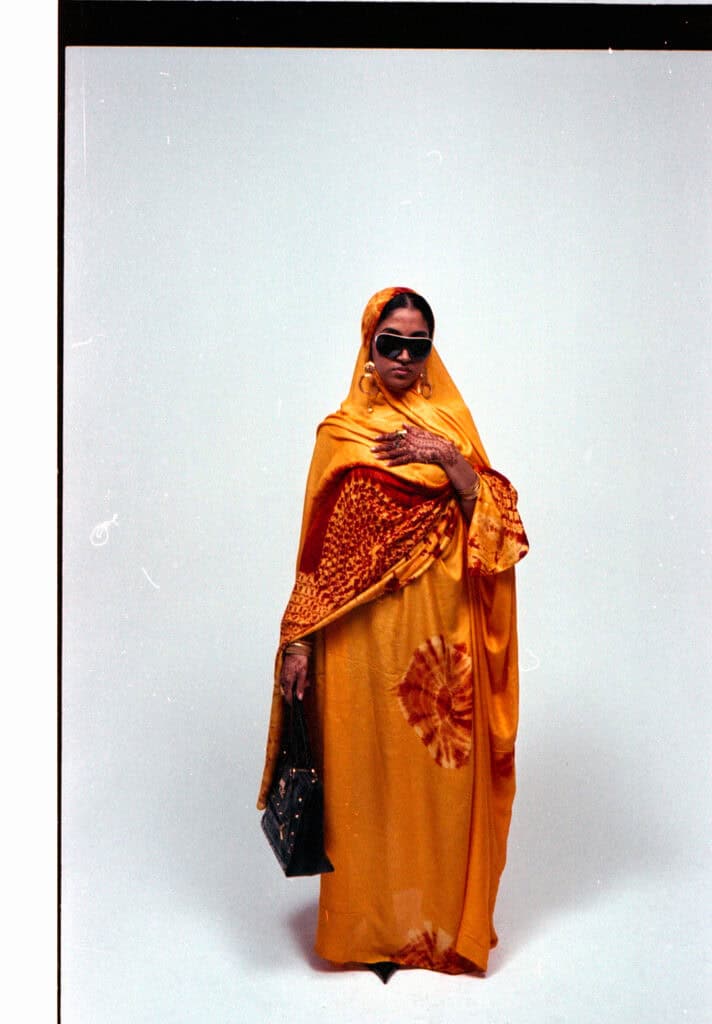
Salma Bensalim is a Paris-based artist exploring the hijab, looking at how it is embraced, worn and experimented with amongst women from different Muslim backgrounds. Having grown up in New York with a Moroccan heritage, Salma views wearing the hijab as intrinsic to her own identity. Whilst currently pursuing her MA in Fashion Studies at Parsons, Paris, her personal work involves archiving and curating. The Hijabi Archives, Salma’s first ever solo exhibition, aims to give a voice to hijabis and Muslim women.
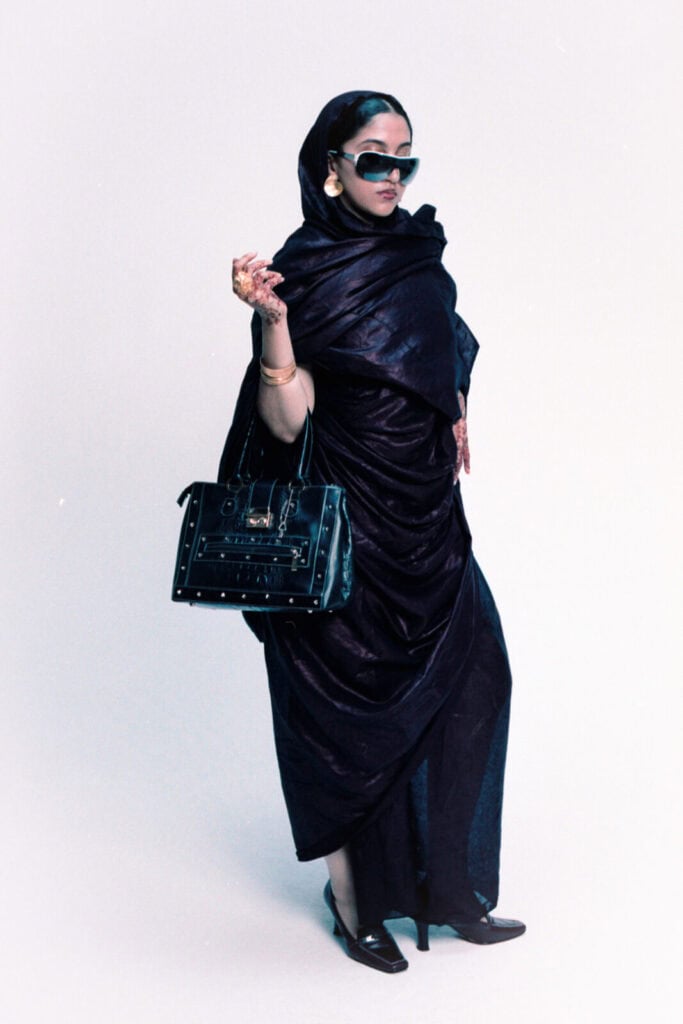
The exhibition positions the hijab within a dialogue of girlhood and identity expression. Salma reveals how Western discourses often paint the hijab as limiting, a tool in control and conformity. This project proves otherwise. It shows how central the hijab has been for women and girls in negotiating aspects of their own identity and faith whilst also providing a space to express themselves – as with any other form of fashion. Moving away from the rhetoric that modesty dressing can only be oppressive, Salma’s ongoing and evolving research reveals how Muslim women have always been at the forefront of fashion. As many as 49% of people in the UK believe the hijab is worn out of pressure from their family or religion, according to YouGov.
Whereas only 26% believe it could be worn out of personal choice or engagement with fashion. These statistics perpetuate false narratives surrounding Muslim women. They misinterpret negotiating style for a lack of religious autonomy. When it comes to fashion, the hijab becomes a playful and colourful site of expression and experimentation with style.
The Cold Magazine caught up with Salma to understand more about her creative practice. We discussed her own feelings towards wearing the hijab, Muslim identity and the impact of the colonial “saviour” paradigm that reiterates false narratives surrounding how Muslim women dress.
CM: Can you tell me how The Hijabi Archives started?
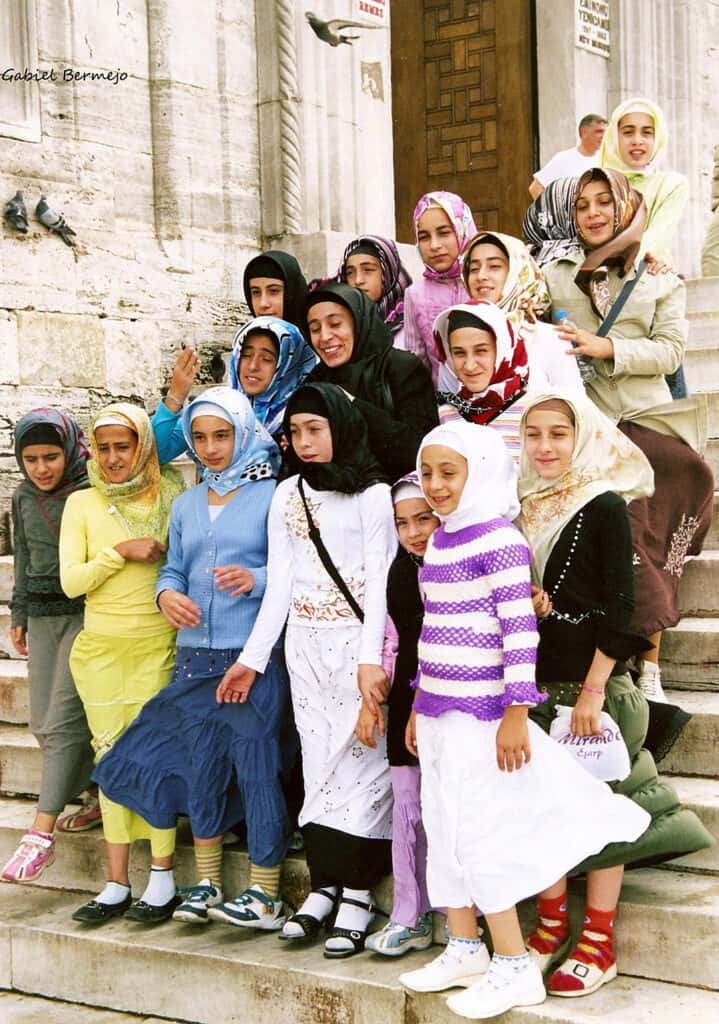
SB: I had just started wearing the hijab and experimenting with ways to express myself through modest fashion when I had this feeling I hadn’t had before. I made an intention to seek out hijabis and how they were dressing. I found hundreds of hijabi catalogues from North Africa, the Middle East, and Turkey. I was in awe of the ways these women identified with the hijab. It never felt like a limitation. That was really helpful for me, having visual references informed how I identify with it, and how I choose to wear it today.
I came to the conclusion that hijabis, Muslim women, and modest wear have always been in tune with the times. Scholarly research has put us in a box, framing modest dress in a rigid, uniform way. So I thought: why not show this? It’s clearly lacking within archives and in Paris, which is very opposed to the Hijab.
CM: How has your background and upbringing, being from Morocco and growing up in New York, shaped your understanding of hijabi style?
SB: My parents immigrated from Morocco in 2000. My mom has always worn the hijab in a very colourful way – that actually comes from Morocco! She really shaped my view. She would always be wearing vibrant outfits and was so confident in who she was, in what Islam and her hijab meant to her. I never felt like the hijab meant plain black clothing; that’s more of a recent shift. Through cultural exchange, we’ve started seeing more of the black abaya. But for me, at most it was a black abaya with a sparkly top, or a cool undercap. When I entered academia, it became very difficult to separate my identity from my research. I felt that I had a responsibility to research my own community and how these women are choosing to dress.
CM: Western narratives often frame the hijab through modesty and uniformity. How do you counter this narrative?
SB: I think my upbringing and research both resist this. Muslim women, whether they live in the West, a Muslim-majority country or elsewhere, dress differently from one another. Globally, Muslims express their faith through vastly different aesthetics. There’s so much that feeds into this narrative. Do Muslim Women Need Saving? by Lila Abu-Lughod explains how the US depicts Afghan women as in need of “saving” to justify their military intervention. To do that you have to put women in a box, make it seem as though they are stripped of identity and confined to a single mode of dress. It became how the world saw us. That image was pushed through media, film – everything. The rise of TikTok and social media has made it easier to counter. I never believed that narrative, I grew up in a colourful household and mosque. All my life I have been surrounded by different kinds of Muslims. I think the Arabisation of Islam has shaped how even Muslims understand the hijab and modesty, but modesty can be expressed in countless ways including through colour. That matters in how I am thinking about the nuances of hijabi dress and it’s something I’m trying to communicate in my work.
CM: Your archive is rooted in aesthetics, but do you find there is a political element to it? And how important do you think this archive is right now?
SB: The hijab is not inherently political. The political aspect has been forced upon it. I never thought of it as political until someone told me it was. It’s important to recognise that framing as a Western agenda. It positions the hijab as oppressive, making it into a political act. Yes, there are situations where women have been forced to wear the hijab, but for the majority, it simply isn’t political. Women want to dress the way they dress. They believe in something, and they want to adhere to it.
We live in an incredibly polarised world. In Paris I have encountered a level of politics around the hijab that I never experienced before. So many women in France wish their government could separate the political weight of the hijab from the hijab itself.
I made a decision with my exhibition not to include anyone speaking about the hijab in a way that framed it as oppressive. That is not what I’m here to say. That narrative has already been spoken from outside the hijabi experience – loudly and repeatedly. I wanted to offer a space where we can be ourselves, talk about what being hijabi means, dress the way we want, and feel accepted for who we are.
CM: There’s a strong visual identity across your work, very street style and very Y2K. How intentional is that?
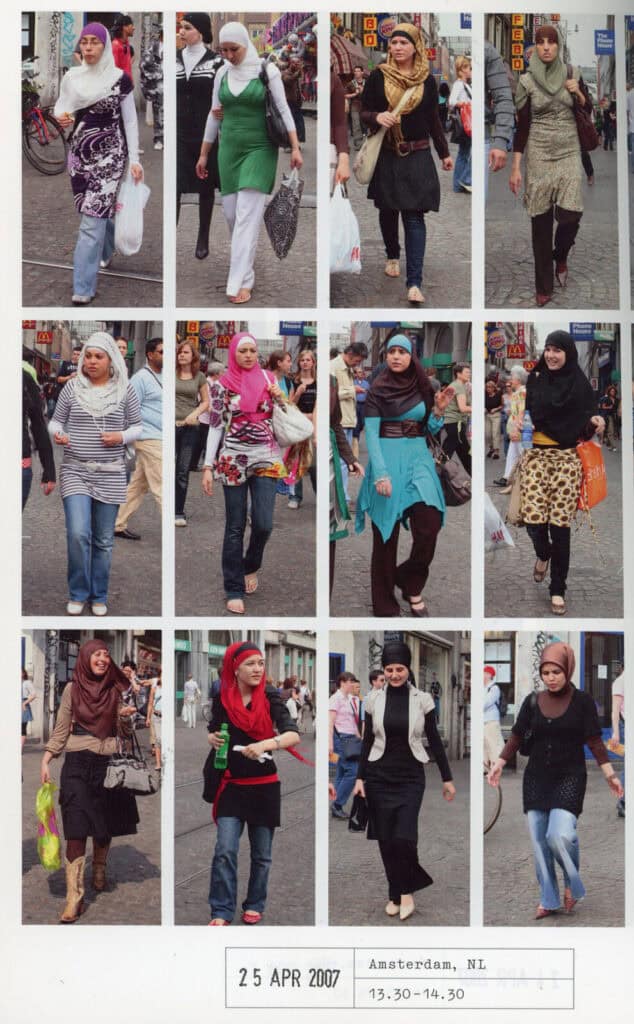
SB: Completely intentional! Hijabi women have always been reflective of the times. The 2000s were a period when entire generations of people from Muslim-majority countries immigrated to Europe and the US. I chose street photographers like Ari Versluis and Ellie Uyttenbroeks’s “Exactitudes” because it felt like an accessible way to show that these women have always been part of fashion. When you see a hijabi woman dressed in full Y2K or early 2010s, it makes something clear: these women weren’t living some separate life outside of culture. They were embedded in what was cool. They were influenced by the same media and trends as everyone else.
CM: How have women within the hijabi community responded to the project? And do you feel a sense of responsibility when representing a community like this?
SB: There’s a weight that comes with wearing the hijab and representing your community, you carry it even if you don’t want to. That’s the society we live in.
I asked myself: what would it have meant to have seen girls who looked like me in a gallery space? Seeing yourself represented shifts things. It might sound dramatic, but I believe it could have changed the trajectory of my life. Maybe I would have embraced the hijab sooner.
I was surprised by how positively people responded to my exhibition. I think everyone felt seen.
CM: What do you want people to understand or question when viewing your archive?
SB: I want people to reflect on how the hijab has been portrayed in their lives, whether Muslim or not. How has the hijab been shown in your community? How has it been spoken about? Does the media around you actually reflect reality?
What felt really meaningful was that a lot of the people viewing my work weren’t hijabis themselves. Many of them had never considered the hijab in the way I was presenting it. I sparked a new curiosity – which was my main goal.
CM: Where do you see The Hijabi Archives evolving next?
SB: The job is not nearly finished! I want to work with more photographers and explore different mediums. This iteration leaned heavily on photography and film, I feel there’s so much more to develop. I hope to bring it to different cities and different parts of the world. Inshallah! I would also like to include a wider range of cultures and perspectives on the hijab that aren’t filtered through an Arabised lens.


