

Dieter Vlasich’s mind thinks in cycles. He talks of textile fibres circling around from soil to crop to garment and, after a lifetime or two of wear, back to the soil. Generational knowledge is discussed as if it’s a spiraling chain, every contributor adding and discarding pieces of inherited wisdom as they tumble down to the next in line.
Then there is the cycle of the young designer’s own cultural story; from Mexico to a globe-hopping adolescence, his true homecoming only arrived as the pandemic disrupted his studies at London’s Central St Martins (CSM), drawing him back to Yucatán. “If I were brought up in Mexico my entire life, I would want to explore things outside of it,” he tells me. “But I’m trying to make sense of my upbringing through this. That’s why I work with cultural legacies.”
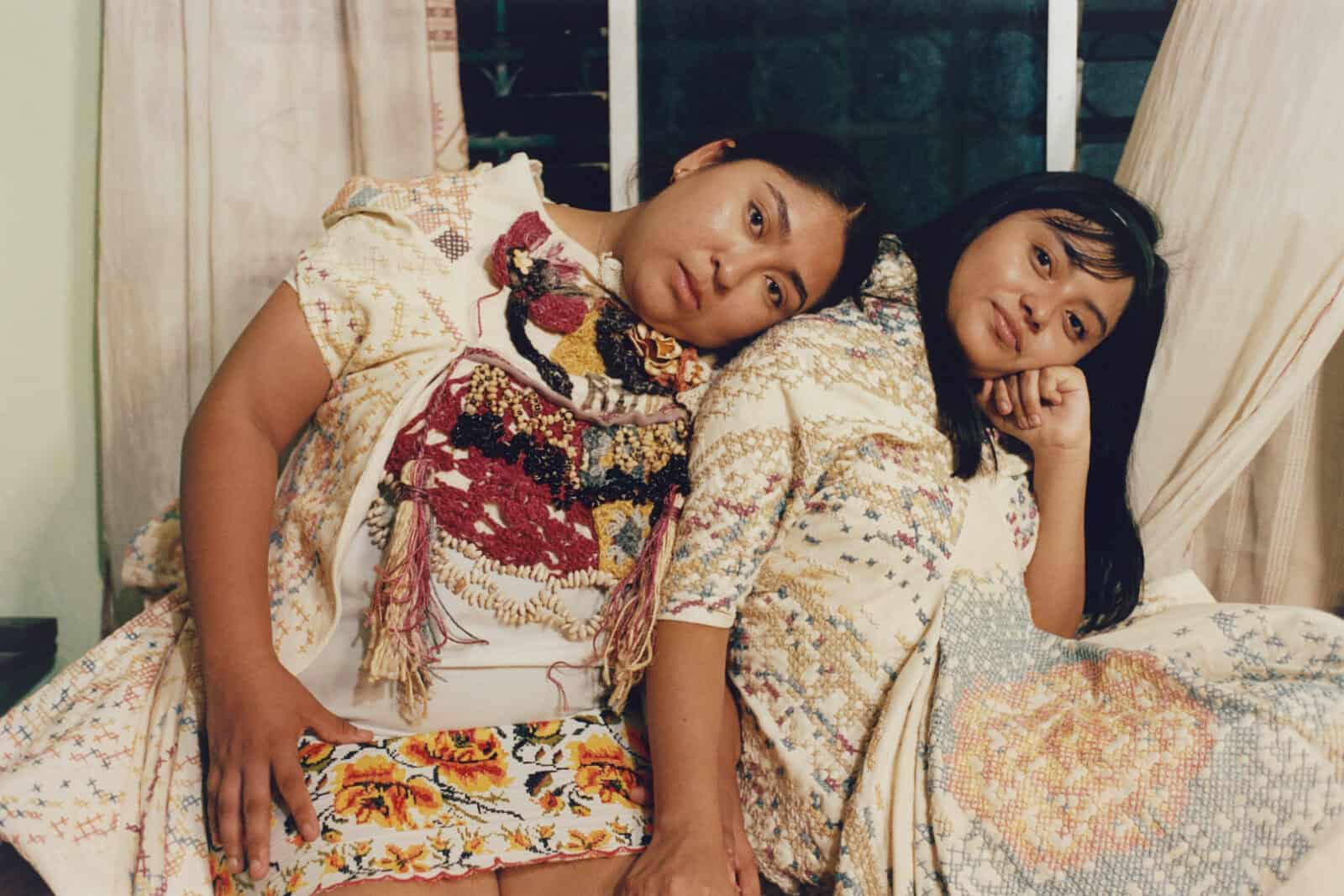
The work in question is his fashion collections, which, so far, have been fantastical outbursts of organic textures and tones. He graduated from CSM last year with a collection that, due to its regenerative merits, landed support from LVMH’s Maison/0 scholarship. It was a collection that was not just produced in Mexico; the project, which has evolved from a final fashion collection into a multidisciplinary exhibition and publication, has been inseparable from Mayan craftspeople and their culture since its inception. Using forgotten knowledge and natural dyes found in a local museum, fibres grown and spun in surrounding fields, and finished with London’s creative technology, the resulting pieces have been sculptural and unrestrained.
“Finite in the Infinite” was chosen as the collection’s title. “It’s a mantra for the way I wanted to design, remembering that I have a finite moment within an infinite exchange of knowledge,” he says. “What our generation decides to continue practising will then also be passed on to the next generation. So, what I make should be informed by the past, but also consider the future. It should be something that I believe should live on.”
Dieter tells me this over video call, the only way we have met. During this interview, he spoke to me curled up against the wall of his studio in London. Converted from an old office building, the wifi is patchy and the tenants are eclectic. He tells me that if you go downstairs for a cigarette, you’ll find people in suits having a chat with paint-splattered artists. As a modern fashion designer, Dieter sits somewhere between the two.
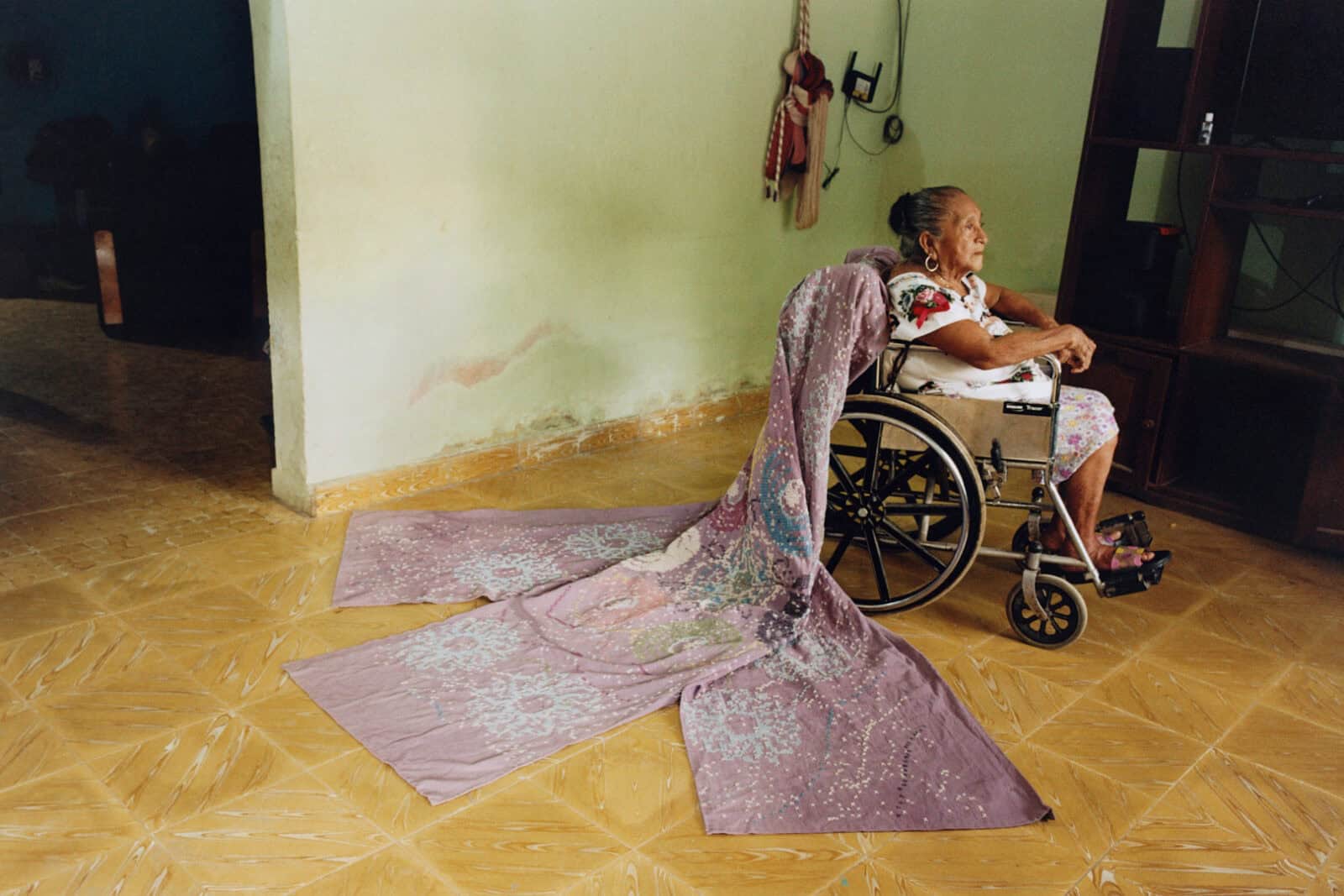
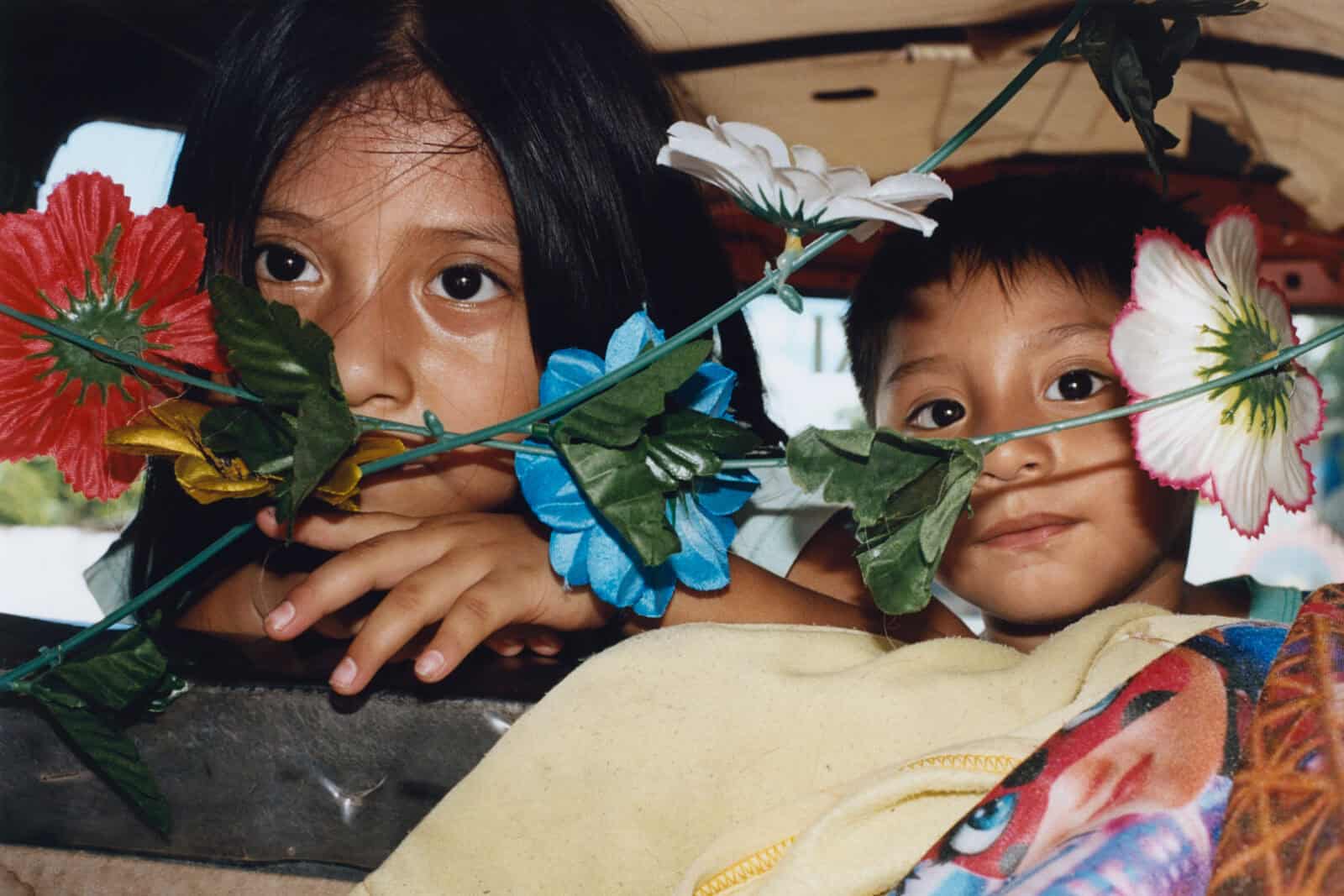
It’s the business side that Dieter was utilising when we spoke, deep in the preparation for a photography series that captures his recent collection in the lively homes of its makers. The project is intended to connect its audience with the craftspeople who made it, not just the final garment. “In the age of AI and automation, it’s all so far away from our human experience. This is a way of resisting, supporting and sharing work that is so manual and slow.”
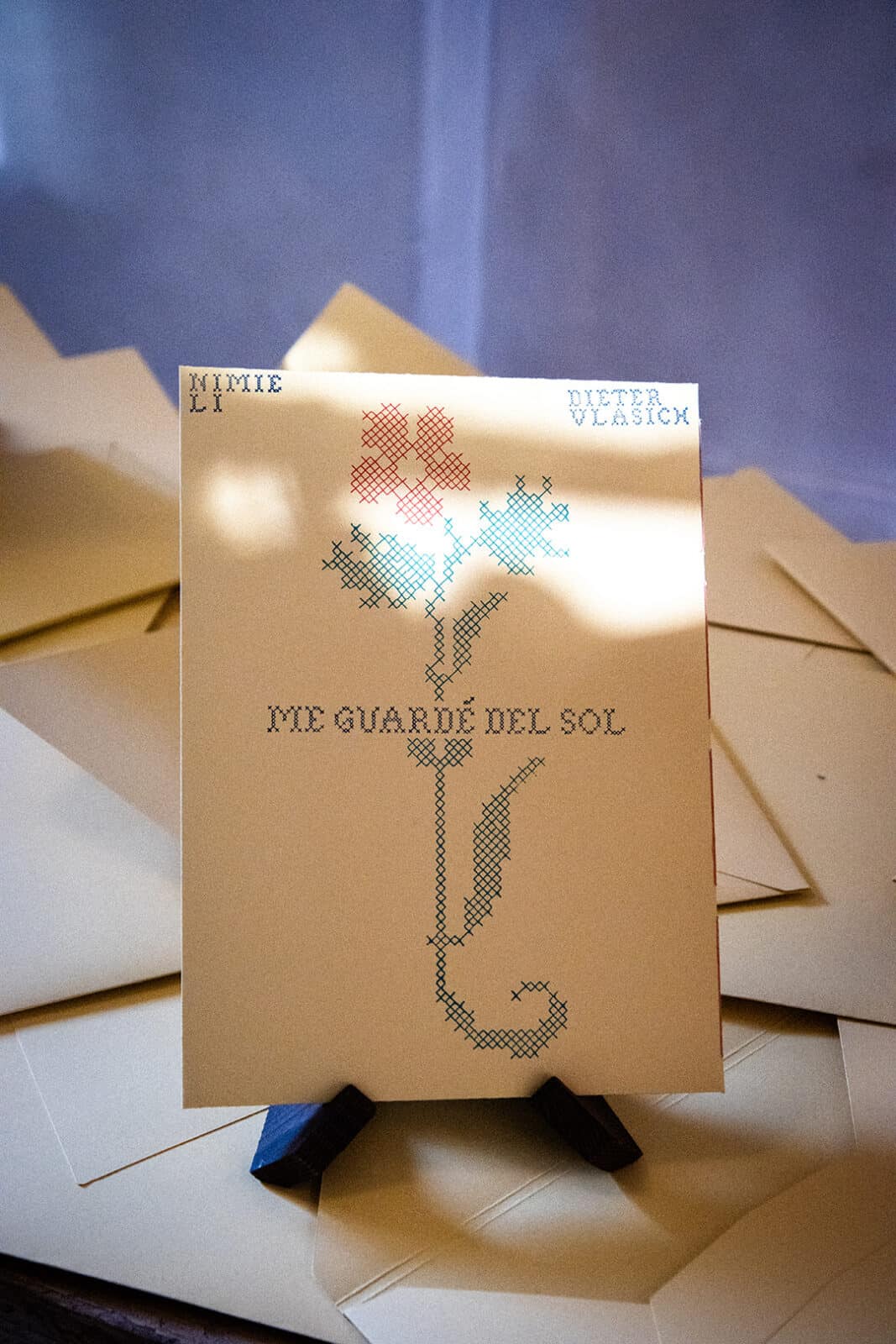
The photos – the work of photographer Nimie Li, also a recent graduate of Central St Martins – were recently exhibited to the public of Notting Hill in Casa Agape, a cultural platform for Latin American artists and designers in London. The photography series’ title, “Me Guardé del Sol”, translates as ‘I Kept Myself from the Sun’. Poetic and apt for a project exploring embroiderers whose craft has them hiding inside from Mexico’s oppressive heat, the saying was taken from an important figure in Dieter’s life and the Yucatán community – Maricela.
Maricela has cared for Dieter’s grandmother for as long as he can remember, and he grew up close to both of them. Her Mayan heritage meant Dieter was raised conscious of the threats to local crafts. “She’s a rare person, a leader in a community whose relationship to their ancestral crafts has shifted so much with Western expectations. It’s become a souvenir,” Dieter explains. “Maricela understood that, so she would gather the artisans in her town and apply for funds from the government.”
When Dieter went to London to study fashion, he found himself empowered by a mentorship from Petra Metzger, a CSM lecturer. She struggled through a 20-day hunger strike in support of the Extinction Rebellion whilst tutoring Dieter, a determined display of agency that has stayed with him in the years since. Dieter found a direction for his inspiration when Maricela urged him to work with the Mayan craftspeople in her community. “It’s a problem that I could do something about. Maricela and I were both doing it together, and she was just as excited as I was.”
What is always apparent is Dieter’s intention for the community, rather than himself and his lens, to be the centre of the project. “I myself am not Mayan. It’s Maricela’s legacy, but it’s not fully my roots,” Dieter tells me as we discuss his removed position, one that is maintained by small alignments throughout the process. The ‘hilo contado’ embroidery motifs in the collection, for example, weren’t reimagined by Dieter’s hand at all.
Instead, number sequences from the Mayan calendar, one of many innovations that secured the ancient civilisation’s place in the modern psyche, were imputed by creative coder Victoria Schlienkamp into a function that made them concentric to a pixel grid. “I didn’t want to draw the designs from my point of view, so I alienated myself from the process by using coding,” he says. The result was floral patterns that were carefully stitched by fully corporeal craftspeople, a perfectly symbolic marriage of early textiles and technology with future-reaching fashion.
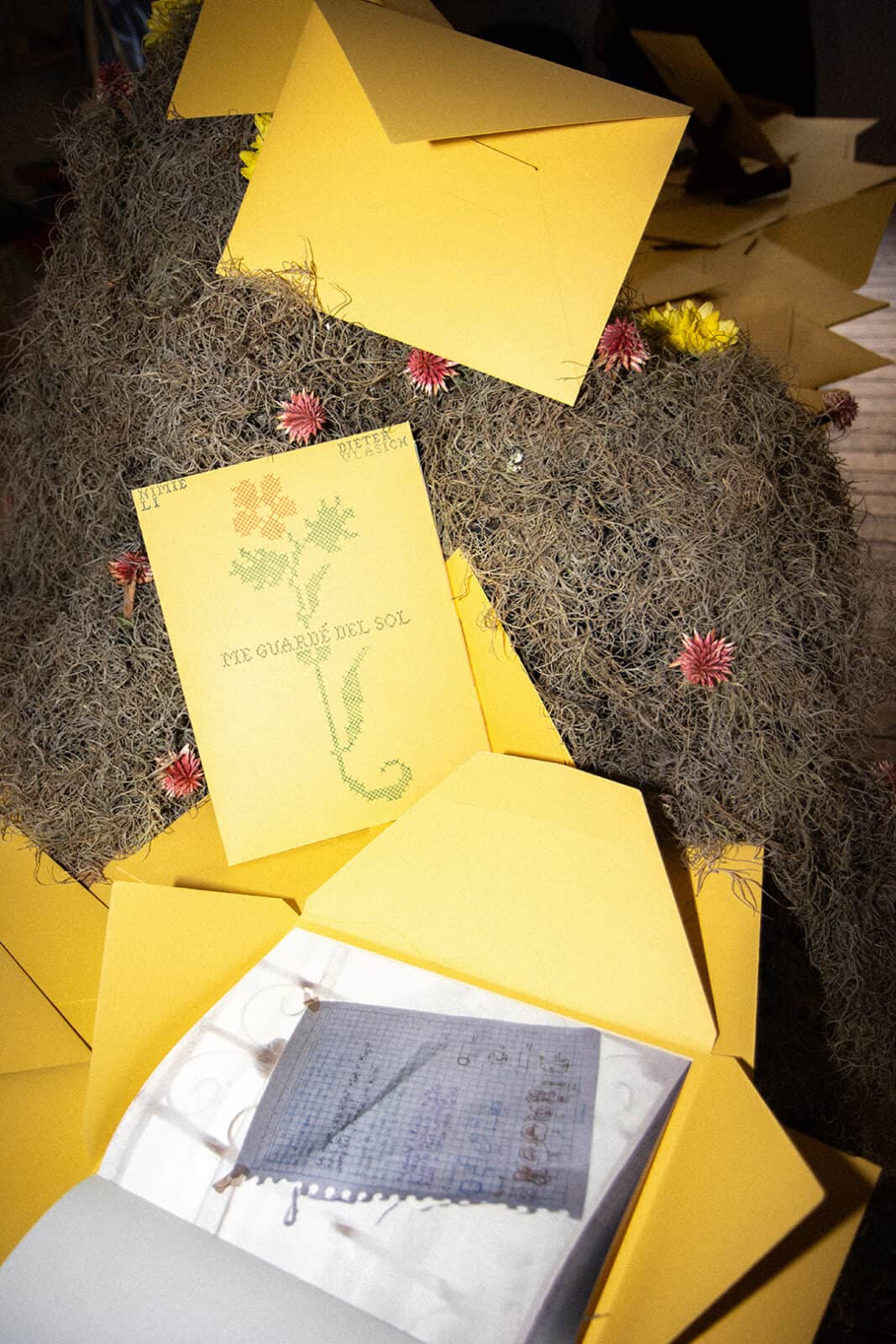
Dieter is opposed to the idea of being a nationalistic designer, restricted to his cultural identity without being free to explore more abstract ideas. Simultaneously, he’s unwilling to let the knowledge held in Yucatán be left forgotten. Both the Mayan language and local biodiversity are fading – through a series of interviews that sit alongside the photography series, ‘Me Guardé del Sol’ hopes to keep ecological practices in the light of day.
“It is all about embroidery, embroidery, embroidery,” local craftswoman Dona Imelda tells collaborating interviewer and translator Edy Dzib. “If I weren’t embroidering, I would get sick.” The spoken stories bring to life a culture where craft is integral, and nature is embedded in everyday life through creation and play. “I was little, I was around 10 years old when I stroked the snake’s skin,” remembers Dona Imelda, retelling the distinctively Mayan tale of her initiation into embroidering ‘dados’, an embroidery pattern that resembles dice, by stroking a snake’s scales. “It should be a boa or a rattlesnake that has to be stroked, because the snake’s skin looks like a bizcotela,” she advises.


