
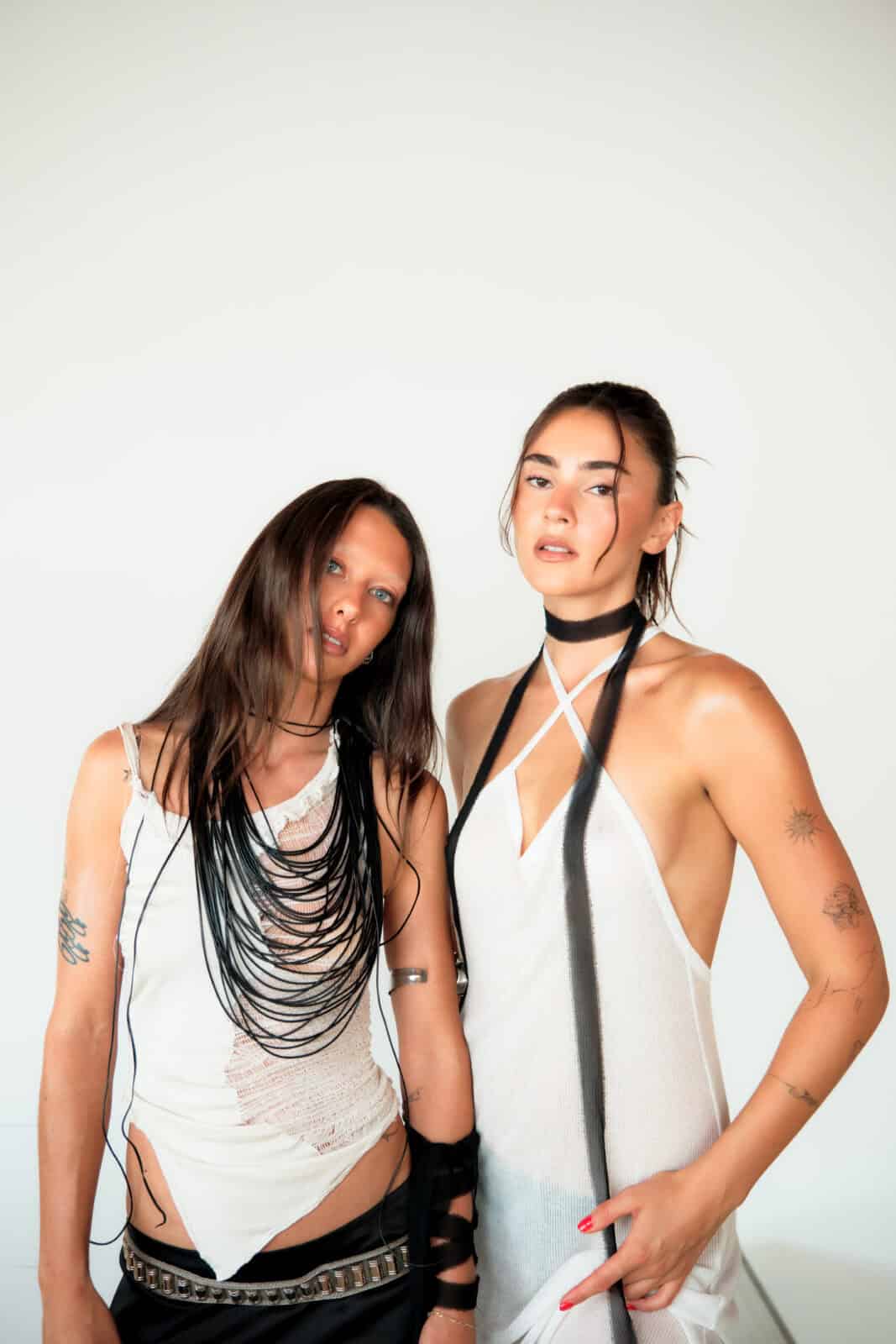
In a digital world that constantly pushes self-commodification and hyper-curated images for the sake of maintaining profitability, it can be difficult to discern who we can really trust. Not to mention, where our creative energies are best placed. Ex to X is a Berlin-based initiative working to lift those nerves. The project was founded by Angelique Houben and Stefanie Giesinger, who were initially inspired by the idea of bridging gaps between industry professionals. Their work specifically highlights the contributions and skills of FLINTA (German acronym that stands for: Female, Lesbian, Intersex, Non-binary, Trans and Agender) creatives.
Ex to X aims to platform and connect historically underrepresented identities by way of intimate gatherings, public activations and events that inspire generative relationships, real time. It is built upon genuine connection rather than the classic transactional dynamics that can develop through “networking”. Instead of asking fellow creatives what they can get from one another, Angelique and Stefanie are opening doors for authentic relationships to develop, in the hopes of creating new pathways for organic collaboration.

The co-founders believe that powerful work can result from one chance encounter in passing, a chat at the bar while waiting for a drink, or by brushing shoulders at a gig or exhibition. They believe that so much can be achieved by sharing resources, building connections and ultimately advancing creative work together. Ex to X’s first activation took place on 31 July. “The First Gathering” centered creative practice across music, art and hospitality. The evening included an installed exhibition, live performances, DJ sets, non-alcoholic wine and other decadent offerings.
Co-founder Angelique documented some of her conversations with guests throughout the event. What resulted was radical vulnerability that lent itself to deeper connection and creative curiosity. For guest Tedesco, all it took was a gifted MP3 player to set them on a path towards music. “I got into music from a very young age thanks to my older sister Raquel. I remember having so much fun shuffling through listening to Paramore, Lady Gaga, Rihanna, Slipknot.” The Venezuelan-born, London-based DJ regularly performs in London and on many global stages.
Angelique also spoke with Anita B Queen. The Argentine DJ and producer spoke further about the impact of music. “I’ve always felt like music has been a safe place throughout my life.” The ability to create unabashedly, allowing earnestness to come to the fore of one’s work, is how meaningful community ties are built. This perspective juxtaposes social media’s incessant push towards curation, where partial identities are destined to become shields from our truer emotions. “[Music] connects people so effortlessly, but at the same time it can reach incredibly deep and so many different emotional places. I find that fascinating”.
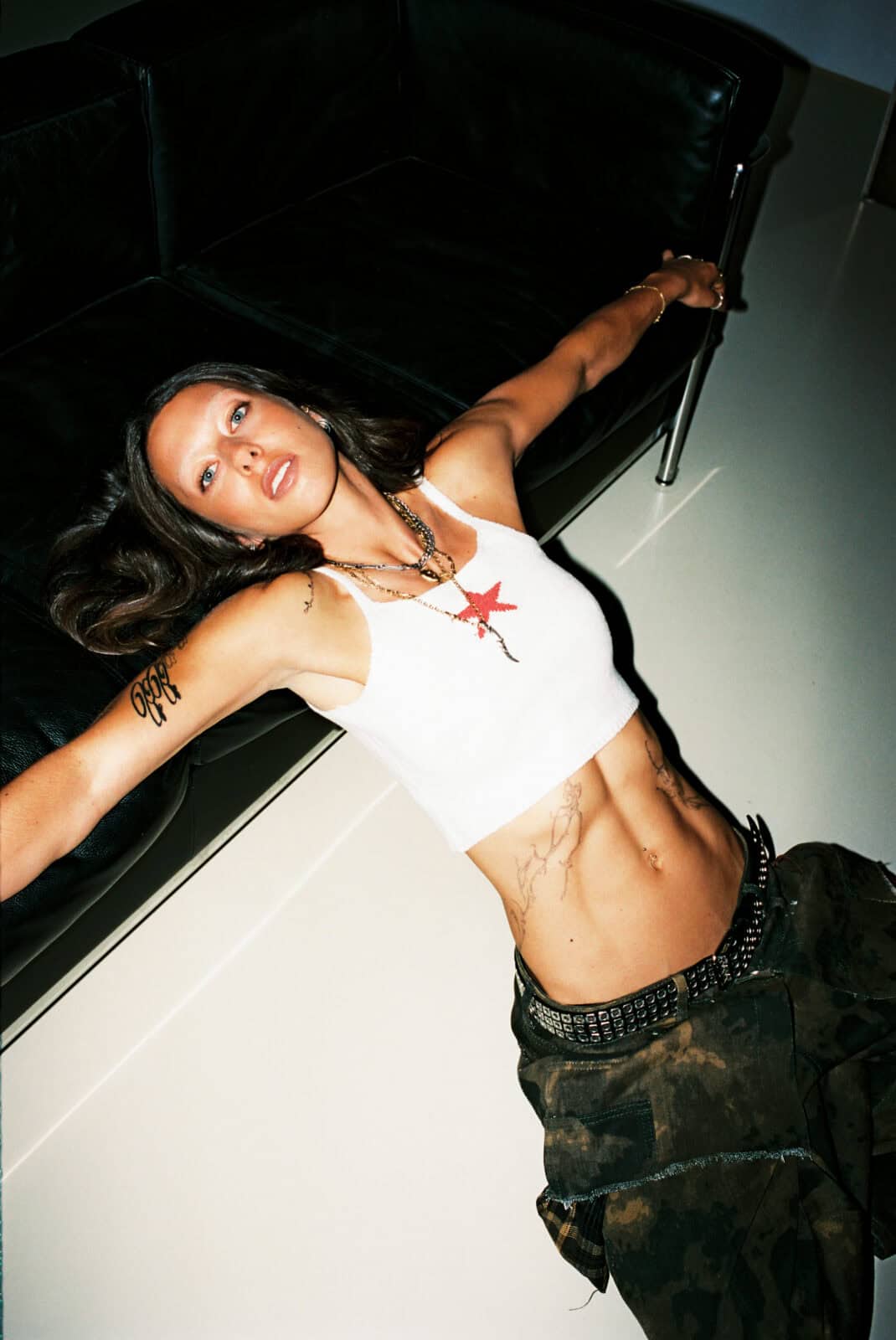
Another artist at the activation, Rafaella Braga, comes from a background in Brazilian street art, “I learned to paint instinctively, trusting my body before overthinking the image. Even though the work has changed, that instinct remains.” Allowing oneself to become fully enmeshed in the creative process is the beginning of connecting beyond it. This vulnerability is what creates tangible, generative relationships beyond mere transactions. “What begins as something deeply personal can then transform into something other people can feel and connect with”.
Co-founders Angelique and Stefanie believe that “every collaboration starts with a conversation” and Chapter 1 of the project has only just begun. To learn more about their shared vision for Ex to X, COLD chatted with co-founders Angelique and Stefanie.
Read for insight about the importance of staying curious and why the FLINTA community will always benefit from new ways to creatively connect.
The Cold Magazine (CM): What was the initial “omfg we have to do this” moment when it came to conceptualizing Ex to X?
Angelique Houben (AH): For me, actually quite a personal one, linking back to my Greek gran passing at the beginning of the year. Just scratching the surface here, but I realised I had been holding parts of myself back for a long time, to “protect” other people I really care for, without really understanding how much that was impacting me personally. Once I did, it really shifted something within me and made me want to create real value and connection for the community that I represent and understand, and that understands me. That feeling was a big part of what pushed Ex to X into existence.
Stefanie Giesinger (SG): For me, it was honestly the moment Angie started telling me about the idea. I didn’t even let her finish before I asked if I could be part of it. I’ve been working in this industry since I was 13, and I’ve experienced how much a single introduction, a person believing in you or someone simply opening a door can change the direction of your life. I’ve been incredibly lucky to have had those moments, but I also know they’re not equally accessible to everyone. When Angie started talking, I immediately thought: why don’t we create more of those moments intentionally? Not another network, but opportunities where people genuinely want to open doors for each other.
CM: How did the core team initially form, what was the context, where, when, what were you doing/ sipping on etc. (paint the scene)?
AH: Steffi was sitting on my sofa, had just returned from a Korea trip and we hadn’t seen each other in a couple weeks. I went on a full monologue on an idea I had, and to be fair, back then it was a bit of a different concept.
SG: Yeeees, I remember that so clearly!! I don’t think she had even finished explaining it before I interrupted her and said: I want to be in. It was very instinctive. Angie is one of those people who naturally connects people and worlds, and I immediately understood what this could become.
AH: And I went – are you for real? Like in it? Like for real for real? LET’S F GO THEN!! And here we are, haha.
SG: From there it grew very organically.
CM: Why are multi-level/ layered creative environments so important when it comes to building generative relationships?
SG: Because people connect better when there isn’t pressure related to any outcome. If you have music, art, food, conversation and different creative disciplines happening around you, people naturally find different entry points into each other’s worlds. You might come for the music, start talking to someone about the artist, discover what they do, and suddenly the layers create unexpected connections, and those are often the most generative ones.
CM: How do you stay distinct in an AI-flattened digital landscape?
AH: AI can’t replace intuition, chemistry, energy and very important: taste. So that’s what we focus on. Good curation is everything :)))
SG: By becoming more human, not less. I think we’re entering a time where perfection is becoming incredibly easy to produce, which actually makes imperfection, personality and real point of view more valuable. AI can recreate an aesthetic, but it can’t recreate your lived experience or the strange little references that make your taste yours.
CM: Where do you see the most obvious connecting points between music, fashion, art, and various other creative industries?
AH: They all influence each other constantly. Music can change the energy of a fashion shoot and make people loosen up, fashion shapes the visual language of music, art influences how we see both. It’s all connected. I think those connections are actually what make culture so exciting. And also to see personal preferences in all of them change over time.
SG: For me, they almost stop being separate industries at some point. Fashion needs music, music needs imagery, art needs spaces, and all of them need people who understand culture beyond their own discipline. I’ve spent most of my life in fashion, but so much of what inspires me creatively comes from outside of fashion. The interesting part happens when those worlds start borrowing from each other and something emerges that none of them could have created alone.
CM: Why is it important to form cross-medium relationships?
AH: You’re always going to be shaped by the people and the environments you surround yourself with. They influence what you see, what you think is possible, and often even what you do next. So if you only stay within your own bubble, you’re naturally going to keep seeing similar references and perspectives.
For me, cross-medium relationships are about deliberately stepping outside of that. When you put yourself around people who think differently, you start absorbing new ways of looking at things. And that might trigger the next big idea.
SG: Because your own world can become very small without you noticing. Especially when you’ve worked in one industry for a long time, you start seeing the same people, references and ways of doing things. Meeting someone from a completely different discipline can suddenly make you question all of that. I love that.
CM Why Berlin?
AH: Berlin is home. And I never said that about any other place I lived in before, and it’s been quite a few. It’s the first time I’m actually excited and I’m looking forward to returning after a trip. I know it so well. And it really made me grow up. Also, personally, I am a bit tired of people having this love/hate relationship with Berlin. If you don’t like it, no one forces you to stay. I feel like Berlin is a place that also meets you where you’re at in life, and will keep mirroring things back to you. It’s up to you to decide what to do with it. For me it really transformed me, opened up new perspectives and opportunities – and now led us to creating Ex to X. I’ve moved away from the idea of having to live in one place only, but Berlin will always be one home.
SG: Berlin gave me something I didn’t know I needed. I came here from a much smaller place and, especially after growing up in the fashion industry, Berlin showed me that there are so many different ways to be interesting, beautiful, successful or creative. You don’t have to fit into one idea of any of those things. There is a freedom here, but also a certain rawness. People are building things, experimenting, failing, starting again. Ex to X feels very connected to that energy. I’m not sure it could have started anywhere else.
CM: Where to next?
AH: I wish I could say Latin America. Mexico City.
SG: I would love for Ex to X to travel without losing what makes it intimate. Paris, London, New York, maybe Tokyo. Not simply copying what we did in Berlin, but letting every city and its creative community shape what Ex to X becomes there. The idea is not to export Berlin. It’s to create a reason for different worlds to meet wherever we go.
CM: Dream collaboration for an Ex to X event?
AH: Arca. I meannnn the new album isn’t called XXXXX for no reason let’s f go!!!
SG: Miuccia Prada. I’m fascinated by people who don’t just create fashion, but shape culture around it. And maybe someone completely unexpected from another discipline. That collision would be the exciting part.
CM: What advice would you offer the younger version of you that didn’t know what was on the horizon at this point in your lives? What did that younger version look like?
AH: Feels unreal to think about that, but yeah, the young me would literally rock up to school in my FUBU silver, shiny baggy jeans, and my skateboard. Most of my friends were boys until I got older, and I never really felt like I fit in fully. I was so shy too and tiny haha. I dropped out of my piano lessons because I wanted to play the drums. And I did, in the school band. I remember I was so proud haha. I think I’d advise myself to just trust. And things will work out.
And just go for it. Do it. Fail. Go again.
Stefanie: I started modelling at 13 and had my breakthrough at 17, so I learned very early how to enter rooms and adapt to what people expected from me. I spent a lot of time observing, trying to be uncomplicated, trying to be liked, trying to understand who I needed to be in order to belong. I think I would tell that girl: you don’t have to make yourself smaller or easier to digest to deserve your place in the room. Stay curious, trust your instincts and ask more questions. And eventually, instead of worrying so much about whether you have a seat at the table, build a bigger table.
CM: Anything else you want our readership to know?
AH: I think on my side, I struggled a long time with finding “my next” thing. You feel like everything is already out there and it’s easy to convince yourself that everything has been done, or that whatever you do next has to be completely new and perfectly formed from day one.
I’ve realised it doesn’t. You just have to start with what you genuinely care about and what feels right to you. Start small, let it evolve, level up as you go and see what conversations happen along the way. You don’t need to have the whole thing figured out before you begin. Sometimes the idea becomes clearer once you actually put it into the world.
SG: Maybe that Ex to X isn’t something we want to define too tightly yet. I actually think that would go against the whole idea. We want it to grow through the people who enter it, the introductions that happen and the things we couldn’t have planned. We’re not interested in building another space where everyone already knows exactly who they should talk to or what they should get out of it. Come curious. Meet someone you wouldn’t normally meet. Introduce two people who should know each other. If something unexpected comes out of that, then Ex to X is doing what we hoped it would do.