

In mid-July, over a week’s worth of humid summer evenings in three of Yerevan’s Soviet-era cinemas were spent, while enduring the quirks of local cinema etiquette and Armenian polychronicity, experiencing what film in the South Caucasus has to offer. My first night saw a debut feature that compelled some of the audience to walk out, a highly moving documentary with a Q&A interspersed with poetry readings from one of the film’s elderly subjects, and a film about labour conflict in space screened in a quiet hall at the back of the former Union of Cinematographers building.
It has been an auspicious year for Armenia. A spate of visits from international leaders in the Spring preceded a landmark election in June. The TRIPP agreement, President Donald Trump’s plan designed to broker peace in the fractured region, has brought unprecedented economic attention upon the small country of three million. Later this year, in a further display of the South Caucasus’s growing importance, Yerevan will host the UN’s COP17. Amidst all of this, Yerevan’s Golden Apricot International Film Festival (GAIFF) enjoyed its first year accredited by the FIAPF, now recognised amongst the likes of Locarno, San Sebastian, and Cannes. Festival goers were treated to premieres of Sean Baker’s Sandiwara and Antonin Baudry’s La Bataille de Gaulle (starring GAIFF guest of honour Simon Abkarian), flocked to showings of Sev Ohanian’s My Big Fat Armenian Family (2008) and Sinners (2025), and stayed up late for the cult post-apocalyptic-porno Café Flesh (1982) and Bela Tar’s seven-hour feat Satantango (1994). The real excitement of the festival, though, lay in its showcase of new regional cinema.
Armenia’s large diaspora came into its own at GAIFF 2026, creating a festival like no other in its ability to mobilise a global network to produce a cosmopolitan yet rooted programme. Understanding the cinema of the diaspora, what film theorist Hamid Naficy termed “accented cinema”, is essential to understanding cinema in the region. Naficy’s seminal 2001 work notes that “although there is nothing common about exile and diaspora, deterritorialised peoples and their films share certain features” – that the constraints of exile force these filmmakers “to develop an authorial style”, becoming both a cinema of and in exile. Accented cinema is often defined in relation to “national cinema”, which can be understood either in the context of cinema production or consumption but, importantly, is rooted within the nation-state. Both accented and national cinema were on display at this year’s GAIFF. Armenia’s deep connection to the experience of dislocation also invited innovative new cinema from Georgian, Iranian, Palestinian and Lebanese directors.
Under the Soviet Union, Armenian directors produced film that highlighted the culture of the Caucasus in innovative and unique ways: like Artavazd Peleshyan’s rhythmic Seasons of the Year (1975) or Sergei Parajanov’s hypnotic The Color of Pomegranates (1969). Post-independence, Armenian cinema has emphasised (perhaps to the point of mythology) national struggle. This remained the case at GAIFF, where loss and war were recurrent plot points that connected all the films in the Apricot Stone (short film) and Regional competitions. Perhaps slightly obvious themes for an Armenian film festival (you can’t walk down a street in Yerevan or drive through a village in the vast Armenian countryside without encountering some form of memorial to the 2020 Karabakh War), nevertheless they were fitting for a nation still coming to terms with new political realities. The use of international film festivals to highlight the Second Karabakh war in particular should be understood in light of the silence from Western media around the conflict and subsequent ethnic cleansing. Some of the messages presented at GAIFF, however, were delivered with greater tact than others.
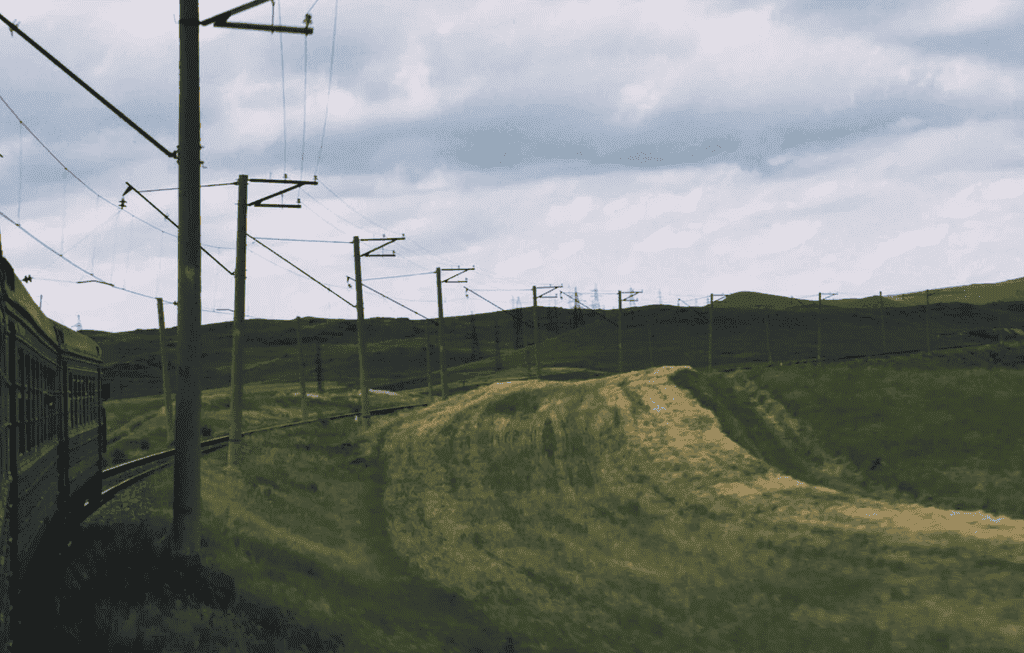
The most compelling attempt to grapple with the Artsakh war was Ici, Ailleurs (Here, Elsewhere) directed by Comes Chahbazian, a Lebanese-Armenian residing in Belgium. As he would well agree, describing Chabazian as the “director” is slightly misleading: the Lalayan family, the film’s sole ‘characters’, had full autonomy to direct what was shown. Filmed entirely on a phone, Ici, Ailleurs is the story of the Lalayan family’s suffering and eventual exile during the 2022-23 blockade of Nagorno-Karabkh by Azeribaijan. Eerily silent shots of a city under siege, facing starvation, are broken by paltry family meals filmed by candlelight under the noise of artillery fire. Sporadic narration is provided by Artsiv Lalayan, cameraman and father. The film concludes on a bitter note, with the Lalayans safely resettled, but surrounded by fellow countrymen who seem shockingly indifferent to the events that upended the family. Chahbazian, who was present at the screening alongside the entire Lalayan family, noted that he still ‘feels strange that, at the end of the film, people applaud’.
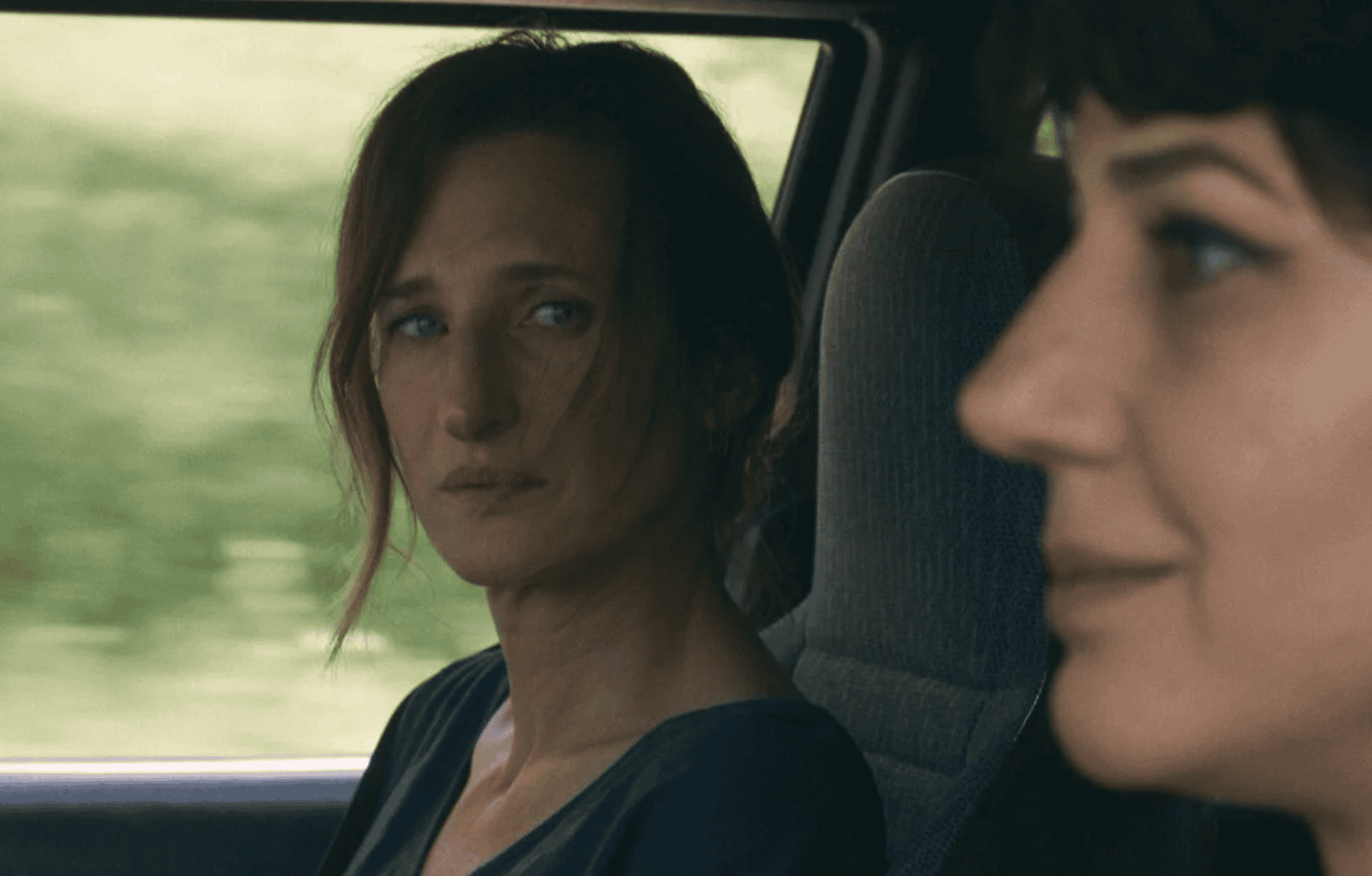
Chahbazian’s documentary approach contrasts heavily with GAIFF 2026’s opener, Tamara Stepanyan’s Le Pays D’Arto. The film follows Céline, a Frenchwoman married to an Armenian (Arto), who travels to her husband’s home city of Gyumri in order to legalize his sudden death and obtain a copy of his birth certificate for her children. Céline soon realises that her husband had lied about his identity, changing his name after dishonouring himself in the first Nagorno-Karabakh war (1988-94). Stepanyan attempts to use Céline’s individual grief to explore broader ideas of national grief. But Céline’s grief for her husband is, in fact, hardly explored, and the readiness with which she takes to the Armenian national cause (a country which, days prior, she knew nothing about) is laughable. The film didn’t seem to know who its audience was: it bounced between heavy-handed expositions of Armenian history clearly intended for a Western audience (including, at one point, a painstaking drawing of a chalk map of Armenia’s pre-2020 borders) and references to obscure battles of the First Karabakh War. It is a film that tries to do everything and, in doing so, achieves nothing. Emile Parseghian’s short film For Those similarly struggled with the balance of subtlety in its attempt to tackle the grief brought on by the recent war. The effectiveness of the raw, largely unmediated story told in Ici, Ailleurs was made more apparent by the heavy-handedness of Arto and others. ‘Accented’ approaches to the issue achieved far more nuance than “national” styles.
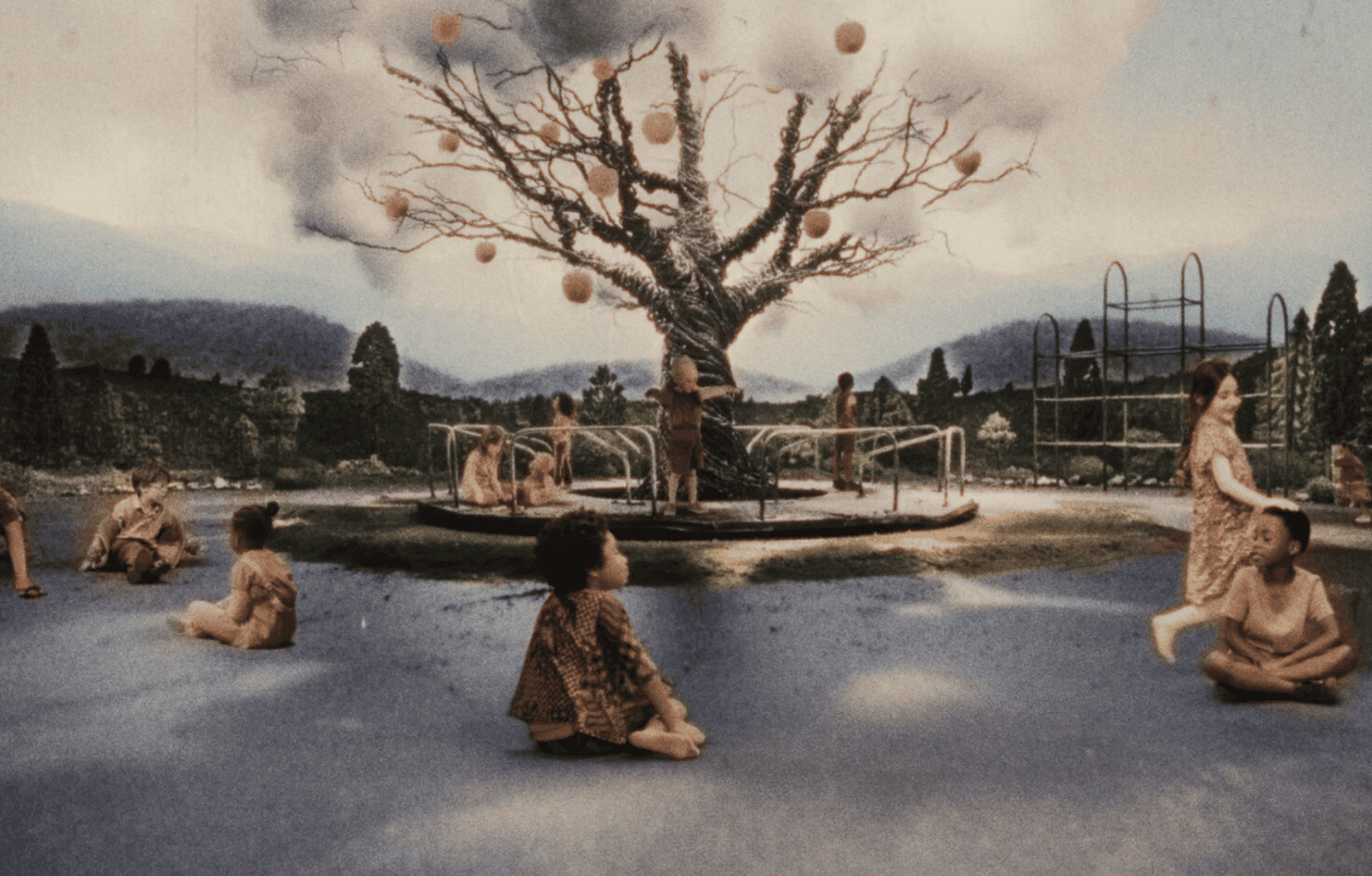
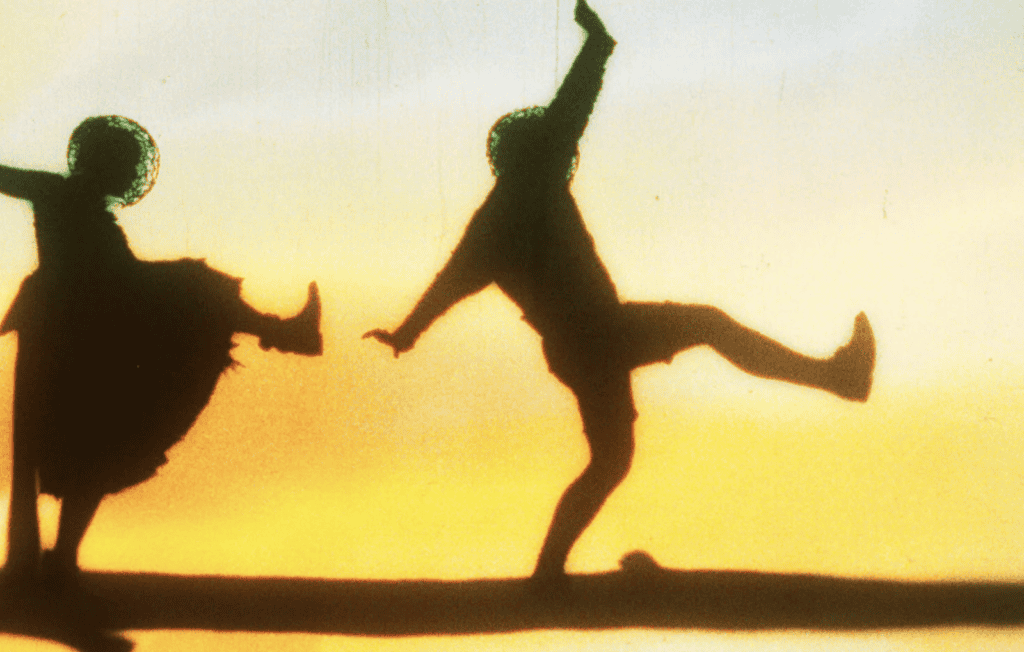
ONCE WITHIN A TIME by Godfrey Reggio



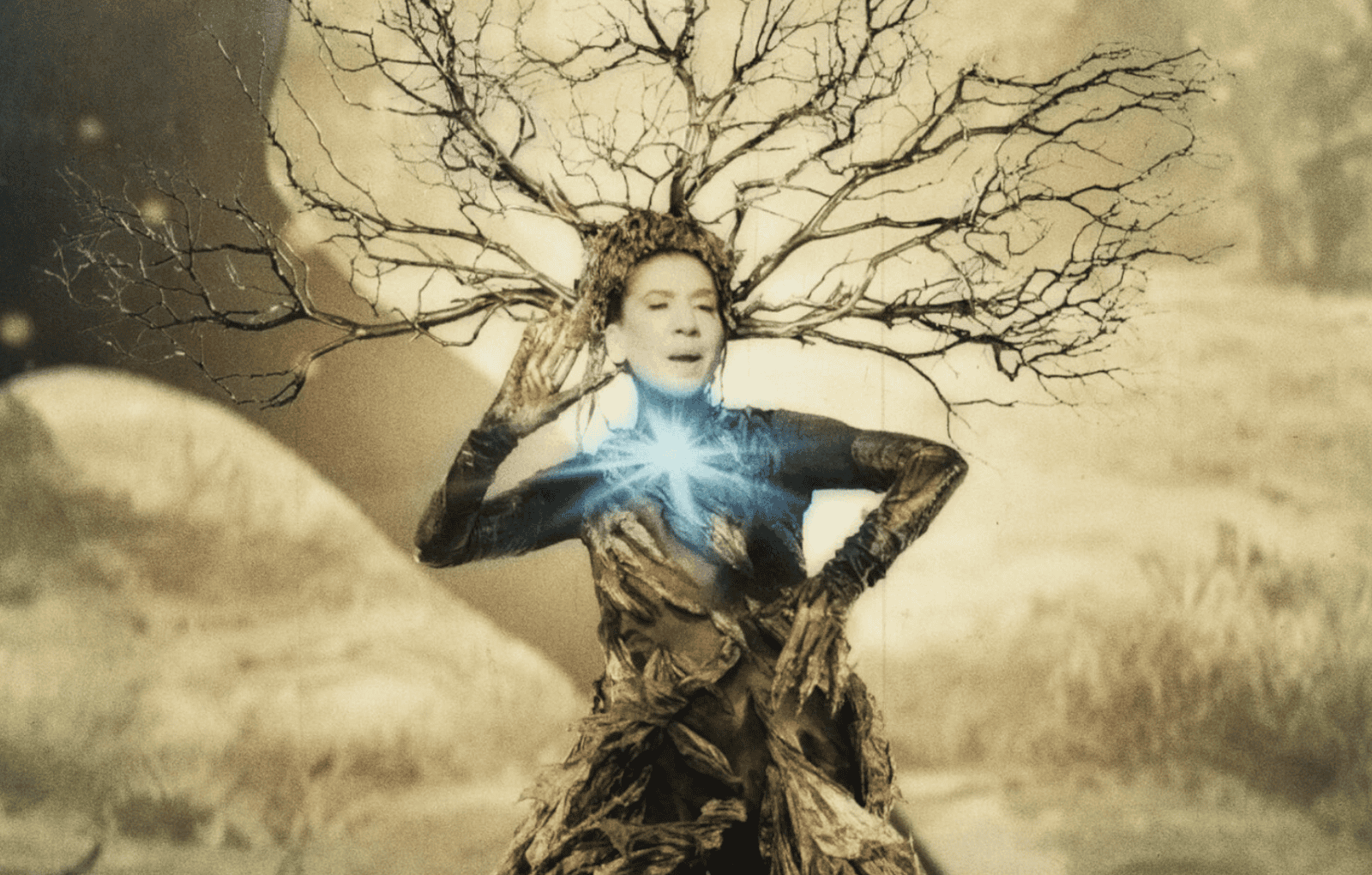
The emphasis placed on grief and war at GAIFF 2026 created an atmosphere highly receptive to similar stories from the wider region; in a way, the programme produced an “accented solidarity”. Iranian directors Morteza Ahmadvand and Firouzeh Khosrovani’s Past, Future, Continuous deserves special mention. Blurring the lines between fiction and documentary, it explores Iranian exile Maryam’s growing obsession with the lives of her parents after installing a set of security cameras in their Tehran home. As in Ici Ailleurs, war is omnipresent but needs little explicit introduction. A series of visually striking animal metaphors, the personified family home as a narrator, and news reports are all incorporated with the simpler CCTV-style footage to tell this story of grief and exile, without excessive or on-the-nose imagery.
The two stand-out films from the festival were Serouj Hovsepian’s Dialogues Solitaires and Ovsanna Grigorian’s Paid Mourners, deserving winners of the Golden and Silver Apricot prizes for Best Short Film respectively. In them we see the differences between accented and national cinema, with their contrasting approaches to Armenian life and identity. Grigorian’s film roots itself in the peculiar traditions of a rural Armenian community: that of the “paid mourner”, individuals who make a living through their performance of over-the-top choreographed funeral rituals. The film’s main character Margo, a 16-year old aspiring TikTok star, is forced to grapple with the allure of joining the outside world, tied up with her grandmother’s worrying premonitions of impending mortality. The film blends quasi-absurdist humour with poignant ruminations on grief and community, held together by cinematography that conveys, through light and shadow, the cramped isolation of the life that Margo is wrestling with. Dialogues Solitaires, meanwhile, is situated firmly in the tradition of accented cinema. This story of unrequited queer love, told through a series of monologues (or, “solitary dialogues”), wears its Armenian identity lightly. The two central characters, Van and Aren, are themselves Armenians, but the film is set entirely in Paris. Hovsepian, through his tight shots and obscured landscape, creates a proprioceptive cityscape that could be anywhere, underscoring the film’s themes of love and dislocation. The short film category was by far the strongest at the festival, which suggests something special not only about these two young directors, but this new generation of filmmaking in the Caucasus.
I had a chance to sit down with Hovsepian just a few days after he won the award. We meet for coffee in the centre of Yerevan; he arrives some time before me, notebook in tow and his eye set firmly on his next project. We discuss his inspiration, the writing process, and, of course, the festival itself. Though Hovsepian doesn’t believe Dialogues Solitaires to be directly in the tradition of queer cinema, seeing the project as speaking to something more universal related to the experience of unrequited love, he explains that he was surprised that the film was accepted to GAIFF. For it to have won first prize at the festival suggests to us all, not least to queer Armenians, that there is appetite for these stories to be told in a country where attitudes are often far from accepting. It was, in fact, encouraging to see just how many local people turned up to the smaller screenings at the festival. Far from just a sea of press passes, GAIFF 2026 was a chance for local Armenians to enjoy the kinds of cinema that Yerevan is normally reluctant to screen.


