The Arcola’s wartime romance is for anyone who has ever left someone on read
Is the perfect relationship having someone you can’t wait to run and tell things to? Someone whose whole world you know, the side characters, the running jokes, the small decisions they agonise over, because they’ve shared it all with you. Ken Ludwig’s Dear Jack, Dear Louise at the Arcola Theatre asks whether that intimacy even needs two people in the same room to exist.
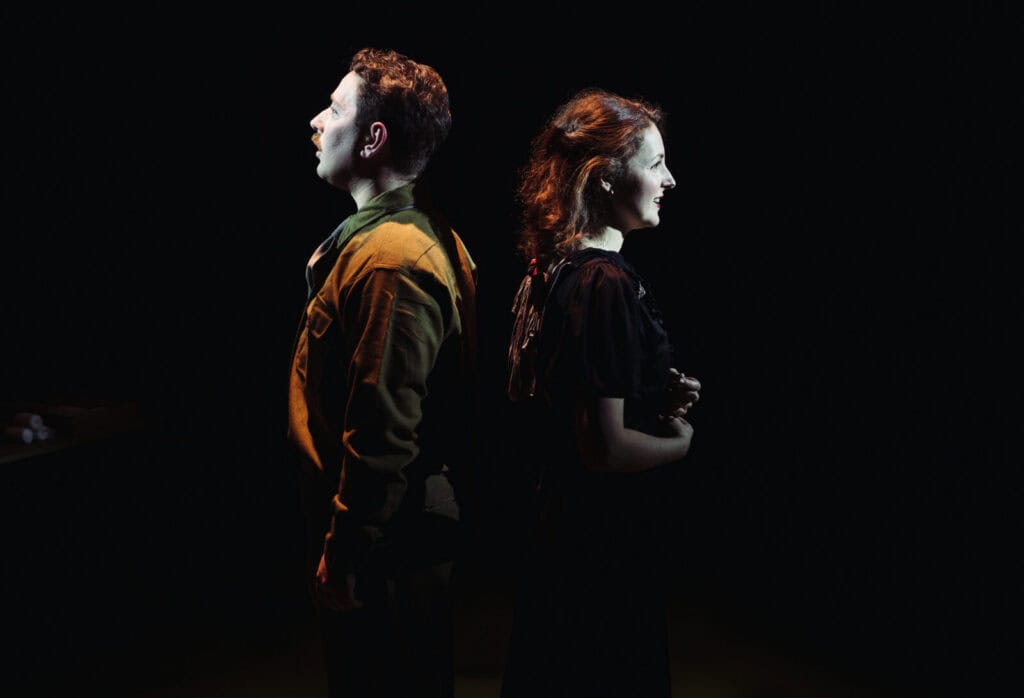
Sitting in the Arcola as crackly wartime radio filled the air, I found myself convinced that it doesn’t. Based on the true courtship of playwright Ken Ludwig’s own parents, the play follows U.S. Army Captain Jack Ludwig, played by Preston Nyman, a military doctor stationed in Oregon, and Eva Feiler as Louise Rabiner, an aspiring actress and dancer in New York City. They fall in love entirely through letters during the Second World War. Two performers, two desks, and a stage full of hanging correspondence do the rest.
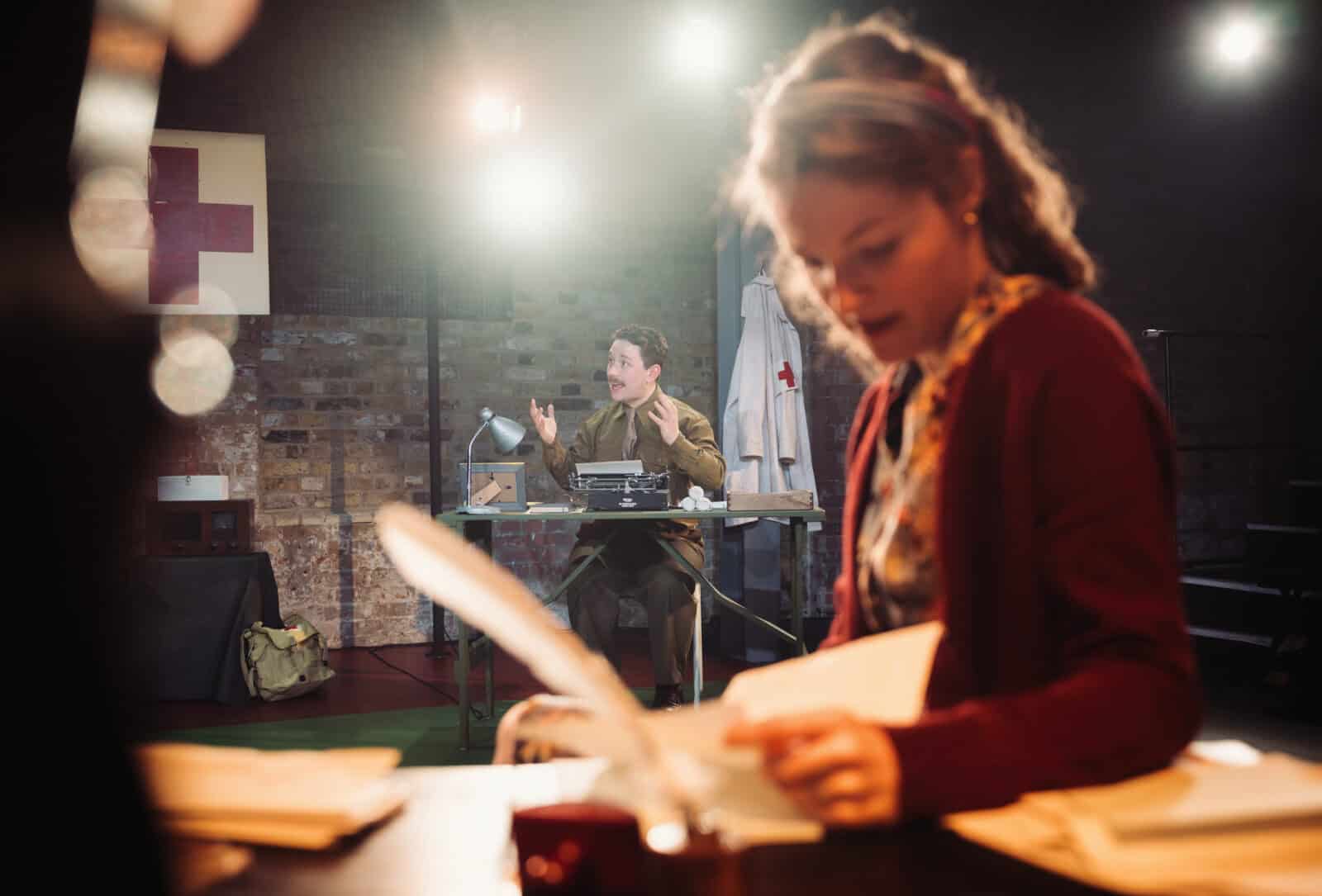
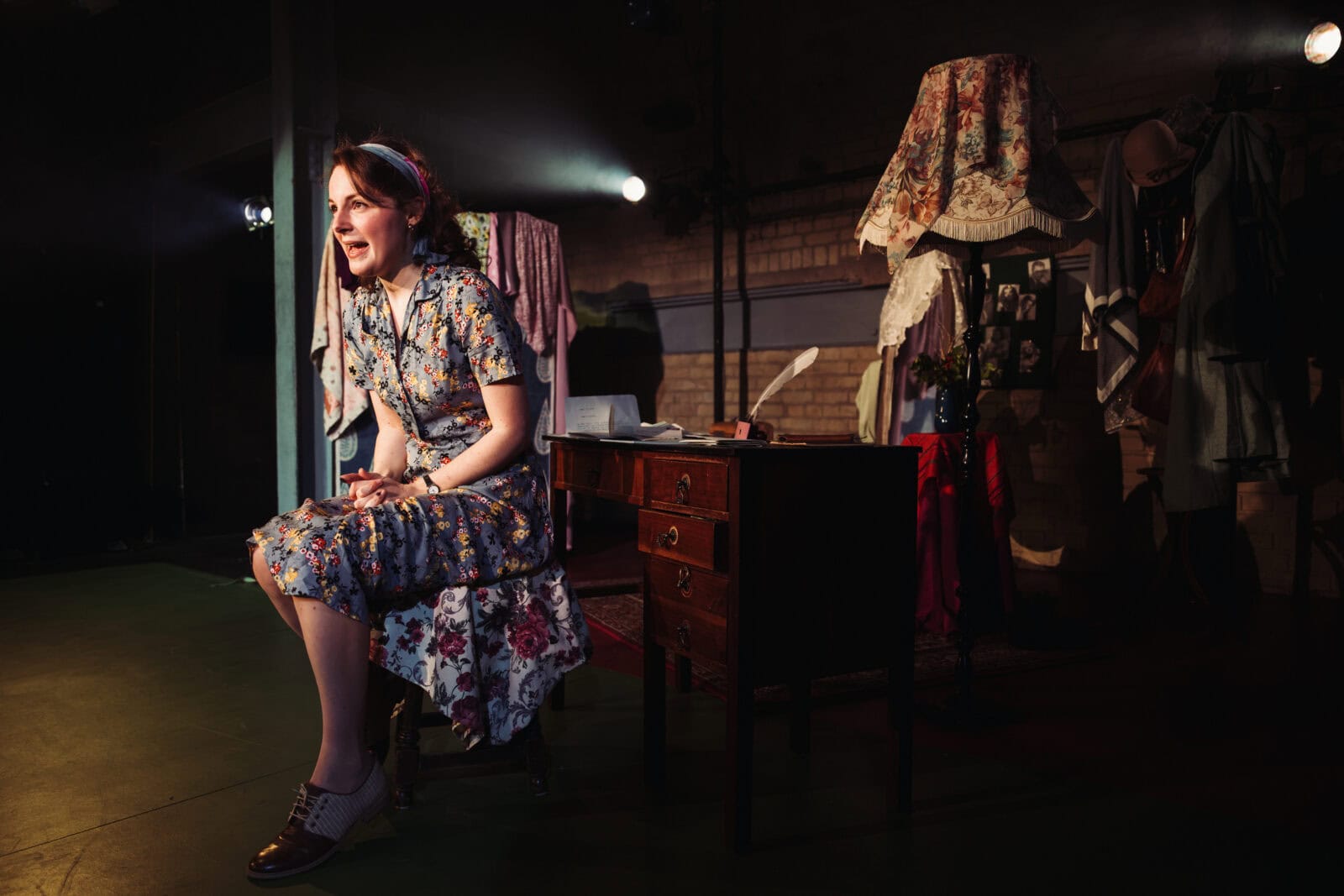
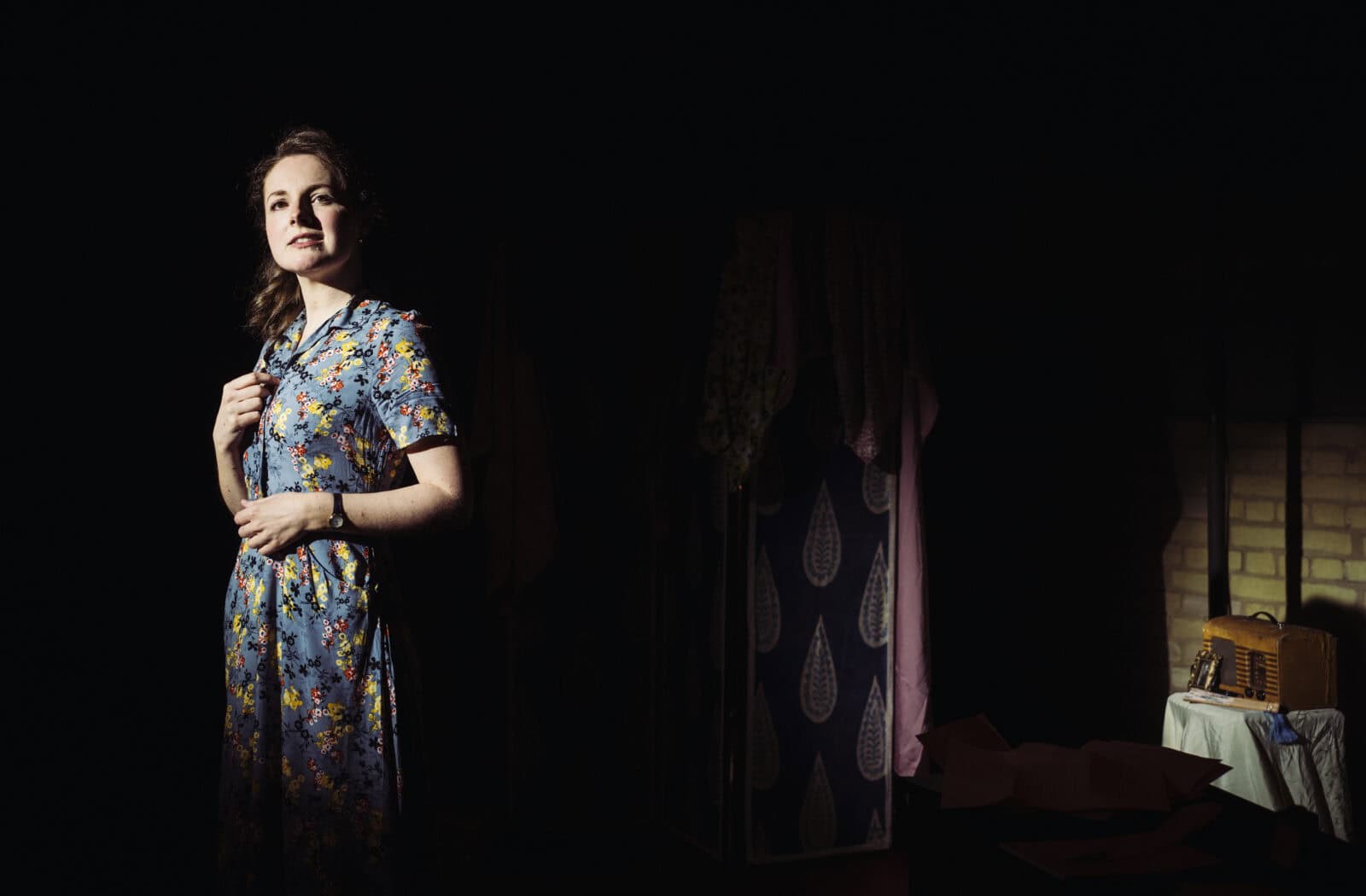
The set design does elegant work in establishing two separate worlds that feel like one. There’s the clinical order of a military doctor’s office on one side, with a desk bearing a typewriter, bandages, a family photograph, the Red Cross insignia mounted on metal bars above a telephone and stacked bags. On the other lives the warm disorder of a performer’s life with a floral-topped stool, a dressing mirror, a rack of costumes, and a Broadway street sign. Between them, strung above everything like a sky made of longing, hundreds of letters and envelopes hang from the ceiling. The staging makes clear from the very first moment what the play is about – two people living entirely separate lives, connected only by paper.
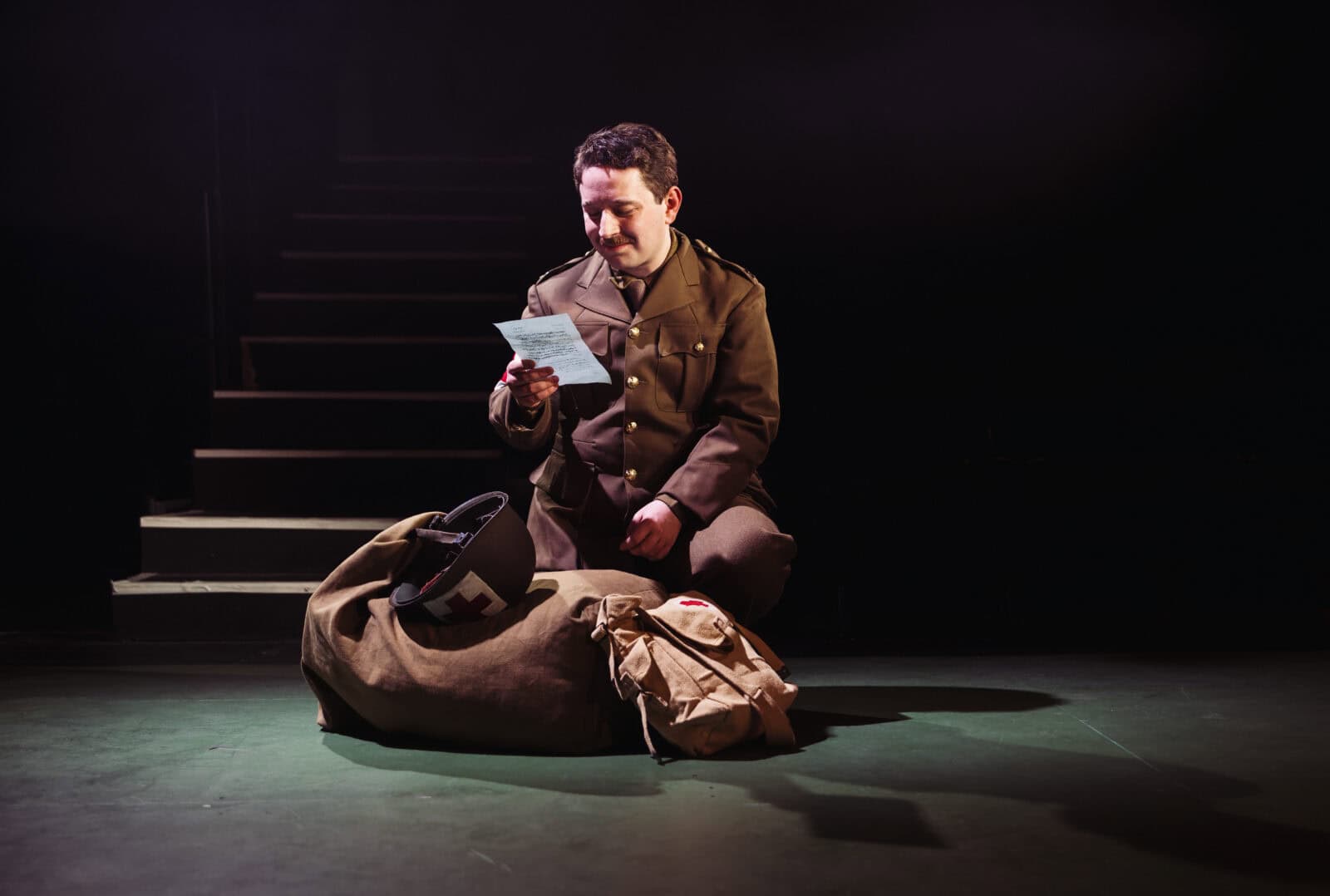
What makes the production sing is how fully both performers inhabit that separation while making you feel the connection across it. Nyman writes first as Jack, every keystroke deliberate, every formal salutation a small act of self-consciousness. He reads his letters aloud as he composes them, matter-of-fact, a little stiff, and the awkwardness is entirely endearing. It’s hard not to watch his face when she is reading her letters. That is where Nyman does his subtler work, with the slight softening, the poorly concealed delight of a reserved man discovering he is being charmed.
Feiler, meanwhile, brings something almost dreamy to Louise. She moves across her side of the stage in a trance as she composes, as though the writing carries her somewhere else, and it is a smart physical choice by director Simoon Reade, as it captures exactly the way putting words on paper can feel like its own form of travel.
Having both performers read their letters aloud could have felt distancing, but the direction finds something close to magic in the pacing. Wartime correspondence moved slowly in reality, days or weeks between letters. Here, the back and forth has the rhythm of flirtation, and it is that compression which makes the relationship feel so immediate. You understand how thoroughly you can come to know someone without sharing a room and how the accumulated details of someone’s days, their jokes, their anxieties, can build a portrait more intimate than many friendships conducted face to face.
There is a sequence midway through the play that stayed with me. Louise is touring and Jack is moving between postings as the war shifts around him, and rather than simply narrating this in letters, the production has them trace a kind of path around the stage. It becomes almost a waltz, almost in step, like one change in direction and they might just meet.
The war sits at the edges of everything. Jack is so angry at it and he is not a man given to romanticising life, yet he finds himself doing exactly that, reaching for colour and connection in circumstances designed to strip both away. I found myself genuinely anxious for them in a way you feel about people you have come to care for. I worried she might meet someone else on tour. I worried, more than once, that he might not make it home.
That the play generates this investment in a love story you know must have ended well, given it is the playwright’s own parents is a real achievement, and a testament to what Nyman and Feiler build together across that empty space between their two desks. You leave the Arcola with letters still hanging in your mind, and an envy for a courtship conducted entirely on the page.