
Israeli Defense Forces launched a series of deadly strikes in southern Lebanon on March 2, 2026, reigniting an ongoing war that has since killed more than 3,000 people and displaced at least a million.
Just a week before, over 2,000 kilometers away, the president of newborn nonprofit cultural association Cinema Without Borders, Sara Abou Said, had signed a contract with Rome’s prestigious movie theater Barberini, formalising the venue’s availability to host Italy’s first Festival of Lebanese Cinema in late May.
As I make my way towards the press conference and screening that serve as the official opening of the five-day festival, my mind can’t help but linger on the apparent dissonance in this sequence of events. How does a country at war, in which bombs are dropped and people killed on a daily basis, find the wherewithal to sponsor something as mundane as a film festival halfway across the continent?
The venue chosen for this opening does nothing to dispel the general contrast: I soon find myself sitting in a frescoed room in Palazzo Grazioli, a grand sixteenth-century baroque palace best known for serving as late Silvio Berlusconi’s Roman residence during his tenure in office and as the setting of his most flamboyant endeavors. Since 2024, the palace has housed Italy’s Foreign Press Association. This afternoon, it hosts a conversation about Lebanese cinema. As the festival’s director Sara Abou Said admits as she takes the stage, there were several moments over the past three months in which such a possibility seemed somewhat remote. “We had a moment of uncertainty after this last war started,” she says. “We wondered how we could do a film festival while in Lebanon people were being killed and entire neighbourhoods destroyed; frankly, we felt a bit ridiculous.”
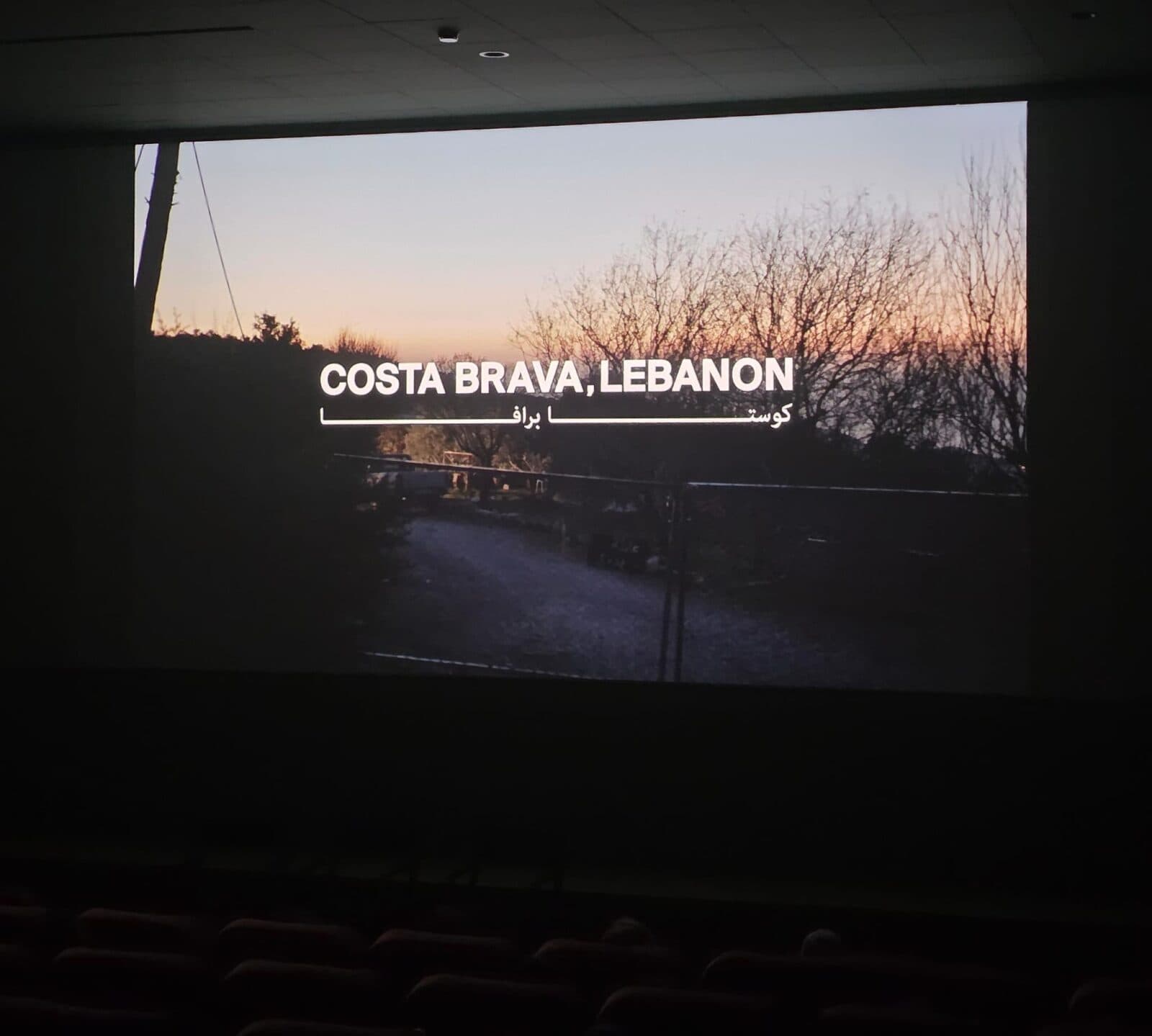
As Dr. Said and her co-organisers Sarah Hajjar, Francesca van deer Staay, and Maria Cristina Rigano pondered whether to call the whole thing off, they realised that screening ten carefully curated Lebanese films in one of Rome’s most storied movie theaters was a good idea not in spite of the war but because of it. “Cinema is an instrument of amplification,” says Dr. Said, a Lebanon-born and Rome-educated nuclear engineer who holds technical precision dear in all contexts. “This festival is a way to make audiences travel through a Lebanon we cannot visit right now, hoping that one day a lasting peace will come and you will all be able to visit this beautiful country in safety. In the current climate, we chose an approach grounded in cultural resistance.”
Lebanese cinema is, in many ways, precisely an exercise in cultural resistance. Largely self-financed, rendered with scarce resources and non-existent institutional support, and often subject to various forms of censorship, it has nonetheless never been more vital or more diverse. Part of the explanation lies in a peculiar demographic reality: as artistic director and CEO of film production company Black Light Film Francesca van Deer Staay points out, Lebanon’s population of 5.8 million is dwarfed by a diaspora estimated at between 14 to 18 million. “This is reflected in the films,” she says: “stories of exile, memory and plural identity that are capable of speaking to the world while remaining deeply rooted in the Middle East.”
The Lebanese film industry has produced about five hundred movies, mostly funded through international coproductions and foreign funds. Picking ten representative titles for screening was no easy task. Sarah Hajjar, president of France’s Festival of Lebanese Cinema and veteran of six editions of that festival (the seventh one will take place in October 2026 in Paris) was brought on board as co-artistic director precisely for her experience navigating that abundance. “As cultural mediators, we have a responsibility to raise the voices of Lebanon, especially in difficult times,” she says.
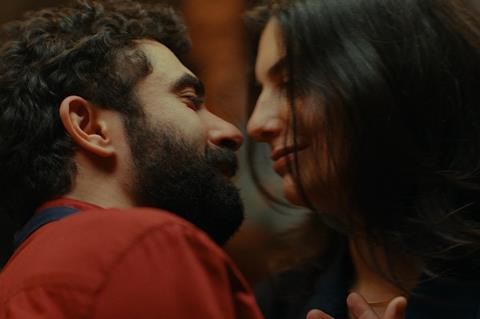
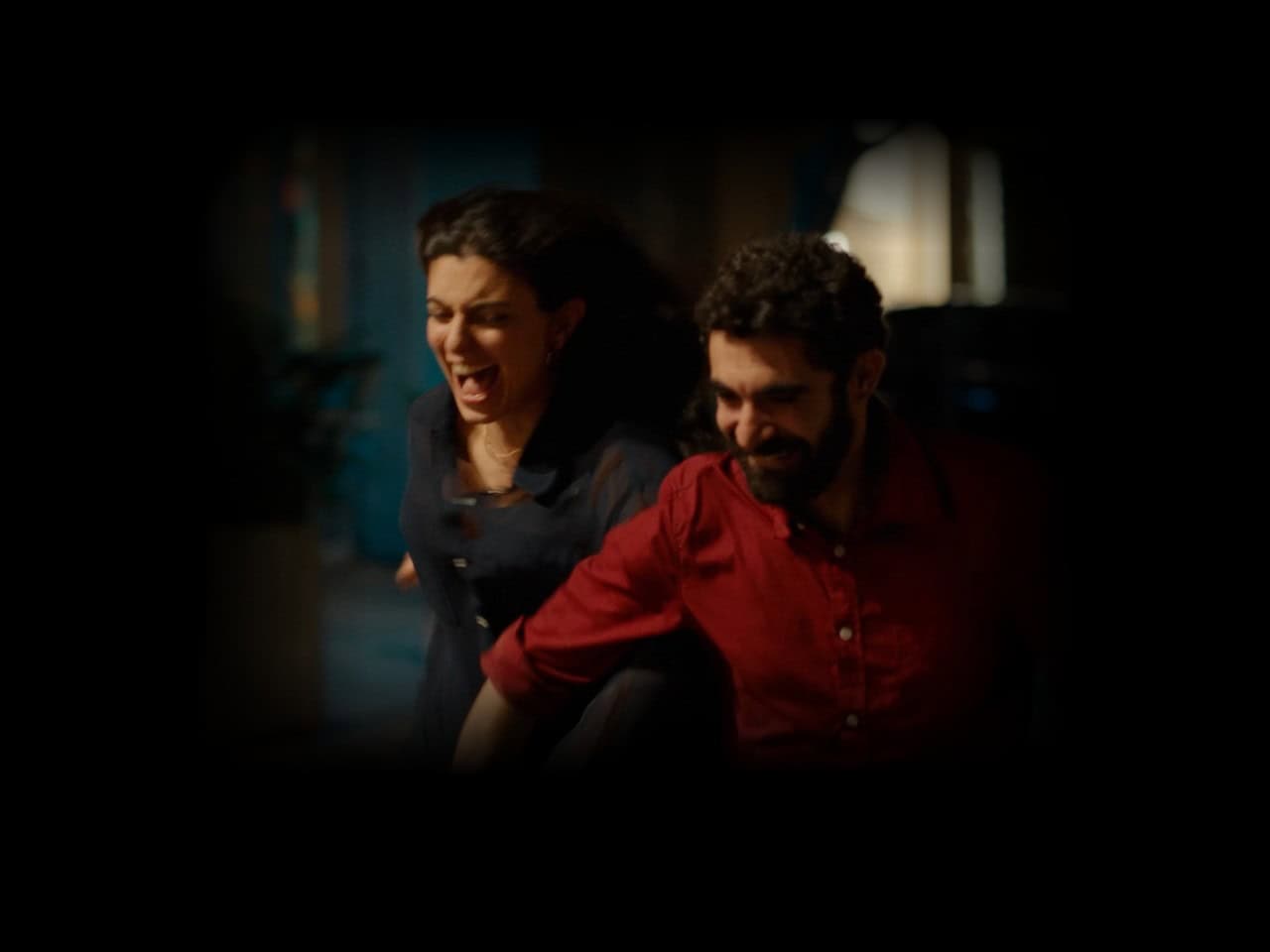
The film we are then shown, Cyril Aris’ debut film A Sad and Beautiful World (2025), embodies everything we have been told about Lebanese cinema’s cultural resilience. It follows Nino (Hasan Akil) and Yasmina (Mounia Akl) in a love story spanning three decades, navigating the ordinary adversities of love and the particular ones imposed by a country in which planning a future means wondering when the next war will start. After an endearing childhood romance as classmates, the two lose touch and by chance run into each other several decades later. By that point, Nino is the jovial and optimistic owner of a family restaurant, utterly in love with Lebanon and willing to obsessively believe in its redemption no matter how far-fetched. Yasmina, on the other hand, is a disillusioned workaholic at a public consultancy, attempting to help Lebanese institutions recover from the latest crisis while eyeing a one-way ticket to Germany. The story following their encounter is filled with an often indistinguishable mix of hope, pain, and passion, with the only constant being the magnetism between them.
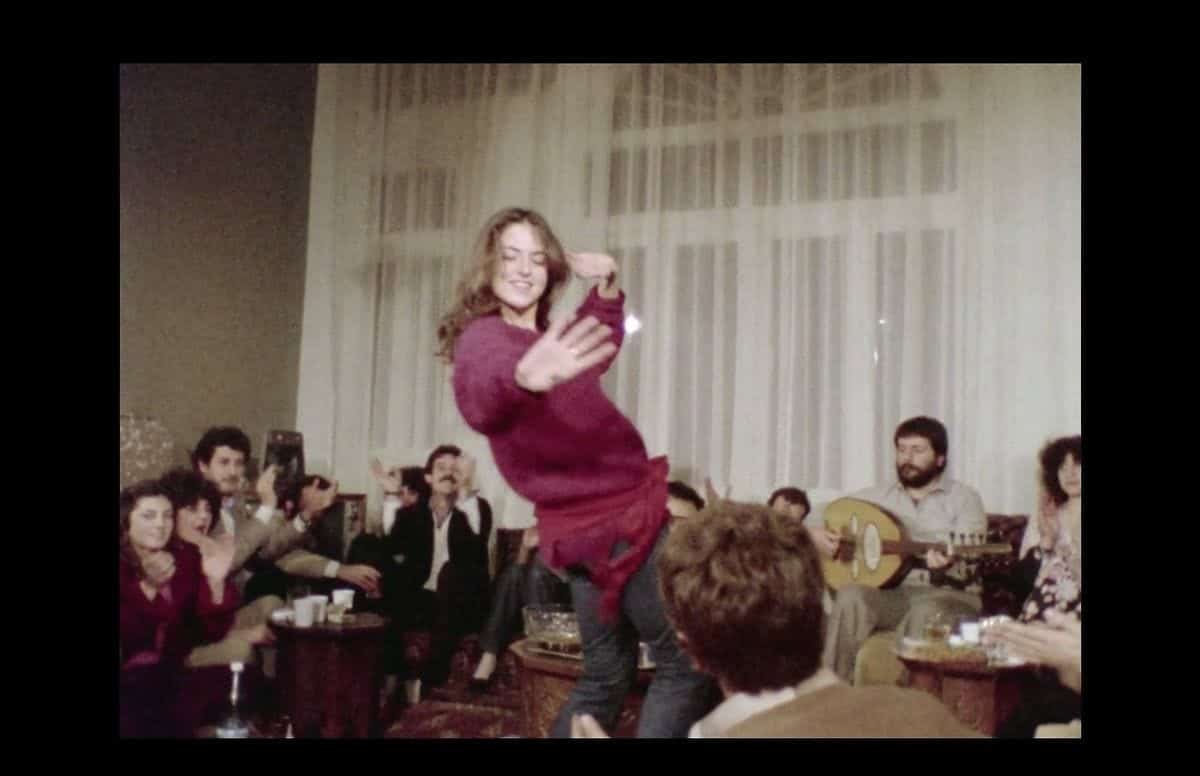
As the end credits roll, the sequence of laughter and sobs that characterised the screening converges in a spontaneous standing ovation. Mounia Akl walks in just in time to receive it. Ms. Akl, 36, is primarily a director and writer; for A Sad and Beautiful World, she stepped in front of the camera instead. “When Cyril asked me to exit my comfort zone, I reflected a lot,” she says. “I said yes because the screenplay captured the real experience of growing up in a country that you love so much but in which it is so difficult to dream.” The transition was not without its difficulties. “As a director, you are used to controlling every single decision, while acting requires a certain level of vulnerability. I think I grew a lot: you can’t be a good director if you are not willing to go to the places you want your actors to go.”
The question I arrived with, on how a country at war finds the wherewithal for a film festival, has, by the end of the evening, answered itself. “Lebanon continues to love life in spite of tragedies,” filmmaker Nadine Labaki had said days earlier at Cannes, a sentiment Sara Abou Said quoted approvingly from the stage. Geopolitics scholar Bernard Selwan El Khoury, also present at the event, suggested that the word resistance ought to be reclaimed from its military connotation and returned to culture.
Outside, the war continues. In here, though, for now, there is Lebanese wine, a selection of hummus and falafel and a room full of people who just gave a standing ovation to a love story. And judging by the packed screenings over the following five days, Lebanon’s stories have no trouble finding a room.


