
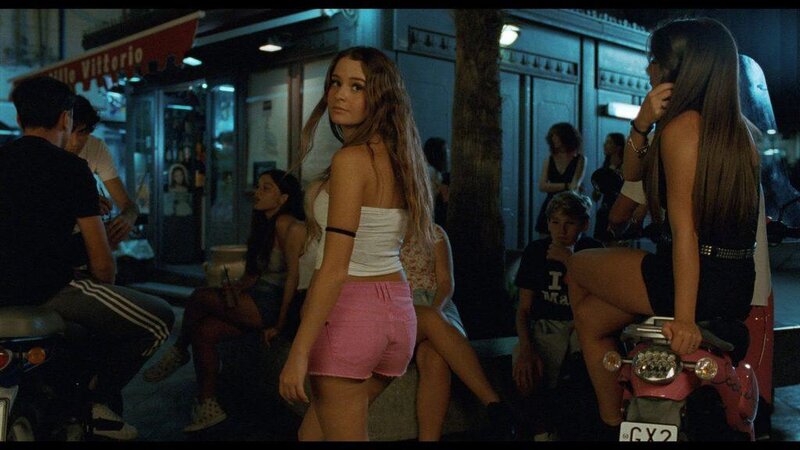
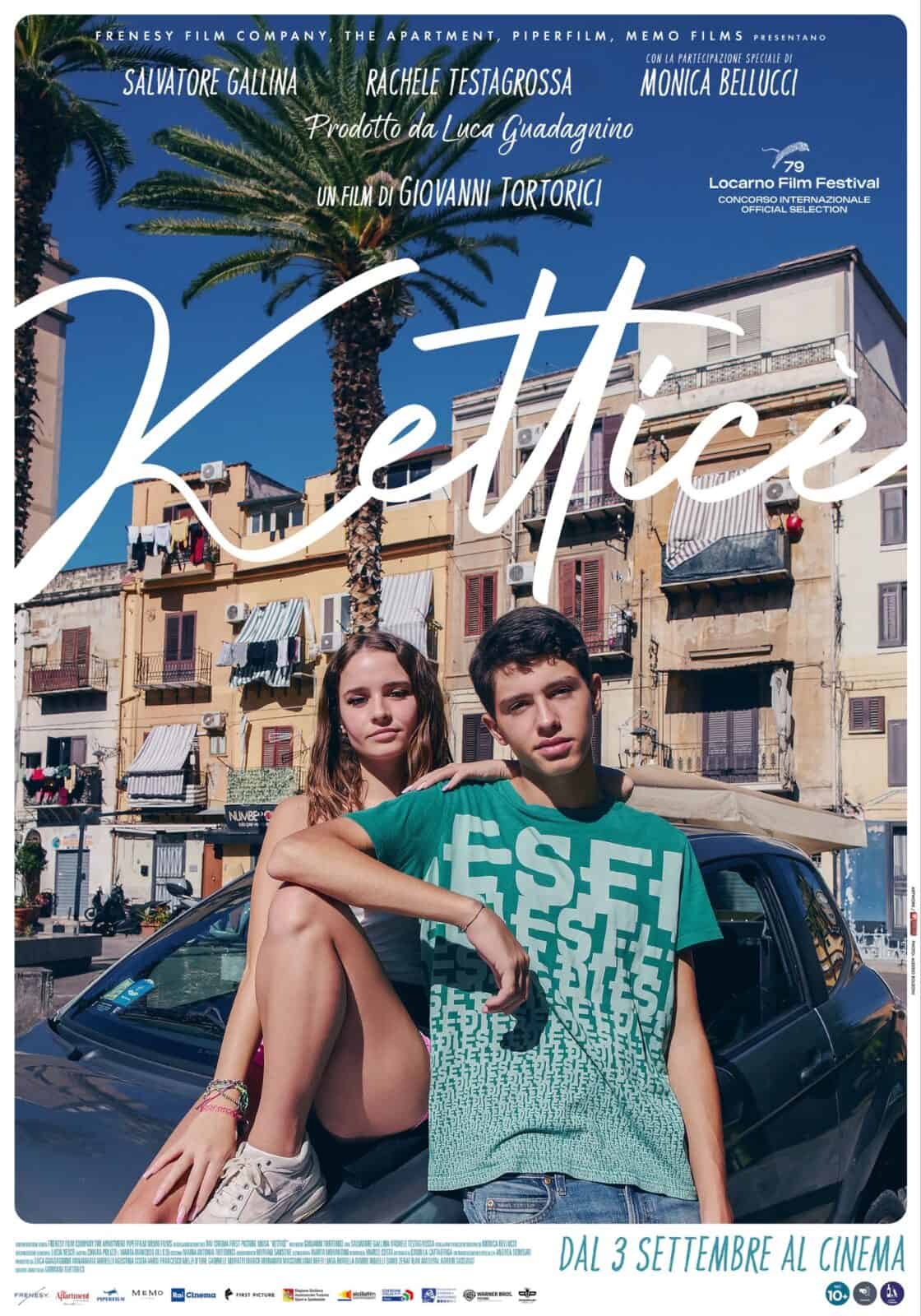
Following the critical success of his feature film debut, Diciannove, writer-director Giovanni Tortorici returns to the big screen at the 79th Locarno Film Festival with Ketticè, an intimate semi-autobiographical portrayal of adolescence produced by Luca Guadagnino. Set in Palermo, Sicily, in 2012, Ketticè follows Giulio, a sixteen-year-old boy juggling various pressures stemming from his family, his school, his friends, the media, and, most importantly, himself. The turning point comes with Ketty’s introduction into his daily life, as this teenage girl seems to be the only person he can share a genuine connection with, despite their very different social backgrounds. Salvatore Gallina and Rachele Testagrossa make their acting debut as Giulio and Ketty, while Monica Bellucci plays Giulio’s mother, winning the Best Performance award at Locarno.
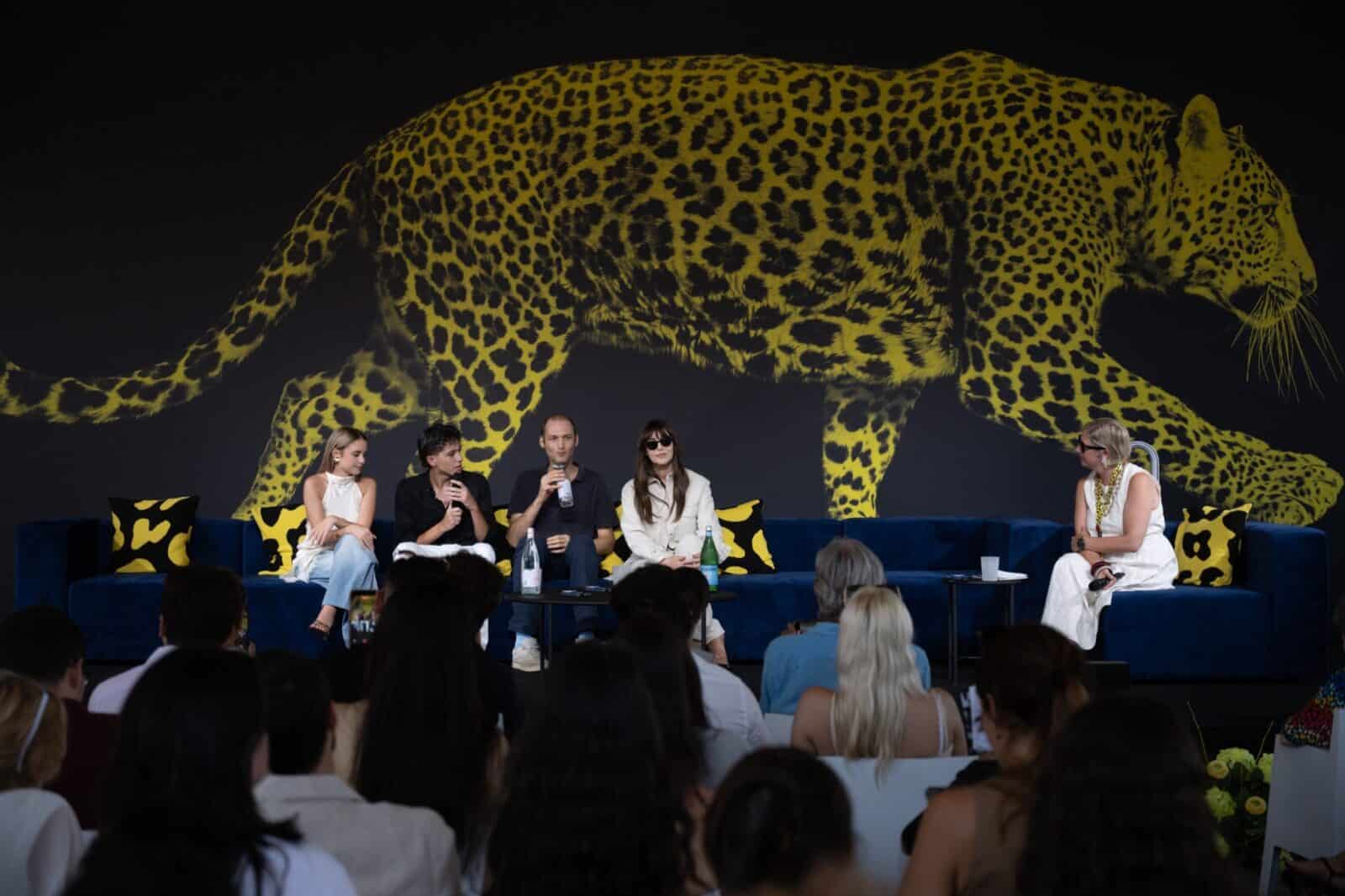
During my roundtable with Tortorici and Guadagnino, the latter praised Ketticè’s intoxicating truth and vivid reality, while Tortorici shed light on Giulio’s subconscious perception of school and home as places where he is forced to submit to adults’ demoralising life perspectives, which explains his rejection of such culture and his need for escapism. One of Giulio’s high school professors tells his pupils: “Don’t get offended, but you’re basically just farmhands taken away from the fields.” The adult figures in Giulio’s world are indeed bound to strict, fossilized rules that leave no room for intergenerational dialogue, a key motif Tortorici insists on in his films.
I met with Tortorici at the lively Gran Caffè Verbano in Piazza Grande to further discuss Ketticè’s themes, his filmmaking approach, and the characters’ inner and outer dimensions.
The Cold Magazine (CM): Ketticè is a wonderful movie, and although it is often quite comedic, I was very moved by it. Your unfiltered portrait of troubled adolescence in Palermo feels deeply authentic and relatable. Your directing approach observes without judging; it’s the characters who judge each other and themselves.
Giovanni Tortorici (GT): Yes, I think that was more or less my intention, in the sense that I don’t think approaching the narrative with a strong ideological and moralistic premise is right, on a methodological level. I really appreciate your comment because what you described is important to me, so I hope that’s what comes across.
CM: You previously mentioned that, although this is Giulio’s story, you chose the title Ketticè, which incorporates the name of the female main character, Ketty. Why did you pick this name?
GT: Ketty Mendola was the name of one of my friends while growing up in Palermo. I didn’t want to choose another because this one is too evocative and important for me – it’s irreplaceable. I decided to try to ask the real Ketty if I could use her name, and she very kindly accepted. She was very generous.
CM: When casting Giulio and Ketty, what attracted you to Salvatore Gallina and Rachele Testagrossa?
GT: We did so many castings with the two casting directors, Marta Mancuso and Chiara Polizzi, especially street casting. We visited schools, meeting spots, and clubs. We did scene readings, and Salvatore and Rachele convinced us from the very beginning. They worked really well together and had lots of chemistry. We couldn’t imagine anyone else playing these roles.
CM: Giulio and Ketty come from two very different social backgrounds, yet they immediately subconsciously recognise each other as equals. They fill each other’s existential voids, embodying a safe space where they can explore and define their identity.
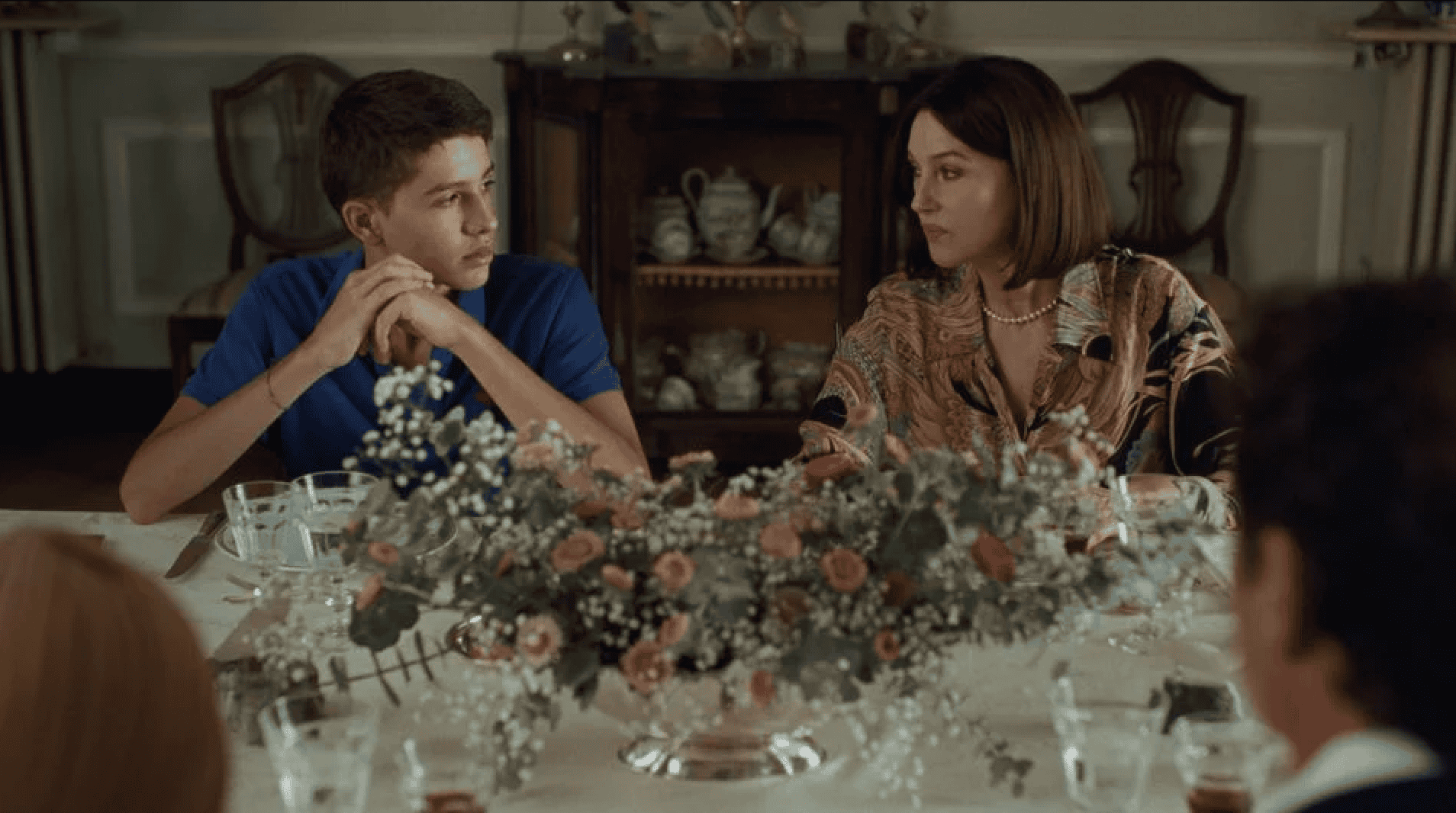
GT: Yes, Giulio comes from a very rigid, pervasive social class that wants to shape every aspect of his behaviour. The lunch scene is particularly significant in this respect: his grandmother is constantly correcting the way he speaks, his accent, at one point even offering diction lessons. Then, there’s his mother, played by Monica Bellucci, telling him how to sit at the table, to keep his elbows in, and so on.
This insistence on small social rules speaks about the world of conventions he has grown up in. Obviously, in Ketty he finds the kind of freedom and ease that he aspires to. At the same time, there’s a kind of elective affinity, perhaps, regardless of their social class, needs, and impulses they have to sublimate. There is something chemical between them, as well as a very strong and significant shared sense of irony.
CM: Most of the secondary characters, on the other hand, especially those who are supposed to be educational figures, suffocate Giulio with demands and expectations that only make him more confused. It is very difficult for Giulio to find a point of reference, especially a male one. This point of reference ultimately comes in the form of his female private tutor. What led you to make this choice?
GT: I think that throughout the story we see Giulio channelling all of these very strong needs into Ketty. Then, unfortunately, circumstances intervene. Everything seems to come crashing down around him, and even his friendship with Ketty gradually begins to fade and weaken. So, for a while, it feels as though everything is lost until he encounters this new female figure who can evidently fill the enormous void inside him.
CM: During the festival’s Q&A, I heard a few comments and questions from people who clearly belong to an older generation than ours. One person, for example, described your characters as “unusual”, whereas to me they all feel incredibly realistic. Someone else suggested that the female characters are portrayed as somewhat frivolous, while the male characters are given greater dignity. Again, that didn’t quite align with what I observed. So, this idea of a generational disconnection, which keeps resurfacing in your films, also seemed to play out in real life yesterday.
GT: My approach is always about trying to be as realistic as possible, so, to be honest, I was a little surprised. As you were saying, it’s strange to me when people describe the mother, for example, as though she were somewhat eccentric or out of the ordinary. I’ve met so many women like that from that particular social class. But what can I do? I’ll just accept it.
CM: You open the film with an establishing shot of Palermo, accompanied by Lebanese music. What does Palermo represent to you, both in real life and in front of the camera?
GT: The Palermo I wanted to portray was the Palermo I actually experienced during my adolescence. I didn’t want to shoot in the historic areas of Palermo, the culturally significant or touristy parts of the city, those more picturesque places. Instead, I wanted to return to the residential areas and the more neighbourhood-oriented side of Palermo, the places I spent time in when I was that age. So, once again, I wanted to use a very realistic approach, staying close to the city as I have seen it, experienced it, and continue to experience it.
CM: During our roundtable, I asked about the future of the film industry in Italy. Guadagnino spoke about it with a great deal of confidence, affirming that what’s truly important is “the mindset, which means how you work, what stories you want to tell, how you interpret reality, and how you run away from falseness”. What made you and your creative voice feel welcome within the Italian film industry?
GT: I have to say that I think I had a very privileged entry point into the Italian film industry. I started working with Luca Guadagnino as my very first experience on a film set, and he later produced my films. In a sense, it all began with him. I was able to share so much with the various people I worked with, from the crew to the producers.
There’s one producer in particular, Agustina Costa Varsi, whom I’m very close to and who produced both of my films. Then, there are producers Francesco Melzi d’Eril and Andrea Scrosati; the list goes on and on. All the people I’ve worked with have been important to me, and they have supported me enormously in bringing the films I wanted to make to life.
Ketticè will be screened at the 2026 BFI London Film Festival as part of the official competition.


