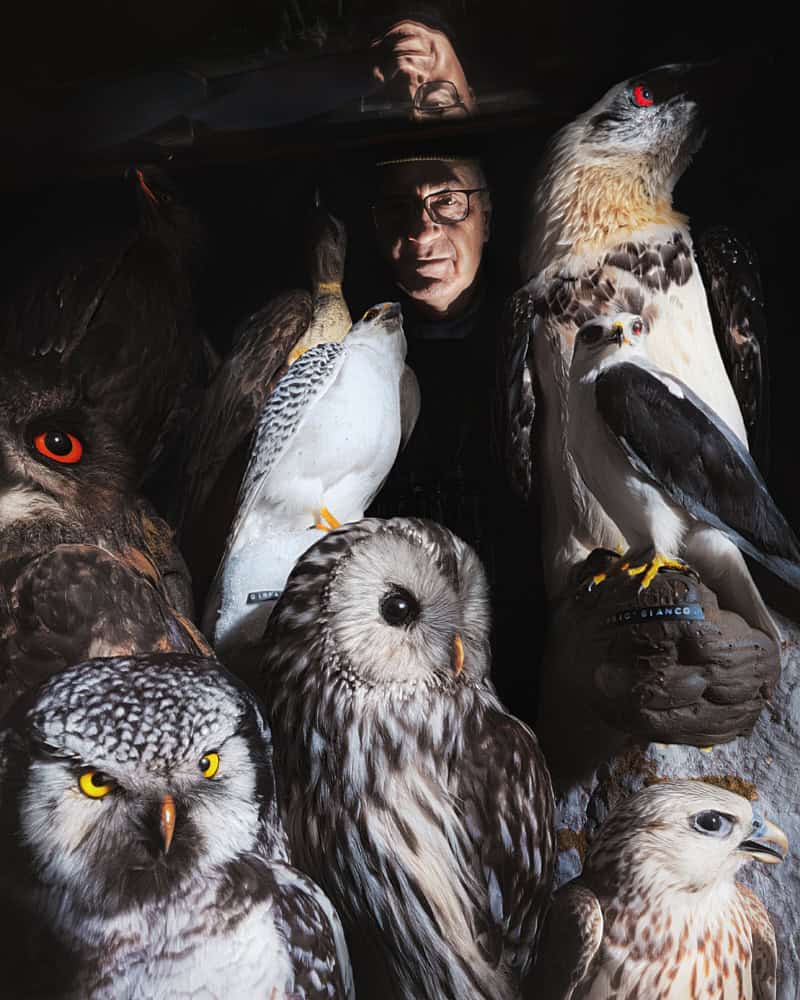
This article is part of a visual and narrative research project investigating contemporary wunderkammer: private rooms, obsessive collections, personal archives born from the desire to catalog the world, classify it, save at least a trace of it.
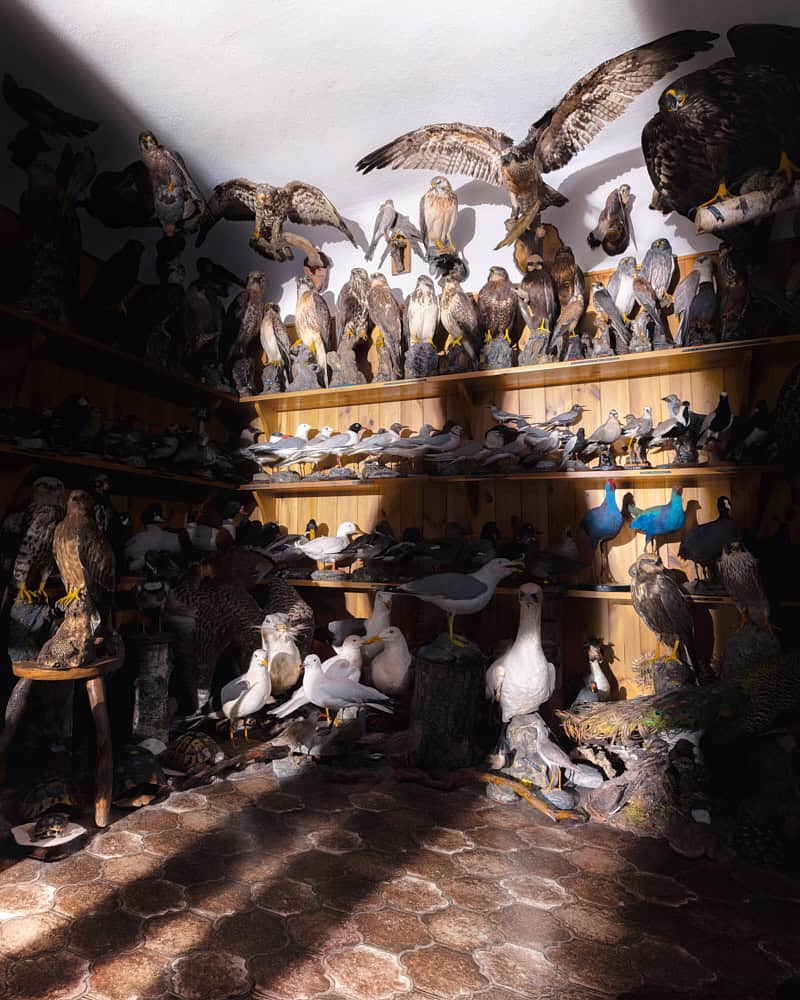
Through images and interviews, the project tells not only the stories of the collections, but above all of the people who created them: their passions, their obsessions, their urgencies. This is not an isolated case, but an open journey crossing different forms of collecting and accumulation, questioning the boundary between knowledge, memory, and the desire for possession.
Today we enter the wunderkammer of Luigi Magistrelli, ornithologist and animal collector. His is not a decorative collection, but a scientific and emotional archive: a room that preserves what, outside, is slowly disappearing.

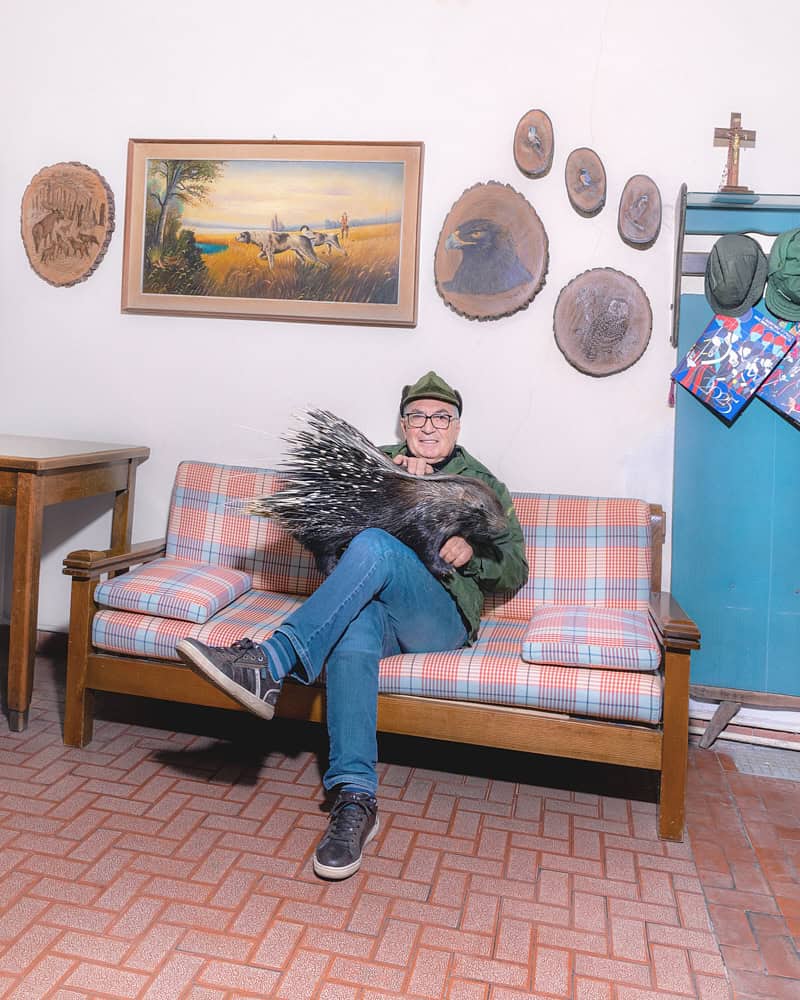
—
“It’s beautiful. It’s a biodiversity made up of insects too.”
Luigi says it right away, as a necessary premise. Because everything starts from there, from what can no longer be seen.
“In the woods, at night, it used to be full of animals. Now I can’t find the mole cricket anymore.”
When Luigi was a boy, it could be found everywhere, in everyone’s gardens. Today it has disappeared, like the lizard with green flashes, like the nightingale that sang at night on the hedges, like the swallows that can no longer find insects to eat.
“There’s nothing left there.”
The room where Luigi keeps his collection is silent; a silence that speaks, that tells of a world that no longer exists. Real animals and real nests, “no artifacts.” Everything is cared for, dusted every spring, protected with almost ritual attention.
“Now they just need to be respected, and we must try to defend them. All animals. Now people blame the bear, the wolves coming down from the mountains. But we sent them up there, and then we took away what they eat too.”
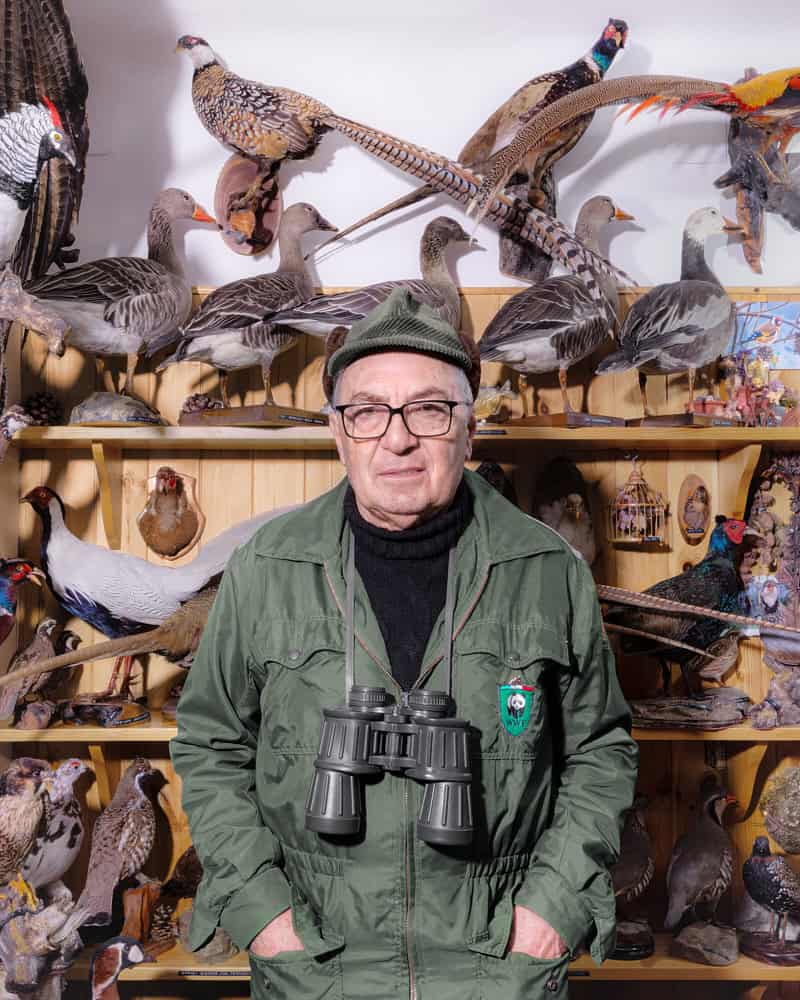

Many animals we now consider “ours” never really were.
“Pheasants were imported 300 years ago for hunting; now they’re all considered European, but they’re all Asian.”
Nature has always adapted, even to human selfishness. But now time is no longer enough.
Listen, Luigi—we ask the animal collector—if we involve you, does it make you uncomfortable?
“Not at all. Quite the opposite!”
Only one thing matters: documenting the Mediterranean fauna found in this room.
“You have to do the article in print for me. I come from another world.”
Luigi has been building this collection for fifty years, and for seventy he has lived what he calls his “illness.” It’s not accumulation, but memory and testimony.
“My interest was to preserve the memory of animals, of our land. Many can no longer be found. Recreating this archive today would be impossible. If we keep going like this, in a while these will be like the dinosaurs.”
Luigi knows each of the more than 900 European species; he could recognize an animal even from the smallest detail: a small red ring around the eye, the color of the claws, a pose on a branch.
“It always has to be a natural pose, because you can’t put up an animal that looks like a mannequin. That kestrel there is doing the Holy Spirit pose. It stops in mid-air, still fluttering its wings, staying suspended. It needs that to look down, to see the prey, whether there’s a little mouse underneath or whatever there is… Snap! It dives straight down.”
At one time, school groups came here to see biodiversity live. Not as a concept, but as a presence.
“When there were streetlights, at night, you’d see the moths and right after, the bat. Now you don’t see either one anymore. Kids can no longer tell a hen from a blackbird!”
Sadly, it’s very true: how many of us, questioning our own direct experience, could say when we last saw fireflies?
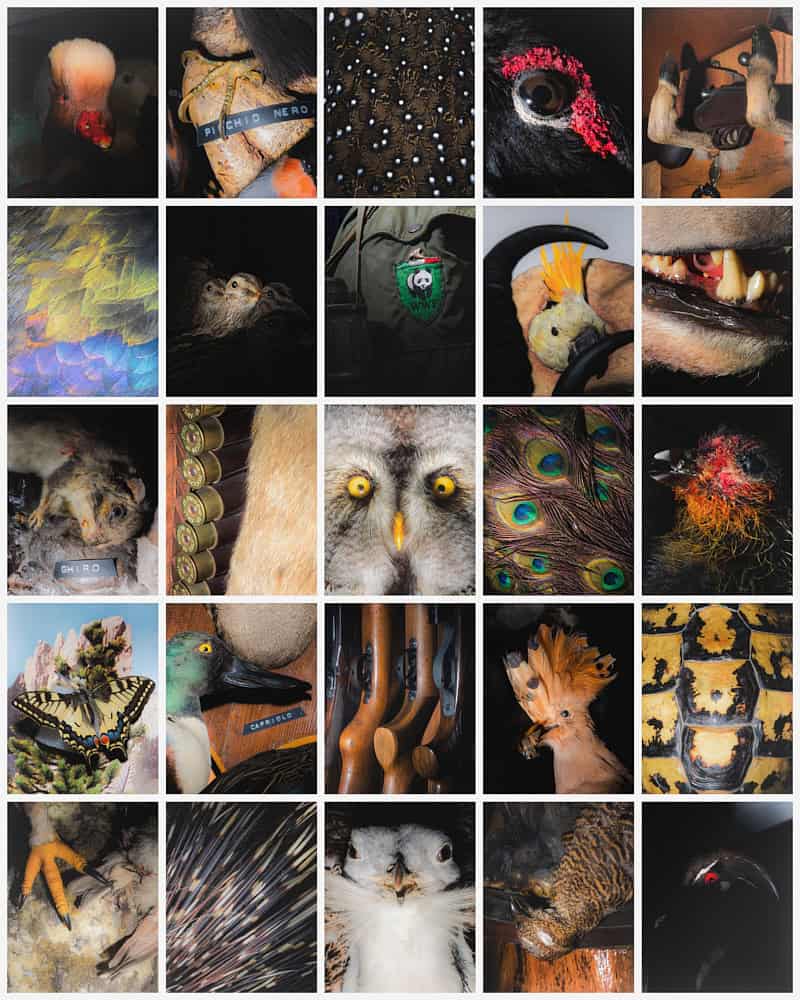
“Look what’s written there! Read it out loud, all the way to the end.”
If all the animals were to disappear,
man would die of the great loneliness of spirit.
The dream is not the future, it’s a legacy.
“I’d like to give everything to a museum. I don’t want anything to be sold, nor for it all to end up in some private home.”
Because beautiful things should be shown.
Because humans are not the masters of the world.
Because we can’t go on like this.
“We’re destroying everything. Even inside the sea.”
The room remains, and the animals watch. They have done so for fifty years and will continue as long as a caring hand, like Luigi’s, keeps dusting.
Thank you, Luigi—you’re a hero.