
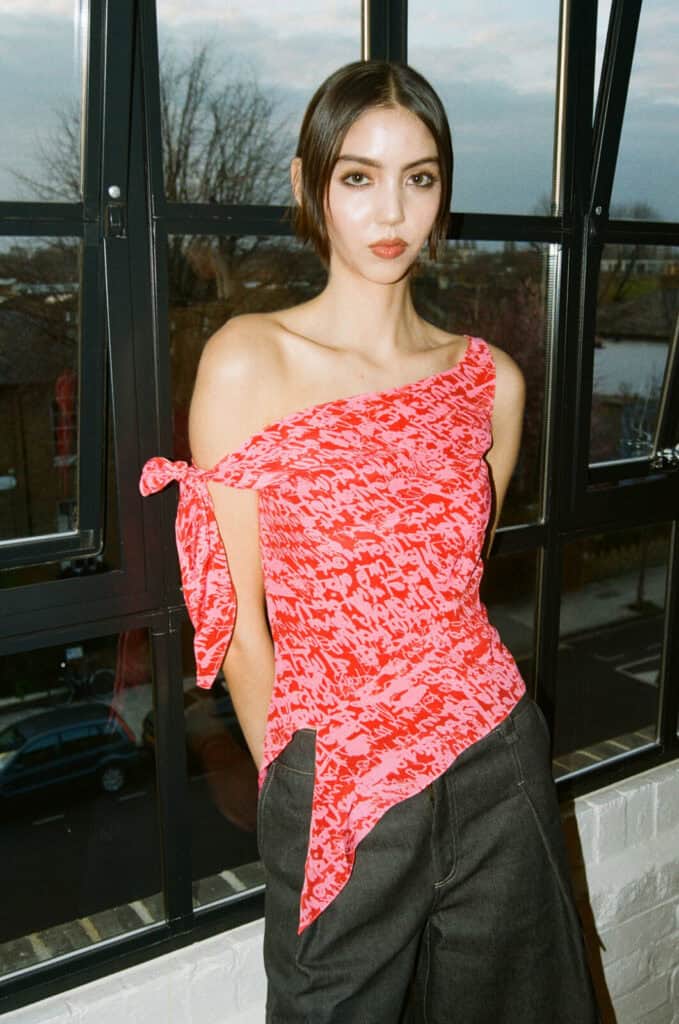
When a designer truly understands the people they are dressing, their success softly follows. This is certainly the case for Rose Canham, the founder of the London born-and-based brand Of Planet Earth. It only takes one conversation with Canham, or even a quick glance at the range of garments she makes, to see that her understanding of the women she dresses is a linchpin of the brand rather than a byproduct. While labels rarely dare to contend with the vastness of womanhood, “Of Planet Earth” embraces the challenge – even drawing inspiration from the “beautiful peculiarities” that come with being one. It is a quality that has led the label to shoot to cult status amongst the city’s fashion community.

For Canham, a Central Saint Martins graduate and Celine alumni, craftsmanship and imagination work in tandem to create capsules of flattering silhouettes. True to its name, the brand functions as a terrestrial entity, with every piece of clothing thought-up and developed in pace by a close-knit all-female team. The majority of their production happens in-house, with Canham utilising naturally made and deadstock fabrics wherever she can.
As the brand spends its last month hosting its Hackney Road based pop up, Cold speaks with Canham about everything from her passion for contemporary tailoring to her magpie-like sensibilities.
The Cold Magazine (CM): What made you want to go on to create your own business?
Rose Canham (RC): When you work for a major fashion house, a lot of the time, you don’t have creative control of what’s happening. So, the creative trajectory is limited. You also don’t get paid much and you don’t have a good work life balance! Having a business is something I struggle with sometimes, but at least it’s my own thing.
I always wanted to make my own brand, with clothes that felt accessible to girls like me. That was maybe frowned upon when I was at university, but real women need real clothes. When I started the brand I imagined how I wanted to look and feel. I always draped things on myself. And if it made me feel good, I knew that I wanted to make it.
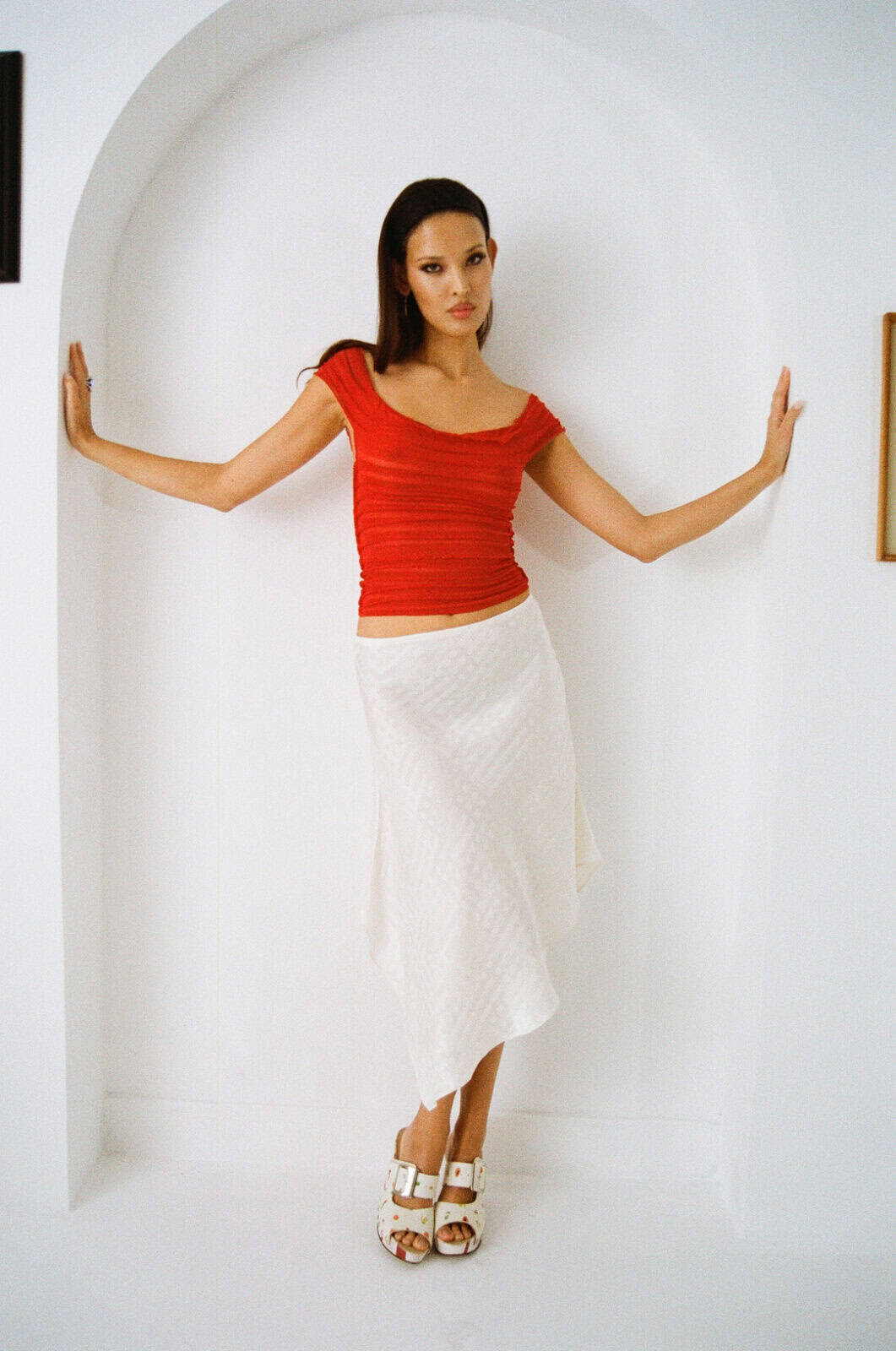
CM: I mean this in a good way, but you only have a limited amount of silhouettes and items that you’ve released. It all feels very purposeful. What is the process like?
RC: It takes ages for us to develop things. Getting a pattern right is not something that’s done in three days. Sometimes it can take over a year or even two years.
We use so many deadstock fabrics, and as we develop things into the future we want to make sure that we continue to produce garments in such good-quality fabrics. I still want to continue producing things in deadstock where I can. I think it’s so interesting going into a fabric shop and using the fabric as the start of your design. Like the material for our Gia Skirts, for example. Our supplier just came across it in Greece.
CM: You have had a few items that have gone viral – like The Pompeii top. Do you see this as a good thing?
RC: The Pompeii top was a happy accident. I’m not looking to make viral products, I’m looking to make clothes that women want to wear. I want to discover what the customers really want.
Right now, I want to knuckle down on the products that we already have and develop them more, not just keep releasing loads of new styles. The logistical stuff is the worst!
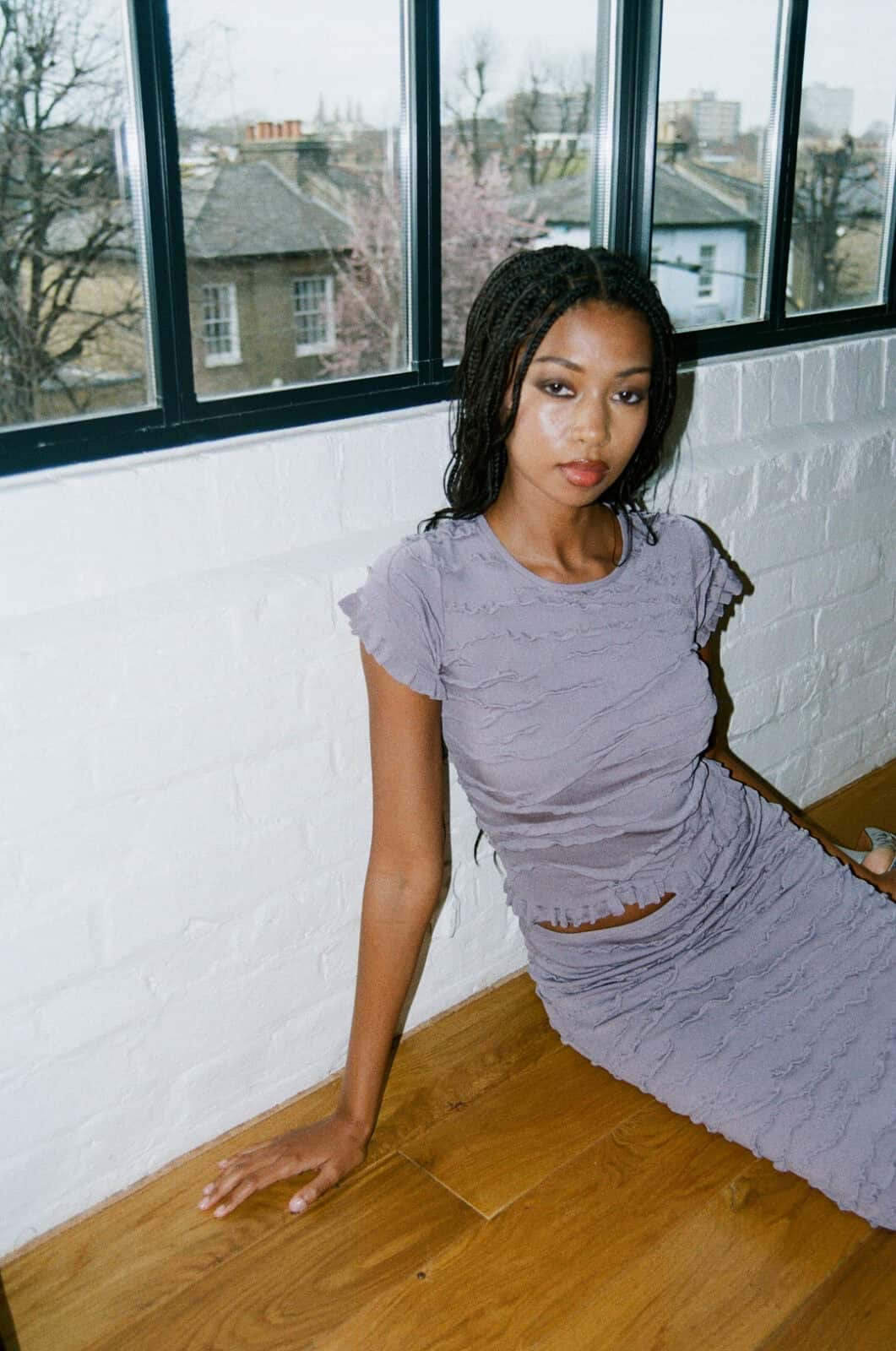
CM: When you are coming up with a new product, what is your creative process? What do you gather your inspiration from?
RC: I go to a lot of charity shops and spend a lot of time looking at furniture design or sculptures. A lot of 60s, 70s era furniture design. I really like touching handmade objects, too. It’s really nice to hold something that someone’s made with their own hands.
I also love Space Age design. When I was at university I became obsessed with space, which is also where the brand name came from. I love watching old sci-fi films and the costumes. Our wet-look Morena top is very barbarella. I’ve got a comic book where she has this wet look shield on her and the top looks like that.
I find a lot of the clothes on the high street extremely soulless. I’m not sure how much designers are involved in fast fashion now. All of the girls in my studio all studied fashion design so we all participated in the development and the design of the clothes. Which makes me really happy because I know that these girls are passionate about what they do. They love clothes like I do and they love talking to each other about them.

CM: Although you mainly exist online, you’ve been working out of your East London pop up over the summer. How has it been seeing your concept come to life in a physical space?
RC: It’s really surreal for me. I see girls come into the shop and they’re already wearing the brand and know what they’re looking for. When you’re selling online, you’re kind of detached. So it’s really amazing to see the clothes and the girls meet in person. Also, some products just do a lot better in store than online because photos don’t translate well enough!
You’re also constantly realising how different shaped women are, and how you need to make clothes that cater to a variety of different people. I do think there is something for everyone in the shop, though.


