

“I had a desire from early on to depict a girls’ nightlife scene – Caravaggio meets a 3am takeaway”, says Hattie Quigley. Her exhibition, SWELL, is the first solo show at Queensrollahouse, a former Rolls-Royce factory that has become the London home of Refusés.
Refusés is an experimental art and culture studio co-founded by Athina Sanvido and Juliette Miller, old friends from Paris. Both have a classical art-historical education, but they are interested in what happens when a gallery moves beyond established conventions.
The Salon des Refusés offers a precedent. Held in 1863 under Napoleon III, it exhibited works rejected by the official Paris Salon, incldìuding Édouard Manet’s Déjeuner sur l´herbe. Athina says it inspired the name and the idea behind Refusés: questioning the many restrictions that the art world can present as tradition.
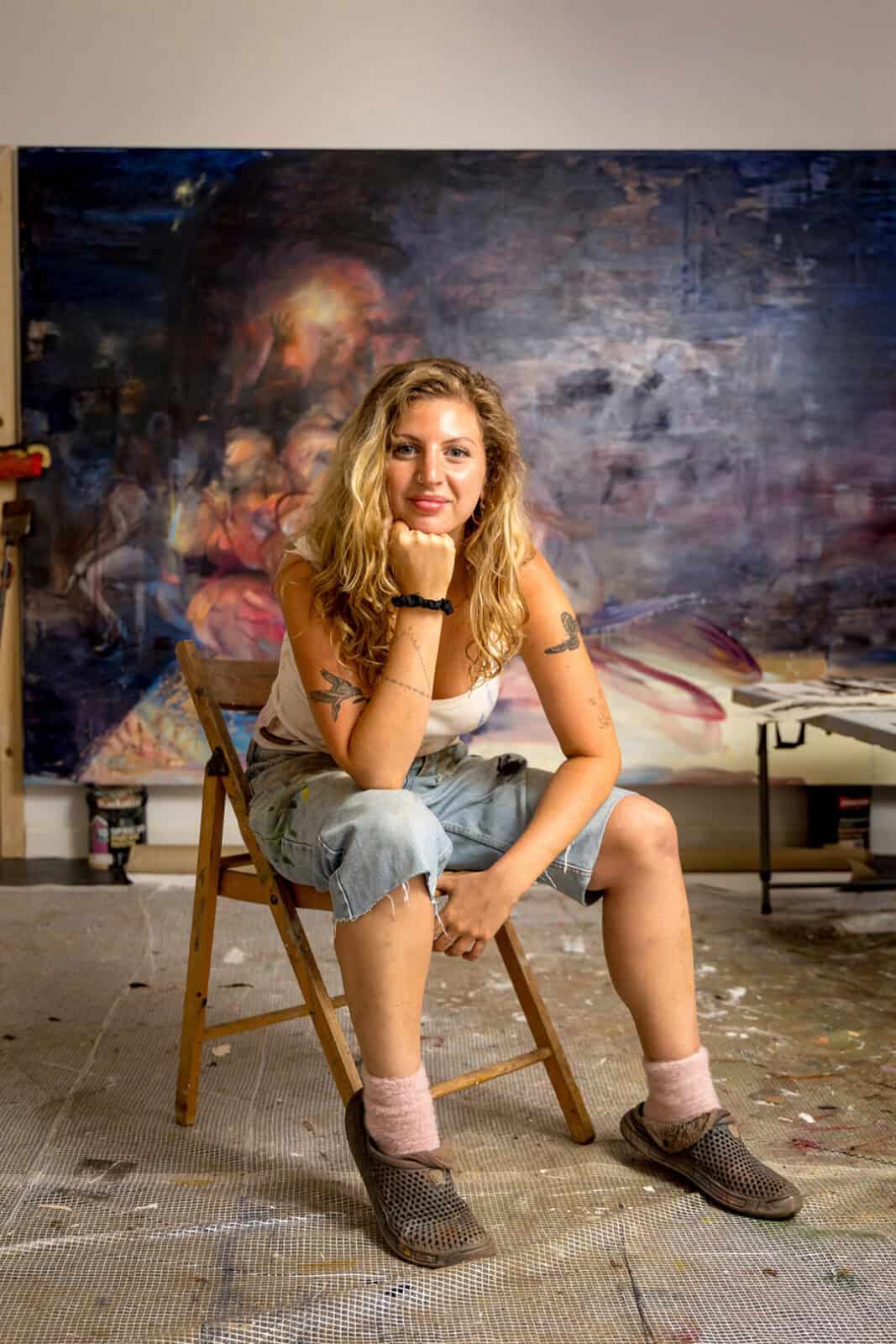
“The art world is supposed to be a creative industry, but it´s really strict – as a cultural practitioner, you’re supposed to follow new ideas and be impulsive,” says Athina. In the two years since its founding, Refusés has staged projects in London,New York, Portofino and Lugano, as well as other cultural hubs. Its programme moves between exhibitions, workshops, talks and informal gatherings, with no fixed duration for a show. Some run for a couple of weeks; others last six months. Athina and Juliette decide what suits the artist, the space and the audience.
Queensrollahouse, run by Henry Krokatis, is Refusés’ first permanent space. It retains its original 1950s factory flooring and has become a communal hub for artists and artisans. Taking on a London base is a significant shift for Refusés, though the founders intend to continue working across cities. Hattie’s relationship with them goes back to the beginning: her first shows in 2025 was also one of theirs. Athina and Juliette were drawn to both her work and the prospect of working with her. They loved Hattie because she’s someone they enjoy spending time with, though her subject matter is also a big sell for them both. Her interest in the female body, excess, and sexuality speaks to their ambition to bring people with different levels of familiarity with art into the same room.
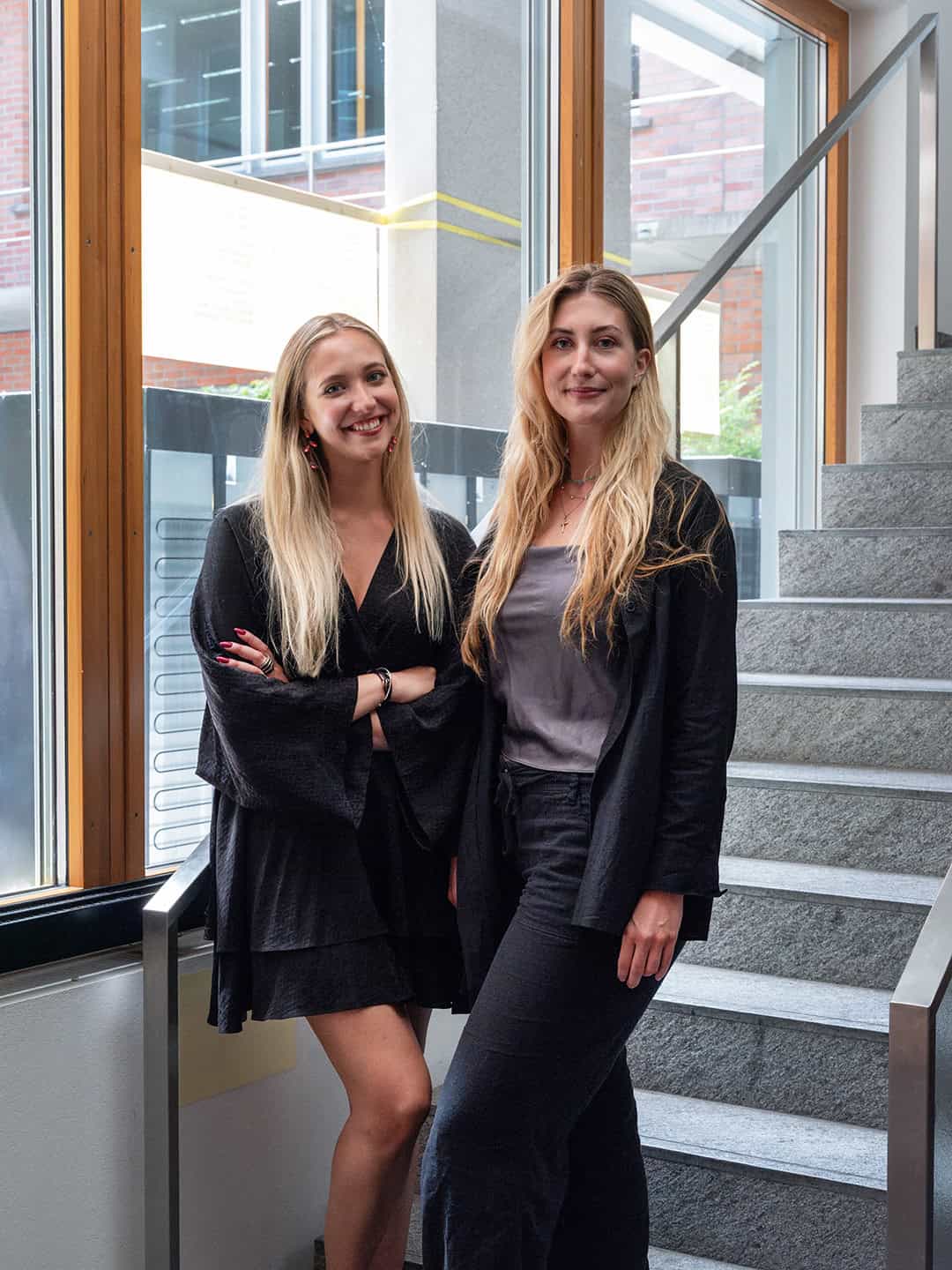
As I talk to Athina, I begin to see how Refusés uses its grounding in art history to make room for something less prescribed, an attempt to deliberately stand outside the White Cube. It wants to participate in the established art world while allowing its artists and audiences to shape how a gallery operates.
“Art doesn´t exist for me without art history”, writes Hattie. Rooted in revelry, nightlife, hedonism and the carnivalesque, SWELL explores a society in which excess is both celebrated and condemned. “I’m interested in the fact that oil painting has this enormous historical vocabulary for representing appetite, excess, pleasure, flesh, sexuality and spectacle,” she explains. Like her Refusés collaborators, she draws on the canon without feeling bound by its conventions. “Those things aren’t new — they’ve been represented for centuries. What changes is who’s doing the looking and who’s doing the painting. I’m just joining the club!”
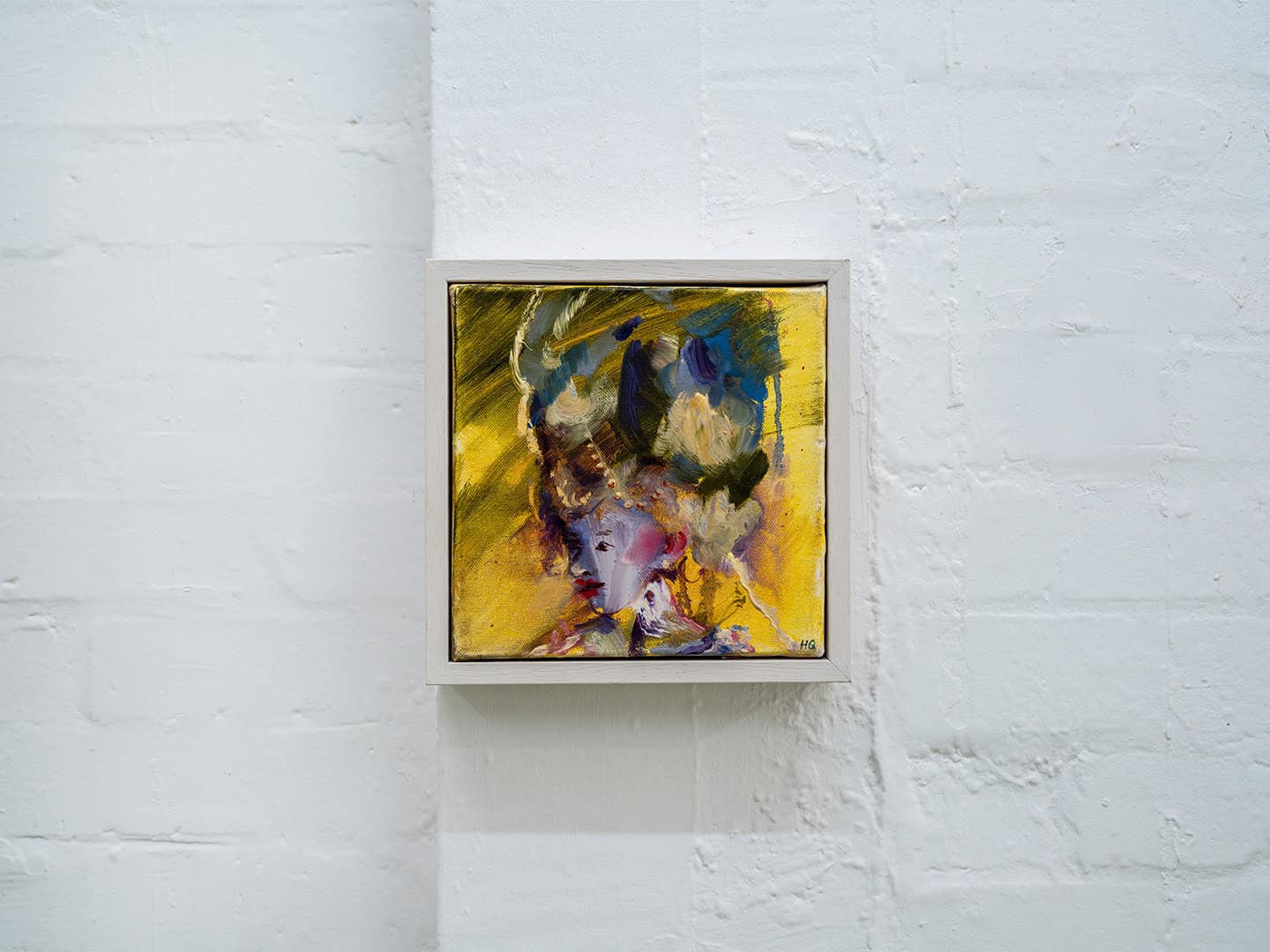
In Full Cream Silk, a woman in profile stares into the distance, her red lips parted in a half-smile, as though she is about to say something. Blues and maroons surround her hair and neck. The painting takes Sofia Coppola´s Marie Antoinette as a reference, and Hattie’s generous brushstrokes give its excess a physical presence.
“Ultimately painting is an incredibly physical substance sitting on a surface. It’s gloopy, viscous, fleshy, almost edible. I want the paintings to feel excessive in the same way that the subjects I’m thinking about are excessive.” In this way, Hattie´s paintings are a depiction, as well as an expression of, excess. In Chaser for a Collapsing Body, bodies gather in a nightlife scene; in Feel, Everything, Carnival unfolds through light and shades of red and yellow. One takes place at night, the other by day, but both capture the fleeting freedom of people being caught up in a crowd. The show critiques the historical pressure on women´s bodies, as well as a culture that constantly pushes consumption.
SWELL offers an introduction to Hattie’s work, but it also gives a sense of what Athina and Juliette wants Queensrollahouse to become. They plan to use the space for exhibitions, performances, talks, workshops, artist residencies and rooftop parties. “This space is a reference point for our community, and we still remain a nomadic platform”, says Athina.
For them, accessibility means feeling able to enjoy art and spend time with it, regardless of how much you know about it. In this way, there exists a clear gap between the gallery as an institution and the gallery as a social space. Refusés also advises art collectors. Athina is direct about the fact that his side of the business is commercial. It is no secret that galleries struggle. It is also no secret that hosting events and putting on traveling exhibitions can get pricey. The solution? Financial freedom. “It funds the mission, while also supporting the artists to be able to spend time in their studio without needing a second job”. Ideally, it will also give Athina and Juliette the means to discover and work with more artists. Refusés’s position is an interesting one: it refuses the gallery system while using a commercial service to sustain the parts of its programme it cares about.
When I asked Athina how she and Juliette describe themselves – businesswomen, researchers, educators? – she pauses and smiles. “All of those things”, she replies, chuckling at the number of roles she takes on each day.
“Art never goes on holiday,” Athina says. Refusés’ projects abroad and movement between cities remain central to its identity; Queensrollahouse gives the founders a place to return to and, importantly, a community to build with, even as their work continues elsewhere.
So what does it mean to be a refusé now? Hattie draws on centuries of painting while changing whose appetites and pleasures take centre stage. Athina and Juliette draw on the gallery model while adapting its spaces to the artists they work with. Many others are constantly probing and pushing the limits of what is possible in the art world, because they understand that there is not only one legitimate way to participate in it. Their refusal lies in deciding that there is more than one way to take part in the art world.
Upcoming Refusés events: Auudi Dorsey at Untitled Art, Houston (2–4 October) & Refusés at Queensrollahouse (Official opening 8 October)


