On the first of September 2007, Esquire magazine published a 12-page feature titled “Tonight on Dateline, This Man Will Die.” It chronicled the events leading up to the suicide of assistant district attorney Bill Conradt: For weeks, he had believed himself to be texting with a 13-year-old on the internet, but had really been corresponding with an adult posing as a child, as part of a sting operation for Dateline NBC’s popular reality TV show To Catch a Predator, hosted by journalist Chris Hansen.
The show ended that December after a three-year run. Its premise was simple: Engage with sexual predators online, lure them to a sting house where a decoy would act as the child they’d been speaking with, and surprise them in flagrante with a camera crew led by a square-jawed Hansen. In the show’s later episodes, a police ambush would also be awaiting the predators just beyond the doors, all recorded for the satisfaction of the more than 10 million Americans tuning in at the height of Predator’s fame.
Ajon Singh was among them, himself a pre-teen at the time. Today, he’s the writer behind Primetime, a retelling of the events detailed in the Esquire article. Starring Robert Pattinson (who also produced) and directed by Lance Oppenheim, the film is a kaleidoscopic look at Hansen, the inner workings of his production and crew, and the larger world of mid-2000s America. With its straight-edged, suited-up vigilante presenter, exposure of internet predation, use of the home as a critical location, and the child as the ultimate victim, To Catch a Predator seemed to perfectly bank on the fears of a post-9/11 society. And yet, the spectacle of public punishment has titillated audiences for centuries.
COLD sits down with Singh to discuss.
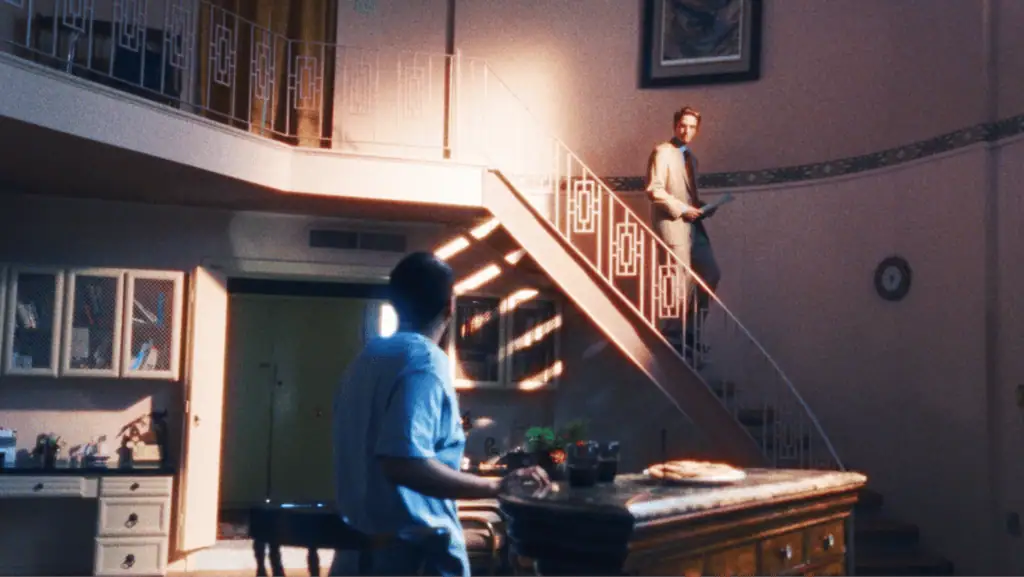
The Cold Magazine (CM): Primetime is not a straightforward biopic; for one, it’s based on an Esquire article, not on the life of Chris Hansen. What is it like to adapt an article to film, and why make the distinction?
Ajon Singh (AJ): The thing about the article that really informed the script was that it actually follows this 20-something struggling actor in Hollywood, and that’s what hooked me in. This young actor is struggling, and his big break is to play a 13-year-old boy who says, “Hey, I’m baking pizzas. Come on in. Hey, I’m baking cookies. Come on in.” Chris Hansen might be the A-list role of this film, but I thought the Decoy Dan character was its heart.
Then, the article also mentions a producer, and we thought to write a composite version of that producer with producers from that time. So we took all these things from the article, but there was also much more research than that. We used Chris’s book [To Catch a Predator: Protecting Your Kids from Online Enemies Already in Your Home], which I’ve read a few times; we listened to primary materials like Chris’s podcast; and we watched every episode a million times. I’ve done so much research – it’s hard to describe the months and months of research that lead up to writing the script.
That’s how you build the journalistic version of the biopic, but then the way I write and the way I perceive the world, and the way Lance [Oppenheim] and Rob [Pattinson] perceive the world is through a surrealist lens, I suppose. We put real life facts through a fever dream funnel, giving them a certain syrupiness. I really need whatever I write to be extremely dramatised and extremely fun and loud and weird.
CM: I was struck by how the film situates audiences in time. The idea of a primetime slot in the first place is very early aughts, then you have Lost, and the Iraq War on TV… I was wondering how important that was to the scriptwriting process?
AJ: It was crucial. I was around 10 years old when Predator was on, so I was watching it at the most impressionable time in my life. To this day, I think of the colour of cereal boxes and the toothpaste at the time – they felt brighter and so vivid it almost gives you nausea. A big part of writing a movie in this period was trying to capture that nostalgia, and also capturing that feeling for audiences who might be too young to have experienced the early 2000s. It was an odd time, and a big thing that Lance and I talked about was how confused culture was after 9/11.
We lived in this traumatised world that was coping, but was also very commercial and very capitalist. The country was at war. The country was angry. You don’t even know exactly who you’re angry at or what you’re angry about. It was a very confusing time, and it’s extra confusing if you’re 10 years old, so you have no idea really what’s going on. Capturing the feeling of that moment was essential. It’s why we used cameras from that time to film as well, because we wanted it to feel exactly right.
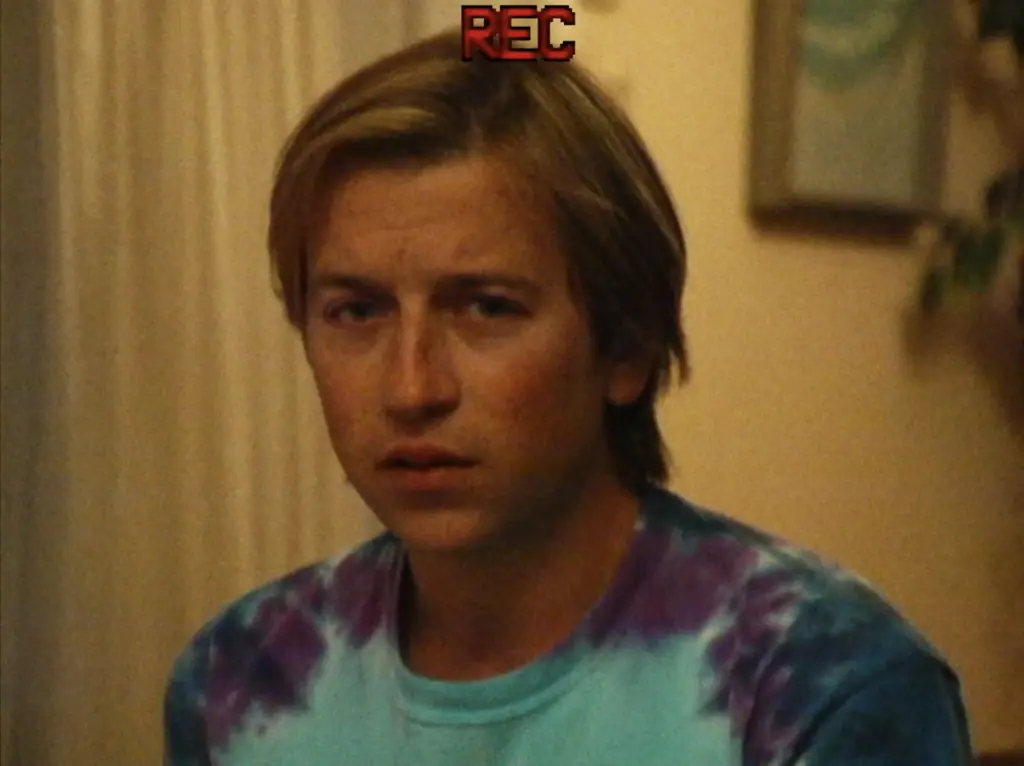
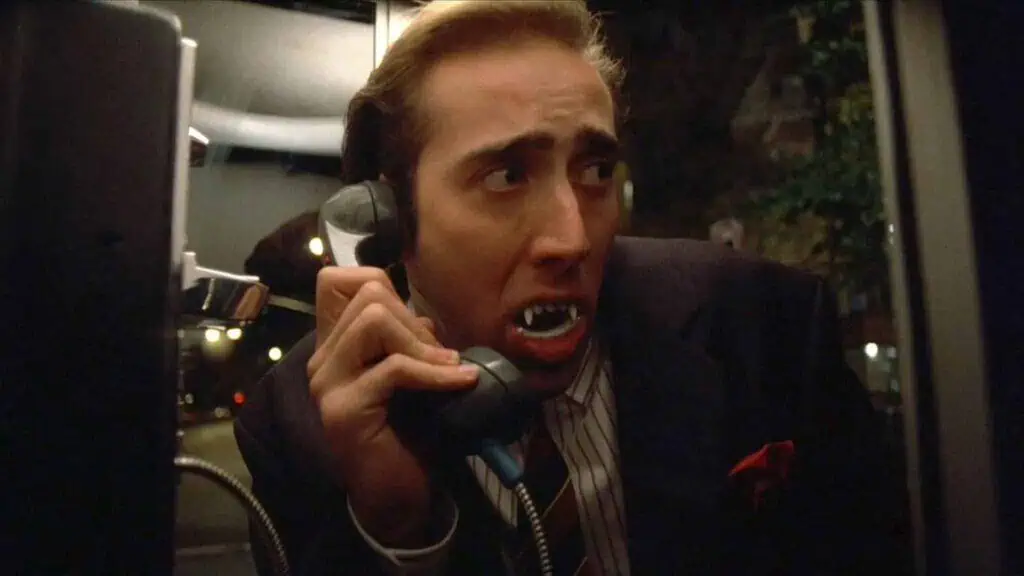
CM: On social media, the idea that Primetime plays out like a Dracula story has really blown up. Was it a purposeful part of the script?
AJ: We talked about it in terms of visual references, like when Hansen descends the stairs. But it’s really funny to see how the Dracula of it all has taken a life of its own on the internet. I won’t comment more on the Dracula stuff – I’m enjoying watching people interpret the film in their own ways, and there are things that we talked about. I get a kick out of it, and it’s beautiful.
CM: Talking about the internet: Chris Hansen himself has had an afterlife of his own post-Predator, and I was wondering if that influenced his characterisation?
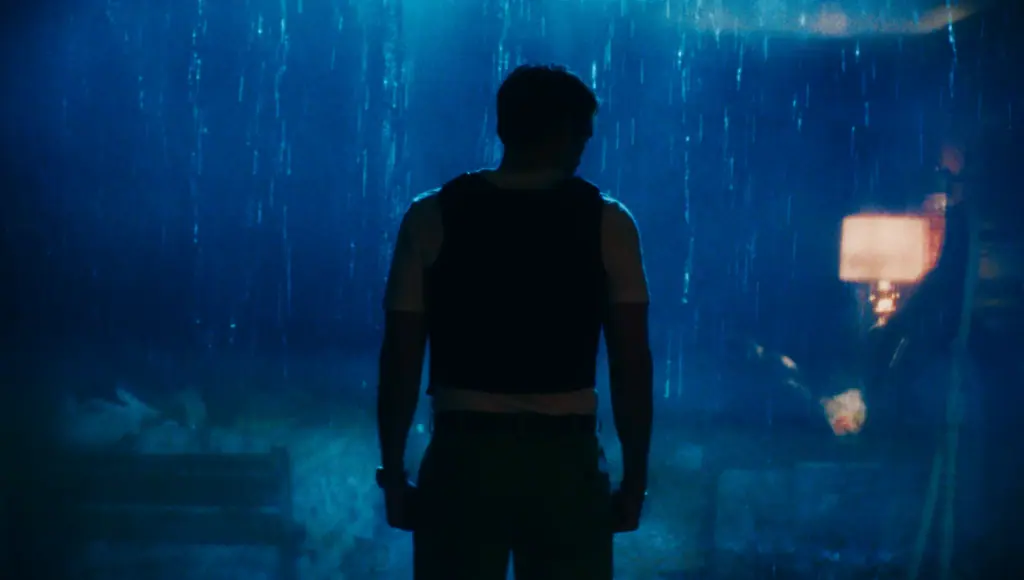
AJ: It played a huge part. We talked about the term media collage, but there’s also a Chris Hansen collage, in the film. Rob is not playing a photorealistic mimicry of Chris Hansen – he’s playing all of the versions of Hansen, even the self saturated versions that he’s done over the years. I think it was a really delicate performance because, again, we didn’t want to make a typical biopic. We wanted to do a biopic through the refraction of the internet, then refracted again and refracted again. It keeps bending and bending and bending, so you’re telling a version of Chris Hansen that exists through the filtration process of the internet.
CM: How long did you work on this script? How did it change after it was picked up?
AJ: The project was dead. Nobody had engaged with it at all for a long time. And then, out of the blue, Rob [Pattinson and his producing partner Brighton McClosky] called me. Eventually, as we were sorting things out, they gave Lance the script, then Lance reached out to me.
The thing was, when Rob came on early, it was only as a producer. So it took a lot of convincing to get him to act in the movie, and that’s where Lance and I had to do this sort of courting ritual, like birds. It took a lot of talking, and we had this one epic night where we were up very late at Rob’s house, talking about the character and the performance, and the mysticism of punishment in the public square. By the end of the night, Rob was reciting lines from the script and talking about running around the local reservoir listening to Chris Hansen’s podcast. We had a feeling that he was leaning in and possibly going to do the role.
That’s when I did this big pass on the character to try to get Rob to do the movie. That was with the help of hours and hours of conversations with Lance about what exactly I should do and what we should try to tackle. Once I’d done it, we sent the script to Rob, and he was like, “Let’s do it, let’s go,” which was crazy.
CM: When I heard about the film, the first thing I thought about was the TikTok creators who were basically doing To Catch a Predator, but just beating the predators up on video. And of course, the potential of a public execution happening in the U.S. right now. So I’m just wondering where you think the film fits in today’s world?
AJ: I mean, I think you said it. I think the thesis of the film is that this is not new. This is an ancient practice. Public humiliation and punishment has always existed, at least as long as I can research. We’ve had public executions, public humiliation, public punishment – and that’s not to judge it. I’m trying to approach this topic without moralising on it. In fact, I’m more trying to analyse it. Is it in the human condition to engage in this sort of thing, whether it be on the punishing side or the voyeur side? I think we’re all complicit.
I think some people want me to condemn To Catch a Predator, but that would make me a hypocrite because I was one of its biggest fans. But what I am trying to do is shine a spotlight on what it is about humanity that consistently engages in this practice. Part of it is that there are a lot of people in power and they do awful, horrible things and they don’t see any punishment for it. So I think what Chris Hansen did was: Using network television, he allowed people to see justice doled out every single episode. I think it gave people a release. It gave people hope, and you know that’s a good thing. But I also wonder about the human need to see this sort of thing on network television as entertainment. What does that say about us? I don’t know.