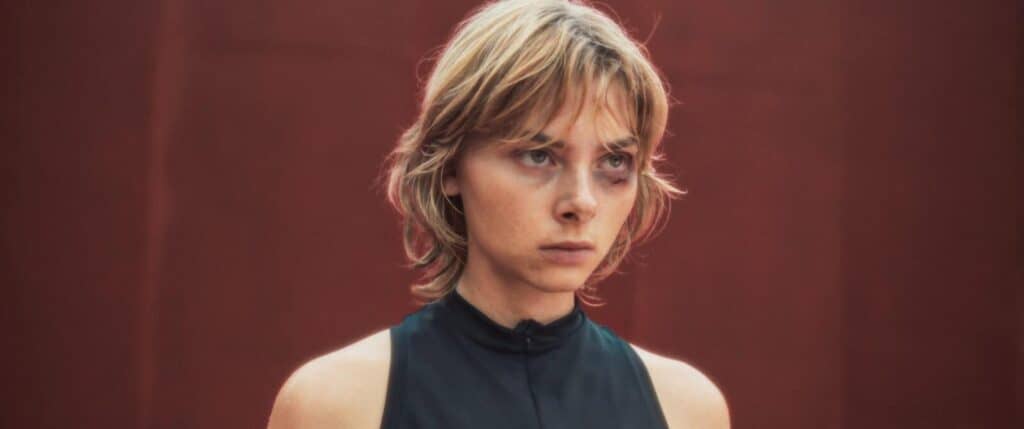
Suspiria (2018) meets Challengers (2024) in Bloody Tennis: a deliciously freaky new body horror from German director Nikias Chryssos. The film had its world premiere this summer at the 79th Locarno Film Festival, which I had the pleasure of attending. It follows Sophie, an American teenager who moves to a prestigious tennis academy reserved for the crème de la crème of the sport. There, the girls endure a brutal training regimen and a questionable diet to determine who will prove worthy of competing at the next Wimbledon tournament.
In the world of Bloody Tennis, winning becomes a totalising mindset, pushing the girls to annihilate not only their opponents but their own humanity, where vulnerability is synonymous with weakness. “Find everything society demands you suppress, and let it out,” the players are told.
This is what I discussed with Chryssos in Locarno, just before he boarded a train back to Germany. We spoke about the film’s production process, the ambivalent nature of its characters, and how the aesthetics and ethos of tennis perfectly aligned with the themes he wanted to explore.
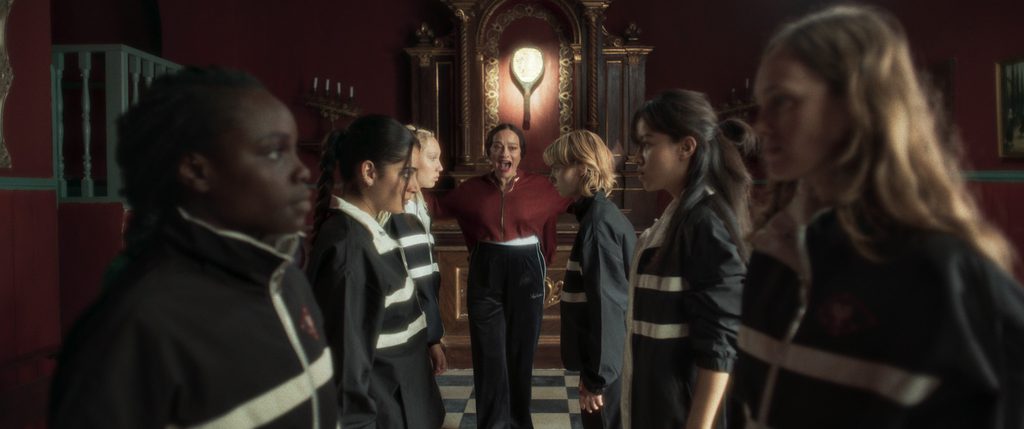
Cold Magazine (CM): The characters of your story are ruthlessly divided into two categories from the very beginning: winners and losers. However, in Bloody Tennis, this logic doesn’t just apply to the tennis court; it is almost a religion that the girls of the academy must convert to in order to succeed. What inspired you to choose tennis as the narrative vehicle to explore this concept?
Nikias Chryssos (NS): Tennis is a good vehicle because it is the competitive meeting of two people against each other, almost like a boxing match, but without physical contact. It’s an endurance test: there’s no time limit, a match can go on for many hours, and it can turn at any moment. Tennis can be a really dramatic game, and it requires a strange, quite peculiar mixture of strength, athleticism, and something more delicate. Players are very much on their own; it’s not a team sport where they can rely on someone else, so they get into a very specific mindset. It takes a very special kind of person to commit to that focus, discipline, and mental strength. What we hear about tennis all the time is that it’s such a mental game compared to other sports. This is what fascinated me about it.
CM: You found a great balance between tennis’ theatricality and aesthetics and your own reinterpretation of them.
NC: Yes, I admire the entire aesthetics: people dressed in white, the nice geometry of the court, and the sounds… There’s something very hypnotic about them. It’s quiet except for the ball and the sounds two people make. The mixture of these elements creates something archaic and powerful that is fascinating. In a way, it’s also very brutal, because only one player will prevail. There is an aspect of loneliness about tennis players. They have to invest a lot of money, but they might be out of the game very quickly. At the same time, they have people working with them and putting expectations on them. You see this kind of commitment in actresses or singers who start very early, too; the need to get to such a high level while you’re still young.
CM: Your movie is a body-horror, a coming-of-age, and a fairy tale in its darkest sense. Your main character, Sophie, is more of an anti-heroine. Why did you choose to push her to develop her darker side?
NC: That’s part of her dramatic arc and transformation. I always like these fairy tale comparisons. For me, it means the feeling of something mythological, and I definitely played with certain tropes. At the beginning, she’s the innocent orphan, more of an observer.
CM: Bambi, like her nickname.
NC: Exactly, coming into this cruel new world. I didn’t want to make her completely naive and innocent, though. The first time she is confronted with “the bullying girls” who try to set the hierarchy with the newcomer, she defends herself. It was important to show a little bit of her strength from the beginning, because it explains why she makes certain choices later. She’s ambivalent. She both gains and loses something in the end, so is this a success story or…
CM: …a corruption story? Maybe both.
NC: I think it’s both, but this is up to the viewer. There is something dark already inside her. Then, the environment uses and enforces that to transform her even more.
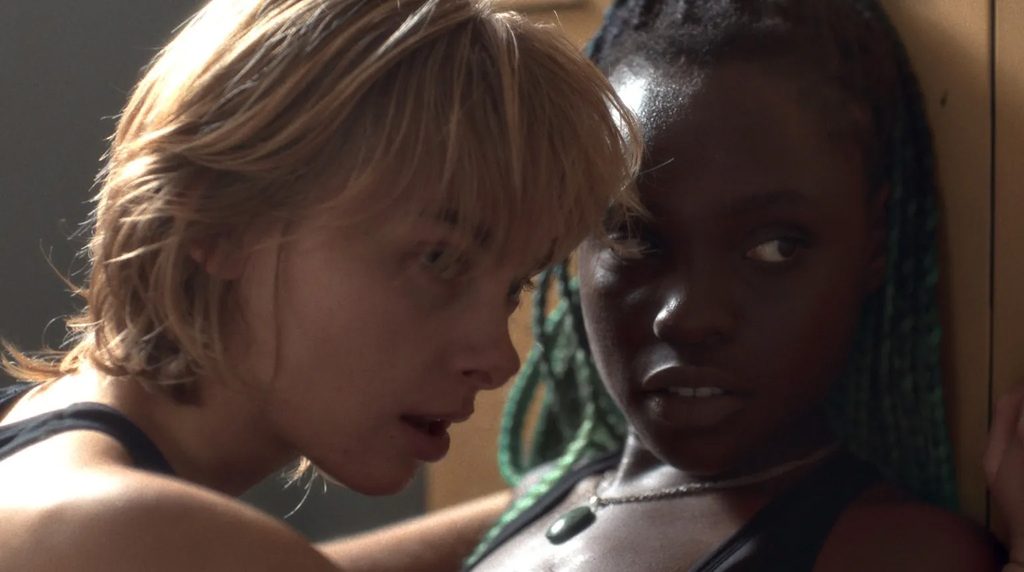
CM: A significant quote in the film is “Will you emerge from your cocoon as a moth or a glorious butterfly?” At the premiere, I asked if you could identify a moment in which Sophie begins her transformation.
NC: I’ve been thinking more about that question because it was interesting. I did mention a specific scene where she acts in a certain way, but it’s also important to stress that a change like this happens gradually. I think this speaks about society, as well: there isn’t just one moment when people decide to accept fascism. It all happens little by little. You get used to certain things, and then it’s very hard to get rid of them. This corrupting process happens inside Sophie with time, although there are moments when she rebels against it.
CM: All characters have different backgrounds and motivations for succeeding. What makes Sophie’s motivation special, compared to theirs?
NC: She definitely comes from a less privileged space, although I don’t necessarily want to say that this is why she is the most driven. I think her drive doesn’t come from outside factors; it’s something very primal within her that gets awakened. This is what makes her a true athlete. One of the other girls, instead, is a kind of nepo baby; another was sent to the academy by her parents. I worked with certain stereotypes. Sophie instead has a mother who didn’t make it quite as far, and she finds a new mother figure at the academy.
CM: The evil stepmom, in a way.
NC: She gives love, but also cruelty, and she stresses that players don’t need to think about the rest of society, including their parents; they need to surpass all of that. I play with this kind of religious, cultish aspect here because if you are an athlete at the top level, I think you need to have absolute faith and belief that what you’re doing makes sense. You cannot live it half-heartedly; otherwise, it’s easy to have an existential crisis, especially if you’re not making it. It can all turn into “I’m just hitting a ball.”
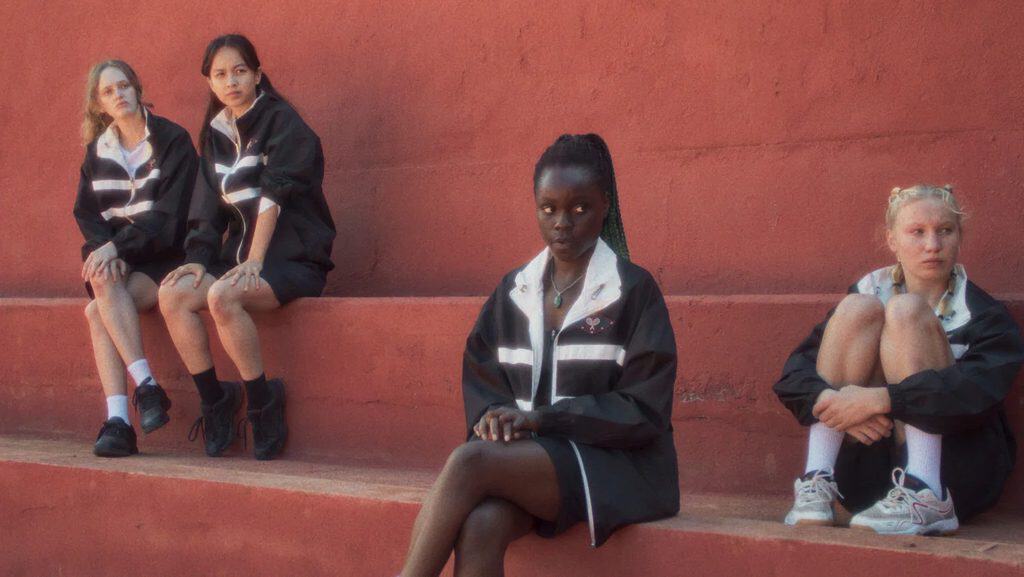
CM How did you find the film’s locations?
NC: I wanted to have a very secluded, isolated place with some connection to the past. The production company had shot in the Canary Islands before, so we started scouting there. We could have gone in a different direction, a little bit more modern, but then we found this old mansion that is now a hotel. It even has a little chapel, which was already in the script. It was just hard to shoot certain things there because it’s a real chapel, which made it delicate. We also shot most of the exteriors around there. Initially, we were a little skeptical because everything was so red.
CM: Tell me more about the casting process.
NC: We started with our main actress. We needed someone with the right kind of concentration and vulnerability. I’m very happy we found Sandra. We built the rest of the ensemble around her. Each of the girls has a unique, striking style with a little bit of a punk rock quality, but they also needed to fit together. The casting process was very long, with e-castings, online meetings, and live castings. Our casting director, Alexandra Koknat, was great. The goal was to find the best actors first, not necessarily the best tennis players. Then, we started doing tennis training with them to see how they would look on the court. This isn’t a realistic tennis movie, but we still wanted to see that physicality, so Sandra had the most lessons. For the other roles, I was super happy to find legends like Elina Löwensohn and Zlatko Burić, who had already done a lot of freaky stuff for other movies.
There are a few moments of female communion between the players, as if they still needed to share some sort of bond to survive this environment. Would their unity have been enough to defeat the evil forces in the story?
I think so, had there been a moment of complete solidarity, while also giving up whatever reason they came there for, or at least adjusting their perspective. Only one of them would have more difficulty standing a chance, but someone has to take the first step, just like in real life. The Me Too movement was successful because people came together to fight against the abuse. Victims who come forward by themselves often feel alone, ashamed, and powerless. We need unity. The public also helps by reporting and writing about this.
This is a bit of a digression, but since it’s one of my first interviews about the movie, I’m starting to reflect on my own work from different perspectives. If you think about how kids were educated just a few decades ago, physical punishment in schools was still accepted and considered normal. In sports, it’s difficult because people go to real extremes – physically, mentally, emotionally – and it’s all about winning or losing, about dominating the other. So how far can you push people to reach that? And when is it too much? Especially young people, who are so vulnerable. If you make them feel worthless, that’s a terrible thing to carry within. It’s beautiful that we are starting to move away from all of this now, at least that’s what I hope.
Bloody Tennis is available in the UK on Shudder.