In May, CNN bravely asked whether “London pizza” could stand alongside the great pizza cities of Naples, Rome, New York and Chicago. Four months later, Chiswick’s Napoli on the Road was crowned the best pizzeria in the world by 50 Top Pizza, knocking New York’s Una Pizza Napoletana off the top spot after a two-year run.
Where Franco Manca and Pizza Pilgrims walked so London pizza could run, the capital’s latest generation of pizzerias has ventured far beyond the Neapolitan sourdough pizzas that defined its first real pizza boom. Franco Manca opened in Brixton in 2008, just as pretty much everything else was going bust. Before all this, pizza never sparked much excitement beyond an after-school run to PizzaExpress; yet today, the dish is now the source of animated Reddit threads and queues of up to five hours – the latter courtesy of Crisp, whose New York-inspired pizzas have turned a Hammersmith pub into a very unlikely hot spot.
But what exactly is London pizza? It can come by the slice or as a whole pie, folded in half or eaten with a knife and fork, baked in a wood-fired oven or cooked in a pan. Thin and crispy, thick and pillowy, topped with hot honey or something else my grandmother would likely disapprove of. The consensus is, there is no consensus; unlike its international counterparts, London doesn’t seem to be particularly concerned with sticking to one singular style.
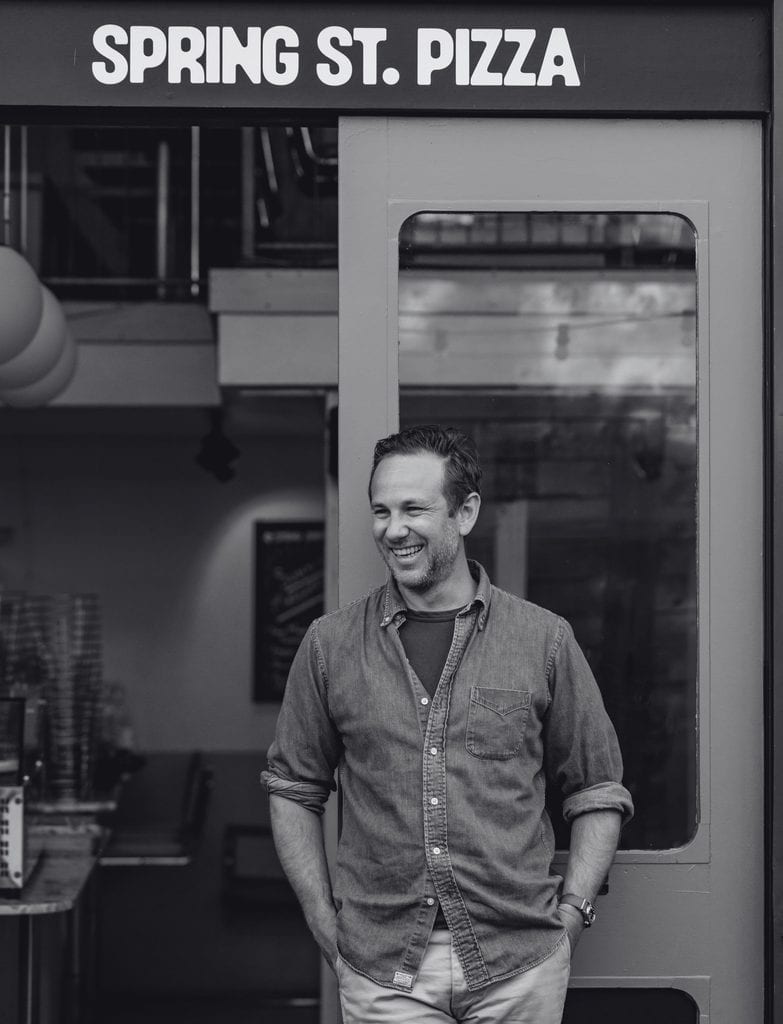
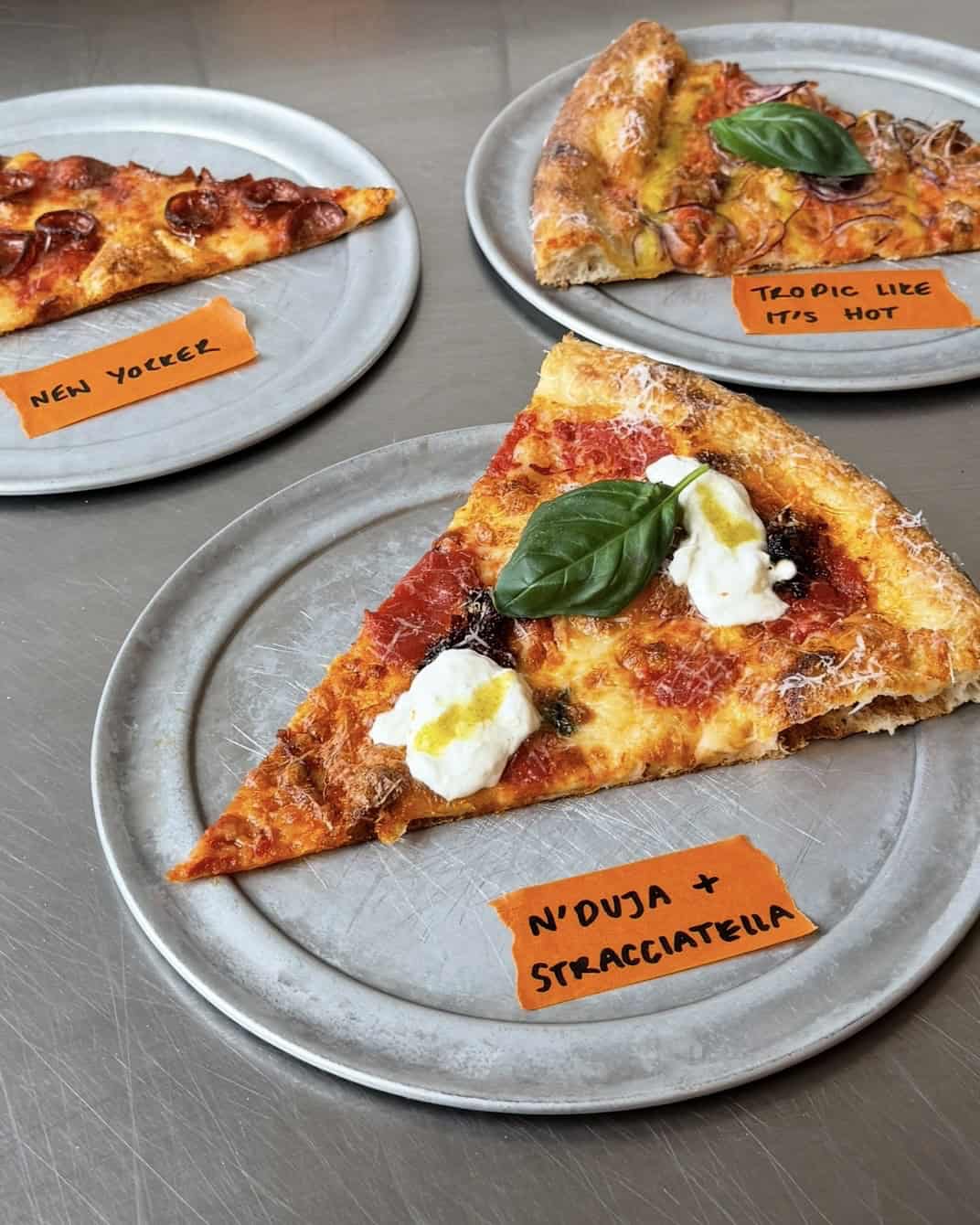
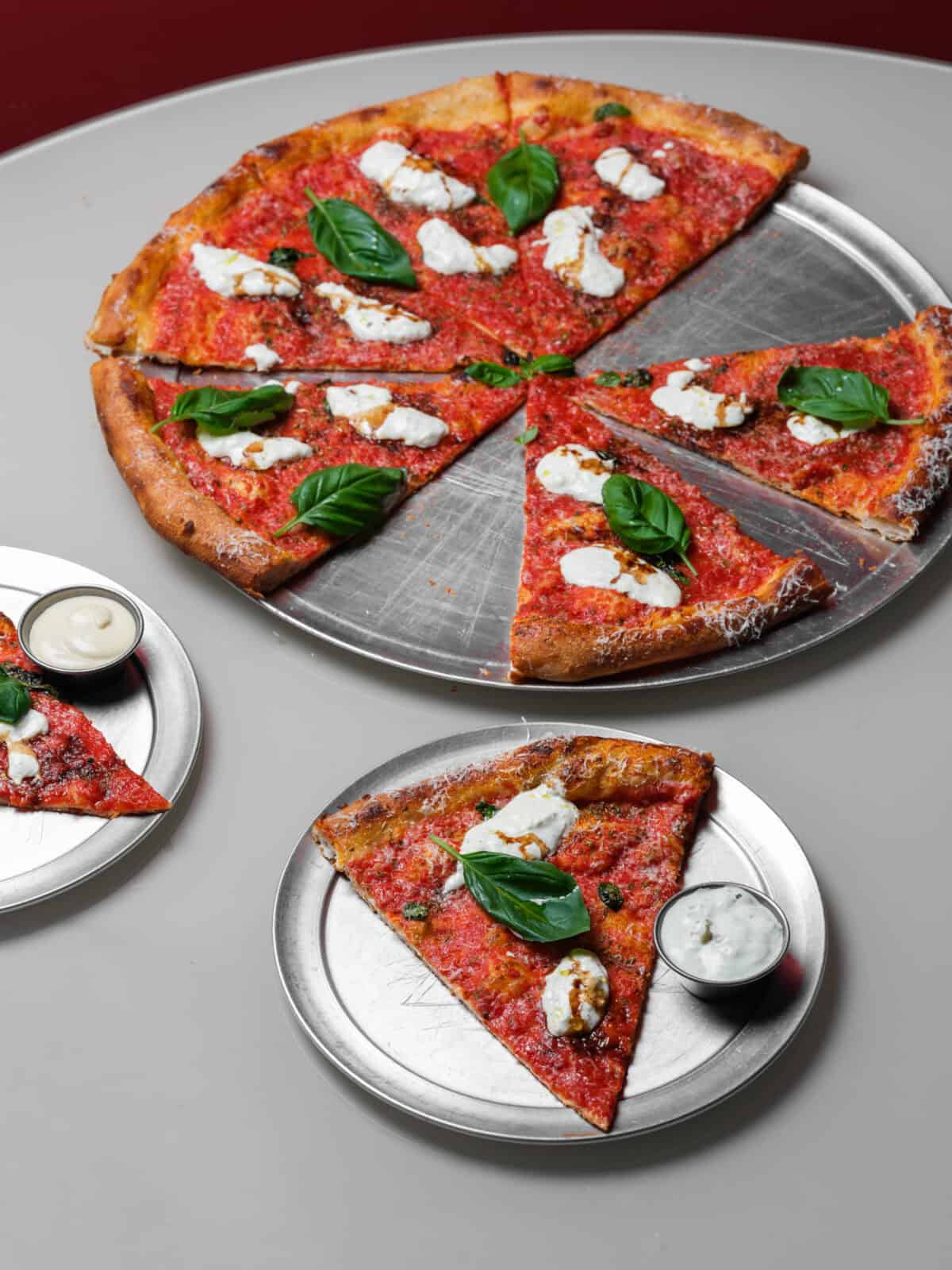
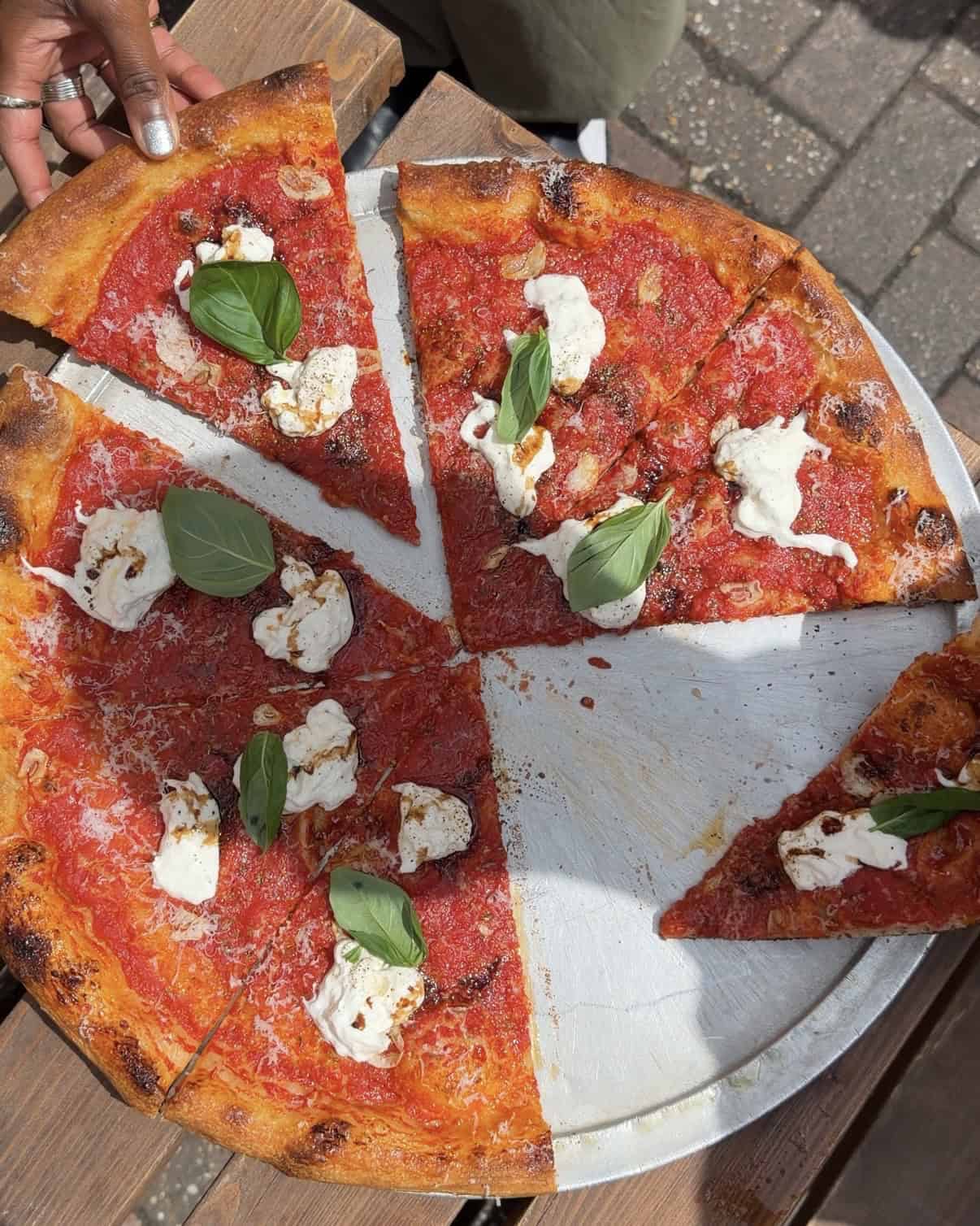
Enter Tom Kemble. Before opening Spring Street Pizza, he spent years in some of Europe’s top kitchens, including Hedone and Fäviken, and earned a Michelin star while running the restaurant at Bonhams. His move into pizza happened during lockdown, when he began making and selling pizzas with his wife, Tessa. This passion project eventually culminated into Spring Street, his tribute to the Italian-American pizzerias of New York, tucked into a railway arch in Borough. Here, 18-inch pizzas are made using an Italian-style biga dough fermented for 48 to 72 hours, and sold by the quarter, half or whole. His current special, ‘Tropic Like It’s Hot’, pairs Calabrian chilli sausage and tequila sauce with lacto-fermented pineapple and jalapeño hot sauce.
As a proud Roman, the thought of an unconventional pizza used to bewilder me. It’s one of the few things that unites us Italians; if we can’t agree about politics, we can at least agree that pineapple doesn’t belong on pizza and carbonara is made with eggs, not cream. Ten years in London, however, have made even me, the self-proclaimed strictest of purists, change my ways. I’ve since found myself recommending Spring St. Pizza to pretty much anyone who asks me where to go for pizza in London, Italians and non-Italians alike.
We’re, admittedly, hopping on the bandwagon here; London’s pizza renaissance has been written about plenty over the past few months. Rather than trying to convince you of something you probably already agree with, we asked Kemble what he makes of the recent hype. We caught up with him to talk about the slice in the capital everyone should try and his perfect day eating his way through the city.
The Cold Magazine (CM): How did you first get into cooking? Was there a particular moment that made you realise this was something you wanted to pursue professionally?
Tom Kemble (TK): It was a culmination of falling in love with how restaurants made me feel throughout my childhood and teenage years, along with a curiosity in the craftsmanship and creative process of cooking. I wanted to explore this professionally after university and gave myself a year to see if it was an industry worth pursuing. Twenty-two years later, here I am, and there is still so much to learn.
CM: What was your first job in a professional kitchen?
TK: As a kitchen porter. Washing pans and prepping vegetables. The best way to start.
CM: After earning a Michelin star, what made you want to start a pizza joint?
TK: That’s a question that I’m often asked. I felt I had accomplished what I had originally set out to do. To be recognised by the Michelin Guide and receive that validation was great, but after five years of maintaining a star I was left wanting more. I felt I had creatively exhausted my time in the world of fine dining and really wanted to explore other areas within this vibrant industry.
I had set up a lockdown pizza business with my wife, which I later sold, but still had a strong desire to build a hospitality business in the casual sector. Pizza is timeless, it’s embedded in so many food cultures and offers endless creative possibilities.
CM: Tell us a little about the menu. Are there any pizzas you’re particularly proud of or one you always recommend to first-time visitors?
TK: We offer a tightly curated menu of 18-inch pizzas where you can order the whole pie or half and half. I always recommend the Marinara with fresh stracciatella and extra anchovies alongside our New Yorker, which is a tribute to the great pepperoni pie.
Always leave room for our house-made vanilla soft serve finished with sour cherry and pistachio. We have a seasonally changing special pizza, currently Tropic Like It’s Hot: a tequila sauce with Calabrian chilli sausage and finished with our lacto-fermented pineapple and jalapeño hot sauce. To sneak pineapple onto a pie and make it delicious is something I’m particularly proud of.
CM: London’s pizza scene has exploded over the past few years. Why do you think we’re seeing so many independent pizza restaurants opening now?
TK: Pizzerias are relatively affordable to open and there are ample opportunities to test a pizza concept with pop-ups or partnerships with London pubs. There is a desire for pizza culture here in London, where chefs have explored further afield than Neapolitan pizza and put their own version or spin on a NYC-style slice or New Haven pie.
Then there are pizza chefs that are striking out on their own having learned their craft from an established name, which has helped fuel growth.
CM: CNN recently suggested that London deserves to be considered alongside Naples, Rome, New York and Chicago as one of the world’s great pizza cities. Do you think London has earned that reputation and, if so, what makes its pizza scene unique?
TK: Absolutely. There is an incredible energy in the London pizza scene right now. There is such breadth and quality from so many operators and unique styles such as Crisp Pizza and Breadstall that only exist here right now.
CM: Is there a pizza in London, other than your own, that you think everyone should try?
TK: Crisp Pizza.
CM: What’s your ideal London food day, from breakfast through to late-night snack?
TK: I would start in Soho with breakfast at Koya, which would set me up for the day. I would never think to prepare myself a Japanese breakfast at home, so this would be a real treat.
Then a stroll around Soho, making my way to lunch at The French House. I would finish with some freshly baked madeleines and try to leave room for a scoop of gelato at Gelupo nearby. Then it would be a quick nostalgic espresso at Bar Italia, followed by a pint or two of Guinness at The Toucan.
A long walk east next for dinner at Planque to experience Seb Myers’ exceptional and delicious cooking alongside some superb wines. Then to Sager + Wilde for a late-night drink and, if there is anything left in the tank, it is a salt beef bagel at Beigel Bake, a satisfying end to the night.
CM: One ingredient you always have in the fridge?
TK: Anchovies.
CM: Where do you see London’s food scene heading over the next five years?
TK: I think we will see an increase in operators focusing on doing one thing very well, from the continuing growth of East Coast pizza to new sandwich shops. There is also a huge demand for authenticity and savvy restaurateurs are delivering that in a very London way.
I’m thinking of something like Kismet, a nostalgic Turkish Cypriot meyhane reimagined and placed in a pub, or Luke Farrell’s Plaza Khao Gaeng.
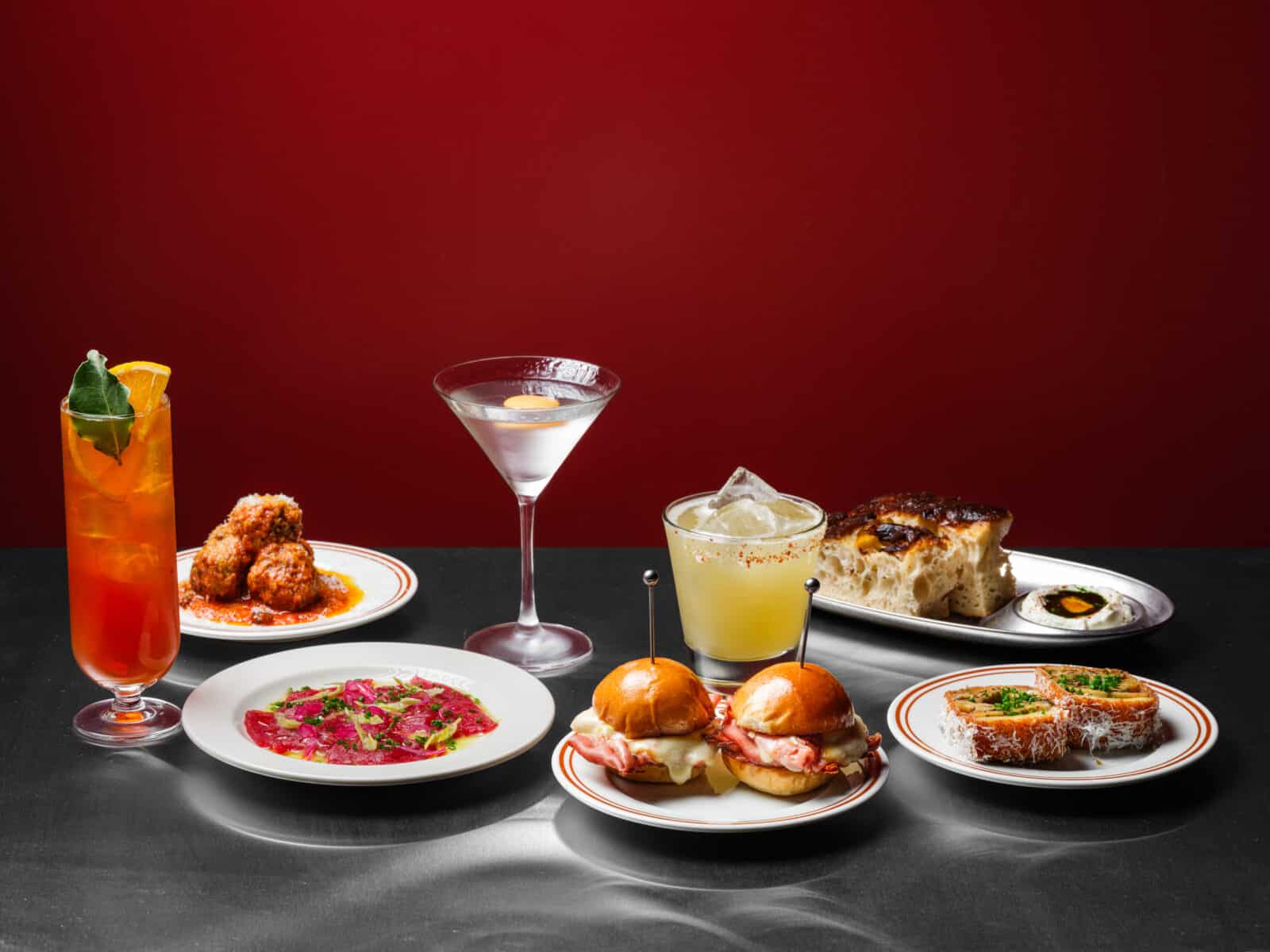
On 13 October, the team is opening a New York Italian bar in the neighbouring railway arch, with a menu centred around another current London obsession: the martini. Expect six takes on the classic, alongside cocktails and Italian-American bar plates.