Where to Find the Best Tiramisù in London
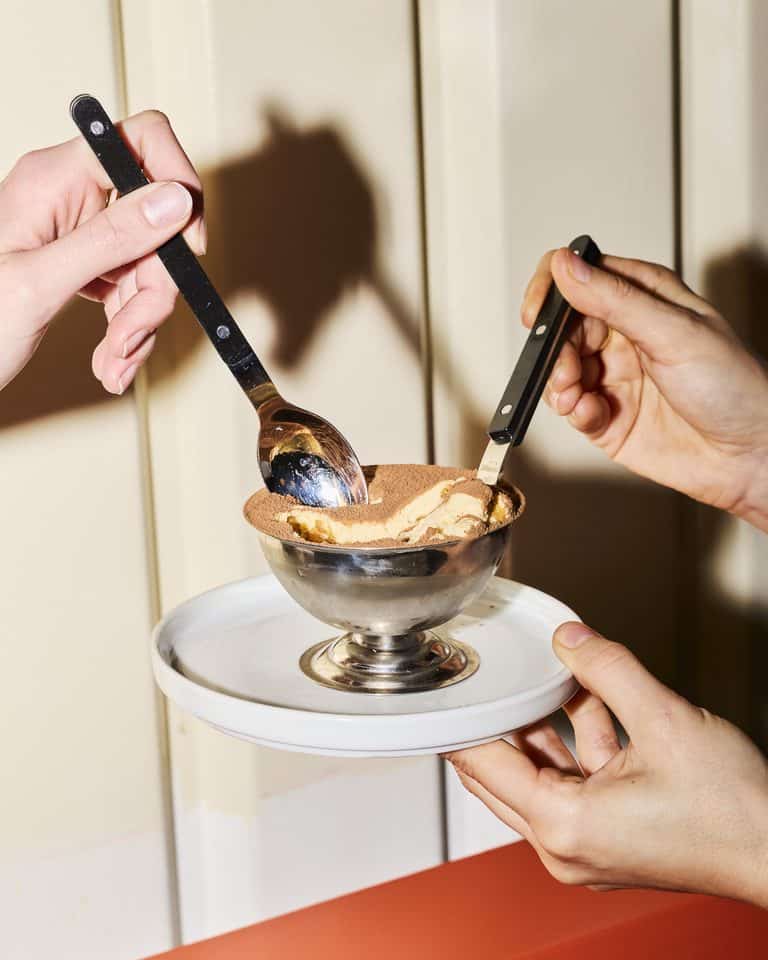
Veneto and Friuli Venezia Giulia battling it out to a creamy death. The Italians in the Cold team on the best tiramisù they’ve tried in London.

Veneto and Friuli Venezia Giulia battling it out to a creamy death. The Italians in the Cold team on the best tiramisù they’ve tried in London.

“A song that I wrote for my younger self, my 15-year-old self”: at Walsall Arena, 600 people met every mention of her hometown with deafening pride.

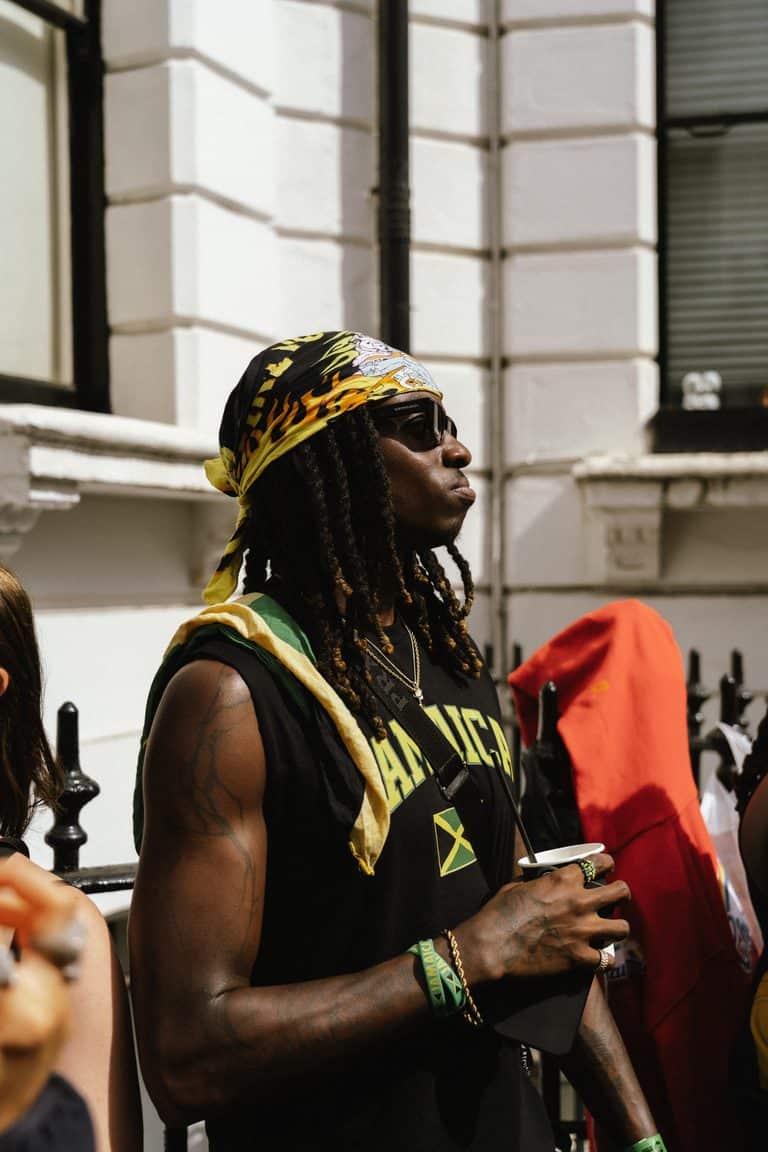
The Cold Magazine headed west for the 60th anniversary of Notting Hill Carnival, one of the world’s largest, second only to Rio.

Salut! on Essex Road is one of those restaurants you’ve probably walked past a million times without noticing; this particular Modern European spot has survived an era in which restaurants repping that same cuisine began proliferating left and right, but since opening in December 2015 has established itself as a neighbourhood fixture. The restaurant was opened by German-born brothers Martin and Christoph Lange. Martin tells us a little about his upbringing; raised in north-east Germany, he grew up in a family-run restaurant, spending much of his childhood in kitchens before

March is one of the best times to be in Rome. With the arrival of spring, temperatures hover somewhere between 16 and 20 degrees, and the Easter crowds don’t quite arrive until later in the month. Whether you’ve travelled down for the Italy v. England Six Nations match, spontaneously signed up for the Rome Marathon (maybe that’s a Strava screenshot worth sharing) or are simply taking advantage of a brief window before the city fills up again, there’s a good chance you’ll be out early and looking for somewhere to

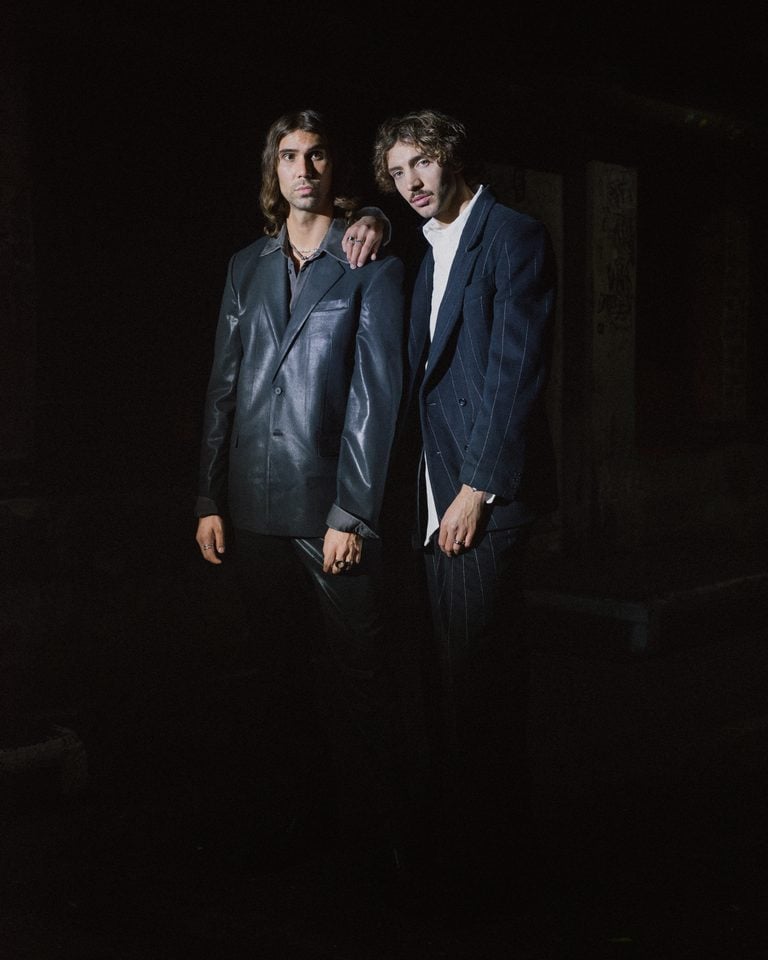
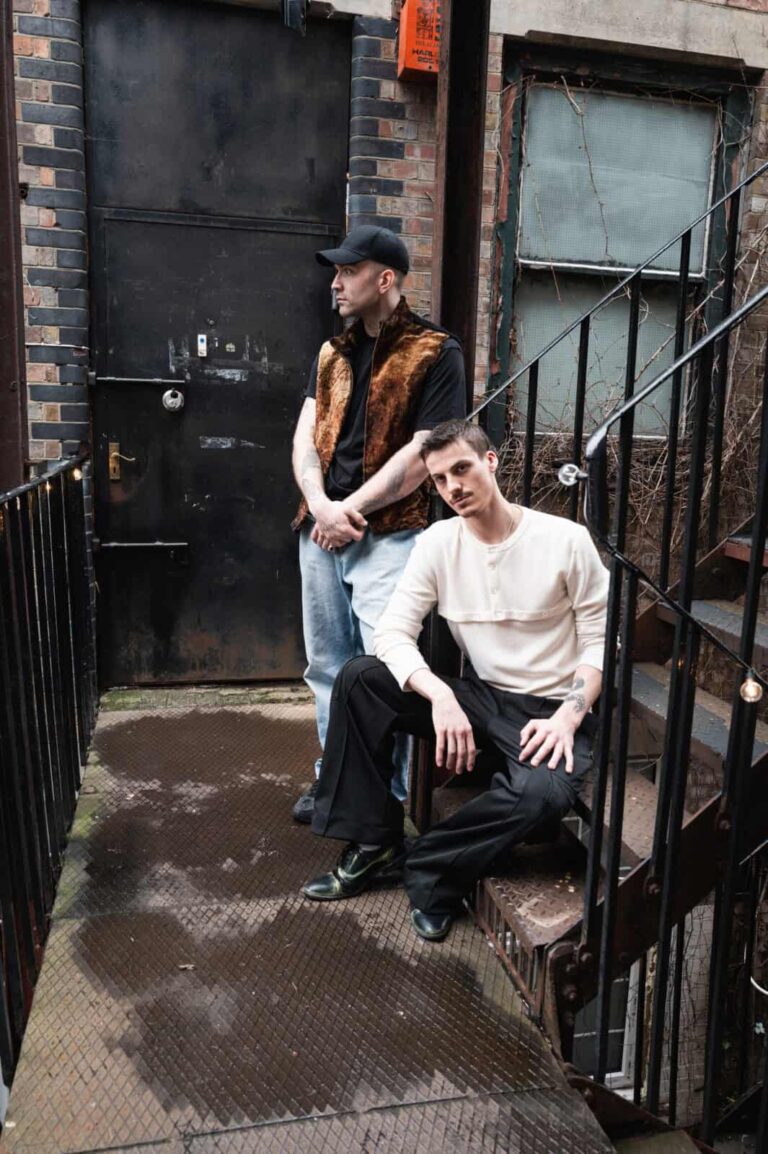
Ten minutes into our conversation at their East London studio, AGRO Studio founders George Oxby and Angus Cockram casually reveal that they met on Hinge. The classic London dating-app-to-creative-collaborators arc, a tale as old as dating apps themselves; what began as a swipe has since evolved, predictably, into a joint venture. It’s the sort of origin story that explains a lot about the instinctive, occasionally chaotic (albeit equally charming) energy running through their work. I first came across the brand in September at their off-schedule London Fashion Week show, seated

Mayfair isn’t somewhere I usually romanticise. It’s an area of London that used to signal old money and inherited grandeur. Nowadays, it feels closer to a kind of expensive kitsch, more akin to a collision between private members’ clubs and tourist-focused establishments. Tucked away, amidst the chaos of the heaving streets, Montcalm Mayfair feels like an anomaly. It sits just far enough off the main Oxford Street drag (a three-minute walk, to be exact) to register as its own little pocket. It’s not quite a cul-de-sac, but it sort of

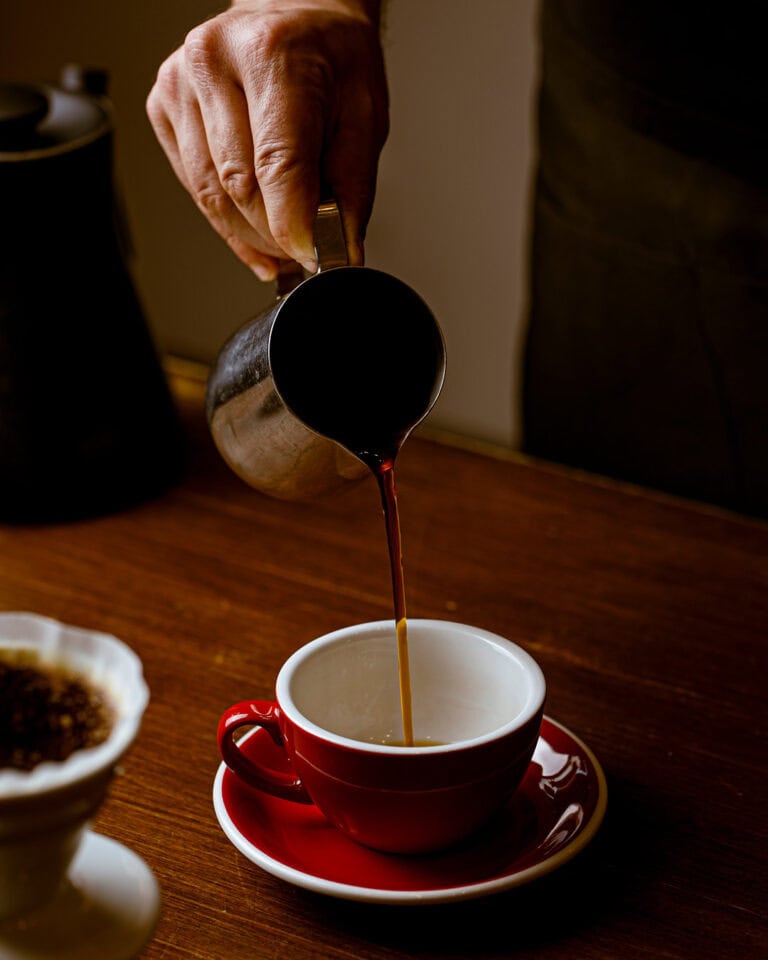
Rome is not the place to brazenly talk about coffee, unless you’re ready to risk being humbled. The city runs on bar counters and espresso so affordable (around 1€) that most Londoners’ heads would spin. It’s familiar and delightfully nondescript, so much so that it barely registers as something you’d be searching for ‘tasting’ notes. Italian coffee culture was built on a bar-espresso model prioritising speed and consistency. Dark roasts and blended coffees are engineered to taste the same, from one establishment to the next. Early 20th-century local price controls

As soon as Panchanit Suriyaworakul – the Thai tattoo-artist-turned-designer behind Jaoka Jaokha – begins talking, one idea tumbles into the next, looping back without warning, and I try to keep up. On camera, she’s bright and funny, with this delightful inability to stop mid-thought. “If people start talking to me, I’ll never stop talking,” she jokes. I believe her instantly. We quickly bond over the concept of home – when you live somewhere for so long you don’t understand how much you’ll miss it when you’re gone. London might sometimes

Open the camera roll of anyone working in fashion and a pattern emerges: not just catwalk close-ups or backstage polaroids, but plates. No ordinary meals, either, but sculptural piles of citrus, colour-matched petits fours, and glossy pastries arranged with the methodical precision of a lookbook. Over the past decade, food has shifted from a perfunctory afterthought at events (a measly, no-carb selection of crudités inherited from the early-2000s diet landscape) into one of the industry’s most expressive mediums – a way to build atmosphere and invite audiences into a brand’s

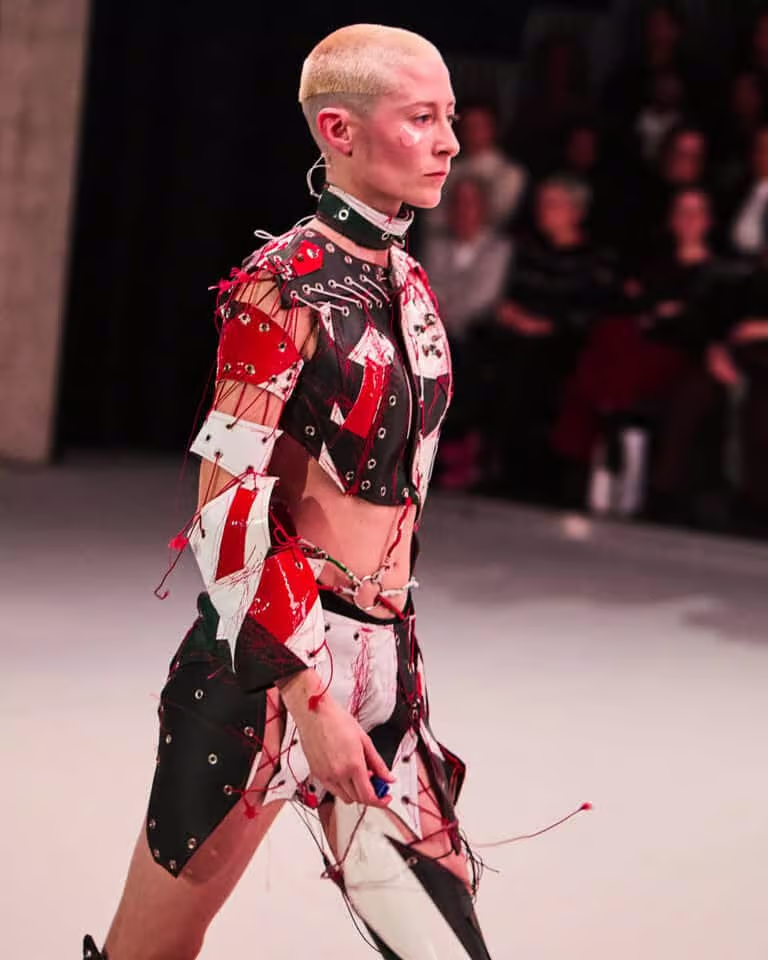
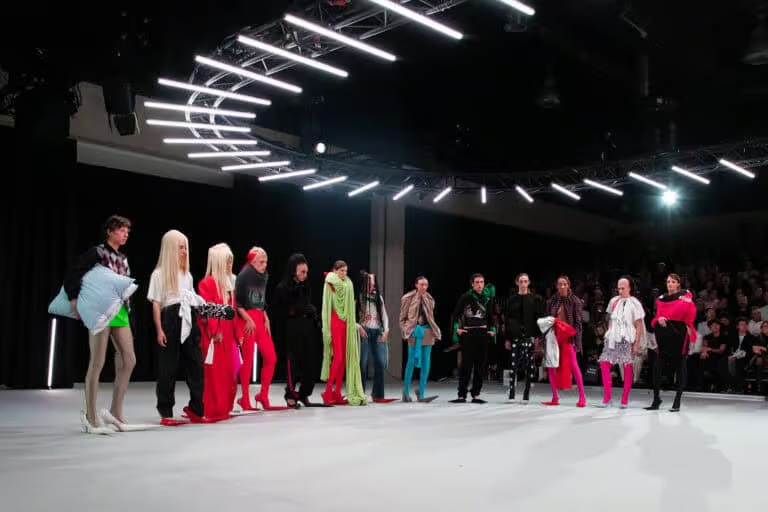
This year, The Cold Magazine travelled to Geneva to attend the HEAD Genève Fashion Show: a major showcase of emerging talent, supported by industry-leading partners and a jury of notable figures across global fashion, including Louis Vuitton, Maison Margiela and Vogue Runway. Across both BA and MA programmes, the work felt unequivocally individual. What a cohort we had! These designers questioned everything, from construction to silhouette. I left Geneva electrified by the scale of innovation on display and full of excitement for what’s coming next. In the following feature, we

When Belgian designer Matil Vanlint speaks to me about HEAD Genève, her voice softens – almost cracks. “It has done everything for me,” she says. After years of fighting to take up space–in life and in her art–she finally found an environment that insisted on it. A place where her aesthetic vision could grow monstrous and sculptural, inhabited by creatures with plaster-built humps, lumps, and bumps that prance (or plod) about in strange, joyful ways: here, Vanlint takes ownership of trauma and makes it hers. Her graduate collection, V* (“Victim,

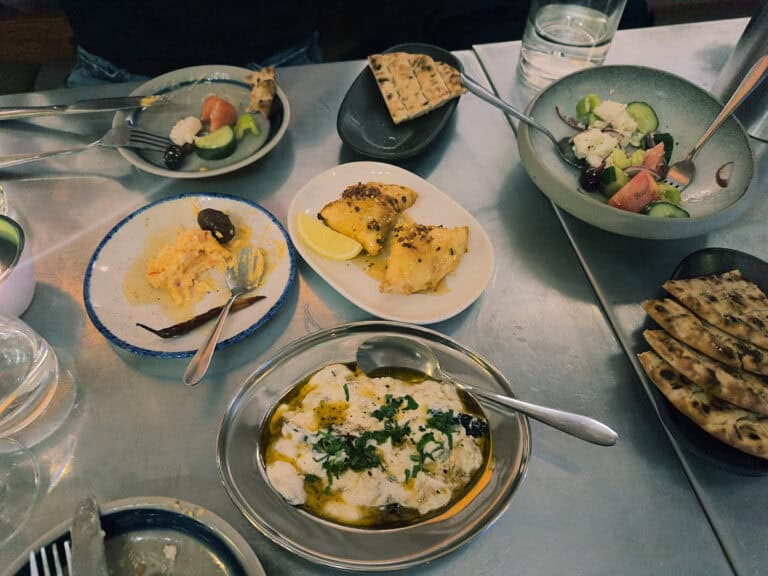
As classic Thursday nights in London go, this one began with (arguably) one glass too many. Lauren – one of our fabulous arts and culture editors – and I marched from a string of press events in central into Holland Park – spirits high and appetites higher. We were headed for Vori, a Greek restaurant tucked discreetly a few doors down from Lidgate’s – a butcher whose window I’ve admired for years without ever venturing in. (Turns out, Vori sources its meat from there, so I can finally claim I’ve

Portugal might not yet rival Italy or France as a fashion powerhouse, but its disruptive energy is impossible to ignore. Six designers from ModaLisboa.

In recent years, a curious strain of corporate romanticism has seeped into fashion’s bloodstream. Where ‘girlhood’ once reigned, womanhood (or the performance of it) took the stage. The figure of the “office siren” emerged: a woman at her desk in pencil skirts and unbuttoned blouses, channeling Gisele Bündchen’s feline detachment in The Devil Wears Prada. The image spread from the online ether to the runways, with Kim Kardashian posing in beige cubicles for Skims, Sandy Liang trading in her signature babydoll dresses for skirt suits, and Calvin Klein’s AW25 show

My relationship with dreams has become a complicated one. I’ve come to associate them with the more unwelcome shadows of the past, the subconscious thoughts I try to push away in broad daylight; the ones that surface uninvited when I’m doing something mundane, like crossing the street. Not dark or terrible thoughts, just the harmlessly mortifying kind. Small humiliations that make you wince, resurfacing when you least expect them. For a while, I thought this was all dreaming was: a recycling of (often bleak) memory and mortification. Then came The

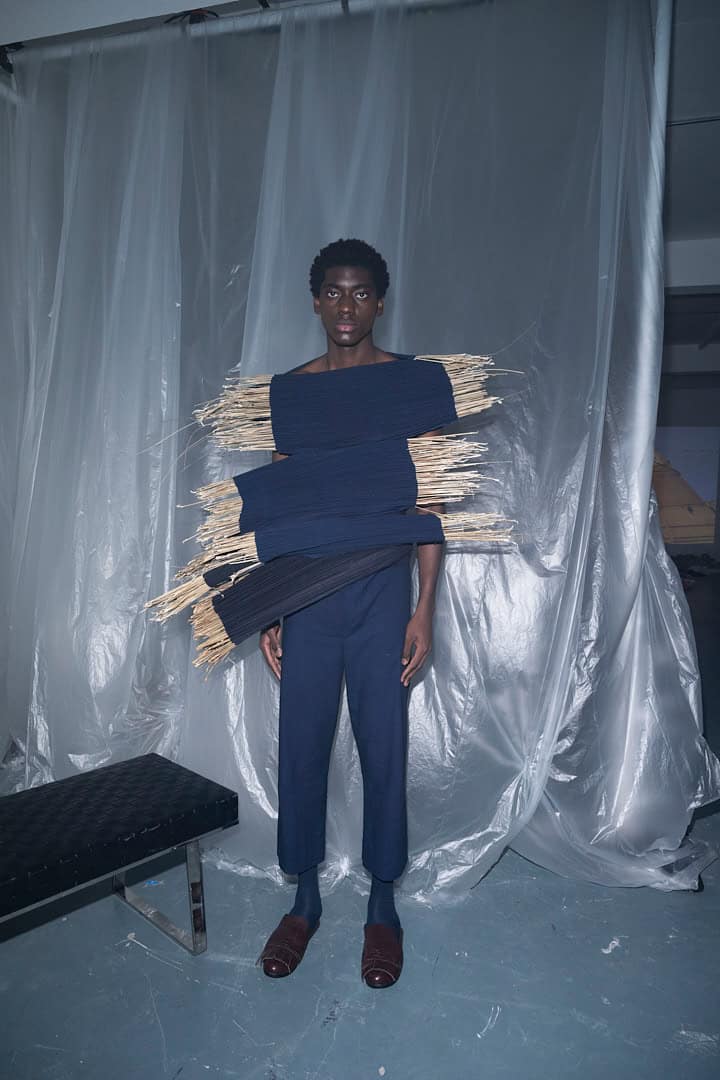
What does migration look like in cloth? In Runners, Timisola Shasanya answers with garments shaped by heritage and the movement of materials across borders. For her BA graduate collection, the Central Saint Martins designer and Sarabande Foundation scholar translated her transnational upbringing into hair-raising sculptural menswear. Born in Ireland and raised between England and Nigeria, her childhood was shaped by life across borders, experiences that continue to inform her approach. When we spoke over Zoom, Shasanya had just relocated to Paris to begin her master’s at Institut Français de la

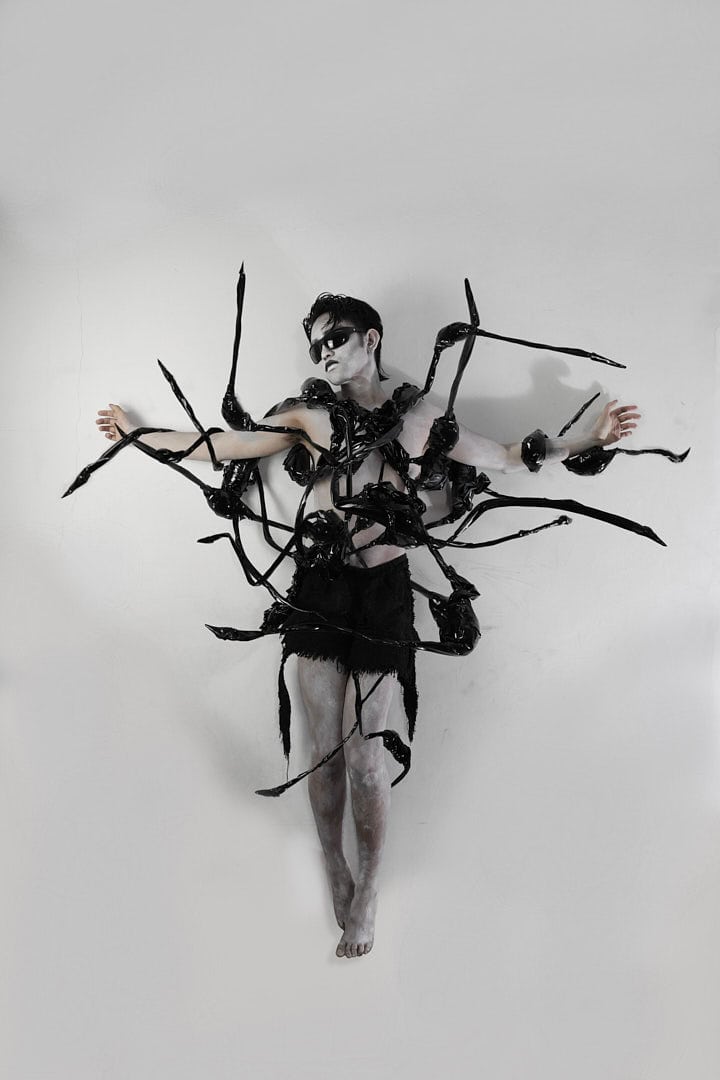
While Epitaph, Jean Louie Castillo’s AW25 collection, lingered among the tombstones of Highgate Cemetery, Tormentor seemed to burst from its crypts in a scream of fury. Presented in a grandiose hall tucked away in Westminster, Castillo’s latest work is an invocation of rage in all its forms. The Welsh-Filipino designer is no stranger to Flair Fashion, the incubator platform aimed at championing emerging talent and democratising the industry; back in February he sent ghostly figures drifting down its catwalk. This season, those phantoms returned transformed; no longer mourners but irate

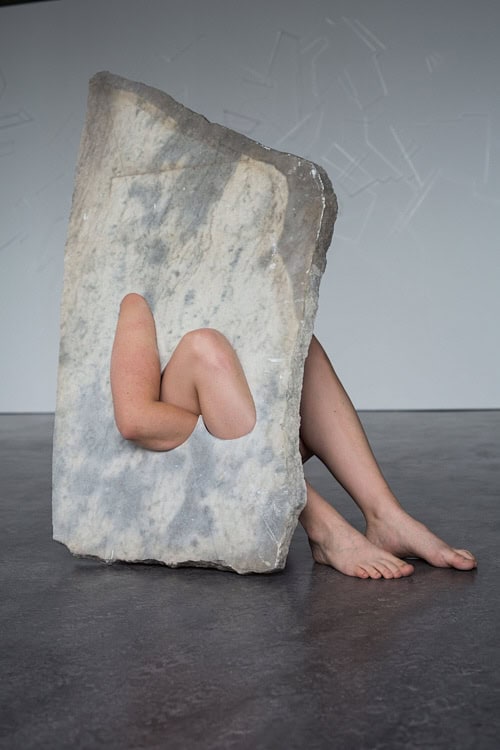
We fear change. We fear ageing. And, most of all, we fear what it means to vanish – to be here, then not. As Epicurus once wrote, death is not a thing to be feared because it is nothing at all: while we are here, she is not, and when she comes, we are gone. Still, we resist it; we chase permanence, treat it as virtue, and build entire industries to mask the inevitability of time. But releasing that resistance opens something else, a space to witness what’s already passing.

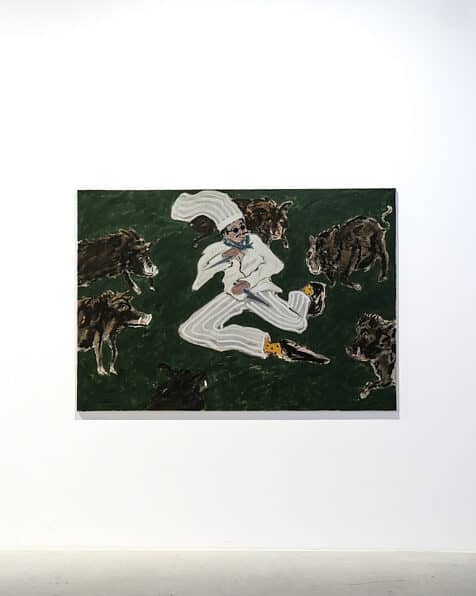
There’s something ancient about the way we gather to eat. From Roman banquets to white tablecloth restaurants, and across time and place, the dining table has always been a stage for pleasure and performance, a place where class divides are sharpened by silverware and momentarily glossed over with butter and wine. In Jack Penny’s latest body of work, CHEFS, the restaurant–now set in the wilds of the Alps–becomes a site of gluttony, and chaos, where the chef, much like the artist, reigns supreme. The series was first shown at Château
We noticed you're visiting from Italy. We've updated our prices to Euro for your shopping convenience. Use Pound sterling instead. Dismiss