

Catching each other via Zoom call, there is a difference in time and mind for Yaya Bey. It’s 10am for the Queens local, and a bright sunny 3pm in London. Prepared for a chat about grief and the heavier themes surrounding her latest album, Fidelity, the conversation takes a sharp twist. Her voice has a slight husk, and with a slow pace and weight,she informs me that this isn’t your classic PR gladdened interview. “I think that people are missing the point. This whole album campaign, people have been missing the point,” she says.
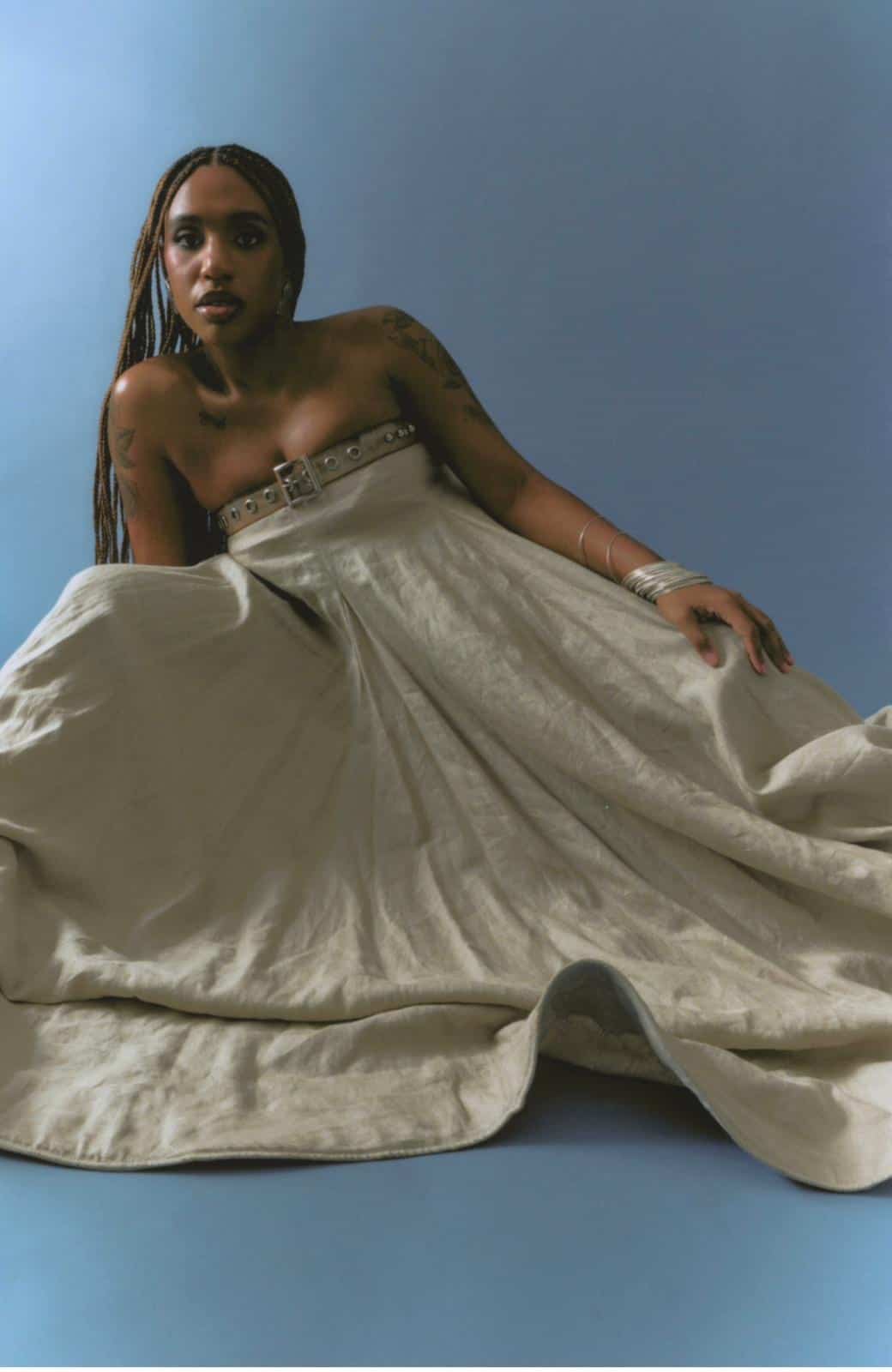
Yaya Bey is a 35-year-old R&B singer born and raised in New York City. Her tracks are luscious funkadelic offerings, while her voice has a soft, soulful hum which soothes you along with her music. Her newest album, Fidelity, sees her openly processing grief, laying out “everything I’m grieving so we could stop making a spectacle about it.” Feeling denied the same universalism often afforded to white male artists, Yaya pushes back against the reductive perception placed upon her.
“I don’t make albums about grief,” she clarifies. It’s a misrepresentation even I am guilty of falling into, and Yaya was adamant it was wrong. Sure, some tracks on the album investigate the bluer side of things, exploring death and gentrification in her local community. But there are upbeat tracks like “Egyptian Musk”, which has you in a trance for love, serving more tender lyricsm: “you’re special, so lovely, so wonderful.”
With a serious tone, Yaya explains that in both life and on the album there is “all types of shit going on, but it just gets stuck in this one spot.” It’s something which sits deeply. During our conversation, her frustration with previous misconceptions of her art and character was evident.
Yaya feels the media often tries to pigeonhole her sound, her art, before really understanding her as an artist. When she first came out with music, people were quick to frame it through race rather than seeing it as music about heartbreak and sadness, music that was universal rather than skin-dependent. “That set the tone for my career,” she tells me with a sigh. One interviewer even asked if her album was about Harriet Tubman. It was not. It was a breakup album.
“The only people granted universalism are white men,” she says. The deeper issue, she notes, is that people simply cannot fathom her having a good life. Her frustration is not with discussing race, but with the media’s obsession with turning ordinary human experiences into a racialised spectacle. “My dad died – how the fuck does that have anything to do with me being Black?” she asks. “I had a breakup. Is your love life perfect right now? This is just normal human shit.”
Life for a successful artist isn’t just the extremes of touring and sitting in the studio jamming,t’s also about normality. “I just went to fucking Dave & Buster’s last night,” she laughs. Even Bey finds herself at an arcade munching on burgers and wings. “Sometimes my life is boring. Sometimes I’m just watching TV.” When she isn’t doing this or at the arcade, most of the time she is with her husband, arguing or having the time of her life.
Despite the mundanity, Bey remains politically active. She detests the Trump regime, the ICE raids, the American slide into authoritarianism. “When you come to my shows, I have a lot of political things to say,” she says. “I think a lot of people come to my shows to hate-watch me. There’ll be someone there to yell at me from the crowd, it’s almost guaranteed.”
Her activism is deeply embedded in her cultural representation. Yaya has never compromised her roots, explaining her ethos of “making music for Black people first” with characteristic bluntness: “I’m not decoding it. It is what it is.” When she uses the nickname ‘the towns’ on the languid track “The Towns – bella roche pt. 2”, I don’t immediately know what she means – but locals and those in her community do. The track is about gentrification and missing what New York used to be. This does not stop her music being accessible, instead it retains its cultural nuances. In Fidelity, “there’s so much shit in there that people just don’t understand.”
For an artist who feels consistently misunderstood, Bey seems increasingly uninterested in controlling perception while creating. “Not when I’m making the music. I’m just having a good time.”


