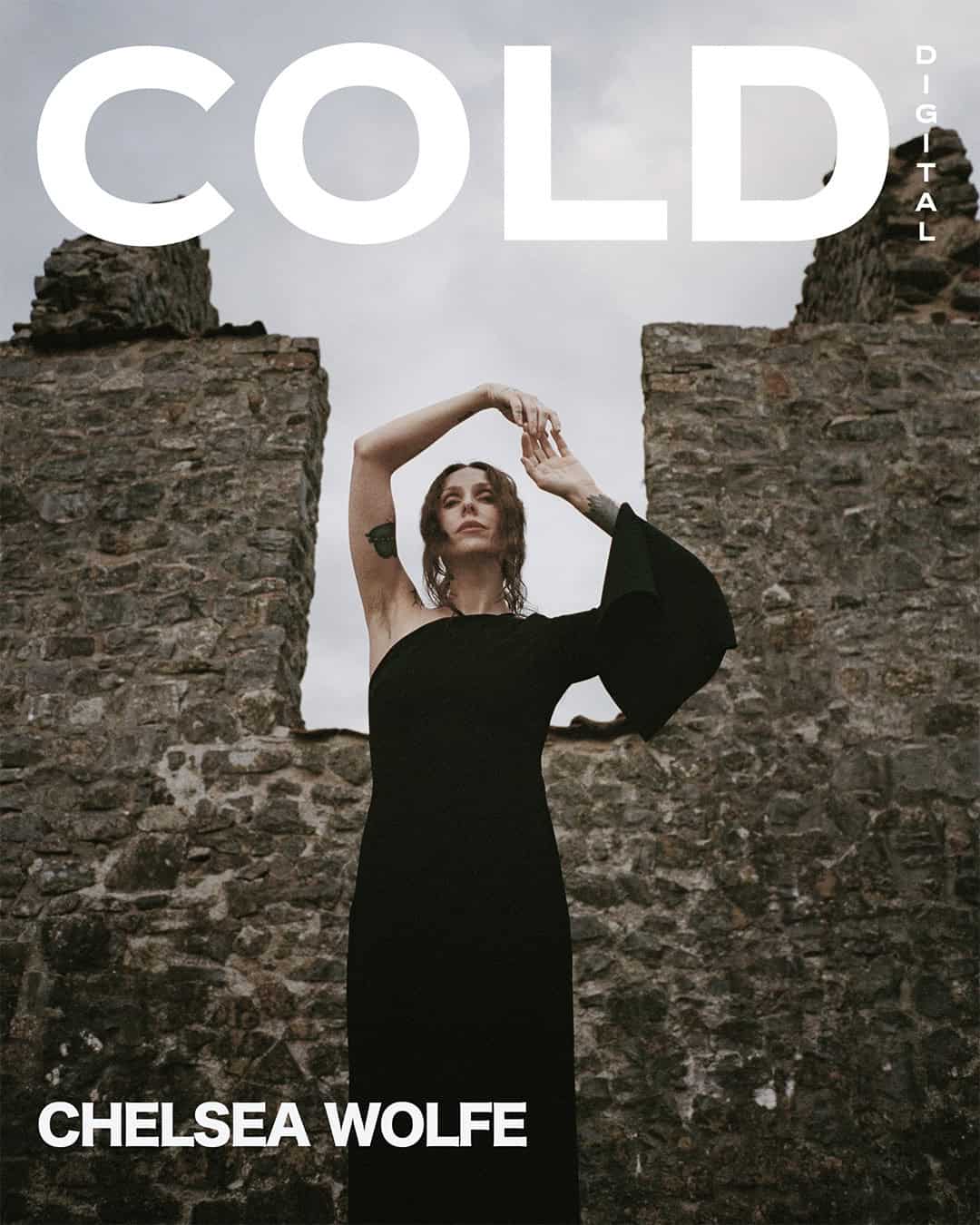
What if the quickest way to heal is to run towards the hurt, not away from it? This is what singer-songwriter, Chelsea Wolfe, makes the case for in her ninth studio album The Dark. After 20 years of making music that blurs the lines between alt, folk, doom metal, and heavy rock, wading into dark themes is nothing new for Wolfe.
She speaks openly in interviews about her love of witchcraft and Tarot, and is rarely seen donning any colour lighter than onyx or ebony. The Chelsea Wolfe aesthetic? Somewhere between enchanted raven and Northern California rock witch. However, something has shifted with this latest album. Entering her 40s, living a life of sobriety, and going through what she describes as “multiple dark nights of the soul” has provoked Wolfe into more intense conversation with her own spiritual bruises.
Darkness, as Wolfe understands it, is not synonymous with despair. It can be frightening and unknowable, but it can also be fertile creative ground. “The dark can be, of course, this sort of scary unknown place”, she says. “And it can also be this romantic, fantastical, beautiful place as well”.
The title arrived late – not until Wolfe had almost completed the album. The artist had initially considered calling it The Dark Night of the Soul, after that mystical phrase used to describe a crisis of faith and profound inner struggle. In the ninth hour, she pulled back, landing on, simply, The Dark. “I felt like that encapsulated so much”, she says of the title. “It also kind of became a way for me to have this album be a love letter to the dark in so many different ways”.
Life, Wolfe admits, really was lived in the dark for a while. The most potent inspiration for this new album were periods of questioning who she was, what her purpose was, and why she was living the way she was. At their centre was a painful realisation: she had been “self-abandoning for a really long time”.
That recognition became the catalyst for the album. The title track, “The Dark”, sees Wolfe confronting “the stranger” she saw in the mirror. This song was one of the earlier tracks that she wrote for the album and Wolfe admits, “it really became the heart” of the project.
She remembers being particularly empowered by the challenge to, “Be the darkest thing in the woods”: an invitation for all of us to fully embody the more twisted, depressing, hard-to-understand parts of ourselves. In doing so, Wolfe seems to suggest, we can be set free.
“Becoming the dark, becoming the thing that I fear, learning to be okay being seen as the villain”, she says, “that really helped me out of that feeling of hopelessness”.
The woods also became an important metaphor during the making of the album. Wolfe found herself returning again and again to the writings of Joseph Campbell and his theory of the Hero’s Journey. A crucial part of the hero’s path, Campbell writes, is when she enters the forest at its darkest point, and there is no obvious path forward.
The answer, as Wolfe understood it, is to carve out your own path, as difficult as it may be. It is here, along the dark, craggy path, through which transformation might be possible. That sense of process extends to the album’s sequencing. “Cold”, its opening track, begins with a powerful release: “I’m letting you go. I need to know who I am without you”. For Wolfe, those lines immediately establish what the album is trying to communicate.
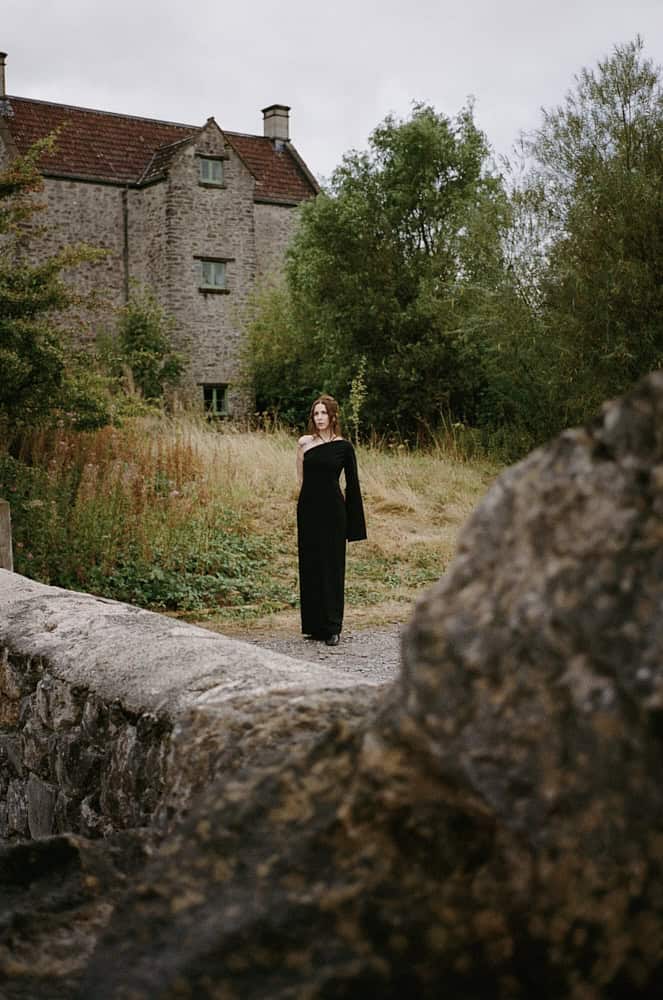
Another guide came from an oracle card she has been drawing for years. From Kim Kranz’s Archetypes deck, “The Forest” card carries another motivating phrase Wolfe has held onto throughout her own process of transformation: “get lost getting found”.
“I’ve just been holding on to that for years now”, she says. “Knowing that I needed to just kind of go through it again and get a little bit lost, and that eventually I would come out in some sort of clearing and understand”.
It is fitting, then, that Wolfe begins her days by drawing a Tarot card. “I pull a card every single day”, she says, as a “guiding point, and a way for me to centre myself for the day”.
She often begins writing sessions the same way. “I believe that Tarot and Oracle is much more of a reflection of what’s already present within us, for me personally at least, and less so like a prediction of where I’m going”, she says.
That same instinct to look inward shaped The Dark’s songwriting process. Wolfe set herself a challenge: to push the songs further than she ever had before. The goal was not necessarily to make them “better” in some objective sense, she is quick to clarify, but to experiment with a more traditional approach to structure.
For an artist who often thinks of music as an experiential form rather than a neat verse-chorus-verse construction, this meant allowing herself to be taught. Working with songwriter Jennifer Decilveo, Wolfe began to question whether songs she considered finished actually needed more.
“I wanted to just work a little harder to give them structure”, she says, adding that she and Decilveo toyed with adding a chorus, a bridge, and, sometimes, a totally different architecture.
The process for The Dark also required a different kind of vulnerability. Decilveo encouraged Wolfe to write directly from her life as she was experiencing it – something she does not always do. The result is an album that draws deeply from personal experience without becoming a purely confessional album.
There are still places where Wolfe’s anger is too sharp to mask the real-life inspiration behind her songs. On the slow-burning “Humours”, for example, searing lyrics about a toxic love paint a portrait of a woman choosing herself over her lover. “I’m stuck reciting all your demon poetry”, Wolfe sings, “I spit it out, I’m gonna get free of the lonely way you held me all to yourself”.
“I don’t think every single song on the album reflects” this personal register, she says. “There’s still some sort of cryptic imagery that helps me feel a little bit more protected when I’m writing about something really personal”.
Wolfe is willing to put her experiences into the songs, she says, because listeners might recognise themselves there, but she does not need to give away every piece of the story. She describes the album as “a dark crystal that’s been chiseled into a shape […] There are so many different facets of it, different sides and shapes”. Each listener will see something different in its reflective surface.
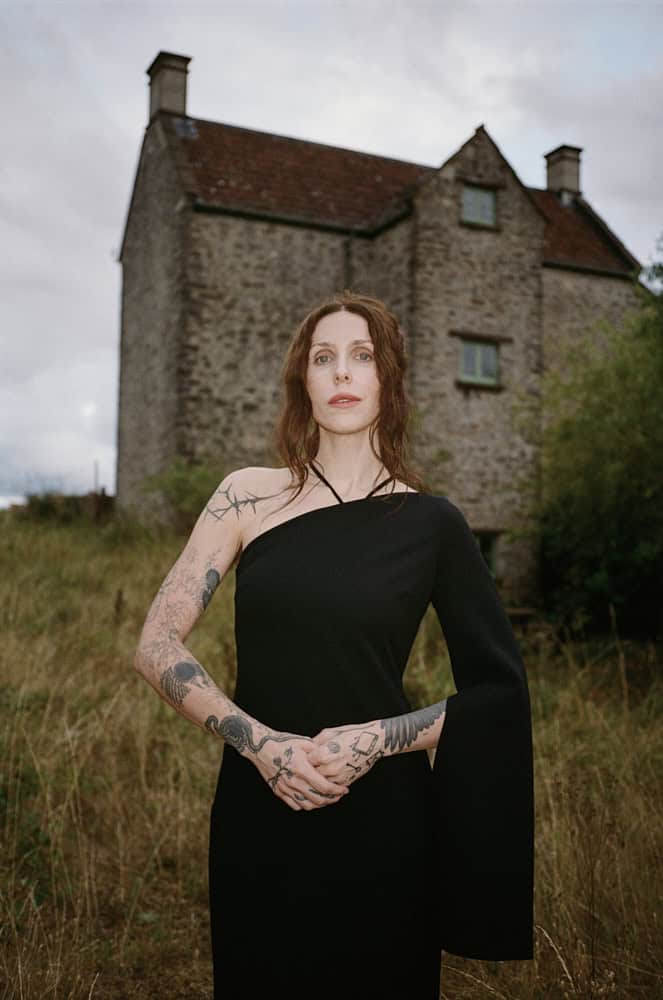
The album’s imagery also plays with this idea of smoke and mirrors. Its visual world is populated by ghosts, séances, and hauntings, drawing on films like What Dreams May Come (1998) and The Others (2001). In the former, Wolfe found a story about a lover who descends into hell to retrieve his beloved, while, in the latter, she found something closer to the mechanics of a toxic relationship.
In The Others, the ghosts haunt the inhabitants of the house, but the inhabitants are also haunting the ghosts. Wolfe was struck by the idea of this “dual haunting”, a relationship in which both people become capable of hurting one another.
“After a while, it’s like, who is the bad guy here?” she asks.
It is an unusually revealing way of writing about heartbreak. Rather than dividing a failed relationship neatly into victim and villain, Wolfe is interested in the point at which resentment, dependency, and love become so entangled that neither person can emerge innocent.
That idea runs through The Dark: releasing relationships that Wolfe loved but knew were no longer good for her, and recognising that she, too, had become part of the damage. “There was resentment and there was codependency”, she says. “And when you’ve tried to work it out and it’s just not working”, sometimes the only option is to leave.
For Wolfe, once an album leaves her hands, it becomes something else. “I was willing to put a lot of it into the music because I know that other people are going through similar things, and I wanted to allow people to see themselves in the songs”.
Years before The Dark was even a glimmer in the goth icon’s eyes, she learned a spiritual technique from astrologer Britten LaRue. This distancing technique helped Wolfe understand this album as its own entity. Although it came through her, and from her experiences, it is ultimately separate from her.
It is a useful distinction for an artist whose work is so personal. If the music is indistinguishable from the self, then praise and criticism become personal too. By separating herself from the finished work, “I’m able to give it away”, she says.
That philosophy also seems to inform her thoughts about generative AI. Wolfe is unequivocal in her opposition to its use in creative work, but her objection is not only about ownership or the ethics of training models on other artists’ work. For her, the deeper problem is what happens when the messy process of creation is removed.
For her the process of making the art is the fun part. To AI users, she says. “It’s sad really that you’re missing out on the process of creativity and collaboration”.
Wolfe loves being in the studio, writing, experimenting, and collaborating. To outsource that process, she argues, is to miss the point. The Dark, with its emphasis on transformation, uncertainty, and the thorny odyssey, could hardly be more opposed to the idea of bypassing the difficulty of creative labour.
There is also a quieter thread running through Wolfe’s music: Americana. Her father played in local country bands when she was growing up, meaning country music was part of the soundscape of her childhood. She hears traces of it in the melodies and vocal inflections of The Dark, particularly in the song “Cold”, although she describes the album’s influence as more folk than country.
How does she feel about the recent passing of music legend Dolly Parton? “She’s such a beautiful gem and definitely a big loss for the world and for music”, Wolfe says. “She reflects such a beautiful side of Americana. ‘A Coat of Many Colours’ is one of my favourite songs of hers”. One could say that themes of finding worth in unexpected places unites Parton and Wolfe’s work – the dark forest, the box of rags.
When asked what she hopes listeners carry with them after hearing the album, Wolfe pauses. The answer that comes to her is not a particular interpretation of the album, but a lesson she learned while making it: “I really needed to create a life that I didn’t want to run away from anymore”.
It was a realisation that demanded difficult decisions. It meant releasing things from her life, and turning her energy back towards herself and her art. A lyric from “Cold” becomes, in this light, something like the album’s thesis. “I’m not running away,” she sings, “I’m running back home”. “I needed to come back to myself”, Wolfe admits in a steely, empowered tone.
Her ultimate hope is that this album might offer listeners the same possibility and serve as “a catalyst for someone else to have a séance for their own soul and a summoning back of themselves as well”.