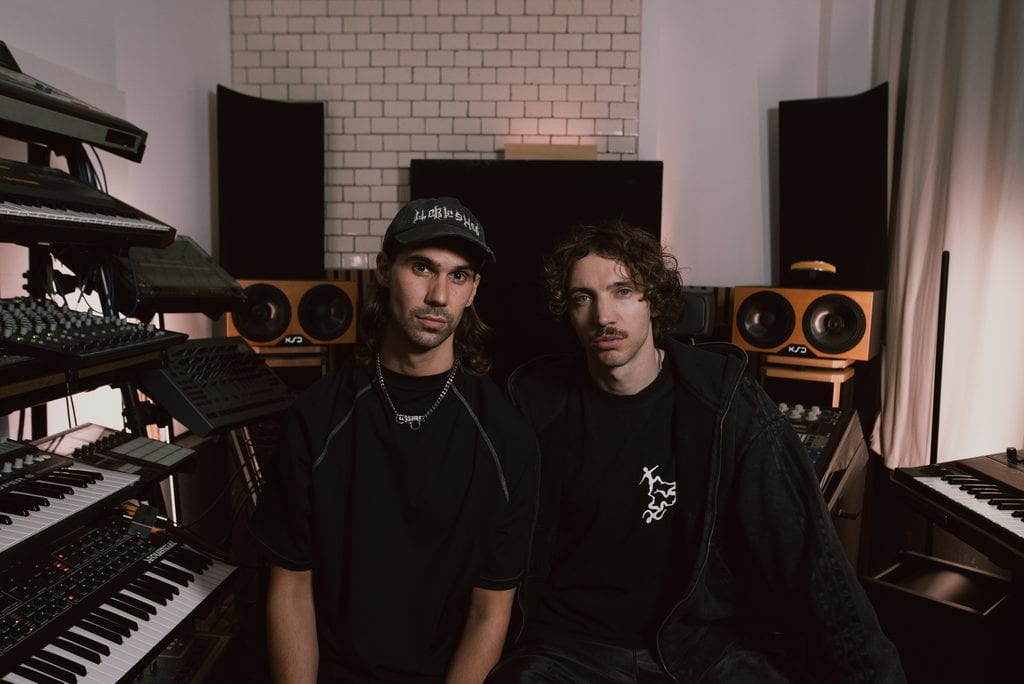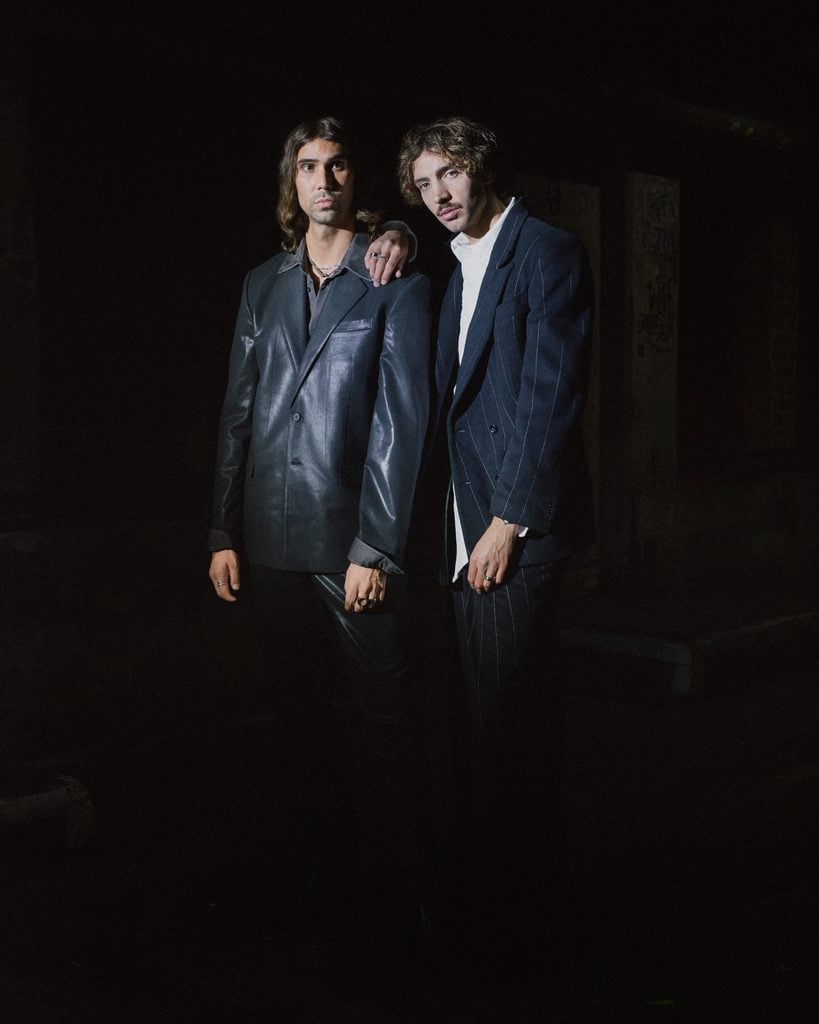
Long before I made it to a Berlin dancefloor, I was staring mysteriously out of school bus windows with FJAAK’s ‘Keep The Funk’ in my headphones, pretending I was already a cool raver girl there. The track got me through studying too, a firm staple in my playlists since 2018. FJAAK, then, became my favourite techno duo, recommended by my 16-year-old self to anyone who would listen–although Felix Wagner and Aaron Röbig would probably have told me to take those recommendations onto the dancefloor. When I finally got to Berlin and experienced its club scene for myself, my affinity for their music only grew stronger: surrounded by a crowd, I felt like I understood.
While I was imagining a life in Berlin, theirs had already taken shape in Spandau (West Berlin), where FJAAK began in 2009 as a four-person project. Bringing Wagner and Röbig’s love of hip-hop and drum ’n’ bass into conversation with their bandmates’ rock influences, they threw illegal raves with friends, and their self-titled debut arrived on Modeselektor’s Monkeytown Records in 2017. Today, they continue to support that circle through their label and collective Spandau20, while taking their own music across the globe.
We caught up with the duo to discuss FJAAK 015 and how music can make you feel part of a world you’ve yet to enter. Naturally, we also asked about dancefloor etiquette. Their verdict? “It’s a club, not a library.”
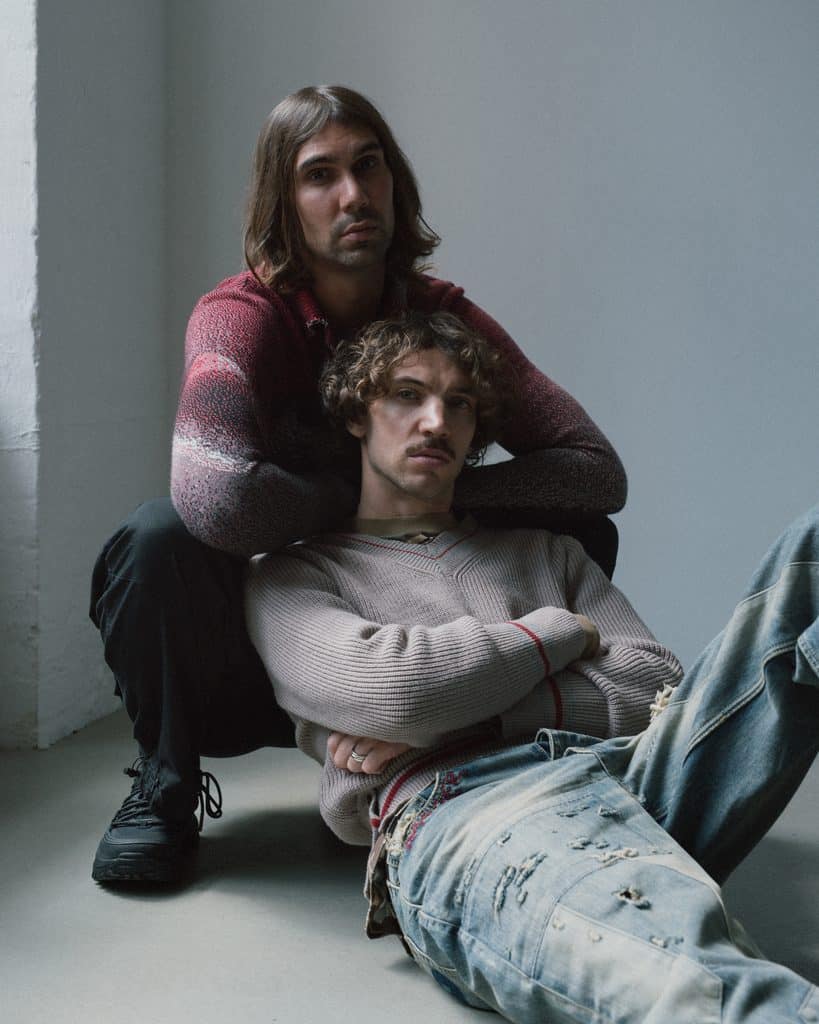
The Cold Magazine (CM): What memory from your friendship would make absolutely no sense to anybody else but still makes both of you laugh immediately?
FJAAK: There are honestly too many. A lot of them involve us being teenagers in Spandau and doing completely stupid things that were very funny to us at the time. You probably had to be there. That’s the nice thing about growing up together. You build up this whole private language of memories that nobody else really understands. Quite a few of our track titles come from those moments too!
CM: How has your friendship changed as FJAAK has grown from something you did together for fun into a career with pressure, expectations and responsibilities?
FJAAK: Obviously things have become more serious, but the friendship itself hasn’t changed that much. We still argue about stupid things and make jokes all the time. The difference is that there are now more decisions to make and more people involved.
When it was just us, we could make a track at three in the morning and not think about anything else. Now there are deadlines, releases, shows and a whole team around us. But the reason we started doing it is still the same. We want to make music together.
CM: If each of you had to choose one quality the other brings to FJAAK, what would it be?
Felix: Aaron is very good at pushing things forward and not getting stuck thinking about something for too long.
Aaron: Felix has a really good ear for what’s missing in a track and what could take it further.
Together, it works because we don’t always hear things in exactly the same way.
CM: You’re giving someone their first ever FJAAK experience. Are you sending them to a live show or locking them in the studio with you?
FJAAK: A live show. Definitely. The studio is where everything starts, but you need to experience FJAAK with a crowd to really understand it. Especially because the live setup is constantly changing and a lot of what happens is created in the moment.
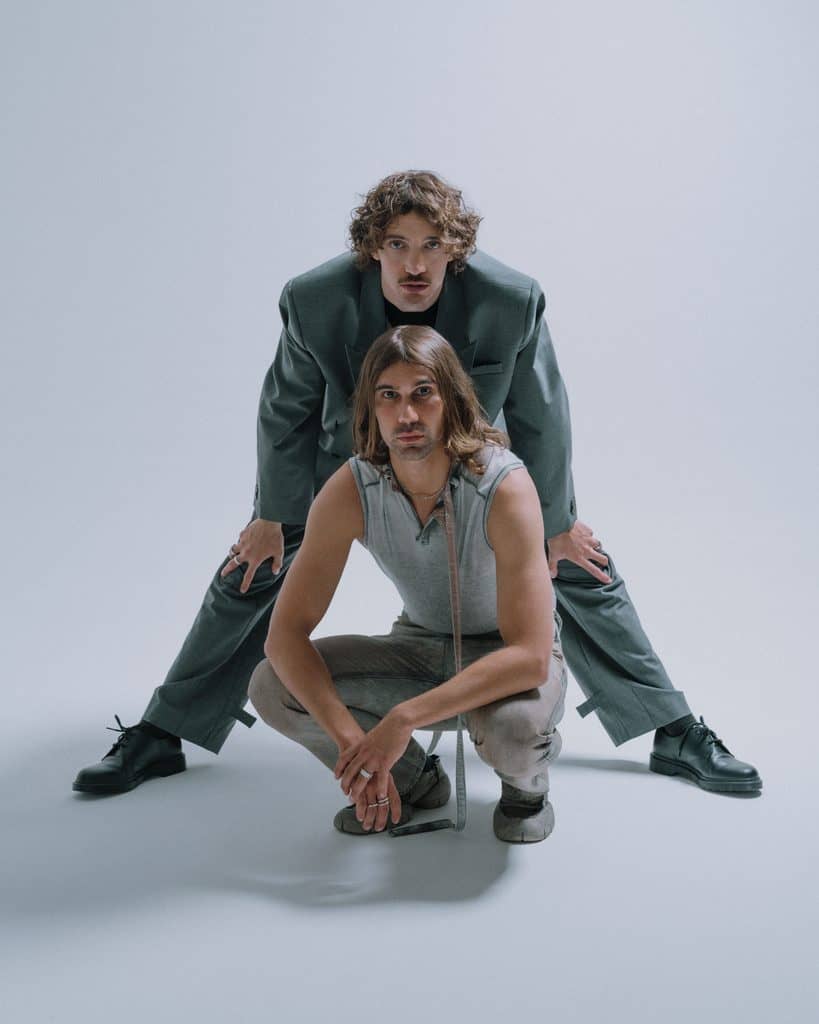
CM: Can you remember a record that changed your entire perspective within its first few seconds?
FJAAK: There are a lot of records that did that to us, and it’s probably impossible to choose just one. Robert Hood, Jeff Mills, jungle records, old house records, hardcore records… all of these things changed our understanding of what electronic music could be at different points.
Sometimes it’s literally the first few seconds of a record and you immediately think, “What the fuck is this?”
CM: Did every track on your latest FJAAK 015 EP begin in the studio, or did any of the initial ideas find you somewhere completely different; at a rave, while travelling, over dinner or in the middle of an otherwise ordinary moment?
FJAAK: Most of the actual production happens in the studio, but the ideas definitely don’t always start there. We’re constantly listening, recording things and thinking about music when we’re travelling or just doing normal everyday stuff.
Sometimes you hear one sound or rhythm somewhere and you immediately think, “That could be a track.”
CM: Beyond music, what fed into the sonic world of the EP? Were there any sounds from nature, machinery, the city or everyday life that caught your attention and made you think, “That belongs in a track”?
FJAAK: Definitely the environment around us. We’re constantly recording sounds when we’re travelling. Machines, streets, rooms, random noises, nature, things you normally wouldn’t even notice.
A lot of those sounds are interesting because they’re not designed to be music. You can take something completely ordinary, put it in a different context and suddenly hear it in a completely new way.
CM: As producers, are you creating the emotional meaning of a track or creating the space in which listeners can find their own meaning?
FJAAK: Probably more the second one. We know what a track makes us feel, but we don’t want to tell somebody else what they’re supposed to feel.
Everyone brings their own experiences into music. The same track can mean something completely different to two people, and that’s one of the most beautiful things about music.
CM: Electronic music often communicates without words. Do you think removing language allows people to access emotions they would otherwise struggle to name? What can music communicate that language can’t?
FJAAK: Definitely. Music can communicate something before you even have time to think about it. You don’t have to understand a language or know the story behind something.
A bassline, a rhythm or a certain sound can trigger a feeling immediately. Sometimes you can’t really explain why. You just feel it.
CM: Which track on FJAAK 015 comes closest to expressing something you wouldn’t know how to communicate through words?
FJAAK: All of them. Many things you can try to express with words, but sometimes a song will say more than a thousand words. That’s a big part of why we make music.
CM: Why do you think humans are so drawn to bass frequencies that can be felt through the body as much as heard through the ears?
FJAAK: Because we’re physical creatures. You don’t just listen to bass, you feel it. You can find yourself moving before you’ve even thought about it.
That’s probably one of the reasons clubs can be such a powerful environment. You’re not just listening to music through headphones or on your kitchen speakers. Your whole body is becoming part of the experience.
CM: Do you believe a crowd creates its own shared consciousness, or are hundreds
of people simply experiencing the same sound individually?
FJAAK: Maybe it’s somewhere in between. Everyone is obviously experiencing the music individually, but when hundreds or thousands of people react to the same moment at exactly the same time, something collective happens.
You can feel it when a crowd is really connected. It’s almost like the room becomes one instrument.
CM: Phones are often blamed for damaging club culture, but they can also capture memories and help music travel far beyond the room. Where do you personally draw the line?
FJAAK: We’re not completely against phones. People want to capture memories and that’s normal. For us, the problem starts when you’re spending more time filming the experience than actually experiencing it. We don’t want to tell people what they’re allowed to do, but sometimes it’s worth putting the phone away and taking it all in.
CM: The internet recently debated whether people should be allowed to talk on the dancefloor. What’s your verdict? Is talking part of the freedom of a club, or can it genuinely disrupt the experience?
FJAAK: Of course people can talk. It’s a club, not a library.
But there’s a difference between talking to your friend and shouting a whole conversation over the music next to someone who’s completely lost in it. Just be aware of the people around you. It’s basically the same as everything else in a club. Enjoy yourself and give other people the space to do the same.
CM: You’re playing four different shows during ADE this year. If someone could attend only one, what would you ask them before deciding which version of FJAAK they need to experience?
FJAAK: We’d ask them what they want to feel. If they want the raw, unpredictable side of FJAAK, come to the live show. If they want to hear us going deep into different styles and taking our time, choose one of the longer sets. We don’t really have just one version of FJAAK. That’s probably exactly why we have four shows 😉