Karishma Jobanputra’s debut collection, The Body of the Thing, will make you fall in love with short stories
“Normal Jean Baker of Troy”: the debut short story collection from a British-Indian writer listed for the Brick Lane Short Story Prize.
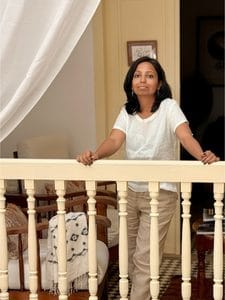
“Normal Jean Baker of Troy”: the debut short story collection from a British-Indian writer listed for the Brick Lane Short Story Prize.

From Lost Lambs to Lázár, writers are exploring secrets, power and inheritance. Pia Ghosh-Roy asks how well we can ever know the people we call family.

“Violette Leduc first taught me that happy endings aren’t very queer”: in her 60s, Ruth Novaczek had her heart broken by a woman in her 20s.
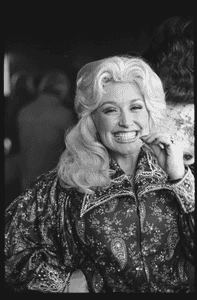
“If I’m remembered 100 years from now, I hope it will be not for looks but for books”: a reading list for the queen of East Tennessee.

When was the last time you opened a dictionary and looked up the meaning of a word? Chances are, it’s been a hot minute. Mabel Evans and Ben Aston, the team behind the new literary podcast Wodcast, want to change the way we interact with language. In 2025, a survey from the The National Literacy Trust revealed that reading for pleasure may just be a dying artform. According to the survey’s findings, reading enjoyment among children and young people in the UK had fallen to its lowest level in two

60 years after the first Notting Hill Carnival festival exploded into the West London streets, the 2026 festival is getting a new look and sound with Rhythm and Roots, a Foot Locker x adidas project that forefronts premier Black British talent. Spanning fashion, music, film, photography, and art, this team-up celebrates both the history and future of Carnival in all its sweaty, glittering, bass and steelpan-bumping glory. Since 1966, Notting Hill Carnival has spotlighted the diversity and beauty of African-Caribbean culture in Britain. While it first began as a small

Every September, the spirits of the dead return before vanishing four weeks later in a puff of green ash. This is the eerie concept behind Simon Wroe’s third novel, Ghost Month, but Wroe’s handling of grief, memory, and love after loss is anything but slapstick. When the novel opens, it has been five years since the dead first began appearing, and over the course of the month, we follow four strangers as they prepare to welcome their spectral visitors. Spirits, hauntings, clouds of green ash – it all might sound

Rebecca Birrell walks into the café in canary yellow and chartreuse. As we settle in with our coffees, I feel the same spark of excitement I had when I first cracked open the golden cover of her debut novel, Venus Vanishing. I take a sip of my latte. Fascism, queerness, resistance. This is going to be interesting. Before turning to fiction, Rebecca built a career as an art historian and curator, working at Charleston, the Jewish Museum, the British Museum, and the Fitzwilliam Museum in Cambridge. She has spent years
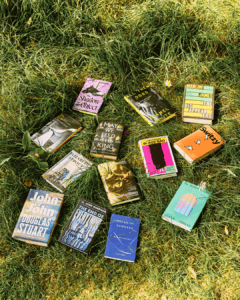
“We’re due a return of weird literature”: 13 works chosen from 163 titles, and it seems the prophecy has come to pass.
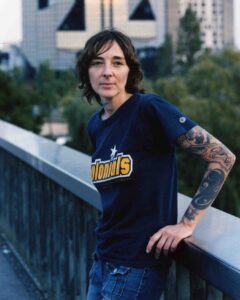
Diaristic, hedonistic, full of sex, drugs and techno music: a group of queer women chasing fame, and love, on the cusp of a new millennium.

In April 1476 a young artist was arrested by Florence’s vice squad, the scarily-named Office of the Night, on charges of sodomy.
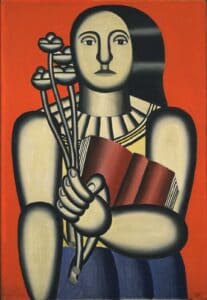
Red alert! From Paris to London, Europe is in the thick of a heat wave, with temperatures almost reaching 41C in the City of Lights, and 35.7C in London. And while some turn to Magnums and cheap Argos fans to help them make it through, we think a little literary escapism might just do the trick. From Croatia, to Uruguay, to the dusty Deep South of America, to India’s tropical Malabar Coast, we’re prescribing a list of heatwave-ready books that will transport you to places where the sea breeze tickles
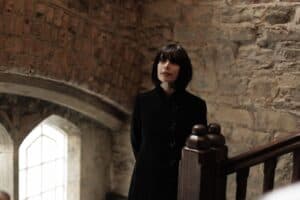
A book about a book, stamped “FEMALE CASE BOOK 22”: the case book of the first woman doctor to work in Ireland’s asylum service.
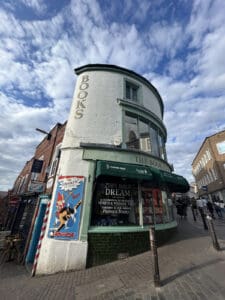
Don’t believe the rumours. Independent bookshops are thriving, not dying. In America, about 422 indie bookshops opened in 2025, showing a 31% increase from 2024. In the U.K., “more independent bookshops [are] opening than closing”, reported Meryl Halls, managing director of the Booksellers Association (BA), in early 2026. And if there was ever a time to shop local for your romantasy, your true crime, and your heartbroken poems, it’s this week – Independent Bookshop Week. To celebrate, the bookish of us at Cold Magazine including our editors, contributors, and author

Polyester Zine has been pushing the kitsch agenda since it launched in 2014, encouraging readers to “Have faith in your own bad taste” – a motto derived from the king of camp himself, John Waters. Today, it released its manifesto The Polyester Book of Bad Taste. With bows in pinks and purples and pixelated glitter hearts snipped right out of an early-2000s e-sticker pack, Polyester’s visual style has become synonymous with feminine maximalism and an ode to the early internet. And with cultural deep-dives on everything from The Real Housewives

“Is there anything more to say?” Jailbait, Lolita, nymphette, tease — the Lolita-bites-back narrative through the eyes of a 13-year-old girl.

About twenty minutes into my conversation with Niamh Campbell, a baby cries out into the dark room. “Sorry,” she says, “I’m going to have to jump up for one moment and grab my baby, she’s just woken up.” “No worries!” I say. Luckily, the baby girl goes back down quietly. “I went into her and she just let out a big fart. She just needed to let that go and let me know.” This is the reality of a working mother – one who’s an author and who’s also on

When E.R. Fightmaster pings onto my computer screen, my eyes can’t help but roam over the home studio behind them, looking for clues. Bathed in California sunlight, a drumkit sits under colourful posters. What appears to be a Tree of Life tapestry hangs high – dark, russet leaves float around a strong centre. Verdant and life-giving. It’s a serious, tranquil environment, and dear reader, when you hear the debut FIGHTMASTER album, Tolerance (out June 5), it will make sense why this is the room of its birth. E.R. Fightmaster is
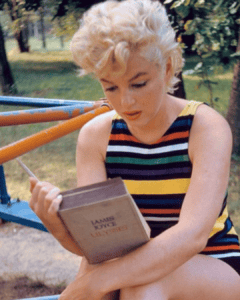
Orphan. Dropout. Factory girl. Pin up. Star. Marilyn Monroe, born 100 years ago today, lived many lives and went by many names. In addition to her birth name, Norma Jeane Mortenson, and that unforgettable screen name, the film icon would wear titles like Sweetheart of the Month, Artichoke Queen, Miss Cheesecake of the Year and Girl Most Likely to Thaw Alaska throughout her life. But who was Marilyn Monroe, really? One story – ditsy, distant, too earnest, an unsocialised puppy of a woman – contradicts another – dark and serious,
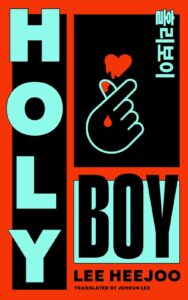
“Don’t you think even Yosep’s excretions make him beautiful?” ponders a young woman in a cafe. The young man in question is a shiny, twenty-one-year-old K-Pop star. The woman? That’s Nami, his kidnapper. Lee Heejoo’s Holy Boy is a simmering, gunk and pus-filled exploration into the dynamic between idol and fan. In the last summer of the 20th century, four female fans kidnap their favourite K-Pop idol, but as the ramifications of what they’ve done begin to surface and jealousy seeps in, the kidnappers’ plot spirals out of control. This
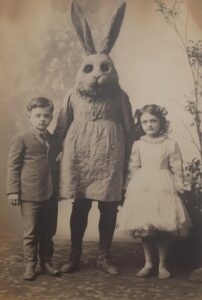
Welcome back big guy (the Easter Bunny, that is). It’s Easter Sunday and that means Cadbury mini eggs, overpriced hot cross bun coffees, and receiving AI bunny gifs from every auntie in your contact list. But, in 2026, the bunny might just be undergoing a rebrand. In the book world, rabbits are no longer the pastel icons they once were, relegated to the children’s section. Psychological thrillers and horror novels are increasingly using bunny imagery in their titles and cover art to signify themes of madness, wildness, and thwarted innocence.

Lázár is the rocket that has carried this 22-year-old into the stratosphere: war, magical realism, four generations of an aristocratic Hungarian family.
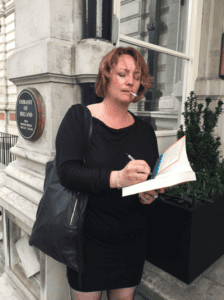
The Green Wave. The Guinnaissance. The return of the Craic Pack. Whatever you want to call it, there’s no denying that we’ve all become a bit obsessed with Irish culture in recent years. Whether you spent the summer obsessing over the gem-toother rockstar, CMAT, hotly following along Kneecap’s court case, or watching and rewatching that iconic Rocky Road to Dublin moment in Sinners, the cultural output of this small island packed a punch in 2026. For St. Patrick’s Day 2026, we’re keeping the party going, and letting the green waves
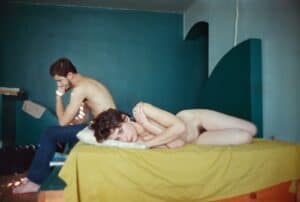
I felt nervous standing in the queue. I had travelled two hours by train and god knows how many clammy minutes on tubes to get here: the entrance to Gagosian. It was Mayfair, late January, blue hour. I was one single vertebra in a long column of people waiting to enter the doors of Nan Goldin: The Ballad of Sexual Dependency. Created between 1973 and 1986, the photo series has long been considered Goldin’s magnum opus. Shown in its entirety here – all 126 photographs – for the first time
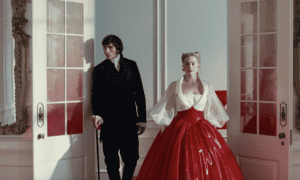
Well, dear reader, we’ve seen the film. And if you’ve been online at all since Valentine’s Day, you’ll know which film we mean. Emerald Fennel’s adaptation of “Wuthering Heights” (emphasis on the quotation marks here) hit theatres on 14 February, and its sexed up take on Emily Bronte’s 1847 novel has divided audiences, to say the least. Some viewers have praised the film’s anachronistic costume design and Tim Burton-esque visuals, highlighting how Fennell has taken a radically different approach to a classic tale – this time putting female sexual fantasy

When Madeleine Dunnigan appears on my laptop screen, the day before her debut novel is published, she’s wearing a citrus green sweater and a smile. Pearly, wet light is leaking in through a window. She lives in London, where, I think, it is probably miserable. At the time of our conversation, the UK has hit its 41st consecutive day of rainfall and there is nowhere else I’d rather be transported to than the summer of 1976. This is when Dunnigan’s debut, Jean, takes place. Jean is a brutal and hazy
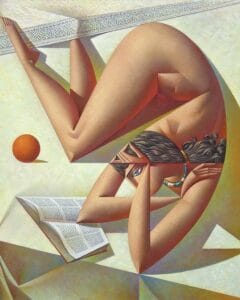
From Coyoacán to Mitteleuropa, to London, Baghdad, and back again, books are taking us places this year. We’ve combed far and wide to fish out the 26 new releases that we’re most excited to crack open in 2026. One theme stood out among the rest: movement. These writers, from debut novelists to tried-and-true literary legends (welcome back, George Saunders) will sling you from end of the globe to another, unpicking place, migration, revolution. A father and son are rocked by the effects of the Great Famine on a windswept peninsula

Put down your whisky. This isn’t your average Burns Night. As skirts are hiked mid-ceilidh and forks are raised above plates of haggis, we’re looking beyond Scotland’s national bard and towards the future of Scottish poetry. Robert Burns may be best known for his beloved poems “A Red, Red Rose” and “Auld Lang Syne,” but what impact has he had, really, on Scottish poets working today? Born in 1759, Burns’ poetry flits between the Scots dialect and English, and is deeply rooted in love for nature and rural life. His beloved
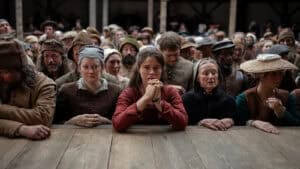
A forest witch takes the gold. On Monday, Irish-born actress Jessie Buckley won the Golden Globe for Best Actress in a Drama for her role as William Shakespeare’s wife Agnes Hathaway – historically known as Anne – in the big-screen adaptation of Maggie O’Farrell’s “Hamnet.” The novel was published in 2020 and quickly became a literary sensation, winning the Women’s Prize for Fiction and the National Book Critics Circle Award for Fiction. And with Buckley winning big in 2025, it seems this tale’s DNA is lined with gold. But why?

That’s the thing: Hamza Ashraf didn’t do anything. The filmmaker, photographer and writer has been exiled from his birth country for one reason and one reason only — for living as an out gay man. When we first log onto Zoom, he’s sitting by the window of his flat in Leeds, morning sun falling across his shoulder. Around his neck, there’s a small gold pendant necklace, ricocheting the light. There’s a kind of composure to him, but also the restless current of someone who’s still building a home in real
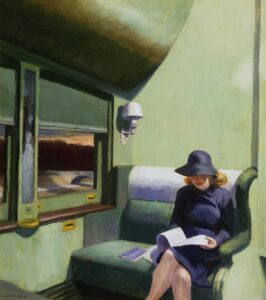
The sky is ink black outside the train window, mince pies glint from every shop counter, and ice crystals crackle under our boots. All signs point to the same truth: November is here. While some people use November to grow moustaches or get into stews, we choose the nobler path: reading non-fiction until our brains hum like a radiator in a Victorian terrace. Nonfiction November is a month-long reading initiative started by the Federation of Children’s Book Group that was originally aimed at young readers. However, it’s long since escaped
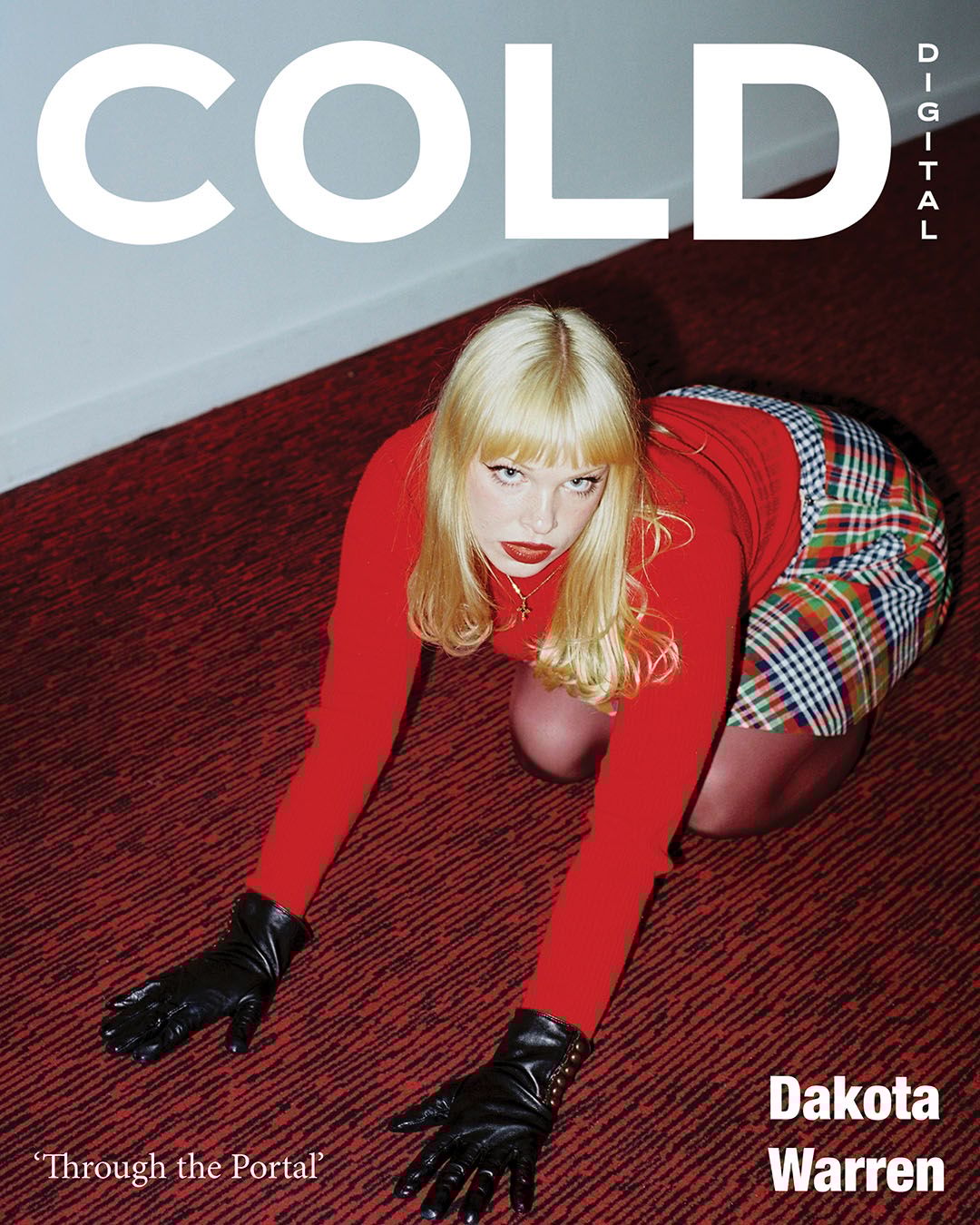
Through the Portal: A Conversation with Dakota Warren Written by: Lexi Covalsen Edited by: Lily-Rose Morris-Zumin Photos by: Luvi Camera When Dakota Warren first appears on my screen, the light from her laptop camera shifts and flickers, tracing her face as she laughs. “I just got a new MacBook,” she says. “It’s doing this weird face-tracking thing. Forgive me if I look distracted,” she laughs. Even through the pixelated lag of a midweek Zoom call, Dakota radiates a kind of 1960s wunderkind energy; white blond hair, sharp eyeliner, a soft
We noticed you're visiting from France. We've updated our prices to Euro for your shopping convenience. Use Pound sterling instead. Dismiss