One month ago we got our first taste of the SS27 season. The city was alight with excitement and renewed energy, this season boasting an impressive roster of independent designers and returning greats. Fashion month is increasingly hectic every time it rolls around. It is near impossible to keep up with the carousel of runways popping up on our digital feeds. Below, COLD’s contributors detail their favourite shows of the SS27 season and the designers worth keeping an eye out for.
Thursday
Keburia
Flora Ivins
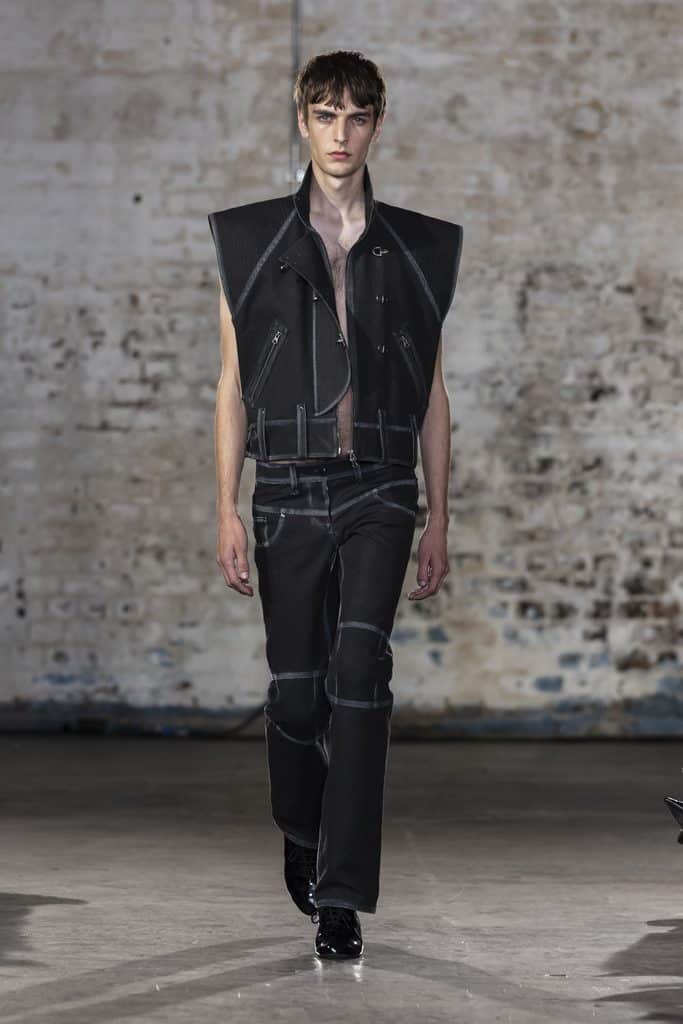
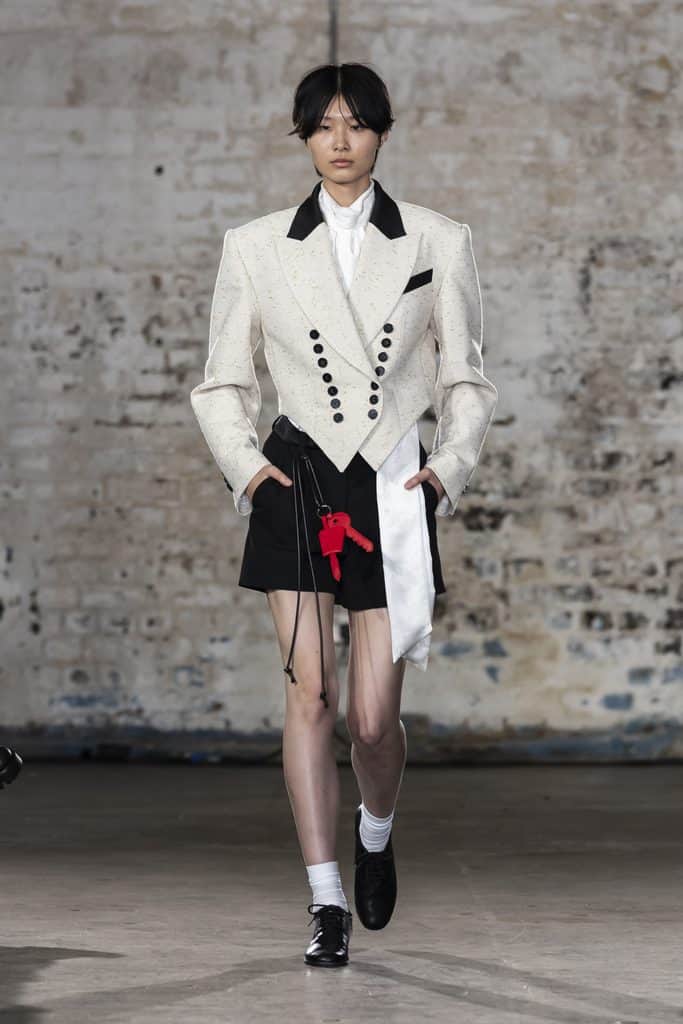
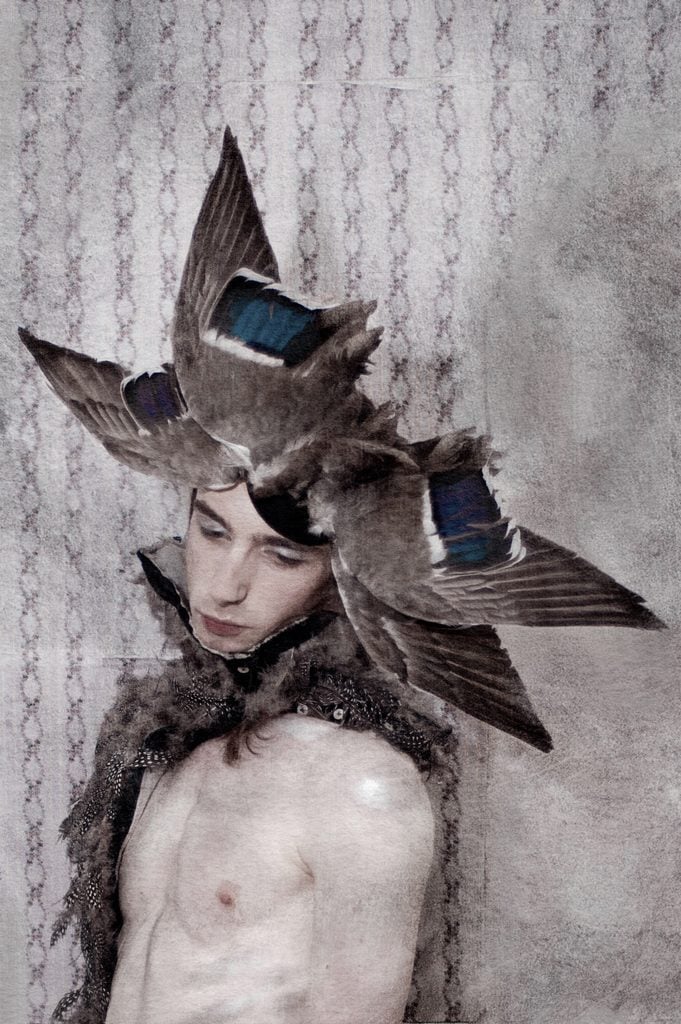
For his first foray into menswear, George Keburia toyed with a delicious mish-mash of references in his SS27 collection. A gamut of countryside dwellers were soundtracked to thumping techno: festival goers to equestrian nuts and estate ladies who organise charitable teas in the local village hall all stomped down the East London runway. Idyllic pictures of mallard ducks and horses appeared on a metallic tweed shift dress and pencil skirt. The tailoring was in equal parts architectural and playful, with blown-up lapels and jutting shoulders taking centre-stage. Elsewhere, we saw tongue-in-cheek military references (seemingly à la Animal Farm), like a pig insignia belt that stamped a breezy bias-cut dress and “hope you burn Putin” scribbled on a guitar case. The closing look saw a blitz of aqua fringe the waist of low-slung culottes and paired with a formal Victorian blazer. Keburia knows how to rip up the rule book.
Agro Studio
Penelope Bianchi
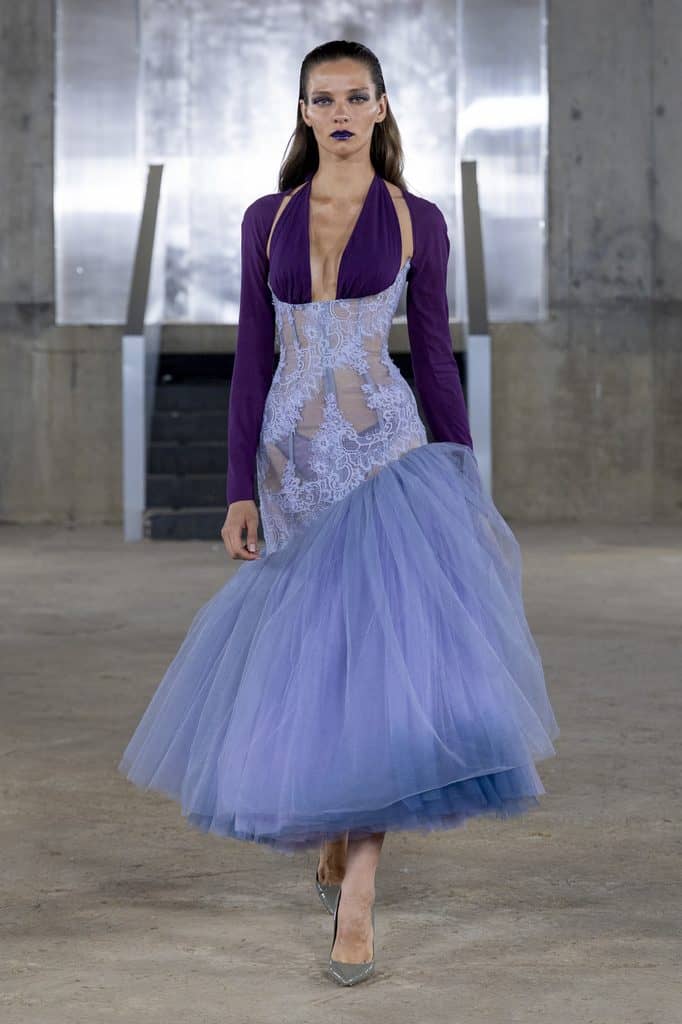
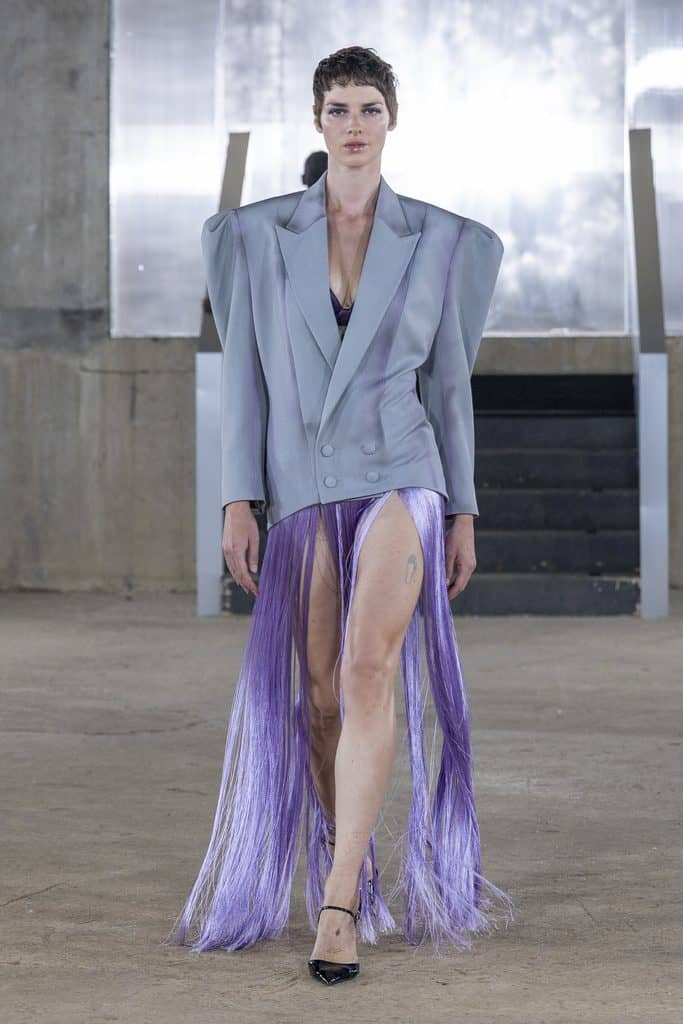
AGRO Studio was my first show of the season, and it set the bar ridiculously high. Having visited George Oxby and Angus Cockram’s East London studio back in February, I couldn’t wait to see what they’d been working on for SS27. Inside the brutalist Collins’ Music Hall, the duo presented ‘Glass Body’, a collection full of dusty and rich purple hues alike. If I needed convincing this was going to be the colour of the season, this did it. The tulle and lace were particular favourites, their softness offset by sculpted corsetry and dropped waists that elongated the torso before skirts widened at the hips. Last season’s very British references (think sheepskin and Union Jacks) have been replaced by balletic motifs. Thousands of antique, discarded buttons created optical distortions across the garments, adding to the collection’s playful experiments with transparency as models literally entered the show space through a glass corridor. References included equestrian clothing and 1980s sportswear, although their punk-ish AW26 spirit reappeared in their distressed lace, but it was the purple I kept thinking about.
Maximilian Raynor
Emerson Francisco
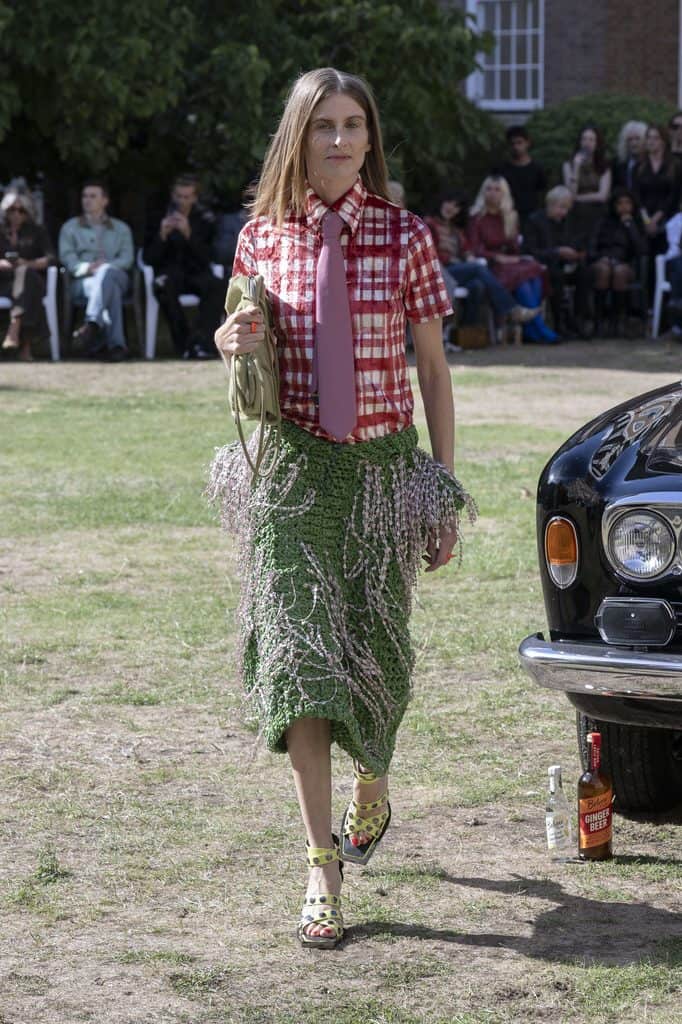
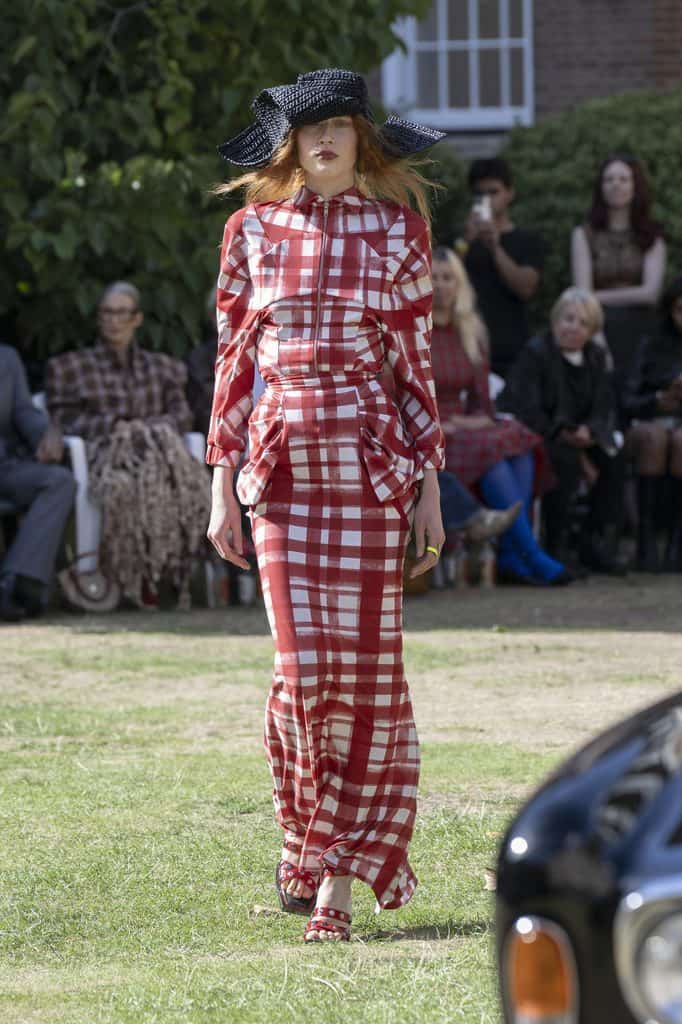
For his debut ready-to-wear collection, powerhouse Maximillian Raynor presented ‘A Village Green Rivalry’ in collaboration with Belvoir Farm. In the sunlit green of Goodenough House in central London, Raynor set up a Shakespearean rivalry between two imagined families: the Elders and the Gingers. The collection is sophisticated enough to stand on its own, but Raynor’s satirical tendencies made this a stand out show. Some looks breathe a sort of hedonism and arrogance, with Elizabethan collars and feathered gowns gracing the debutants on the green. Circling a black vintage Bentley, models from each side of the feud donned hand-crocheted skirts in neon colours and tailored summer coats. Perhaps the most striking look of this collection was St Georgina – a corseted gown painted in a warped red tartan that mimicked the stripes of St. George’s flag. Pulling inspiration from Vivienne Westwood’s famous fading Union Jack rug, Raynor’s reinterpretation of the iconic red stripe is a thoughtful reclamation of a flag that has now become associated with a rise in nationalist ideologies. ‘A Village Green Rivalry’ was in equal parts playful and critical of the culture of class.
Friday
Natasha Zinko
Izabel Koeva
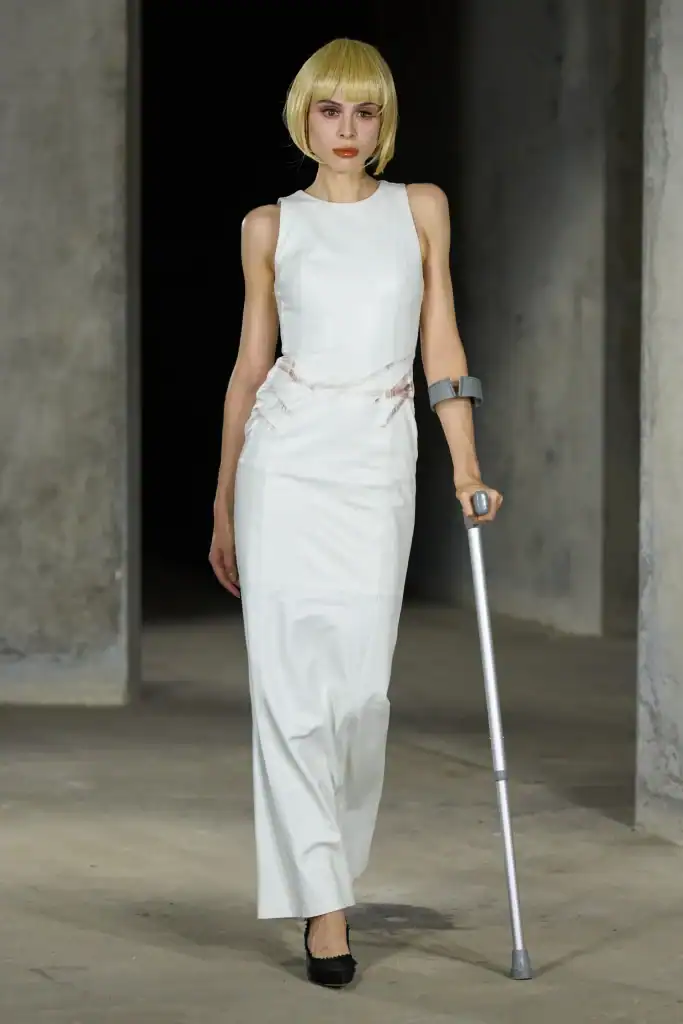
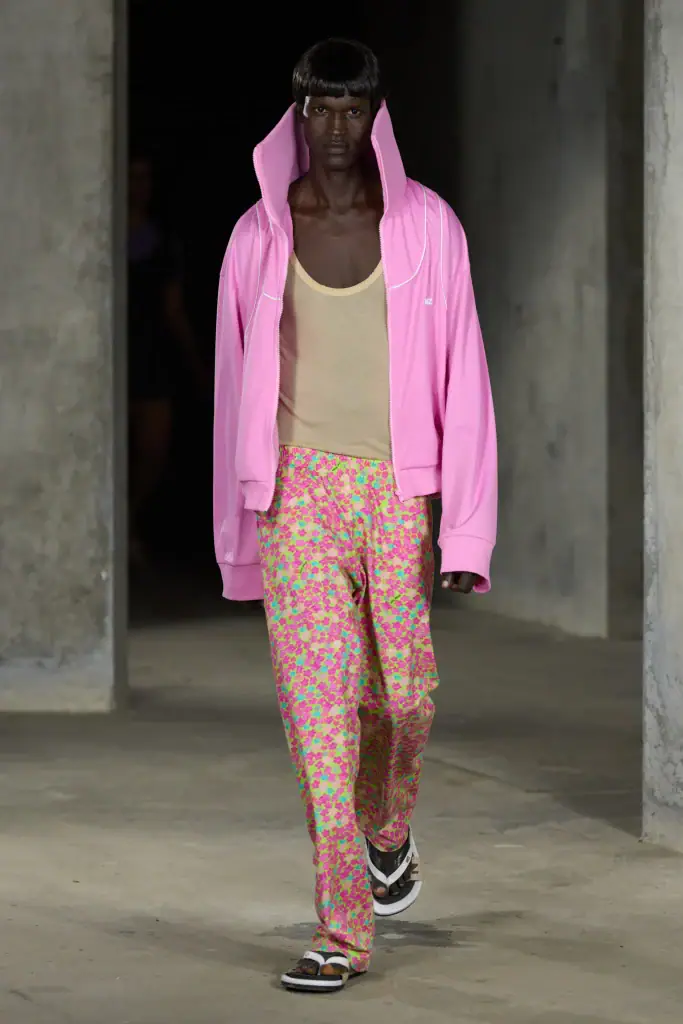
On Friday, Cold went behind the scenes for the set up of Natasha Zinko’s SS27 presentation. We arrived at the Collins’ Music Hall in Islington to find an army of 40-odd trembling interns already crowding the entrance. Inside the brutalist concrete colosseum, Zinko’s mum was setting up food while models sat idly on the floor, waiting for the next appropriate interval to sneak out for a quick smoke. The venue’s backstage was a melting pot of household names and newly famed influencers – from Kelly Osbourne to Kershaw – waiting in equal anticipation to perform for Zinko’s Pay Per View collection.
Zinko’s presentation, which debuted in collaboration with OnlyFans, was laid out like an interactive dollhouse. Separated bays gave a snapshot glimpse into not only the looks, but the performed life of each person wearing them. The central theme was Foucault’s Panopticon, a witty insight into surveillance culture made even more relevant by the widespread adoption of OnlyFans. Cold watched from the top floor as the lights dimmed and a mature model in a pink raincoat performed a Giacomo Puccini aria. Katie Price, returning to runway after an 11 year hiatus, danced provocatively in the front bay while Sopranos star Drea De Matteo smoked a cigarette, sporting a champagne coloured satin set and mustard-tinted eye wear. The remaining performance featured a pole dancer, a rapper, a staged fight, western cowboys, models in a passionate embrace and a live painter. Guests gawked shamelessly at models, frantically darting their eyes at whichever character was placed in the spotlight. The 42-look collection comprised of sheer fabrics, shrunken silhouettes, X-ray anatomical prints, corsetry, tightly tailored waist coats and a brown hoodie boldly reading “ONLY FANZ”.
Yuhan Ao
Carolina Vlachakou
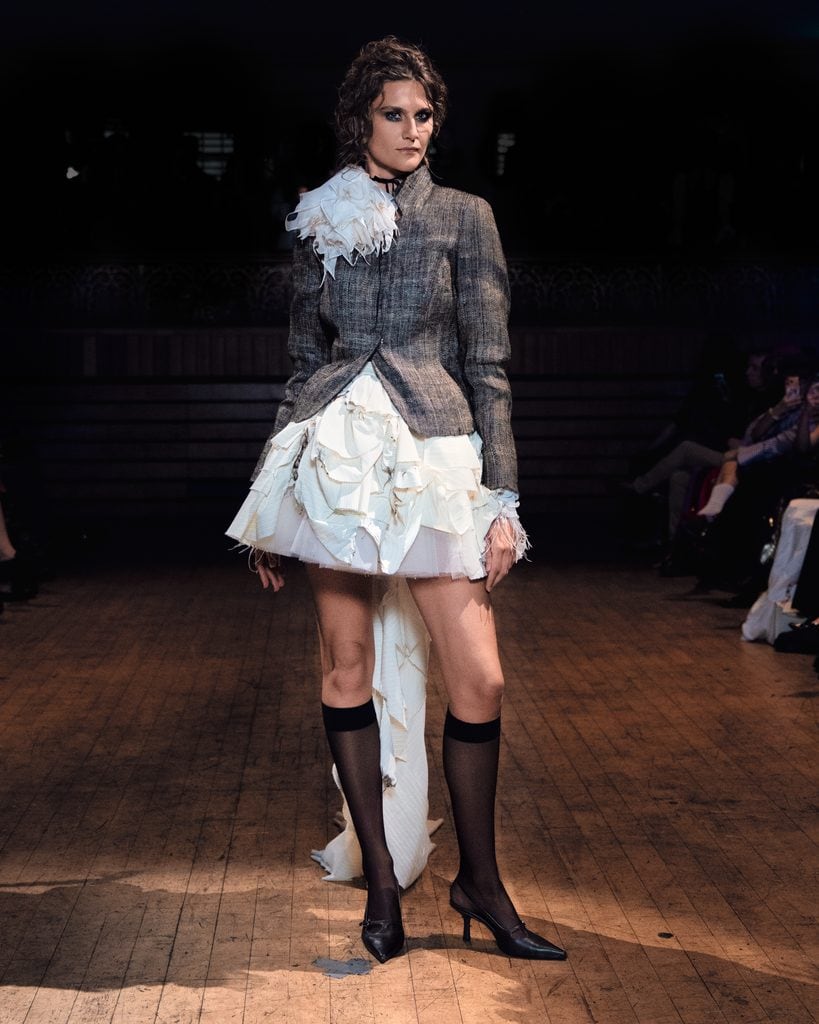
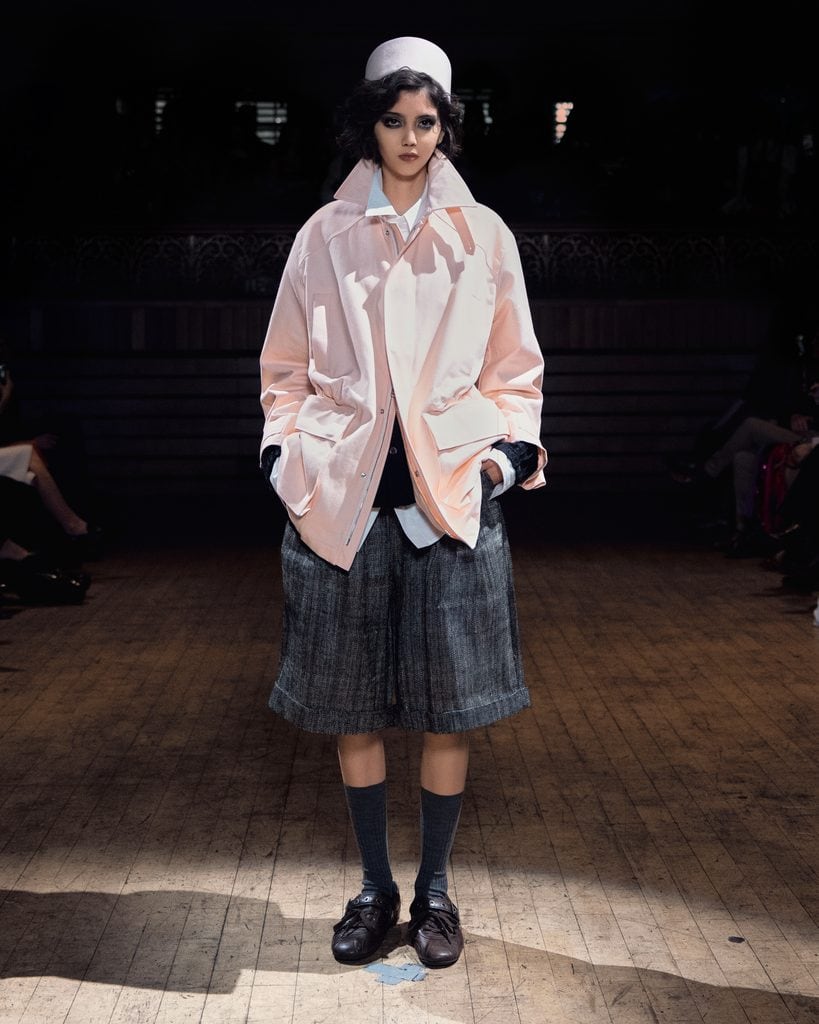
For his SS27 collection titled “No Longer Guided by the Haulers”, Yuhan Ao reflected on the complex relationship between material and social identity. The collection was inspired by the poem “The Drunken Boat” by Arthur Rimbaud, and asked what happens when a material is repurposed in an unconventional way. Notably, the designer replaced traditional weft yarn with mohair, instead interweaving it with ramie. The difference in behaviour between the two materials and deconstruction as a whole became a focal point of the collection. Garments were theatrical, with tailored, distinctive coats and aristocratic collars taking centre-stage.
Saturday
Geordie Campbell
Penelope Bianchi
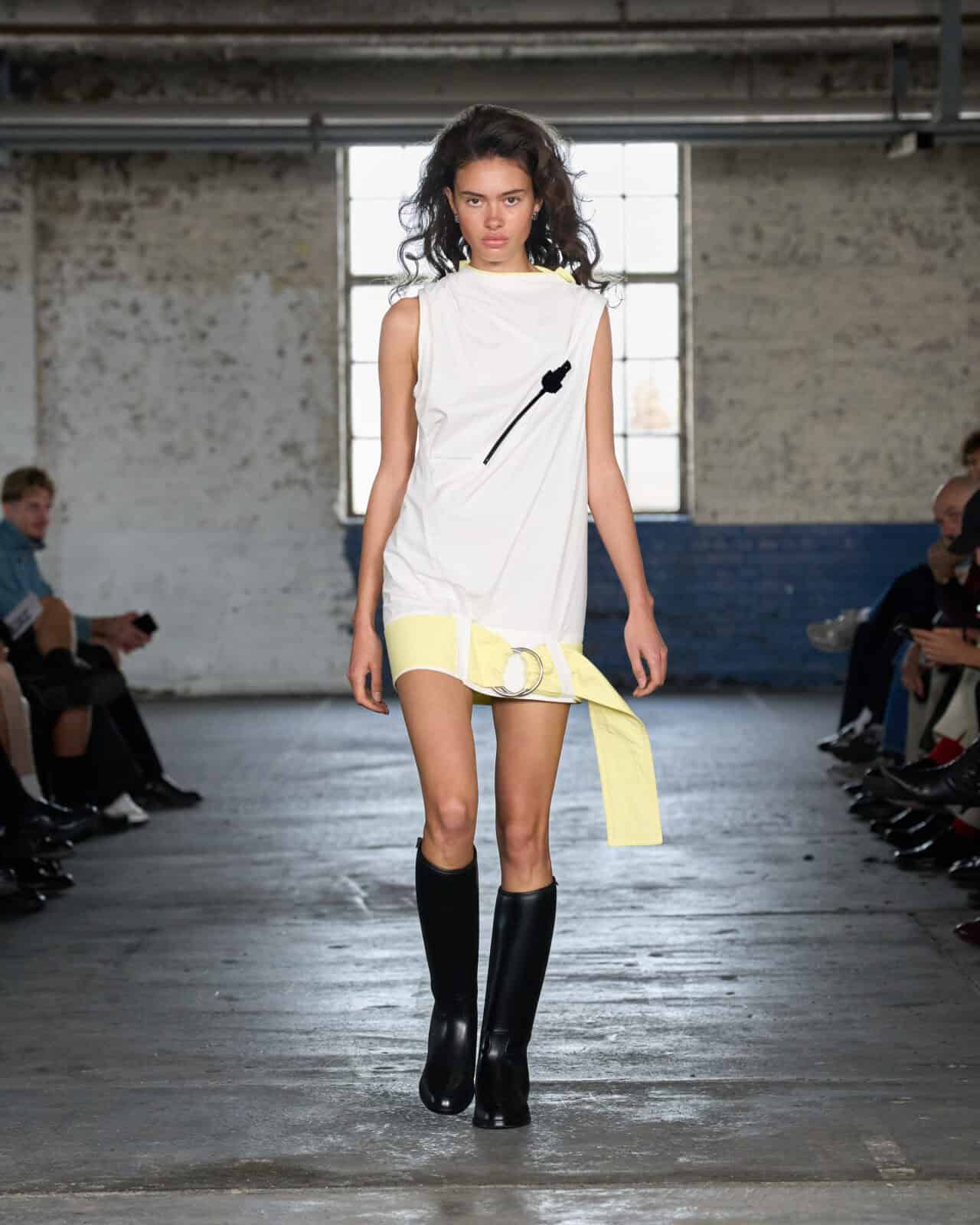
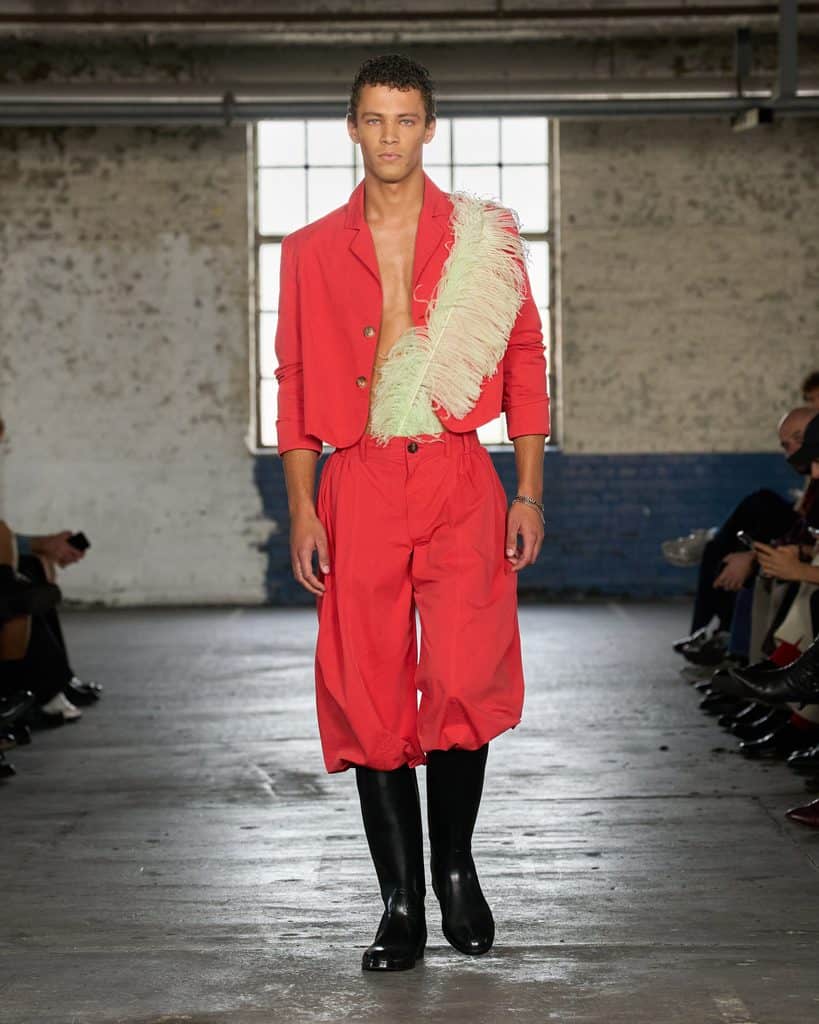
Geordie Campbell was one of my first ever interviews for Cold, so attending his runway debut felt like a full-circle moment. When we first spoke about his AW25 ‘Michaelmas’, a collection rich in schoolboy symbolism (with gold stars and rosettes), he mentioned the dual desire of wanting to fit in but also trying to stand out. For SS27, ‘15 Steps’ took this a step further and transitioned it into adulthood with references to cruising, and the small ways clothing can communicate desire. George Michael’s 1980s wardrobe provided the starting point for low-cut boat-neck tees and oversized military-inspired coats paired with skimpy athletic shorts. Rolled sleeves revealed bright linings with multicoloured trims and sailor trousers showed the designers’ own take on the subtle codes of a handkerchief hanging from a back pocket. The collection featured a collaboration with Cruising Archaeology, whose work we’ve covered several times at Cold, turning an object recovered from a cruising site into a brooch. Of course, Geordie remains a British Boy through and through, and 92% of the collection was manufactured in the UK. His nods to AW25 didn’t go unnoticed as we spotted a few ribbons lining the headwear. Although Geordie’s schoolboy is all grown up now, he definitely still likes the attention.
Pauline Dujancourt
Flora Ivins
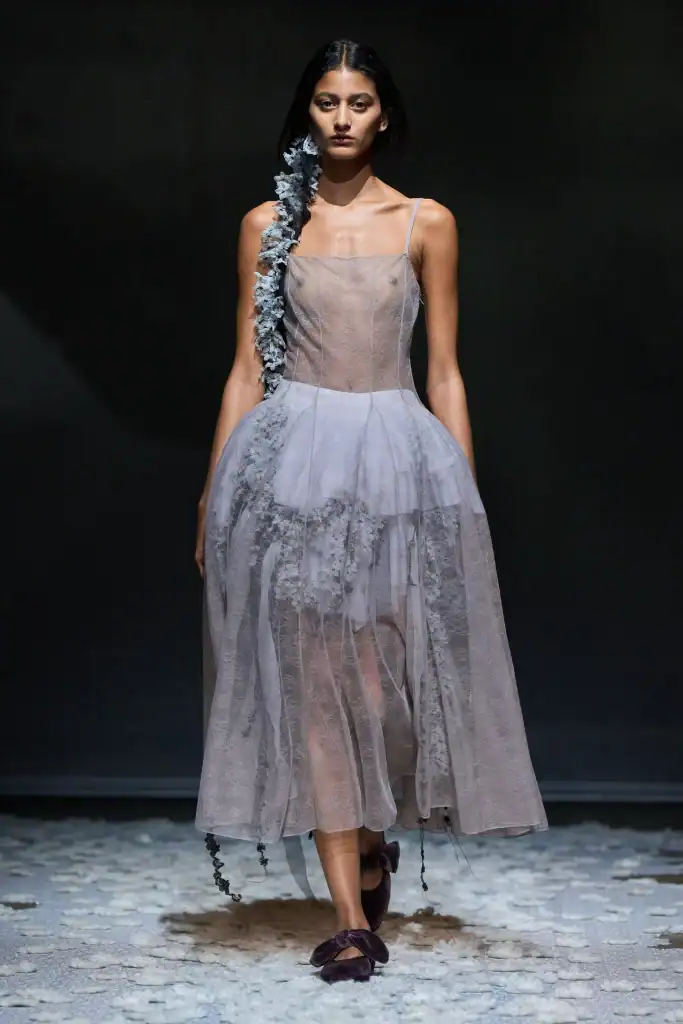
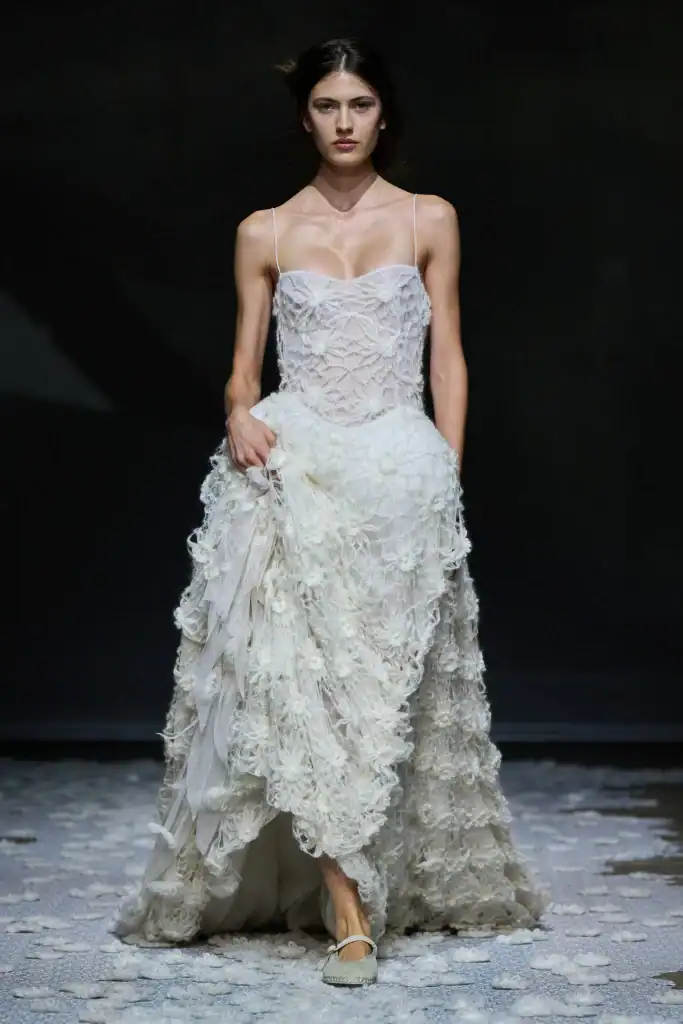
Pauline Dujancourt whipped up a flurry of gauzy dresses and knits for her SS27 collection titled ‘The Bitter Tears’. The Parisian designer began her process by taking inspiration from the play ‘The Bitter Tears of Petra von Kant’ by Rainer Werner Fassbinder, which follows the tumultuous story of a sapphic love affair between a fashion designer and model. Looking at the composition of tears on a microscopic level, Dujancourt concocted what she describes as a “Library of Tears” as the basis of her collection. The composition of a tear is subject to the emotion it was produced from – the intrinsic structure of salt crystals born from grief or joy will differ dramatically. What unfolded sartorially was a material exploration into these emotions. Wispy crochet and trails of hand-woven flowers were pieced together as blooming, delicate bralets that gave way to layered fine tulle skirts. Later looks saw diaphanous bridal gowns in eggshell white waft down the runway. The collection was an extension of the Pauline Dujancourt woman, deeply assured and revered.
Dreaming Eli
Emerson Francisco
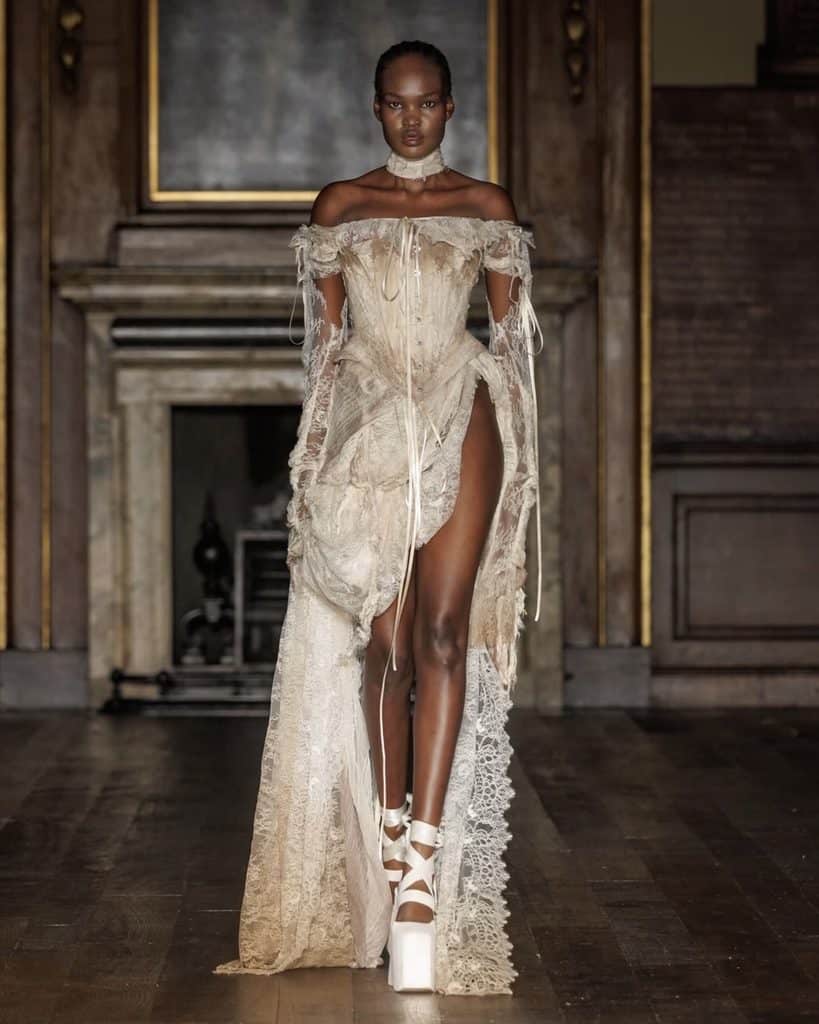
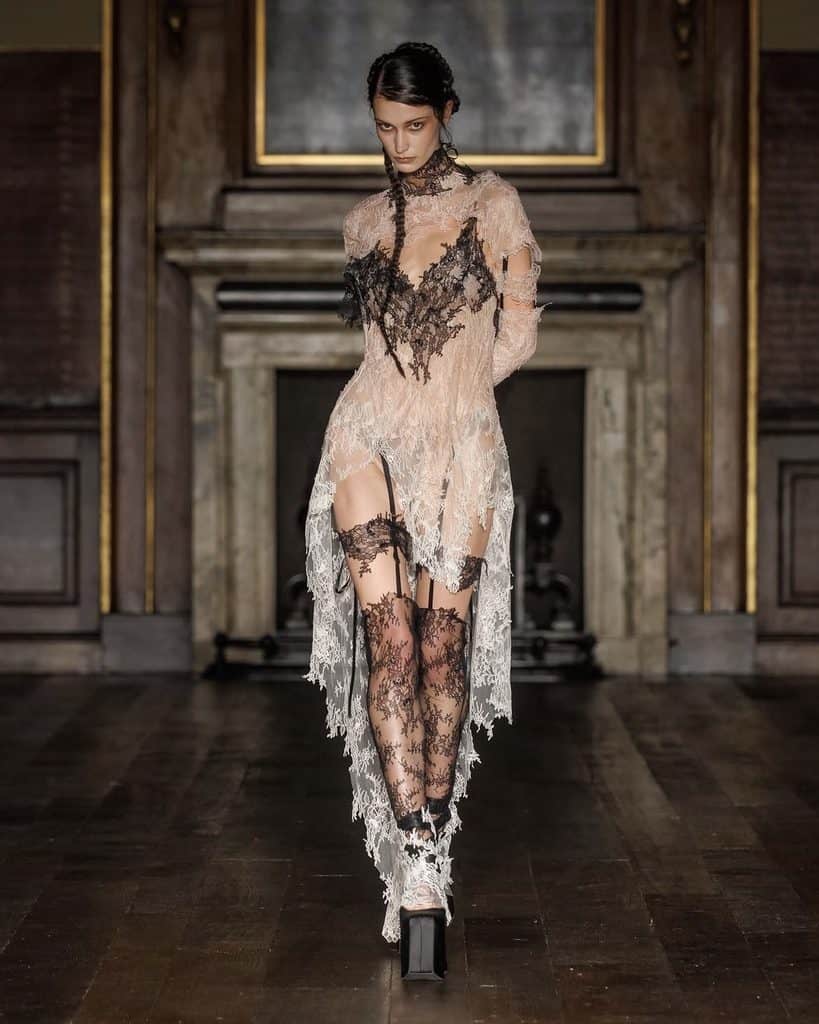
Held in the Great Hall of London’s Historic St. Bartholomew’s Hospital, Dreaming Eli’s ‘Dreamers in Exile’ painted a picture of decay and timeless seduction. Designer Elisa Trombatore pulled inspiration from her childhood in Sicily and the yearning she feels now living in London. Look one, titled ‘The Keeper of Memories’, introduced showgoers to Elisa’s imagined femme fatales draped in hand-distressed lingerie: a corseted two-piece with laced gloves and garters. Each look that stalked the runway was more haunting than the last. Reworked lingerie pieces became tattered boleros and belts. Torn historic lace dragged across the catwalk. These weathered romantic pieces echoed the centuries-old buildings of Sicily, an intentional choice by Trombatore to pay homage to the homes she “misses every day.” Despite the frayed edges and aged appearance of Trombatore’s creations, the modern elegance of 3D-printed pearl bags and satin ballet-inspired platforms gave the collection a sense of balance.
The union of romance and decay told the story of love, longing, and madness. A bride waltzed down the runway holding scissors and chunks of hair, she gazed at the audience with a restless hunger. Despite Trombatore’s newness to fashion week, having only graduated from Central Saint Martins in 2021, her vision of a woman driven to the brink by love and loss is impeccable.
Sunday
Yaku
Lauren Bulla
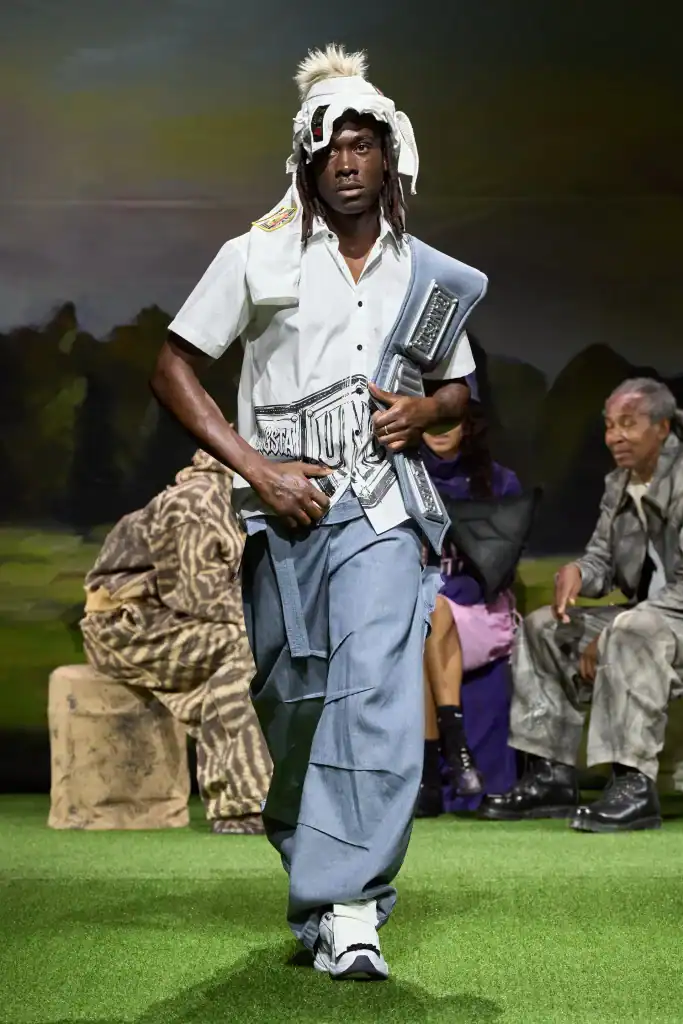
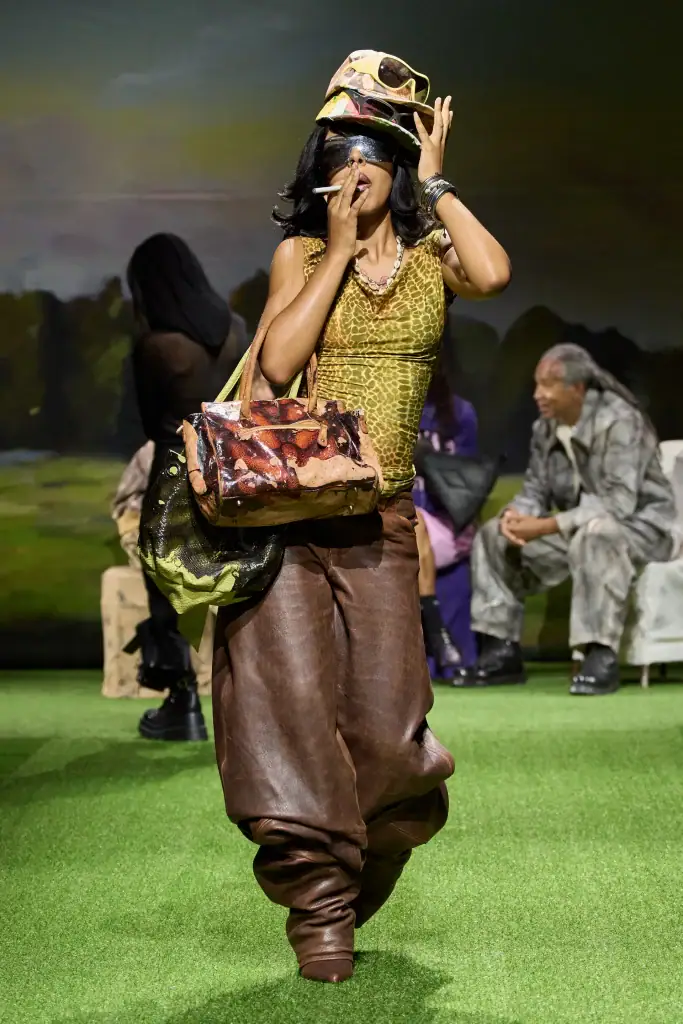
Yaku Stapleton created another standalone presentation for the SS27 season. Hosted in the newly positioned LFW NewGen space, audience members stepped into an immersive, forested world. A family gathering of the models who opened the show arrived at the centre of the runway. They became stagnant, seated for the duration of the show as each of the models greeted us in succession, amongst the green grass, trees, and folding camping chairs. Despite the fact that Yaku’s team hosts four presentation viewings per season, each one is expertly crafted so the performance and space feel brand new each time. This show tends to be one of the most accessible runway events, sans assigned seats, allowing guests the same chance for the best spots to watch from. The runway models moved more like actors, as dancers, strutting in the latest offerings, giving us a direct pathway into this temporary world. We watched awe-stricken as gauzy mesh ensembles, red micro shorts, and an entirely sequin-lined jersey paraded down the runway. Hats were printed with childhood photos, whilst fur-lined caps, leather boots, and reptile prints appeared intermittently. Each of the models clearly represented a different character, bathed in memories and drove the direction of each look. The show overall felt somewhat like a departure (or rather expansion) from what the designer has previously shown at LFW. There’s a reason Yaku Stapleton holds the title as one of the most noteworthy designers on the official schedule. The desire to innovate, whilst maintaining the accessibility of this unique world is standalone.
Monday
Tuuli Turunen
Missoteric
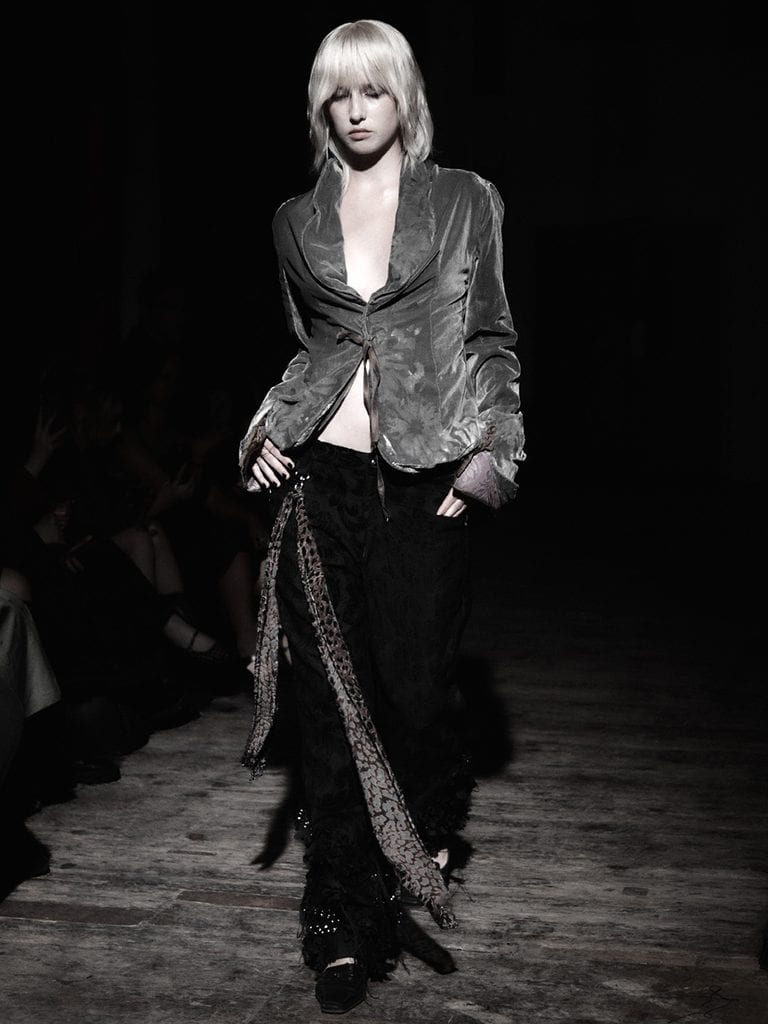
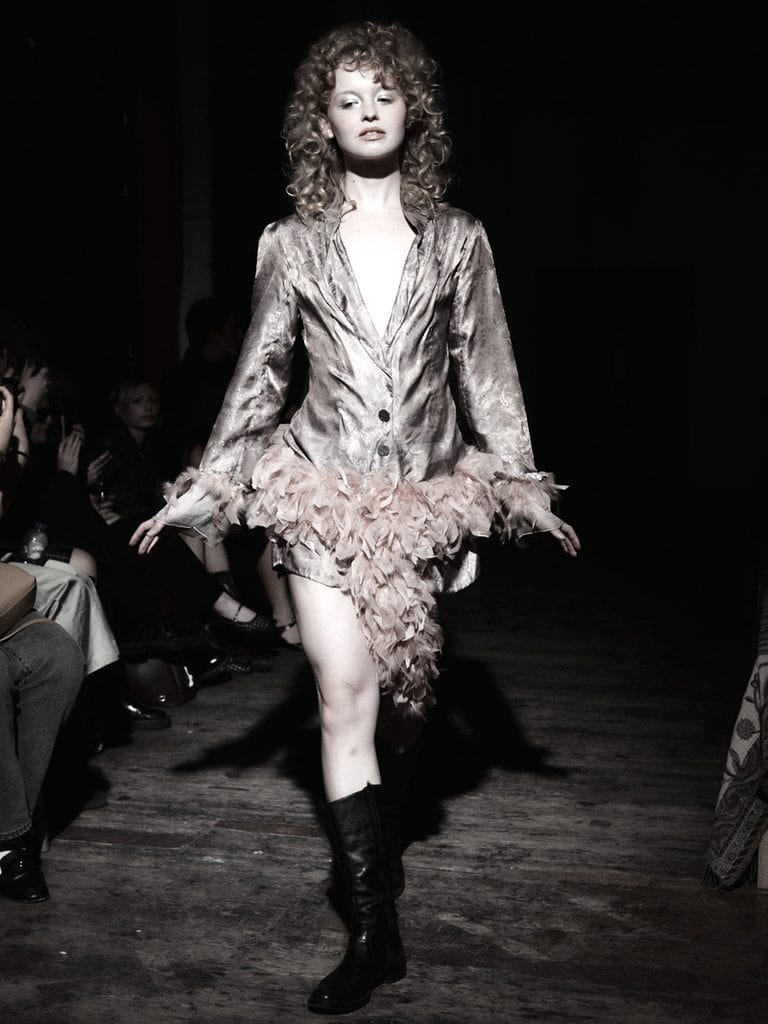
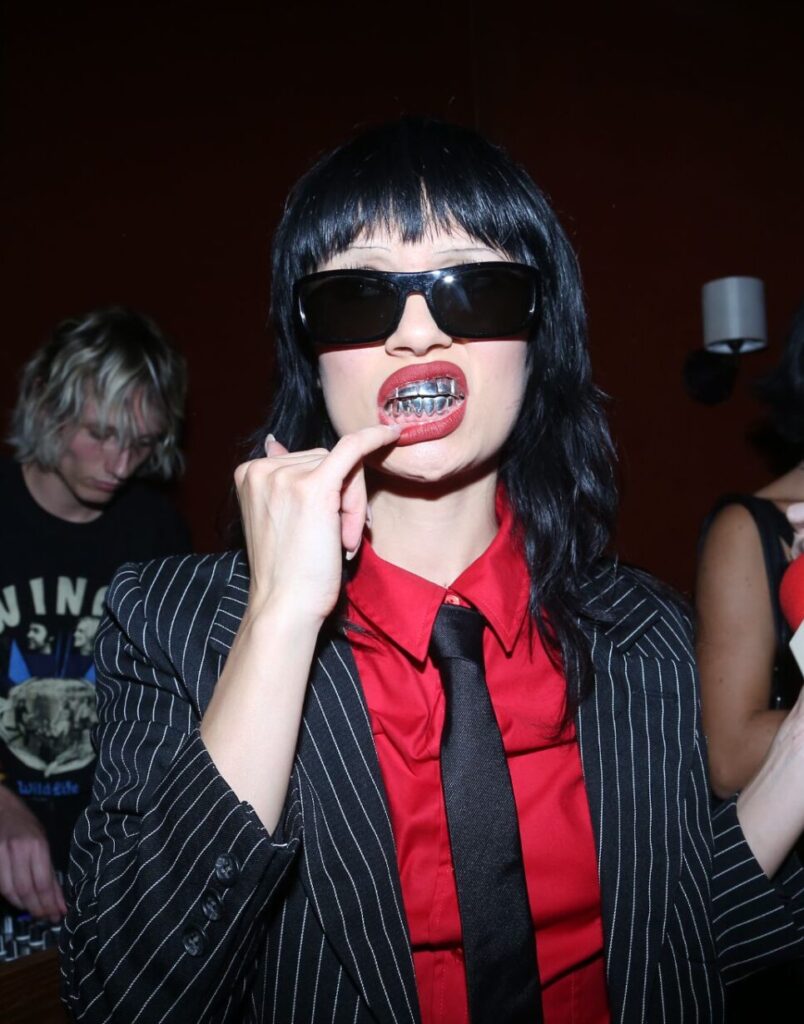
After leaving our angel amongst the apocalypse, Cold headed over to Angel, Islington, to conclude the LFW season with another wondrous debut. For her first on-schedule runway, Tuuli Turunen decided to break the shackles of the gothic label that typically shadows her work and made the radical switch to a not-so-pretty-in-pink collection that protested societal expectations of women. Turunen was inspired by “male uniforms associated with aggression or violence,” drawing inspiration from incels, skinheads, and militia, and skewing them through a “60s and 70s hippie and anti-war” lens. The collection was an experiment of how far the uniforms could be distorted without stripping their original identity. The idea came from the back end of a post-CSM rut, which she broke by watching Nicholas Roeg’s Performance, consulting with Abigail Morris of The Last Dinner Party, and embarking on a month-long stint in Avignon.
Models on the runway embodied the role of rockstars and drunks, swigging from bottles, smoking cigarettes and commanding the room with an authoritarian presence. The show was less catwalk and more a performance piece, filled with eyeliner and attitudes reminiscent of the 90s feminist-punk movement, Riot Grrrl. It was only fitting that Morris, who provided such motivation for Turunen, closed the show by walking a portion of the runway before climbing on stage to perform her enchanting rendition of Kate Bush’s Army Dreamers. The song choice was intentional, to break away from the “really edgy, urgent attitude” of Viagra Boys – whose music had been the grounding soundtrack throughout – and conclude the collection on a more serious note.