Only just about a decade ago, referring to yourself as a podcast aficionado would carry the same kind of quaint specificity as being a young person that, say, listens to the shipping forecast at the weekend, or collects cassettes. There was a charm, and an underground sensibility to the format. Those early adopters of long-form audio might be able to tell you about the genesis of ‘audioblogs’, the symbiotic relationship with podcasts and the popularity of true crime, or perhaps the significant mental health benefits of hearing Ira Glass speak for an hour on the kindness of strangers.
Cut to our present day… Not only have podcasts become one of the primary outlets for media consumption, doubling in global listenership from 300 to 600 million in just the past 10 years. The term itself has become ubiquitous with many dominant aspects of our cultural verbiage: the debrief, the review, the breakdown, and God forbid, the apology. This artform’s boom in popularity has therefore made space for an incredible wave of new talent.
The podcast originated in the early 00s when RSS feeds were introduced as ways for creators and users alike to download and play audio from the internet. The neologism is a neat merging of ‘iPod’ and ‘broadcast’, the eventual manifestation of which was to provide a new mode of storytelling. Particularly, for those stories that hadn’t been or couldn’t be told via traditional and mainstream media. Because of this, the format has always had a healing relationship with platforming authentic voices and those from marginalised communities.
The podcast industry is so swiftly developing, and is therefore generally considered to be a largely untapped and unregulated space, unsure of its own capacity. Creators, specifically influencers, have in recent years amassed astonishing success via the modification of their content output to this new mould. Celebrity podcasters such as Alex Cooper and Jake Shane are now used as aspirational career models for those looking to develop their self-branding. In many ways this ‘Love Island’ effect (something with an emotional core reduced to pop psychology and pyramid-scheme consumerism), is at once an affront to grassroots podcasting. It is also a definite sign that the industry is alive and booming, and reaching larger audiences than ever.
I recently spoke to a handful of the most exciting podcasters, in an attempt to fully understand the conversations that are currently at the heart of grassroots podcasting. We cover everything from the first podcast they ever got hooked on, to the monoculture posing a threat to their current projects. Ranging from coffee-based talkshows to all-Gaelic roundtables, this collective of broadcasters are committed to championing authenticity in their work. All said, it’s unsurprising that they have many important thoughts on why that’s such a necessary mission.
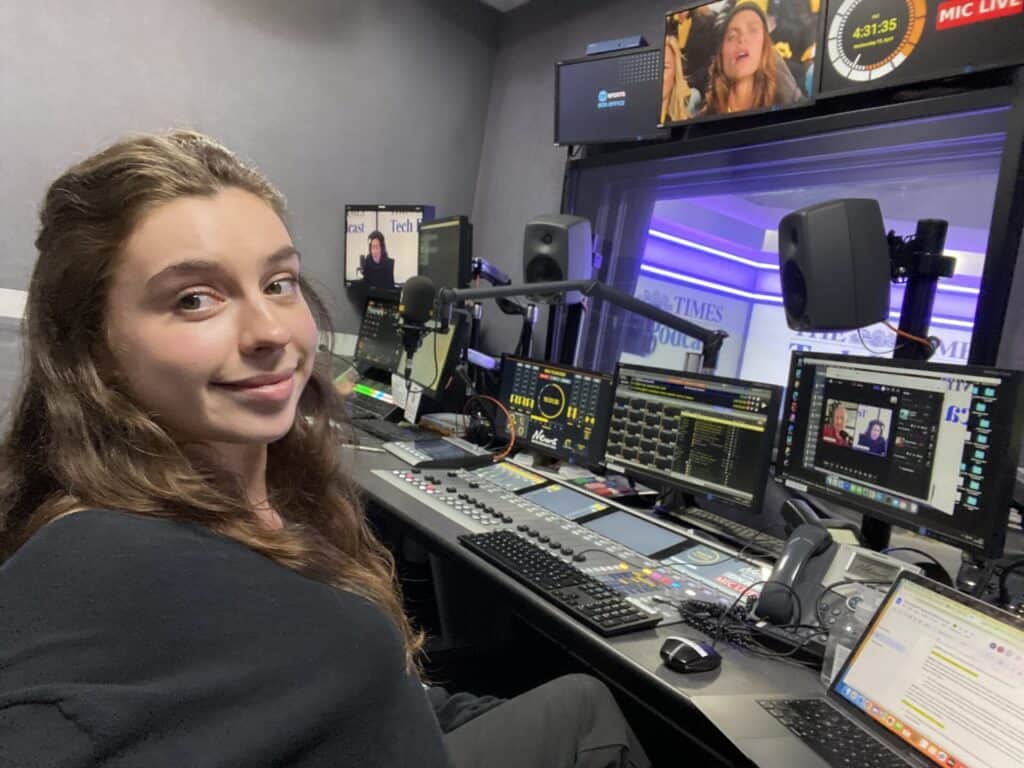
Marnie Duke, The Overturn
The Cold Magazine (CM): How would you describe your podcast to a first-time listener?
Marnie Duke (MD): It’s a narrative podcast, which tells the stories of potential miscarriages of justice in the UK through the eyes of the campaigner. We don’t often hear about these cases, so it’s something I wanted to spotlight… Also importantly, the role of the people that take on the process of trying to overturn a conviction. It’s a really mammoth task that can take decades.
CM: What initially drew you to podcasting?
MD: I’ve always loved storytelling and went to study English at university, but then when I graduated I felt a bit lost, like I didn’t know how that study would translate to the world of work. I’d never even heard of podcasting as a career, so I started experimenting with journalism and news, then live radio. I saw that side to the industry and realised I could link my two interests of storytelling and sound. The first podcast I decided to make (because it allowed me to finally take that long-form approach) was all about how misinformation became mainstream in the US around the time of the 2020 presidential race. I wanted to understand what the circumstances are that allow someone to be susceptible to that, what specifically is it that happens to a person that makes them fall down misinformation rabbit holes.
Christy O’Hanlon, Big Gaels Don’t Cry
CM: How did you get into podcasts?
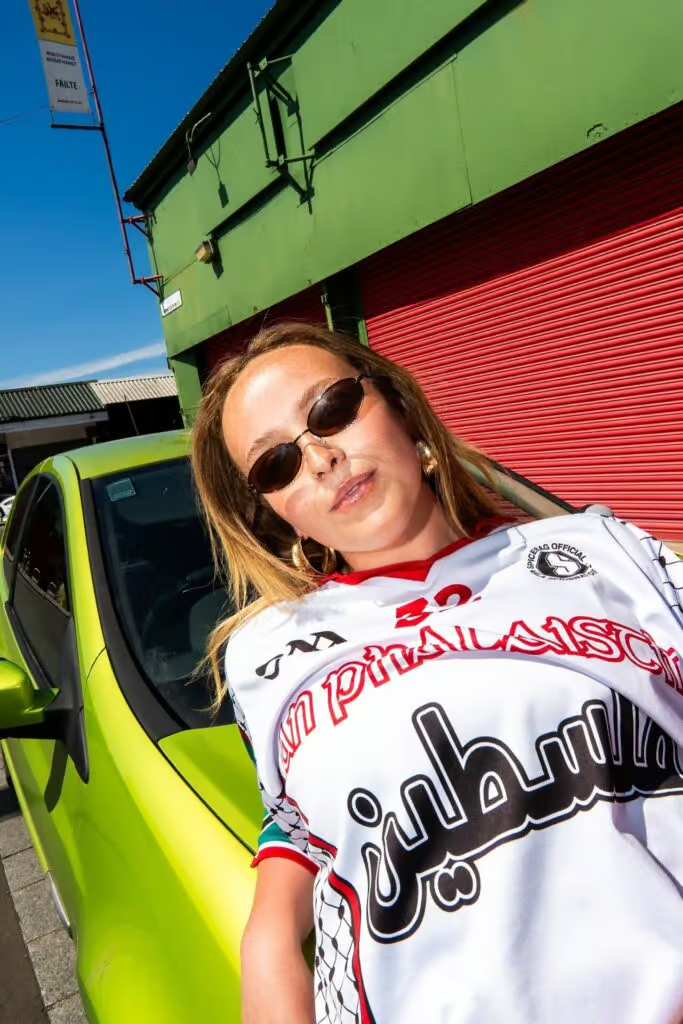
Christy O’Hanlon (CO): Keelin Moncrieff’s previous podcast Same But Different that she did with Eimear O’Reilly. Over the Covid era I was a big fan of her video essays on YouTube, and I think it was quite a natural progression into her style of podcasting. That’s always kind of been my buzz, chattier and more informal… I love just getting the craic from a podcast.
CM: What’s the niche of yours?
CO: Big Gaels? I think for us, we started it in 2021, and as young Gaelic speakers we were feeling a real shift in terms of digital and short form media presence there. Podcasting however felt like a space that wasn’t represented. If I wanted to listen to a gaelic podcast, it would have to be very traditional or academic. We wanted to make something new for Gaels like ourselves, for the young Gaels who are the forgotten audience in modern media.
CM: Why is the platform so accessible do you think?
CO: There isn’t as much of a hierarchy in podcasting, in terms of the team you have around you. It feels so accessible in terms of listeners but also creators. All it takes is for you to have a concept and then record the audio, which is a lot less intimidating. You also don’t have to wait to go through commissioning rounds, it allows for a lot more niche subjects to be spoken about, and minority languages and cultures.
Whatzaraloves, Taboo on the Bus
CM: When’s the first time you remember being aware of the podcast as a medium?
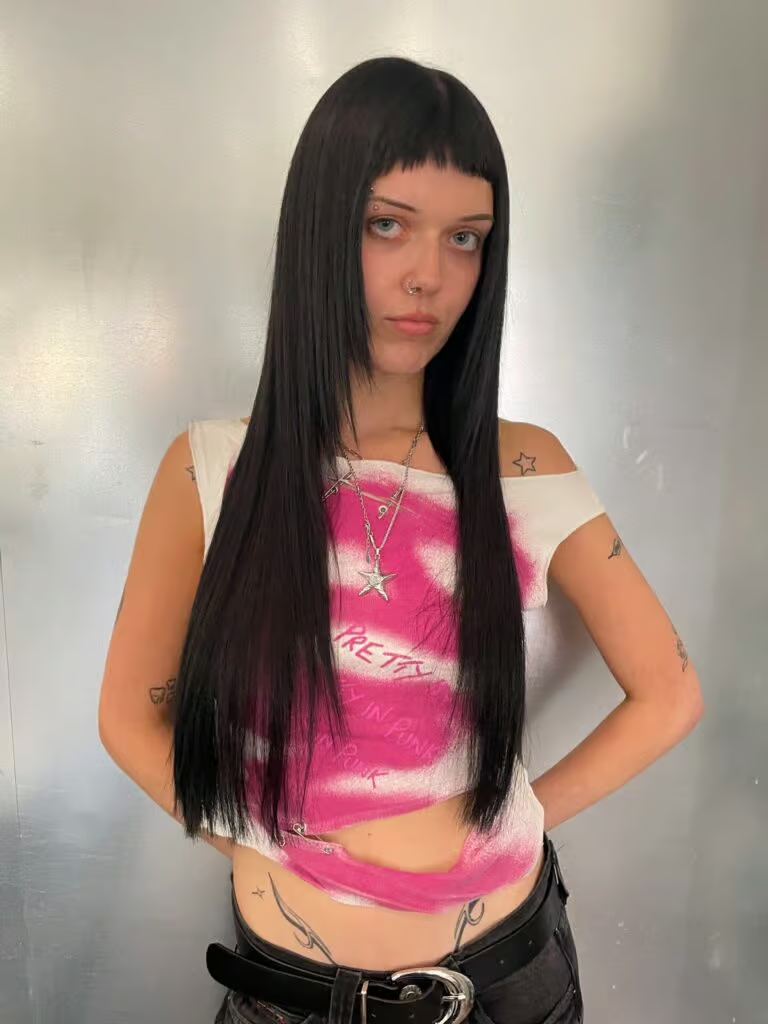
Whatzaraloves (Z): It was definitely Anything Goes with Emma Chamberlain, which I used to listen to when I was 17. It was an interesting way to consume her as a creator because I didn’t watch her YouTube, so that was the only version of her that I knew. This was a time of my life when I’d dropped out of school and wasn’t really seeing many people. I was in my house a lot and remember finding the format feeling so intimate and lovely in that sense, because it has scope to be so friendly and personal. I remember listening to it and thinking I’d love to do this one day.
CM: How would you describe your podcast to a first-time listener?
Z: Mine is a deep-dive into conversations that people potentially aren’t comfortable having, or aren’t comfortable listening to. I’m trying to create a space on the internet for people to engage in topics and conversations that are often considered quite taboo. I aim to educate, but in a chatty and digestible way. I think we can be learning and creating quite a positive impact out of our screentime. I know we’re not going to be able to get people off their phone completely, so it’s how can we change what’s on their phone.
CM: What’s your take on celebrity podcasts, or those that are deemed brand over substance?
Z: It can somewhat dilute the platform or the medium when you can tell there’s inauthentic involvement. When the space becomes saturated with things that are brand driven, or by PR, it can detract from people that are committed to honing their craft and their story. But equally, that can also strengthen the ones that are so clearly genuine… The people that have been so committed to their passion and their niche since the start.
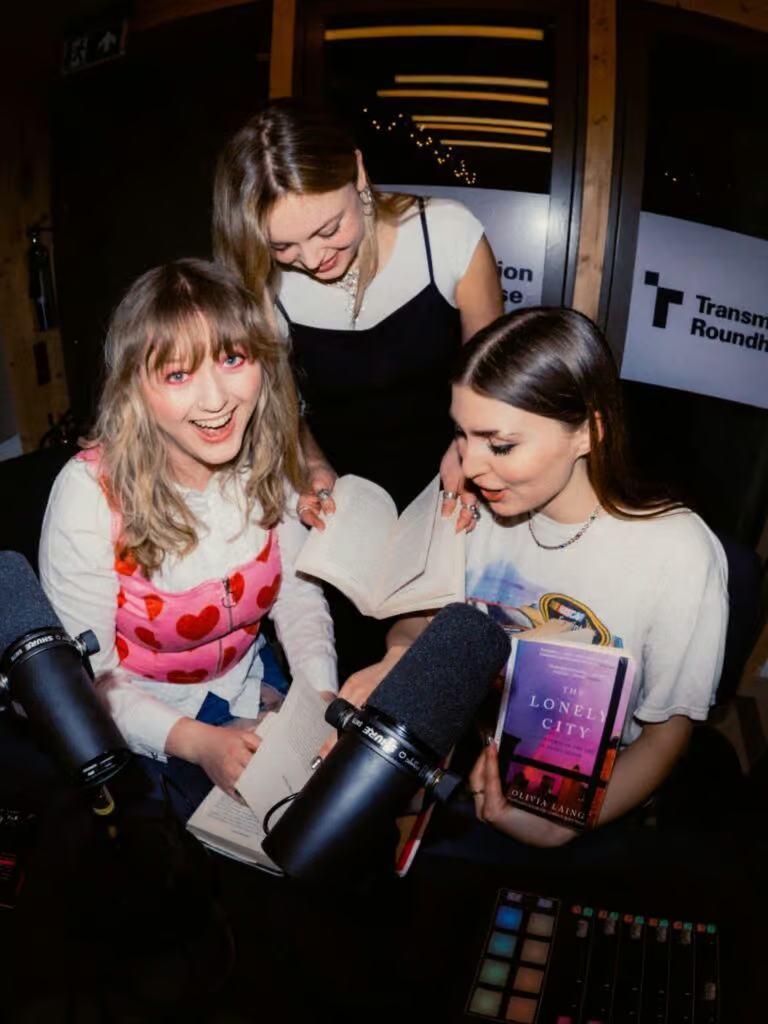
Sophie Parke & Alice Garnett, Out-of-Print
CM: Have you felt the effects of community building since launching your culture and literature podcast?
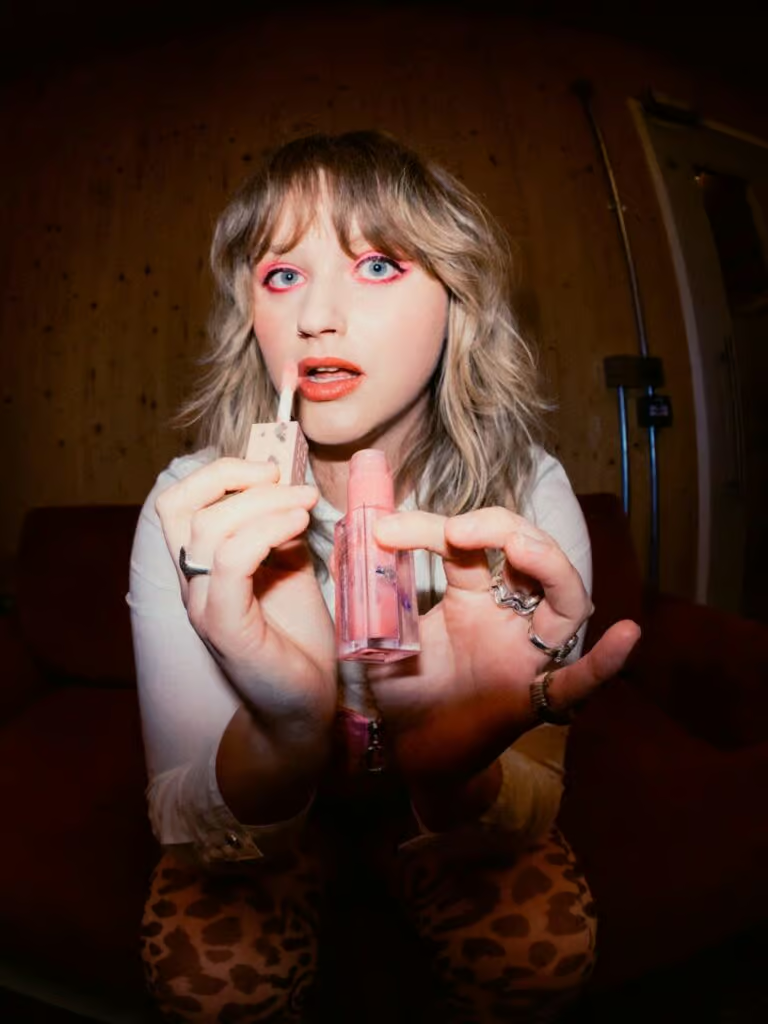
Sophie Parke (SP): Yeah! Mainly in terms of the lovely young women who comment or tell us that they want to study English now.
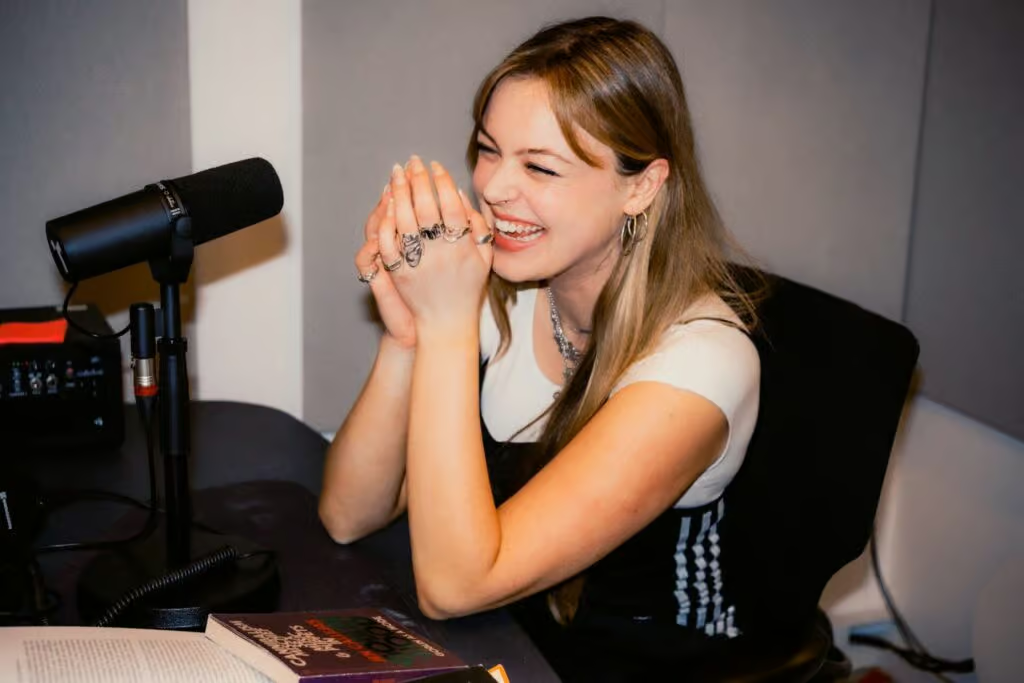
Alice Garnett (AG): Also through our involvement with the Transmission Roundhouse podcast cohort; we’ve been able to interact with lots of other similarly aged grass-roots podcasters, and hearing about their projects and sharing that space with them is great. I guess also, making a podcast with your best friends is quite a novel experience, it does add a new dimension to your friendship, which is a very beautiful thing.
CM: Why do you think the podcasting world has been such a champion for previously un-platformed voices?
AG: I think part of it is because it’s audio only. For instance, if you wanted to have a YouTube presence or a TikTok presence etc a lot of that is unfortunately about optics, and if you’re not fitting in with Western beauty standards or heteronormative aesthetics it’s probably harder to make it in those industries. But podcasting is just your voice, right – you can sit behind a mic and people can’t immediately cast judgements or aspersions on you.
SP: Piggybacking off of what Alice has said, there’s a class aspect as well in terms of you’re not looking at the background of what someone’s bedroom looks like, which is what we found in Covid. During Covid I was doing student radio with a microphone underneath a blanket in my room, and it was a way to suddenly push out and reach the rest of the world when I felt quite isolated.
CM: And how about the trickle-down culture of influencer podcasting?
AG: Yeah, I’ve seen it a lot on Substack too. I do find it a little bit infuriating (maybe this is just me having a chip on my shoulder) but when people like Charli XCX get to Substack and instantly get loads of followers, same with podcasting where influencers can immediately monetise their output, it just kind of feels like they’re taking up space in a way that isn’t helpful to creators, especially if they don’t actually have anything interesting or nuanced to add to the conversation. Of course, there are exceptions to that, but otherwise I’m never going for the person before the subject matter.
SP: Although it does feel a bit more meritocratic than other forms of media. If I’m not laughing or learning then I’m not listening to it.
Amanpreet Kaur, Amma Brown Girl
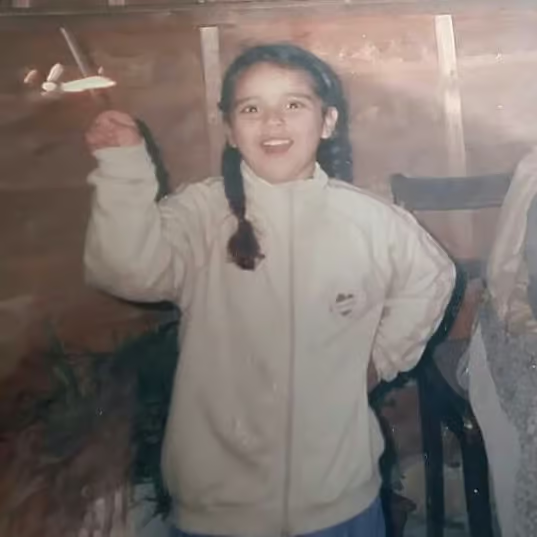
CM: What’s a podcast you’ve listened to that has inspired the creation of your own?
Amanpreet Kaur (AK): 100% Brown Girls Do It Too, which is two South Asian women talking about sex when no one was really talking about it from that perspective. Although they come at it from a straight angle, it felt pretty revolutionary. Listening to that I was like oh my god, I can do this too. These are the types of conversations that need to be had!
CM: How has your community grown since starting the podcast?
AK: Girl. I started the podcast with zero followers, and listen I haven’t got a million followers but even off my TikTok, I’ve gained enough followers to be like, we’re talking about something important here! Even on my IG the engagement that I get on my stories is really encouraging, people sharing their life stories with me and telling me they can relate. One message like that really makes my day.
CM: Do you think that the podcast as a medium is an aid to the platforming of minority voices?
AK: Podcasting is still so new as a medium, which means that it’s automatically less competitive. The stats say that the majority of podcasts don’t make it past their first couple of episodes, which also means that it can be a home for real authenticity, for real stories. You can’t fake that. It’s also quite cost effective and not that difficult to access. Anyone can teach themselves audio, anyone can teach themselves how to upload. If I can do it, you can do it.
Summer Moraes, The Worms Podcast
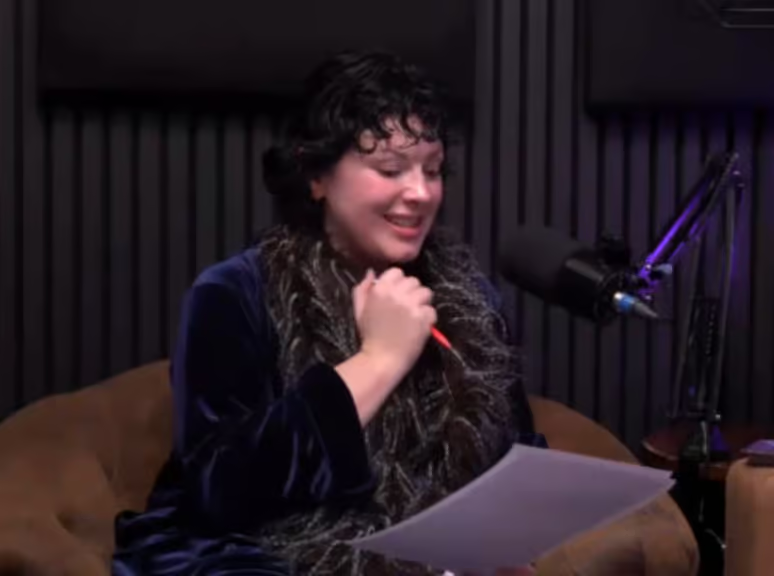
CM: What’s the first podcast you listened to?
Summer Moraes (SM): I’m gonna be so honest, I always cringed a bit at podcast hosts and used to think, ‘oh my god that’s so Gen Z’. I never wanted to be a podcaster and obviously I’ve had to let go of that because now I love it! I think the first one I got into was The Great Women Artists. I got so much from it, and learnt so much by talking about your passion.
CM: Describe your podcast to someone that hasn’t listened before.
SM: It’s like a crossover between a radio show and a series.
CM: And why does the format work specifically for your show?
SM: I think with WORMS specifically, we’re trying to be a bit different in terms of what a literary podcast can be. A lot of them are very serious and very dry. I love Paula Yates on The Big Breakfast show. I want it to feel approachable and casual and not know everything. That’s the angle.
Elida Silvey, Cafecito Con
CM: Where does the name of your podcast take inspiration from?
Elida Silvey (ES): It borrows from that Latin American tradition where you have friends over and you have a little coffee and a little bread and you just chat. Sometimes it’s like a therapy session. It’s completely relaxed.
CM: Why did you choose an audio platform for your project specifically?
ES: I think mostly it’s a memory thing. I was already having so many rich conversations with my friends that are artists and thinkers and do their own creative things, and part of my own creative process is learning from other people, so I was always wishing I could remember what they said so I could reference it. With Cafecito Con, it came into my mind that we could record this, and in that way it’s like a kind of collective memory that we can re-access. Sometimes a little nugget of profundity exists there but mostly it’s just chat.
CM: Has podcasting become a safe space for you and your friends to converse authentically?
ES: I think definitely the authenticity part of it is huge because I don’t prep before a lot of these conversations, I just go into them and then we have a chat. We have a shared thing because there’s a relationship that already exists there. I think also I gravitate towards people that are a bit on the outside looking in, that have to adjust themselves to fit into a world that doesn’t have them in mind. I have a lot of friends who are either Latinos, or are trans, or are from different cultures and backgrounds, or not able bodied. But I also am wary of being like that’s the whole point of it, because I don’t want people to be told ‘this is who you are, this is your USP and you should use it’, just because it happens to be an element of us!
Awa Sow, Diaspora Diaries
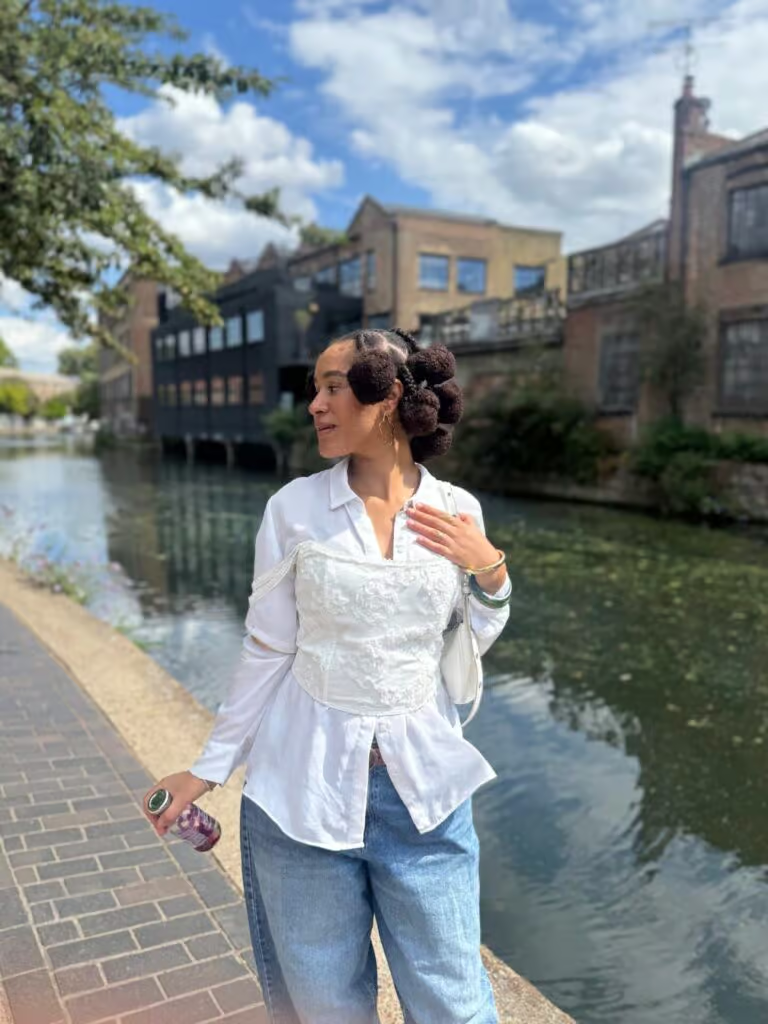
CM: Do you remember the first podcast you ever listened to or when you became aware that this was a form of media?
Awa Sow (AS): The first podcast I ever listened to was the French podcast Kiffe Ta Race, which explores race and racialisation in the French context. It was also the first time I really engaged with podcasts as a medium. It meant a lot to me because it gave me access to conversations and perspectives I had never encountered in school or university, on topics that were largely absent… And often taboo in the environment I grew up in. It also showed me that I could actively choose what I wanted to learn about and engage with questions that mattered to me.
*CM: Why do you think the podcast in particular is championed by both listeners and creators as a space where minority and counterculture voices can succeed so well? *
AS: I think there’s something very freeing about podcasts: anyone can listen to one, and anyone can make one. People can choose exactly what they want to engage with, discover perspectives they might have a hard time getting access to elsewhere, and learn and share on their own terms. That openness can have its drawbacks. But it’s also incredibly valuable for communities whose voices are often marginalised or excluded from mainstream media, education, and traditional institutions of knowledge. I think many of us started listening to (and eventually creating) podcasts because we felt there were gaps in the stories and perspectives made accessible to us. To me, that’s exactly why podcasts have become such a powerful space for minority and countercultural voices.
CM: Have you seen any shifts and trends in the podcast industry since you started to make podcasts?
AS: The biggest shift I’ve noticed is the rise of video podcasts. When I started, the idea of filming a podcast didn’t even cross my mind. While I can see the value of that evolution and the wider audiences it reaches, I still instinctively think of podcasts as an audio medium first.
CM: And do you have any podcast recommendations?
AS: For the French speakers: Émotions is one of my all-time favorites. It breaks down emotions by bringing in perspectives from various disciplines, from sociology to neuroscience, and it does it SO WELL.