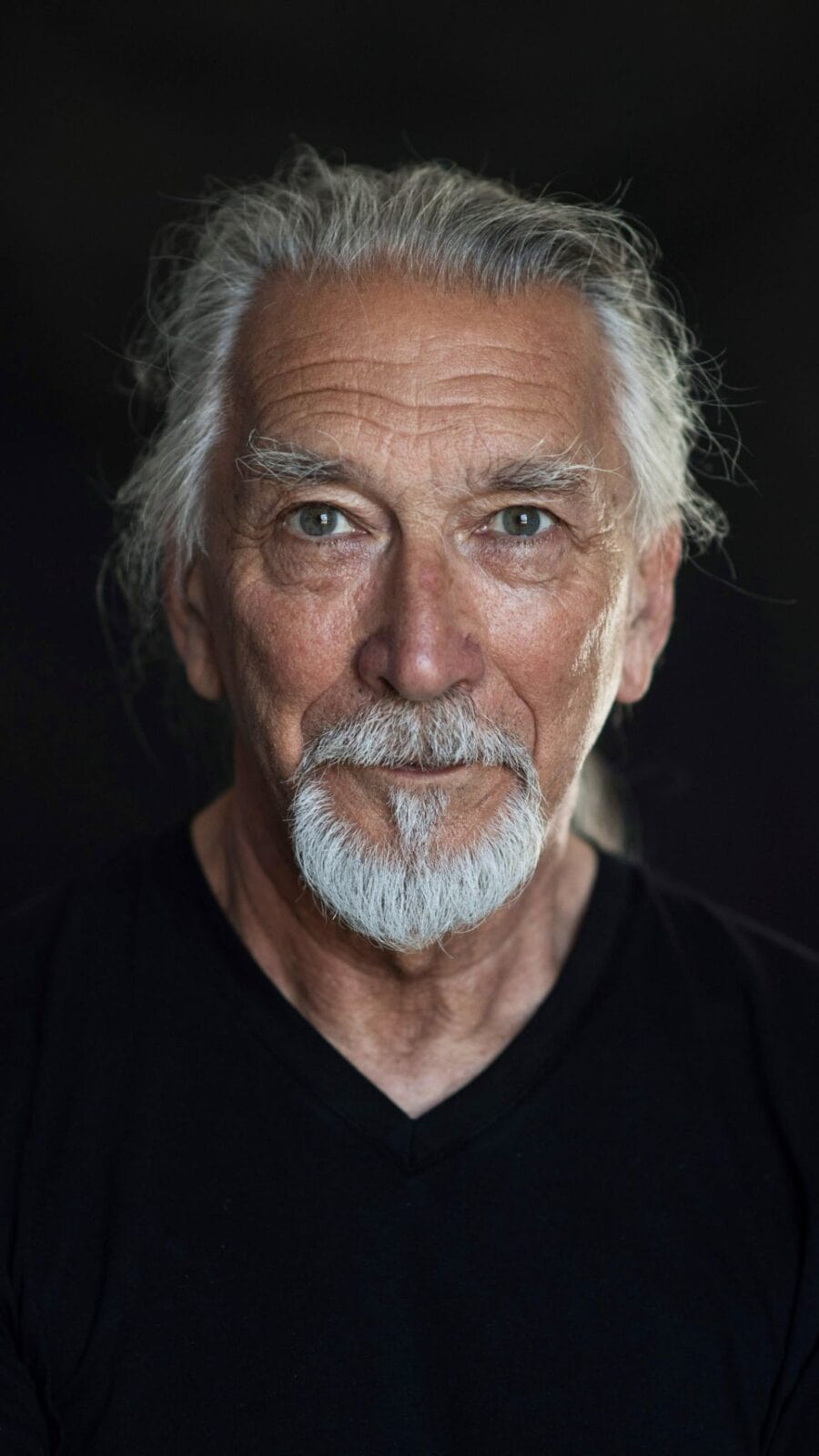
There is a dog barking somewhere behind Raymond Antrobus, then a stranger says hello to him, then the stranger wanders off. “I have no idea who that is”, he tells me, and carries on. He’s on a bench by the sea in Margate, because right now he is one of the Booker Prize judges and has just ploughed through 160 novels to reach a longlist. Now he has to reread the lot to see which ones hold up a second time. He’s seven novels in, with six left to go. There is a tired sort of awe in his voice.
The Booker Prize isn’t actually why I called him, but the irony isn’t lost on me. He’s spent months living inside other people’s books, deciding which ones deserve to go further, and now I’m asking him to talk about the one he wrote about himself.
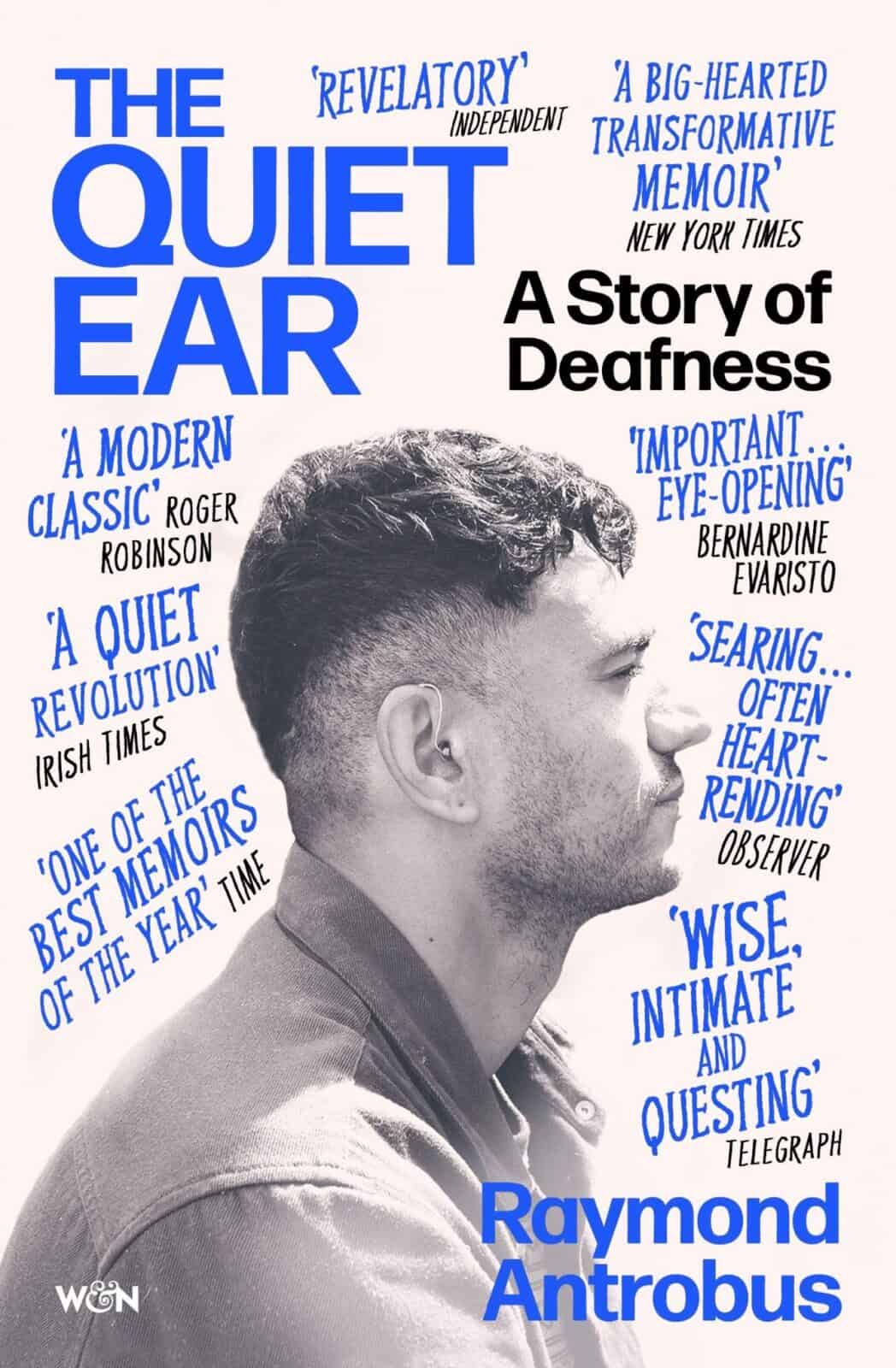
The Quiet Ear came out in August 2025, published by Weidenfeld & Nicolson in the UK and Hogarth in the US. Antrobus was diagnosed as deaf at age six, years after teachers had already decided he was slow and disruptive, some refusing to believe he was deaf at all. He grew up in East London to an English mother and a Jamaican father, moving between mainstream schools and deaf ones.
Antrobus’s latest title is an argument; here, he makes the claim that deafness isn’t a deficit waiting to be fixed and that the teachers who gave him language deserve more than a footnote in his success story. This book also goes looking for the deaf people history left out – poets, teachers, film stars, the models he didn’t have as a teenager. Underneath this mission, The Quiet Ear is still unmistakably about Antrobus’s own story.
CM: You taught for six years yourself, in a secondary school and then a deaf school. How did that feed into the book?
RA: It showed me exactly how unique my own education had been. I’d stand in front of a class thinking, all of you are going through a system. We can only partly relate to each other.
They tend to lump kids with all kinds of complex needs into one place and call it “special educational needs”, instead of treating them as individuals. Give that the right language and its neglect. It should be classified as a human rights abuse.
I wanted to write something that put names to people who didn’t have the role models I had. Athletes, musicians, filmmakers, teachers, people who’ve managed to flourish anyway. When I wrote The Perseverance (2018), I was still teaching, and a lot of it came from thinking about an educator’s job as scaffolding.
How do you scaffold the wide, expansive possibility of a deaf life, when so often all that’s on offer is dead, textbook, medicalised language instead of a cultural one?
CM: You’ve talked before about the media framing you as being in conflict with your Jamaican heritage and your Englishness. The book pushes back on that too.
RA: I grew up fascinated by English history. Proud of it, I claim it. But there’s this expectation, especially in the media, that Jamaican heritage is somehow in conflict with that. It isn’t
A few years ago, me and a few other poets had pieces written about us in GB News and The Telegraph, calling us examples of the eroding fabric of English culture, replacing poets like Larkin, Keats, Wilfred Owen. I love those poets. My work is in the DNA of that tradition.
CM: You’ve written about the difficulty of describing something you only understand through its absence, such as sounds you didn’t know you were missing. How do you make sense of that?
RA: It’s a bit like a ghost story. Hardly anyone’s actually seen a ghost, but plenty of people believe in one anyway. It’s like that. I just know certain sounds are part of the fabric of reality even if I don’t hear them without my hearing aids in.
I’ve had to learn to shape sounds in my mouth, to know how they feel when I say them, and even with the hearing aids in I only catch some of them. A lot of my conversation is guesswork.
If anything, writing the book changed my sense of presence more than absence. I’ve had genuinely moving conversations with people who’ve read it and found their own way in. It’s a text on the Cambridge A Level curriculum now, which will carry it further than I expected. It’s still finding its readers.
CM: The book also challenges the ableist idea of deafness as something to be cured or fixed. Where does that belief come from for you?
RA: Religion carries a lot of the blame for that one. One of the most enduring biblical stories is a deaf man being healed so he can hear and speak. Given what we know now, that story needs to be called what it is: Toxic and ableist.
It centres on an able-bodied saviour. I’m trying to write something that acts as an antidote and breaks that myth. Growing up, there was a whole period of viral videos of deaf people getting cochlear implants and “hearing for the first time”, always framed the same way: A crying mother, a child hearing their parents’ voice for the first time. That’s just the same story wearing a different coat.
Now I run workshops for hearing parents of deaf children, using my own children’s books as a way in. I’ve come to realise most of these parents are grieving the hearing child they thought they were going to have, believing their child’s life will be harder for it. There’s some truth in that.
They’ll need a different kind of support. But it’s support that already exists. Scaffold a proper future for that child, sign language, lip reading, all of it, and there’s usually relief in the room by the end.
The Quiet Ear by Raymond Antrobus was published by Weidenfeld & Nicolson on 28 August 2025