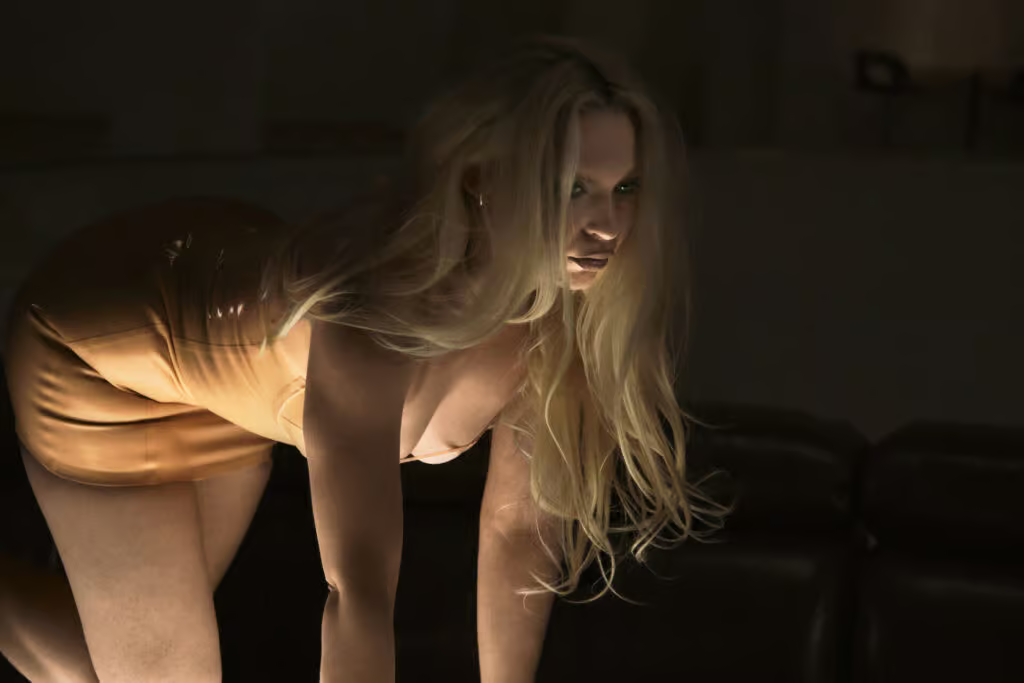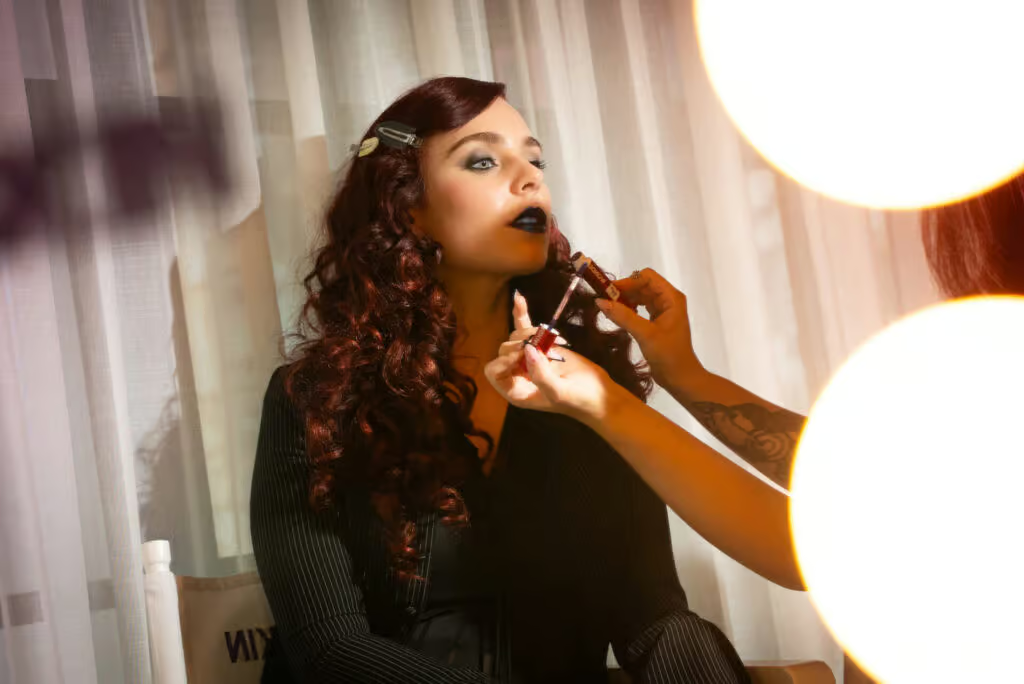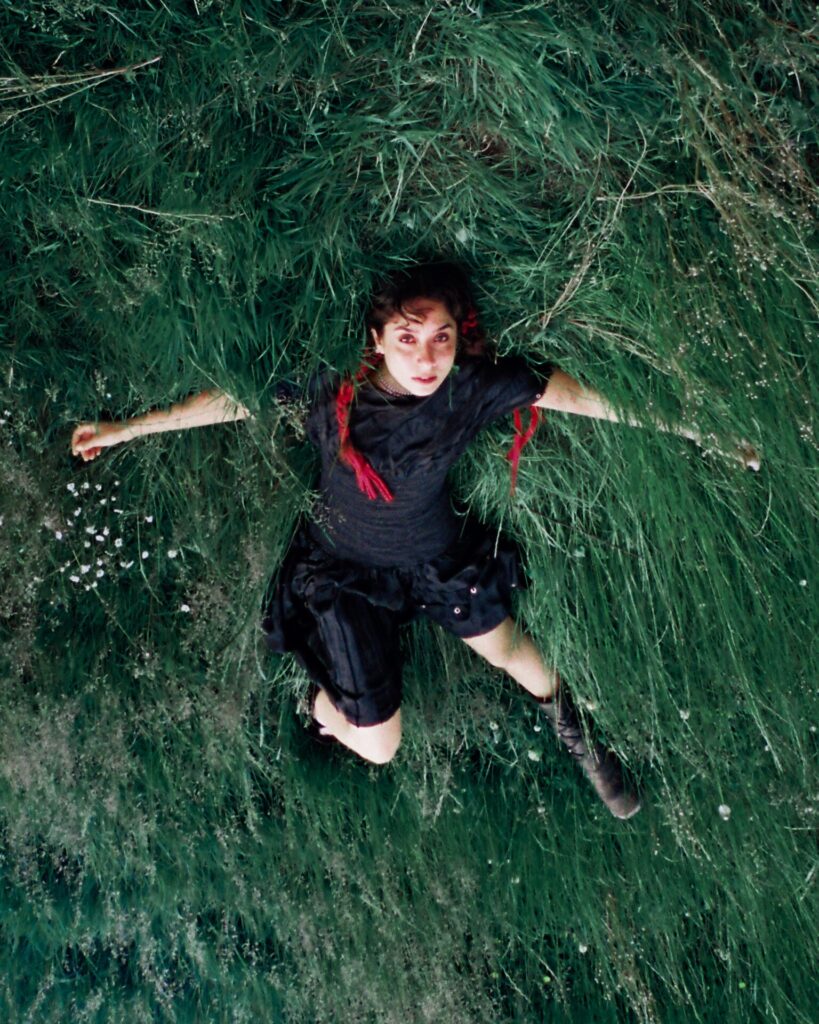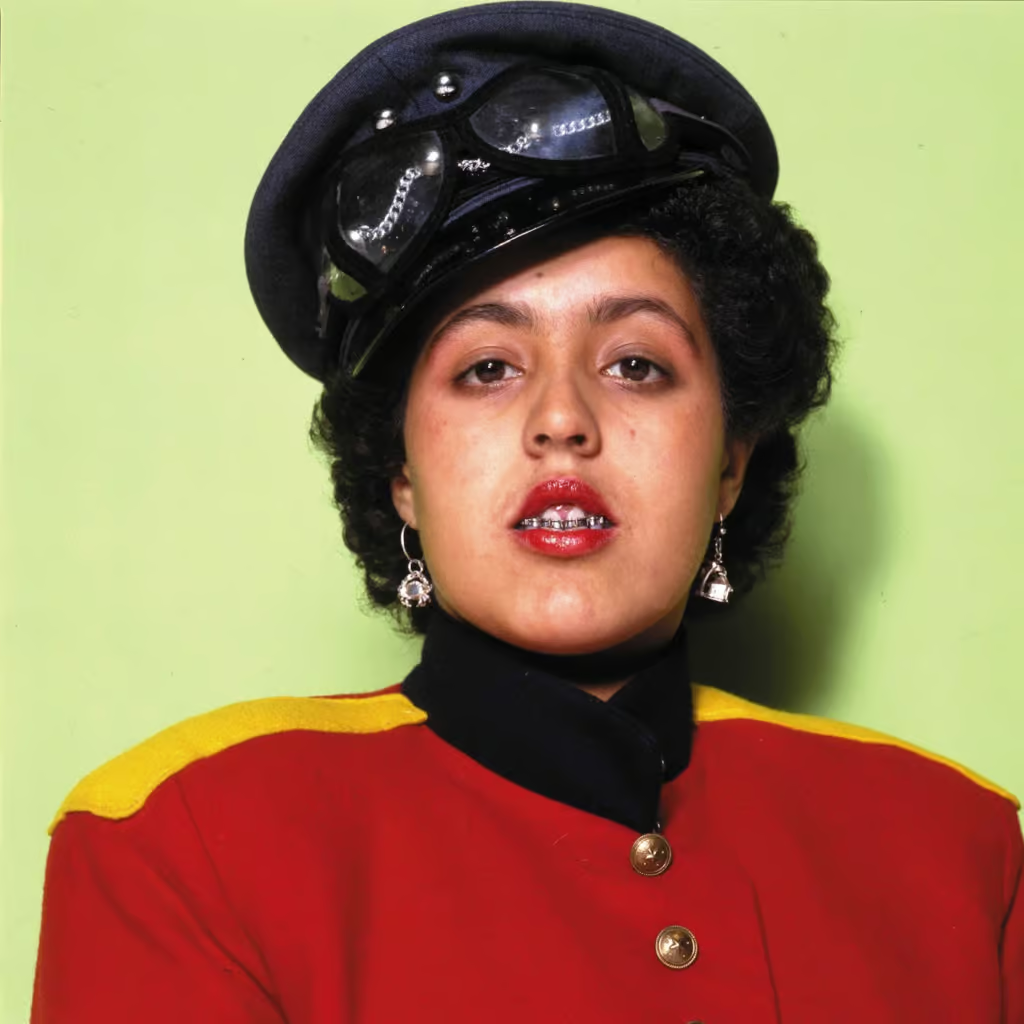
Bright white lights illuminate a clean, empty space, a moment suspended, a fever dream. It’s the visualisation Swedish pop singer Namasenda uses to capture the world of her latest album, Limbo. “It would definitely be liminal, a little bit scary, kind of like a hospital,” she says of the world building, deadpan, her round Prada sunglasses hiding any emotion.
Limbo is Namasenda reintroducing herself to the pop world after a hiatus. The album carries everything from the PC Music days, but with newer elements of reflection, still made to have party people dancing in tight clubs. While hyperpop and PC Music have moved into the mainstream, Namasenda is returning to a musical space that has changed vastly, but one that has finally met her where she already was.
Her music grew out of the hyperpop experimentalism that was once laughed at, working with producer A.G. Cook. It was the same world that would later turn Charli XCX’s BRAT into a cultural event, a sound Namasenda was already living in. Yet with this release came a real fear that she may have come back to a scene that had forgotten her.

“I was in a state of just question marks, wondering what I was going to do next, if I was going to continue making music, if anyone cared,” she says. A part of her still questions it all: “I still don’t know if they care, but it feels a bit better.”
Uncertainty didn’t stop her getting back into the studio. She worked intuitively, with no plan. ” I don’t think I ever realised any of it. It just happened because I was not doing very well, and I was sort of like, okay, let me just get into the studio, and then all of these songs just happened,” she says.
And so came Limbo, an album that has found wide success since its release. The tracks hold onto the hyperpop sound fans come to Namasenda for, while weaving in introspection on a hedonistic pop lifestyle. On ‘Madonna’, Namasenda reflects on the pop star search for perfection and the trouble of juggling public and private life, singing of everything from ‘vodka shots in winter’ to ‘money well spent, living hardcore, put me in Dior’. Elsewhere, ‘Heaven’ and ‘Bad Love’ explore fame and party culture over the pumping dance bass and electronic production her fans will know well. The album filters between personal vulnerability, fame and party lifestyle, while keeping the fun production built to blast through dangling wired headphones.

“I’m a very secretive person, even with people that are close to me, I hold things very close to myself, which is something I am working on, and I do want to be more open, I just find it very hard,” she says, dressed all in black with an Adidas tracksuit and tech quarter-zip. It’s a world away from the heavy fashion and cinematic visuals of her performance persona. “I’ve toned down myself quite a lot,” she admits, “which I’m not sure if I like that much.”
Joking that a therapist she doesn’t have would need to work out why she’s so insular, she admits music fills that role as best it can. “It is [a therapist] , in a way. It makes me happy. It’s the only thing that I care about.”
Music is her primary focus, and she’s unsentimental about how seriously her work gets taken. Behind the glossy visuals and club-ready hooks, she insists, her songs deal with love, loneliness, and the pressure of fame, just like anyone else’s. “If you just bother enough to dive in a little more than surface level, you’ll see it’s about the same things,” she says. “People are too lazy – they’re not interested enough to actually read more about it and care.” Her music and artistry have always been about being seen regardless. “To be bold, and be bold in everything – in the visuals, in the sounds, in my lyrics – that’s something that just started to come naturally,” she says.
It’s something she took from her time with Cook and PC Music. “I’ve taken to dare to be bold and to not be afraid to be ahead, because I think with PC music, so many people didn’t get it at the start, and they’re catching up now, which is kind of lame of them,” she says.
This boldness has carried into choreography woven through her live shows, and into heavy fashion and cinematic videos. But the boldness now associated with hyperpop – wild, autotuned vocals, velocitating synths, jet-engine intensity and corny, bumping bass – she feels was with her long before it became mainstream. “That’s just how it is, and I love it. It’s just me, it’s interesting to see the people that were laughing at it who I know are doing it now,” she says.
Although, repeating her past isn’t what she wants. “I think artists that make the same thing over and over again are just not interesting to me.”
For the future, it’s about new elements. She is currently working with guitars – a sound often overlooked in her scene, and one she’s keen to incorporate. Her appetite for reinvention traces back to Lady Gaga, an artist she’s loved since childhood – eras and all, even the records she doesn’t personally like. ‘Marry the Night,’ Gaga’s ten-minute, film-length video, is a favourite of hers. She also dreams of getting behind the camera for her own music videos, having already written treatments ready for production, while wrestling with the pressure of being on both sides of it. “I have always had a dream of mine to be a director and direct music videos. I just find it very hard to be both in front of the camera and behind the camera.”
Limbo is a state Namasenda hasn’t yet escaped – still trailing through the bright whites of hospital rooms as she searches for her next state of being. “I feel like limbo for me was starting over. Just be like, okay, let’s put this out, clean slate, and then we can start throwing shit at it.”