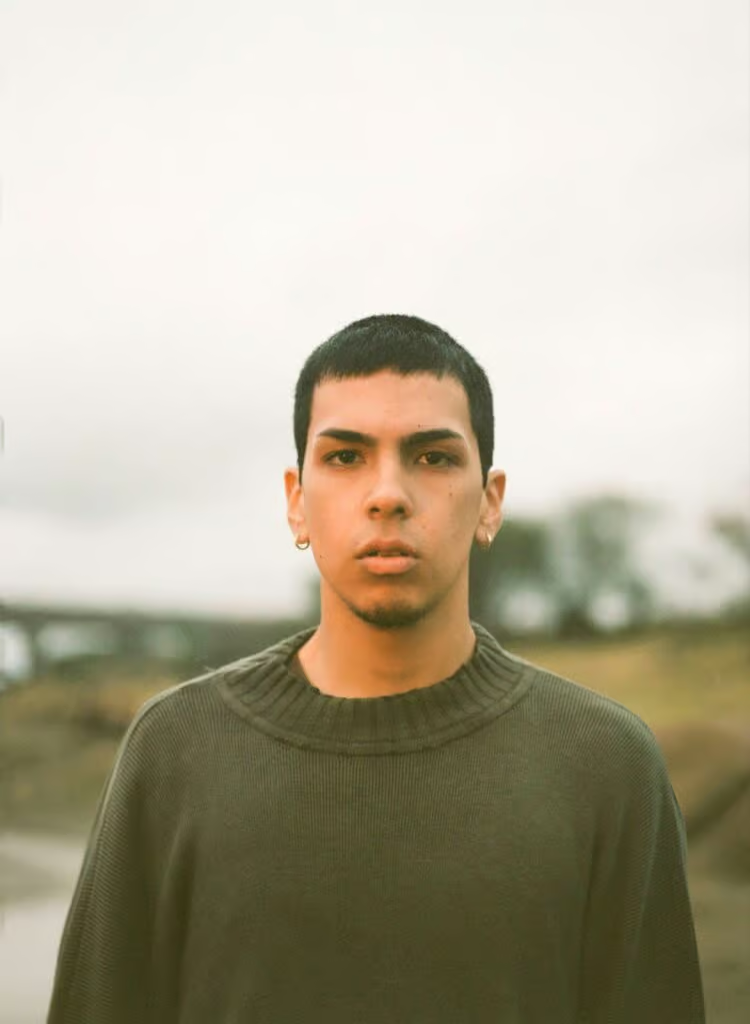
“Who’s your favourite Argentine musician?” I ask a girl from Buenos Aires in the queue for a magazine drop during Paris Fashion Week. “Honestly, Milo J,” she responds. The girl isn’t the first I’ve heard the name of this 19-year-old rapper-turned-folk phenomenon on the lips of. He’s had a meteoric rise in Argentina, framed as reviving folklore for Gen Z. But in the provinces, he tells me, folkloric music and traditional dance never left. What he’s done is deliver the sound of their ancestors into the hearts of a young urban audience raised on trap.
Milo J started out in the underground freestyle and rap battle culture in the neighbourhood of Morón in the outskirts of Buenos Aires, then began recording aged 13. By age 16, he had already gone viral and grown into one of Argentina’s biggest rappers. Then, after being blasted by burnout, he retraced his roots with a folk album: La Vida Era Más Corta (2025). Milo J is part of a generation that has departed from pure rap to experiment with other genres (think the rock elements in the rapper Dillom’s latest album, and Broke Carrey’s new folk disc).
In indigenous mythology is the Pachamama, also known as the Mama Pacha. She’s the Mother Earth deity from thousands of years before the Inca Empire, and spiritual ties to her are still strong in Bolivia and Peru. When he was little, Milo J thought the late Mercedes Sosa – the 20th century emblem of Argentine folk – was the Pachamama. “Many people from my generation will say the same,” he says. So when Sony Music offered him an unreleased archival vocal recording of Sosa’s voice for him to spin into his own song, he hesitated for two weeks before accepting. “I couldn’t listen to it. You have to know that for me, for all of Argentina, Mercedes Sosa is a total icon.” And that’s the track La Vida Era Más Corta ends on: “Jangadero”, in which two generations meet.
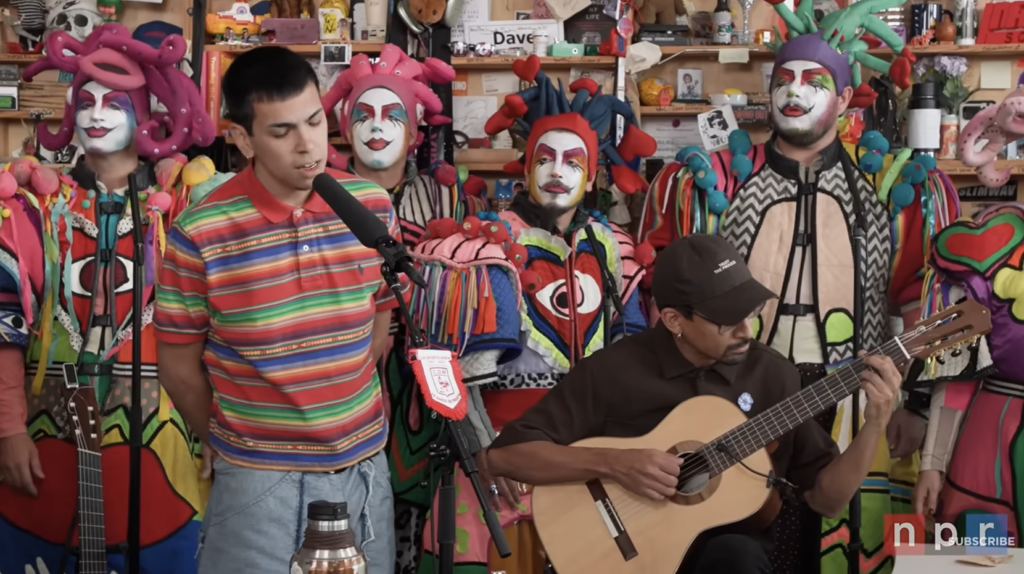
Buenos Aires is famous as the birthplace of tango, where African rhythms blended with European immigrant folk music in the working-class neighbourhoods in the 1880s. But if you zoom out to the enormous country as a whole, other dances such as chacarera and zamba are just as much part of Argentine identity. That’s where Milo J drew inspiration. In his Tiny Desk Concert this year, he was accompanied by Agarrate Catalina, a group of murga performers: dancers in carnival costumes who have traditionally mocked politicians and voiced working-class struggles.
Cold sat down with Milo J at the Sony offices to chat about his ongoing world tour, how Argentina’s rappers are getting more experimental, and what music he grew up on. See one of his music videos here.
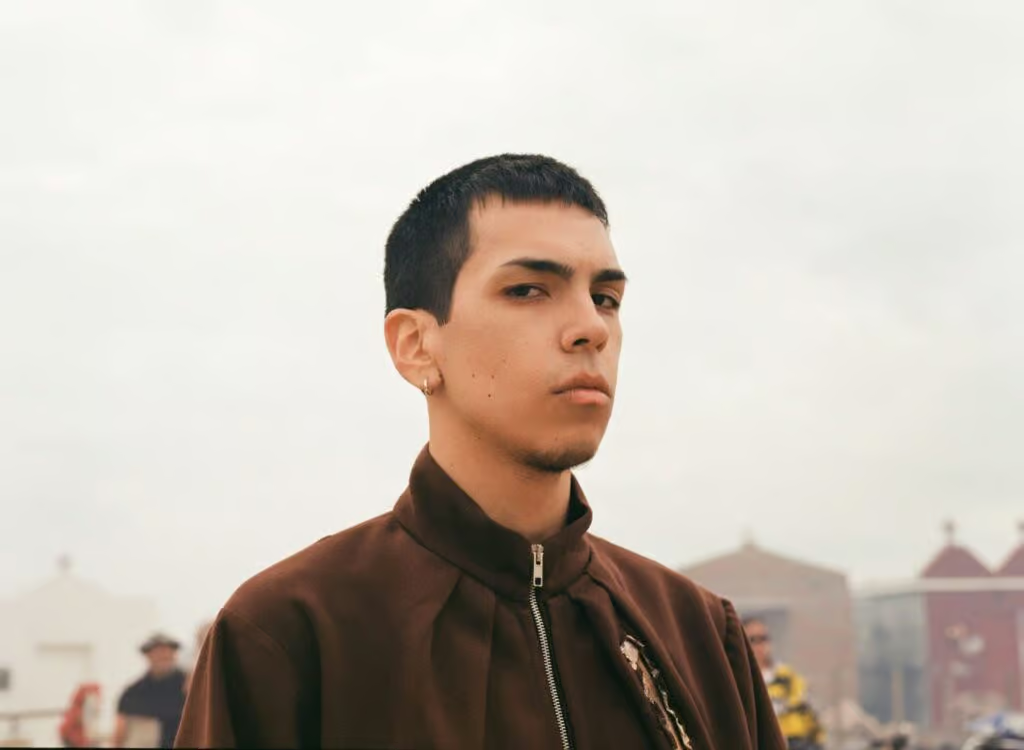
The Cold Magazine (CM): How is the tour going? Is this your first time in London?
Milo J: It’s my second time in London. I came before to watch a couple of Premier League matches, but never for a musical thing like this, and yeah, I’m excited. About tomorrow’s show, too. The tour is going amazingly well. Honestly it’s one of the most chaotic of my career. Also, the last album really warranted going to new countries that maybe I hadn’t visited before, so yeah, enjoying it, honestly. It’s a beautiful place.
CM: Now I want to talk about your music. The first track of yours that I heard was “Jangadero”, a posthumous collaboration with Mercedes Sosa. I wanted to understand more about your journey in deciding to make that track with influences from Mercedes Sosa.
Milo J: Yeah, those are recordings of the song “Canción del Jangadero” actually, from 2006, which she recorded with Soledad Pastorutti – who, by the way, is also on the album, in “Lucía”. At the time, nothing was done with those recordings. It later ended up in my hands through Sony. I probably hesitated for like two whole weeks, not listening to it. I couldn’t listen to it. You have to think that for me, for all of Argentina, Mercedes Sosa is a total icon. And we ended up diving into that production, and I ended up singing the verses that Soledad Pastorutti sang. And I think it turned into a beautiful song, and I think it was the best one I could have selected to finish the album too.
CM: What an honour. Do you feel like she’s sort of a great-grandmother figure?
Milo J: I think she’s like the grandmother of Argentine music too, you know? As a little kid, I thought Mercedes Sosa was Pachamama [the indigenous Mother Earth of South America], you know what I mean? Many people from my generation will say the same.
CM: Pachamama! What a comparison.
Milo J: Yeah! If I had to give a voice to the Argentine land, it’s Mercedes Sosa. She’s the voice of Argentina.
CM: There’s a folk revival all over the world. What do you think about European folk music?
Milo J: European folk? Well, obviously the one I’ve listened to the most would be Spanish because of flamenco, and the people who experimented with those genres outside of maybe traditional folk itself, like C. Tangana, like Rosalía. Regarding other European folk music, I’d like to dive deeper. If there’s any you could recommend to me, for example, I’d like that, but only because I don’t know that much, honestly.
CM: In Scotland, there’s traditional music centred around dance gatherings called ceilidhs.
Milo J: In Argentina something very similar happens. In fact, the tempo in which, for example, chacarera or zamba or so many other folk genres are made, is based on the dance, on the pauses in the dance. For every genre there’s a different dance; you don’t dance everything the same way. So, yeah, it’s crazy how musical time signatures, 6/8 or why things are in triplets, it’s because of the dances, the rhythm of the dance.
CM: Different from tango, right?
Milo J: Yes, yes. Though tango is a type of folk too. But for example, chacarera isn’t the same as tango. But as I was saying, Argentine music is very rich, very broad, and very varied.
CM: And the Gen Z folk revival is huge right now. Last time I visited Buenos Aires, I met the artist Broke Carrey.
Milo J: Broke Carrey, yeah, Hijo del país. Yeah, he’s a sweetie. I know him.
CM: Right now, it seems like people are connecting with their ancestors and history through folk.
Milo J: As a musician, to connect with yourself you also have to return to your roots. Often those of your own country, or the music you listened to as a kid. Everything leads to nostalgia.
CM: And what did you listen to when you were a kid?
Milo J: Besides Argentine folk, a lot of national rock bands, you know? A lot of, for example, Bersuit, Los Piojos, Kapanga, Catupecu…
CM: And what about Argentine trap right now? Is it still trendy?
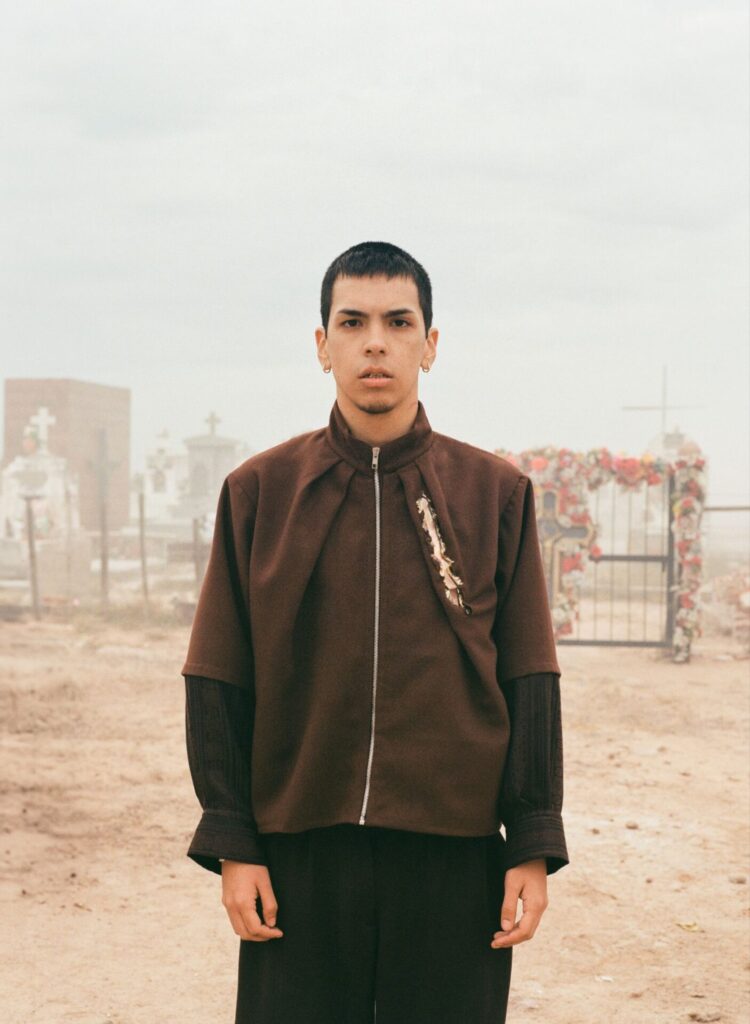
Milo J: There was a huge movement with trap in Argentina in 2018–2019, which was when Duki, Neo Pistea, YSY A, a whole big scene made it mainstream in Argentina. And that was a massive hit here. Nowadays, there’s a very interesting underground scene with artists like El Aia, Enzo Cero Ulto, Dolly Flaco, Pabloxo. They’re artists and producers making a pretty strange kind of trap. Also El Tiffy and El Bufo Fortnite, who released an album recently called Perdiendo a Los Mejores Adolescentes.
So there’s a very interesting movement sound-wise. Maybe it’s not trendy as such anymore, like peak trendiness, but because… Well, it’s fine, everyone finds their niche too, you know? It doesn’t necessarily have to be in the spotlight, whatever comes out. And many artists who hit big during the trap boom moved on to other things too, like they started experimenting with other sounds; they stopped making trap, trap, trap as such. Most of them, not all. But yeah, today there’s a very interesting movement in Argentine trap.
CM: And where can I find the folk scene in Buenos Aires? In cultural centres? I never managed to find it.
Milo J: The real folk is in the provinces. There, it never went out of style. With folk something peculiar happens: there are artists in the provinces who do festivals and fill them with over 80,000 people. And in Buenos Aires, they struggle to sell tickets.
CM: So in Buenos Aires it’s harder to find?
Milo J: In Buenos Aires there is a revival of folk. Certain festivals have restarted. New generations are discovering the old folk songbook and its anthems, and that’s a source of pride. But in the provinces it remained alive, right on the surface, always. It never stopped.
CM: And which province do you like best to go play in, to see the community?
Milo J: Santiago del Estero. I haven’t played there yet. But Santiago del Estero is my favourite province on the planet.
CM: I can’t wait to see your show tomorrow. One reason I wanted to do this interview with you is that you’re from Morón: one of my favorite neighborhoods in Buenos Aires. There’s a great spot for milongas [traditional Argentine folk dancing] near that part of town – Tarzán. In Castelar, I think.
Milo J: There we go. I think it’s right in front of the station. You nailed it, you nailed it.
Milo J’s album La Vida Era Más Corta is out now.