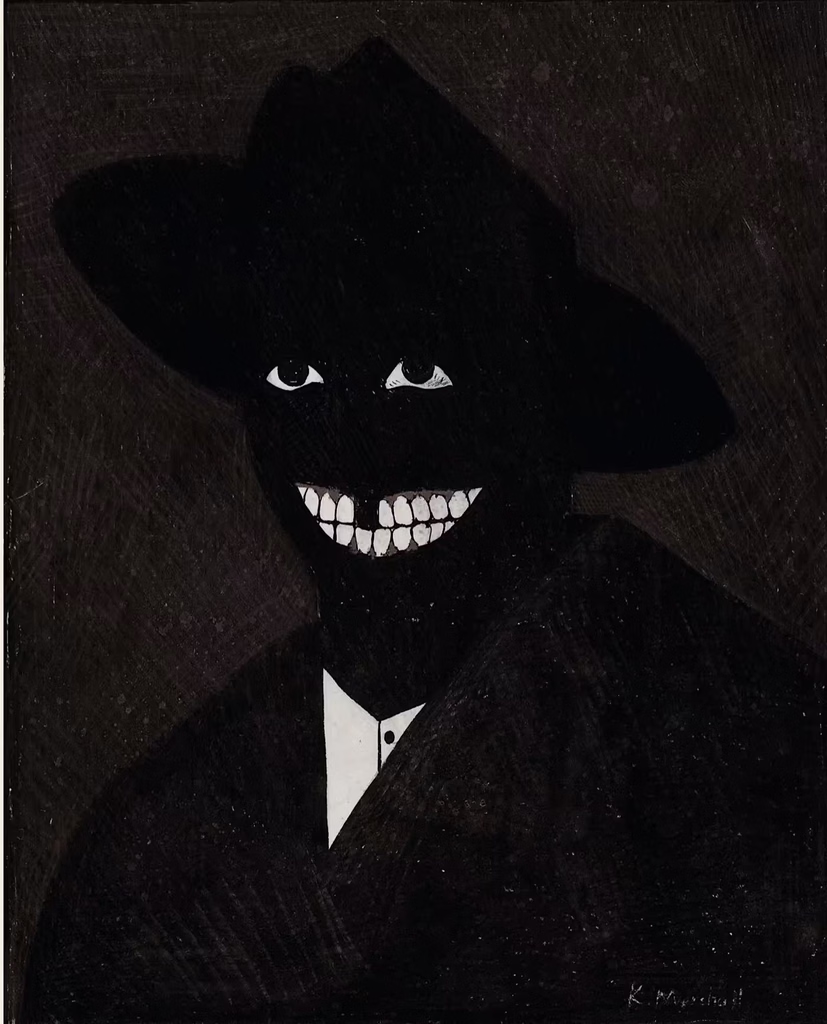
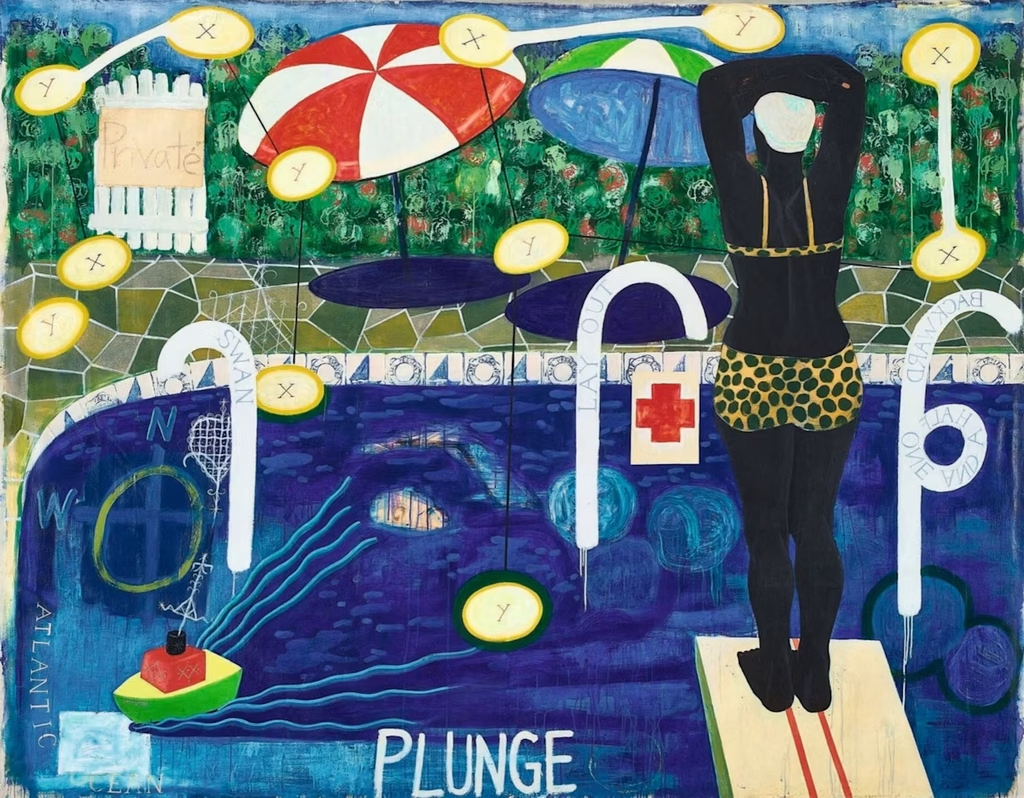
Although it’s not new, nationalism is rising in Britain. Last autumn saw Tommy Robinson’s fascist army march to the beat of Reform UK’s promises of patriotism in the name of ‘uniting the kingdom’. In the same season, Kerry James Marshall: The Histories opened at the Royal Academy, the institutions’ first solo exhibition of a Black artist — and one of the most internationally celebrated shows of 2025.
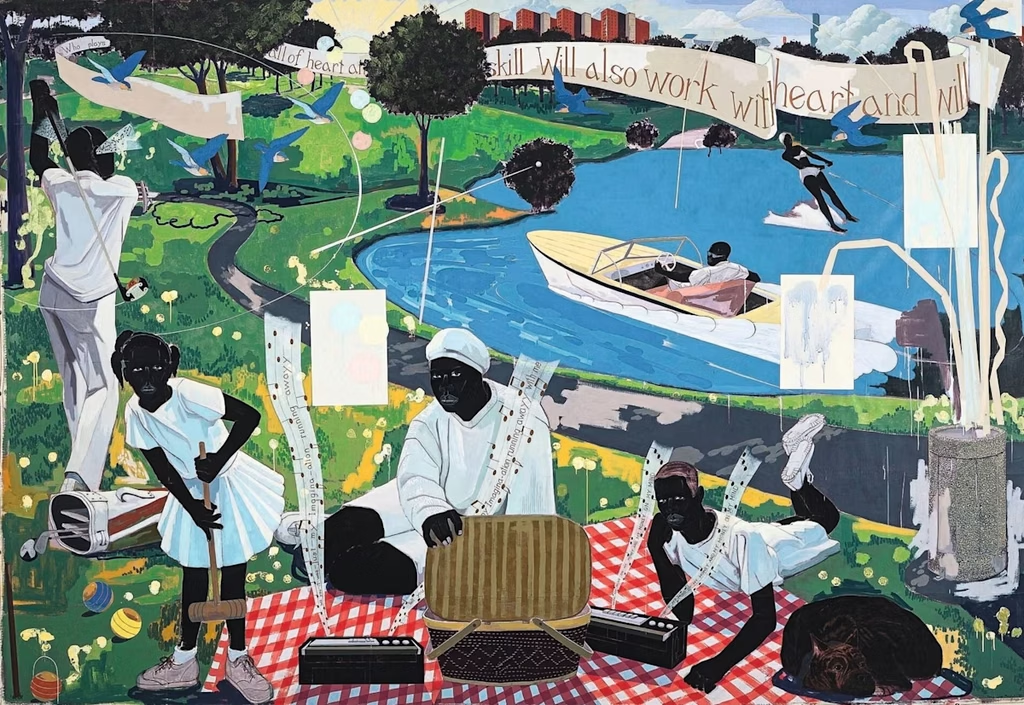
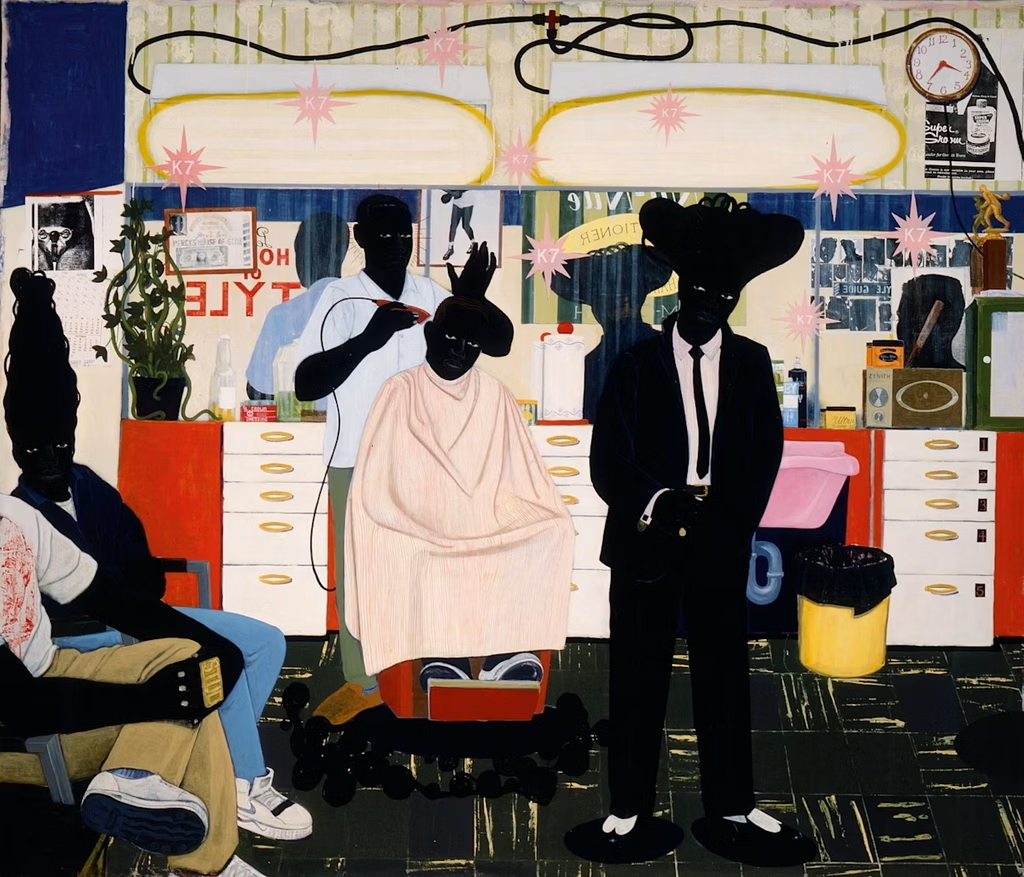
The Royal Academy (RA)’s history, like many other Georgian institutions, is intertwined with the transatlantic slave trade. Today Georges Cuvier, David Hume and Carl Linneaus, three early modern pseudo-scientists whose racial hierarchies helped justify white supremacy, are still honoured with life-size sculptures on the museum’s exterior. Inside, Marshall’s vibrant monumental scenes of Black joy and everyday life unapologetically reassert Black presence as ordinary, directly challenging centuries of Black exclusion in Western art. At a time when far-right protestors are passing the RA on their way to Westminster, it brings a sense of solace knowing that behind these colonial walls, Black Panther flags hang high in Marshall’s paintings.
Unintentionally, the RA’s exhibitions by artists of colour have coincided with the descent of British immigration politics. In 2024, Entangled Pasts, 1768–now, curated by Professor Dorothy Price, Dr. Esther Chadwick, and Dr. Cora Gilroy Ware explored issues of colonialism, empire and migration at the same time when Rishi Sunak’s Safety of Rwanda (Asylum and Immigration) Bill sought to deter asylum seekers from coming to Britain by deporting them to Rwanda. Where this Bill is centered on the exclusion of asylum seekers from the UK, Entangled Pasts foregrounds the mixed histories of empire by bringing together over 100 major contemporary and historical works that examined the legacy of colonialism through the lens of art.
Professor Dorothy Price co-edited a widely read questionnaire for Art History journal, published in February 2020, titled ‘Decolonising Art History’. Her invitation from the Royal Academy to be the lead curator of Entangled Pasts came in autumn 2020, just months after the murder of George Floyd and the removal of the statue of slaver Edward Colston from his plinth by Black Lives Matter activists and local communities in Bristol. When I interviewed Price she explained that the RA’s invitation was partly driven by their interest in the Rijksmuseum’s 2020 Slavery exhibition, and reports by the National Trust and English Heritage examining Britain’s deep cultural and economic ties to the transatlantic slave trade.
I asked Price about the selection of artists and works in relation to colonial history and its diasporic present and she explained that one of the exhibition’s curatorial principles was “to centralise Black and Brown subjectivities and experiences throughout the exhibition wherever possible”. Rather than accepting the established narrative of British art history, Price sought to “read art history as codified through the RA…against the grain” and examined the RA’s entangled histories of empire, colonialism, enslavement and migration. One room was filled with Black British contemporary artist Lubaina Himid’s Naming the Money, dozens of brightly painted life-sized cut-outs representing the varied roles enslaved Africans performed in European royal courts. Another hangs British-American artist John Singleton Copely’s 1758 portrait of Mary and Elizabeth Royall, revealing the Royall family’s plantation-fueled wealth, painted by an artist who himself enslaved three people. Positioned in dialogue with contemporary works, Entangled Pasts invited visitors to question whose narratives have traditionally shaped Britain’s story while interrogating the RA’s own institutional history. In 2022, the museum’s Collections team published its first set of findings on the RA’s links with colonial pasts, followed by updated research in 2025, both publicly accessible on its website. Entangled Pasts and Kerry James Marshall are not anomalies. A showcase of Indian modernism through A Story of South Asian Art in spring 2026 and future exhibitions such as Black-American sculptor Simone Leigh’s autumn 2027 retrospective demonstrate the RA’s continued effort to diversify its programme. At a time when political narratives of British identity are becoming more exclusionary, the RA’s ongoing interrogation of its colonial past raises broader questions about how Britain’s story is told, and who is included within it.
For Black Britons like myself, museums and galleries are proving to be safe spaces amidst right-wing uproar. In Stratford, the new V&A East Museum is a celebration of diasporic communities. On the first floor, its permanent collection is an ode to African, Black British, and Caribbean artists, featuring works by Afro-Scot multidisciplinary artist Maud Sulter, Nigerian-American painter Kehinde Wiley, and Trinidadian textile artist Althea McNish.
Round the corner is Carrie Mae Weems’ film installation The Long Goodbye. Commissioned by the museum as part of its initiative to champion global creative voices, Weems’ new film sandwiches clips of British royal family coronations and 1980s race riots to connect the monarchy’s historic ties to colonialism with the struggles of East London’s Black and immigrant communities, just miles from Buckingham. Not only does V&A East showcase Black artists, its inaugural exhibition, The Music is Black: A British Story is a visual love story to Black music pioneers such as Samuel Coleridge-Taylor, Courtney Pine, and Poly Styrene, and title spotlights Black histories as integral to Britain, redefining what it means to be British.
Reform seeks to eradicate all teachings of critical race theory and virtually reject systemic racism, an easy thing to do when it’s not your lived experience. White nationalists need to feel that they are powerful in a system fantastically based on racial hierarchies, and so by classing lived experiences of racism as void, they ensure that whiteness will climb their folktale of a ladder and regain the powerful imperial seat it took at the peak of the British Empire.
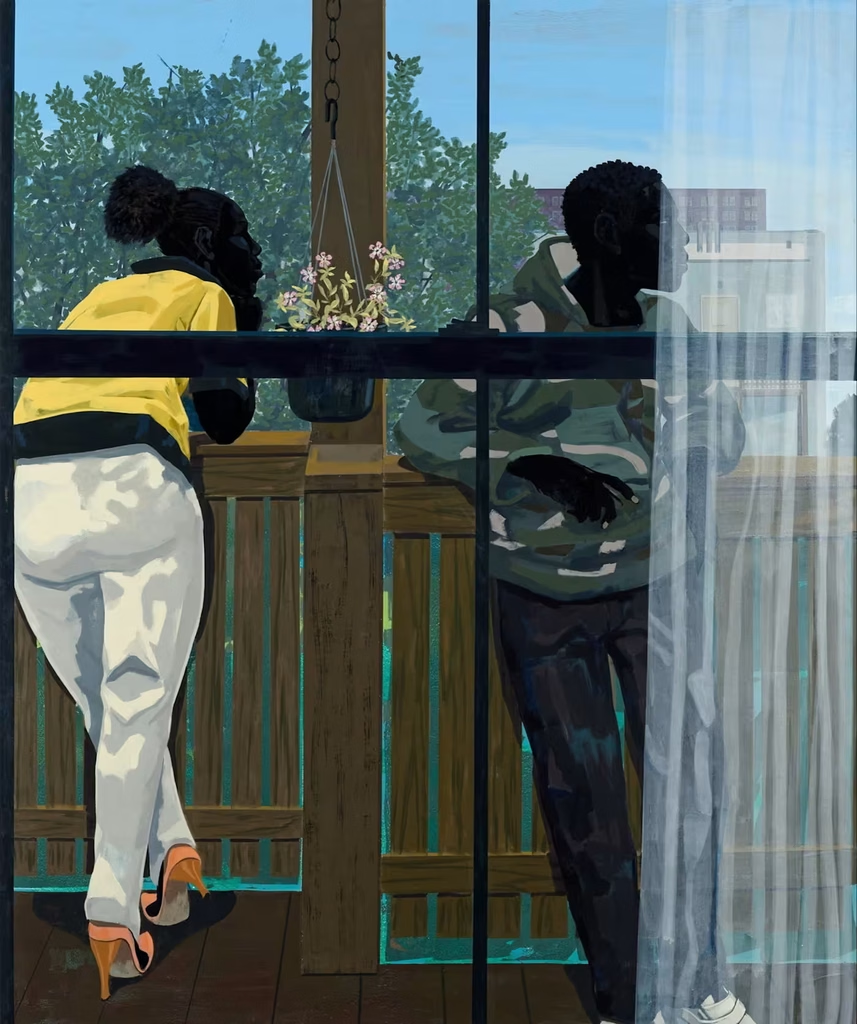
The public’s recent support for the far-right campaign Operation Raise The Colours and racist political party Restore has proven that the popular nationalist movement has nationwide membership. Despite this, unapologetically explicit displays of protest against racism are flooding British museums. Not only is this made clear in the RA and V&A East’s shows, but also in the growing presentation of African and Black American artists Amaoko Boafo and Danielle McKinney, whose colourful portraits of family members and scenes of Black women relaxing challenge the racist stereotype of Black people being reactive and aggressive.
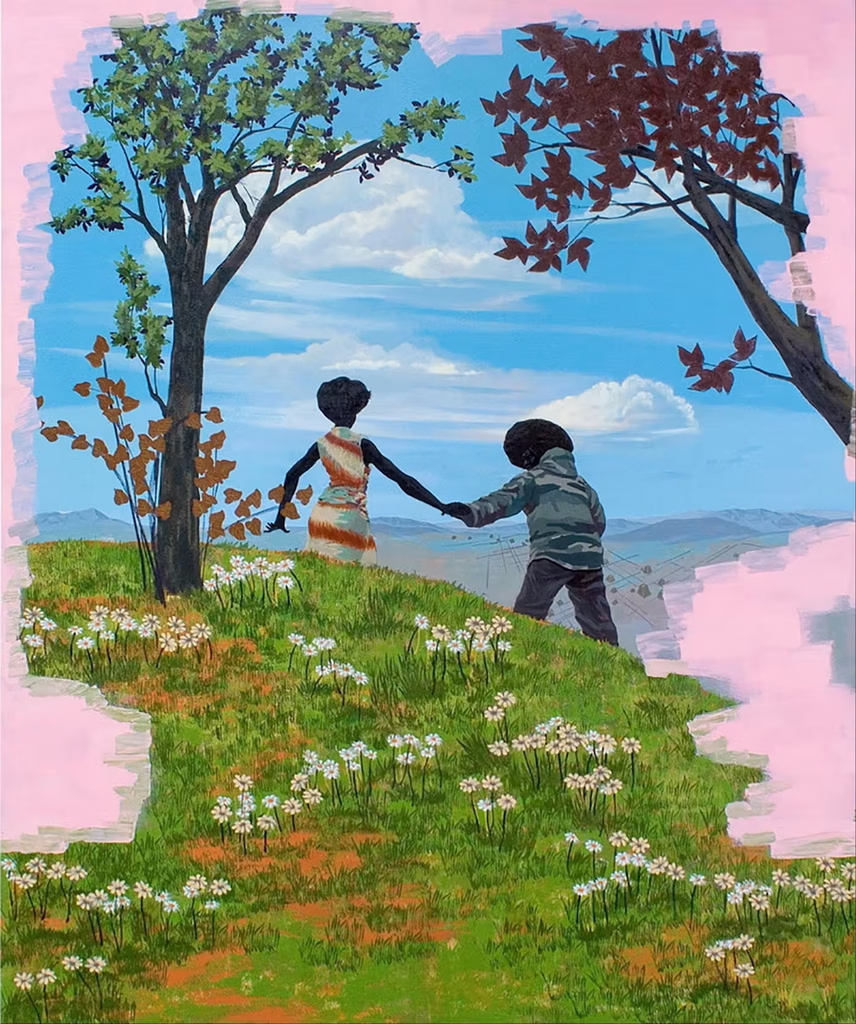
Contemporary Black artists are succeeding commercially too. Gerhard Richter is one of the most influential 20th-century painters. In Before Gerhard There Was Cassi (2017), Black American painter Henry Taylor reimagines Richter’s iconic portrait of his young white daughter by replacing the original sitter with his girlfriend Cassi, whose curly afro dominates the canvas, literally positioning Black presence in the foreground. This painting more than doubled its pre-sale estimate when it sold for $2.06 million at Sotheby’s New York in late 2025, becoming Taylor’s second-highest auction result. A year earlier, Artnet’s Intelligence Report Mid-Year Review 2024 identified British-Ghanaian painter Lynette Yiadom-Boakye as the most bankable ultra-contemporary artist (artists born after 1975), with a 100% sell-through rate across seven auction lots. She paints fictional Black figures in ambiguous settings, challenging their historical absence within European portraiture. Their international success suggests a broader cultural shift towards authentic representations of Black life, one that doesn’t fit into the nationalist agenda. Importantly, these exhibitions are not displays of Black suffering but celebrations of diasporic communities and ordinary life, placing Black stories at the centre of the cultural landscape.
The presence of contemporary Black art and figures in British museums demonstrates the cultural sector’s political standing as one that is in direct opposition with the far-right. Across Britain, museums are building Black presence into their permanent collections. The Garden Museum in London is campaigning to acquire the earliest known portrait of a Black British gardner (John Ystumllyn) for permanent display alongside Harold Gilman’s 1905 Portrait of a Black Gardner. Britain’s cultural racial activism doesn’t just exist within London, Glasgow Women’s Library hosts The Maud Sulter Annual Lecture series and the Walker Art Museum in Liverpool acquired Yinka Shonibare’s empire-referencing Untitled (Dollhouse), exemplifying how Black art is being embedded into institutional collections rather than being treated as a fleeting trend. Black art in Britain is not temporary, it’s becoming permanent.
We are living in a time when political rhetoric is increasingly concerned with borders and exclusion, and major cultural institutions in Britain are presenting a story that centres migration and the Black diaspora as fundamental to the nation’s identity. The idea of what it means to be British is not only taking place on UK streets but it is also unfolding in museums and galleries, where themes of memory and belonging continue to be negotiated. Nationalism is attempting to narrow British identity at the exact moment cultural institutions are expanding it. Through their public celebrations of Black art, these cultural spaces compete with anti-immigration motives and reveal that Britain thrives when there is an amalgamation of cultures. Because at the end of the day, Britain is a story of migration. Our museums know this, but our politicians are still debating it.