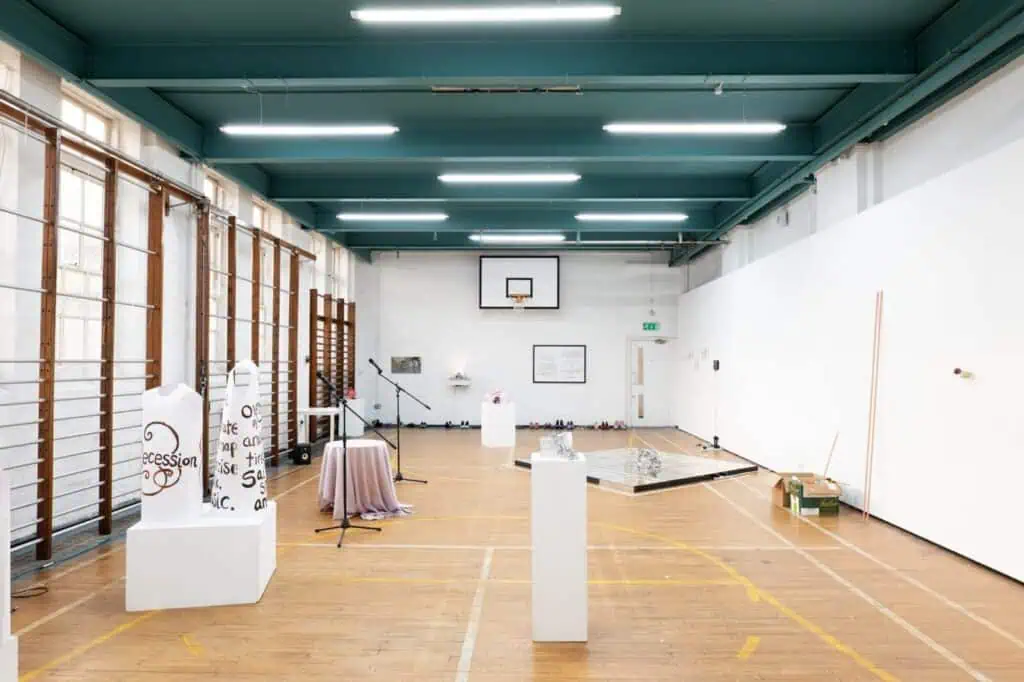
At Arthub Studios’ Apparatus Gallery in New Cross, a Victorian school gymnasium has been transformed into an unconvincing fantasy. Viewers are invited into a world that’s part cabaret, part children’s cartoon, but mostly a memorial to a cultural moment that no longer knows what is real.
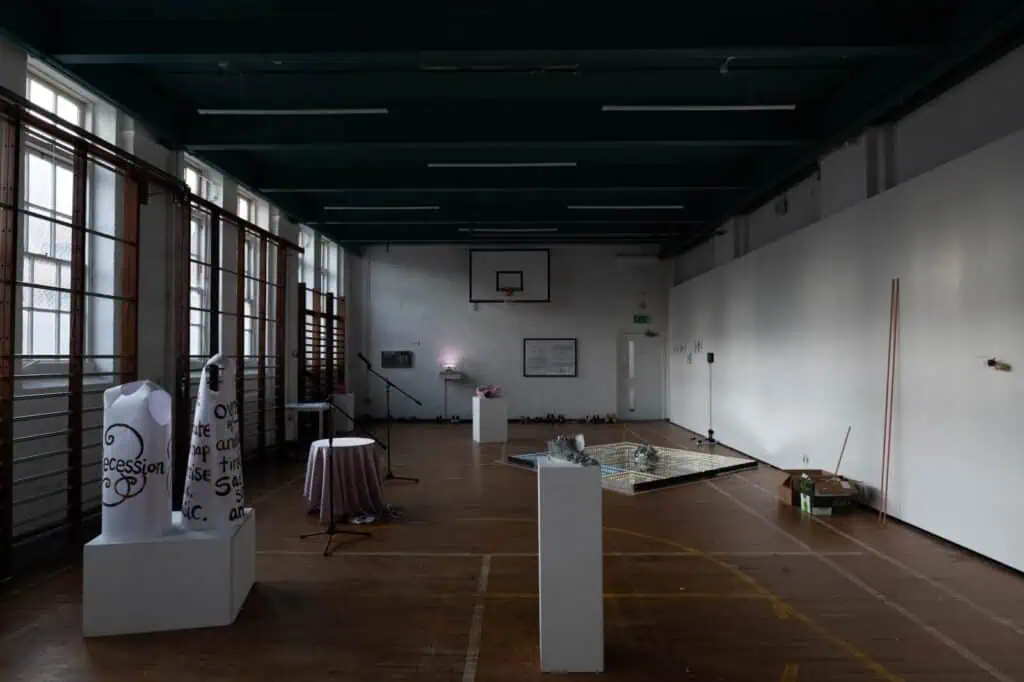
In Days of Heatwave: The Performance Factory, staged from September 4-6, was inspired by the infamous Glasgow event of 2024: An AI-advertised Willy Wonka experience whose promise of magic collapsed into a near-empty warehouse, bewildered actors, and police intervention. Rather than simply satirising that fiasco, artist-curator Emre Ataman uses it as a lens for something broader: A world in which performance, illusion, and disappointment have become everyday conditions.
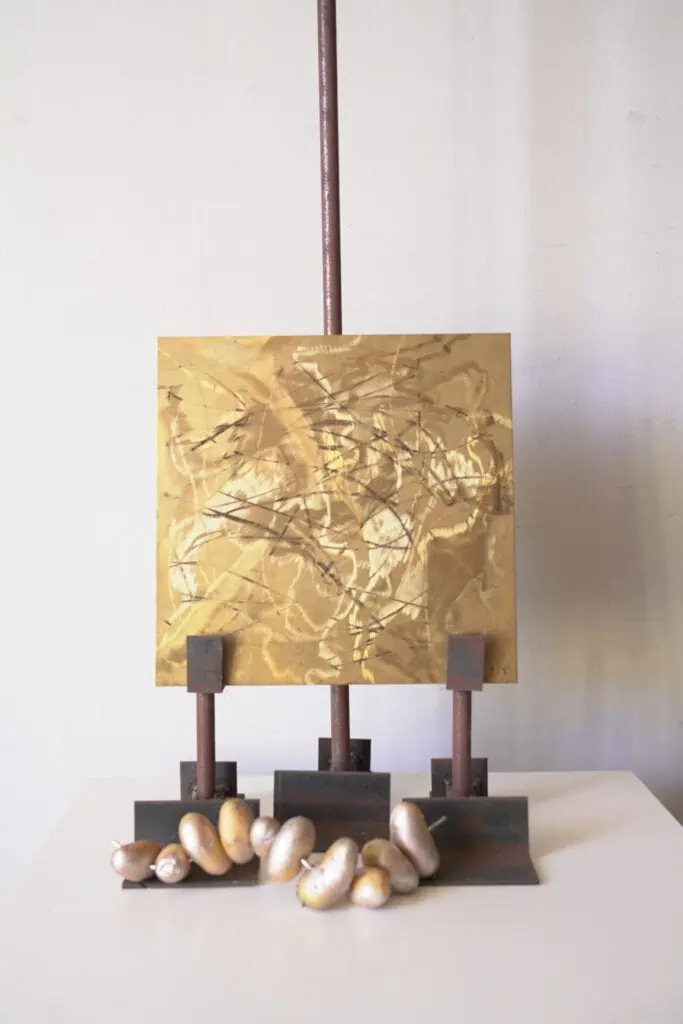
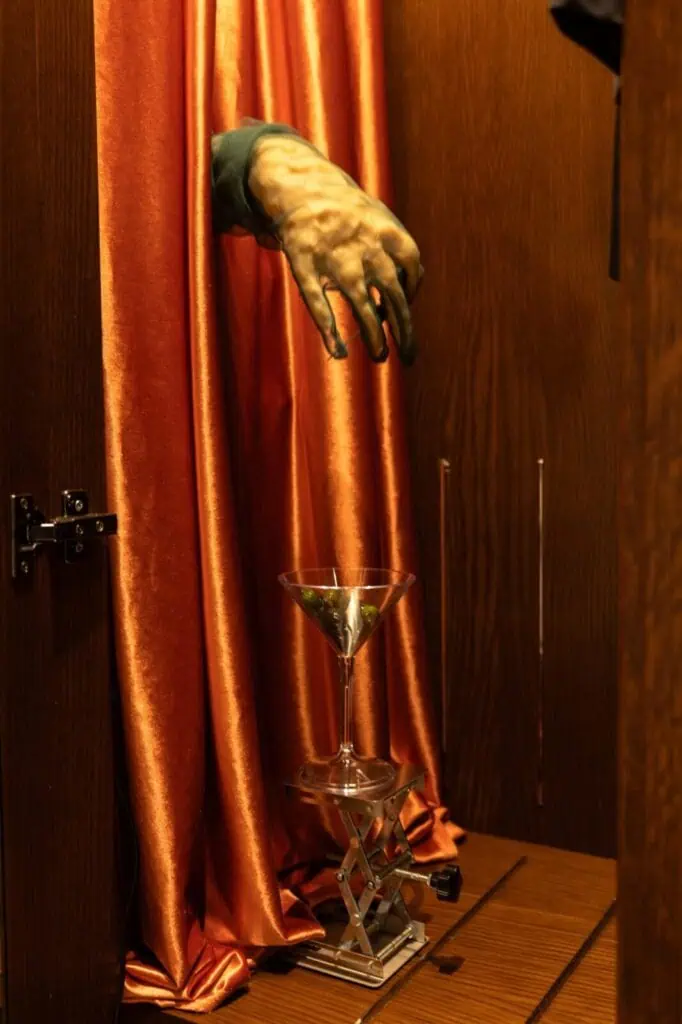
The exhibition gathers sculpture, video, text, costume, and live performance from Ballet for Non Dancers, Fi Isidore, Polly Plowden, Cecilia Sargent, Alex Heard and The Pegram Collection, Charlie Howell, Lucas D’Praser Corp, and Juliette Black, alongside Ataman’s own work. Its premise is deceptively light: What happens when a group of artists are invited to build a fantasy world inside a former school gym? But the answer is more uneasy than whimsical. This is escapism with the lights left on, a show that knows the escape hatch leads back into the same decaying reality.
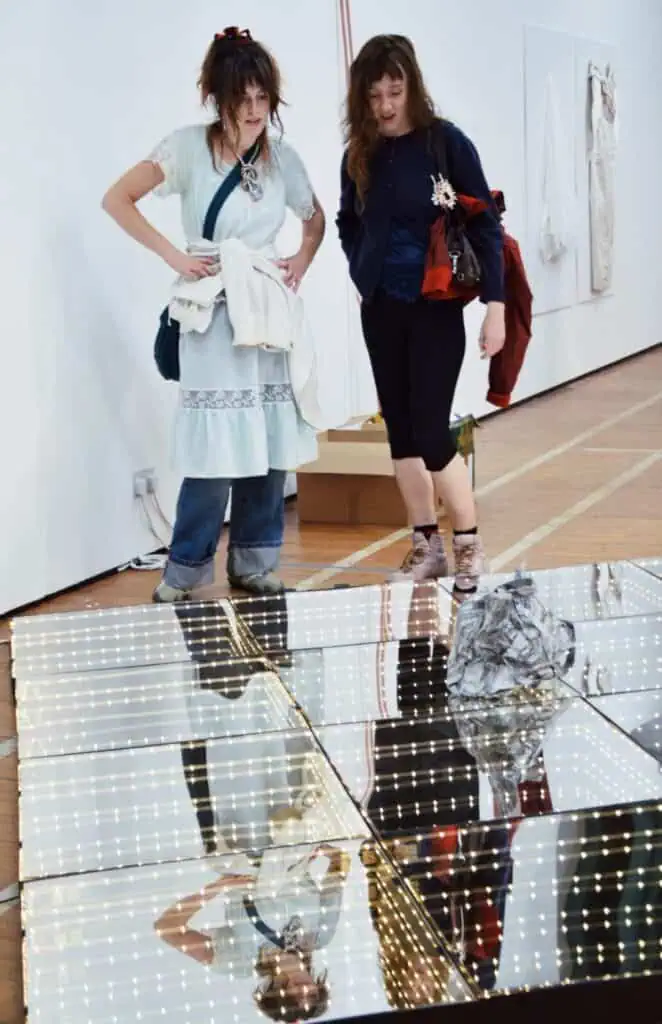
Ataman describes In Days of Heatwave as an extension of his visual arts practice, in which “curation becomes another medium.” Each exhibition begins with a theme, but the real interest lies in what emerges when artists and disciplines collide. “What fantasy world could be conceived from this?” he asks in his accompanying text, imagining a fantasy “carved out of a technologically accelerated, surveilled, and policed world.”
That alchemical approach is central to the show’s logic. “It felt like the process was more of an alchemy than following a formula this time,” Ataman says. “What happens if we put a bunch of these performers and sculptures into this massive space? What collision of energies would emerge from this?”
Ataman wanted to capture “a certain feeling, or a spirit of something, an energy” and the exhibition succeeds most fully when it lets that feeling remain unresolved. Ataman’s own contribution is among the exhibition’s sharpest visual jokes. Metal silhouettes of Looney Tunes characters are cut from aluminium sheet and mounted on the white wall, where they initially register as faint, shimmering shapes. Depending on the light and the viewer’s angle, they nearly disappear; move slightly, and Bugs Bunny, Tweety, Sylvester, Wile E. Coyote and company resolve into view.
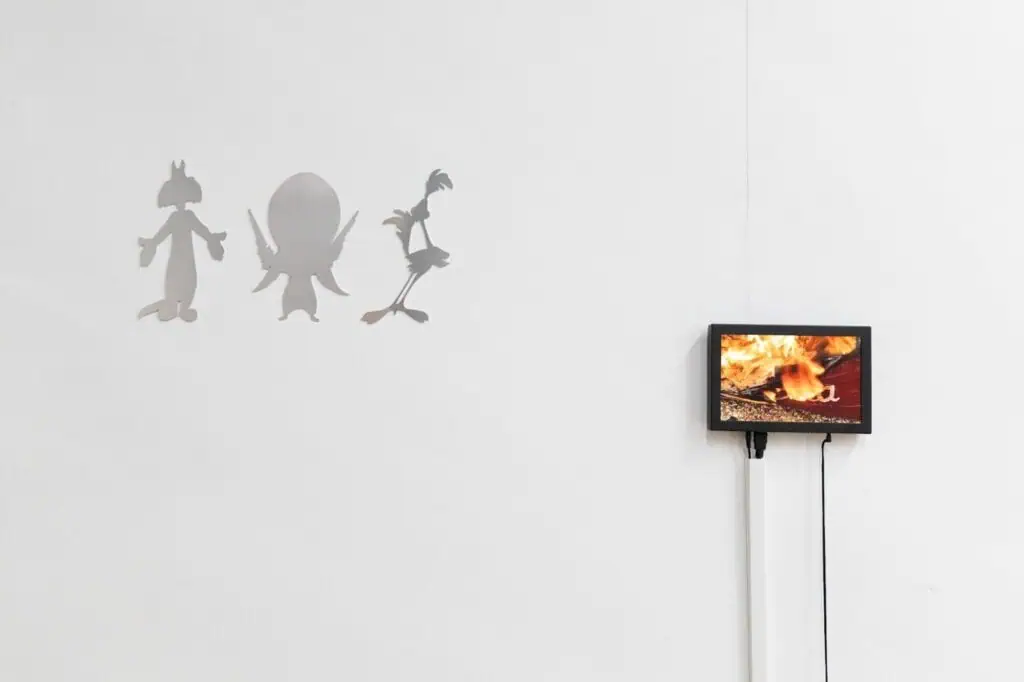
The work’s humour lies in its impossible diplomacy. These are characters defined by pursuit, trickery, and violence: Elmer Fudd hunts Bugs Bunny, Sylvester stalks Tweety, Wile E. Coyote chases Road Runner. Placed side by side, however, they become a strange peace treaty. “If I put these characters together, and if they exist with each other, it could be a bit more peaceful in a way,” Ataman explains. “They’re not trying to chase each other or hunt each other down… they’re just there in still images.”
There is also a formal wit in their near-invisibility. The figures are “ghostly silhouette-like,” Ataman says, “visually hard to decipher,” only revealing themselves as the viewer approaches. It is a neat metaphor for the exhibition at large where fantasy is present, but faded. It’s conditional and dependent on where you stand.
The work almost became more utopian still. Ataman had initially planned to arrange the characters into a world-peace sign, but Bugs Bunny went missing. Instead, the remaining figures were arranged so they could coexist; Lola Bunny, meanwhile, was exiled to her own corner. “I think she’s such a diva,” Ataman says, “and I felt like she deserved her own corner.” It is exactly this blend of absurdity and sincerity that gives the show its charge.
The exhibition’s centre of gravity is Juliette Black’s pair of dance floors, which frame Ballet for Non Dancers’ manifesto. That positioning is deliberate: Visitors are greeted by an invitation to dance, with the artists’ performance shoes lining the wall beneath the text. “I wanted this positioning to act as an invitation,” says Ataman, “to the dancefloor – for visitors to leave their bags on the floor and let loose.”
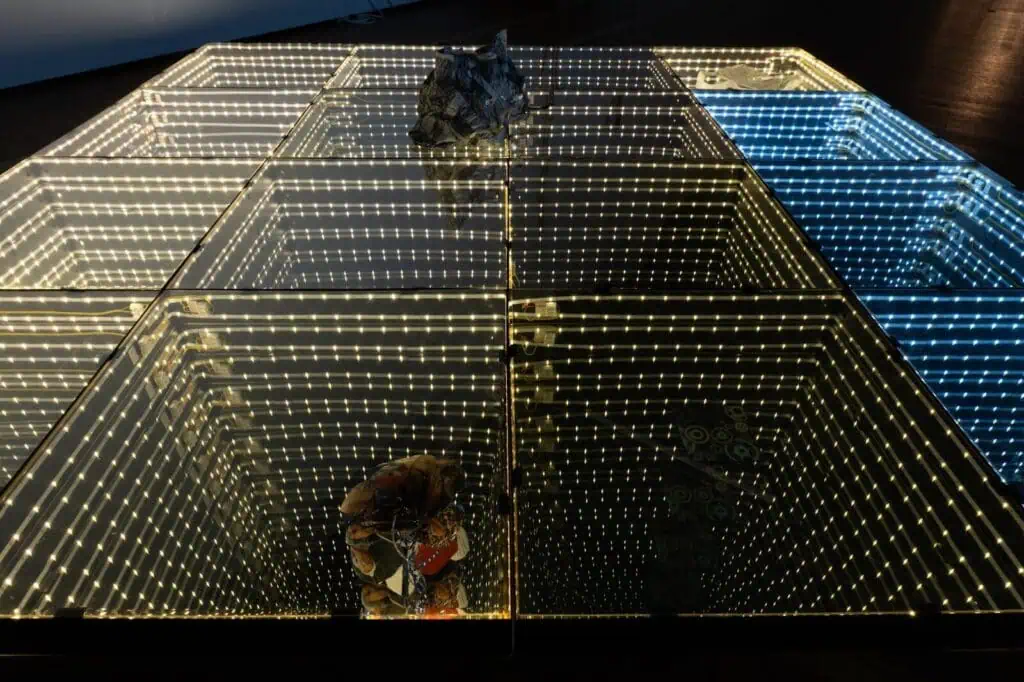
Black’s work carries the exhibition’s most poignant undertow. Drawn from her degree show We Used to Dance in Technicolour, it reconstructs the dancefloor of La Dolce Vita, the Newcastle nightclub founded in 1963 by her grandfather and his brothers. As the Jewish population of the North East has declined over the past six decades, the installation returns to a moment of communal abundance only to let it fracture through projection, distortion, and partial recall.
Here, nostalgia is not decorative. The dancefloor becomes both archive and stage, a site where personal memory and cultural loss meet. The work “constructs an unstable dialogue with a past that is gradually disappearing from cultural memory,” while remaining embedded in family history.
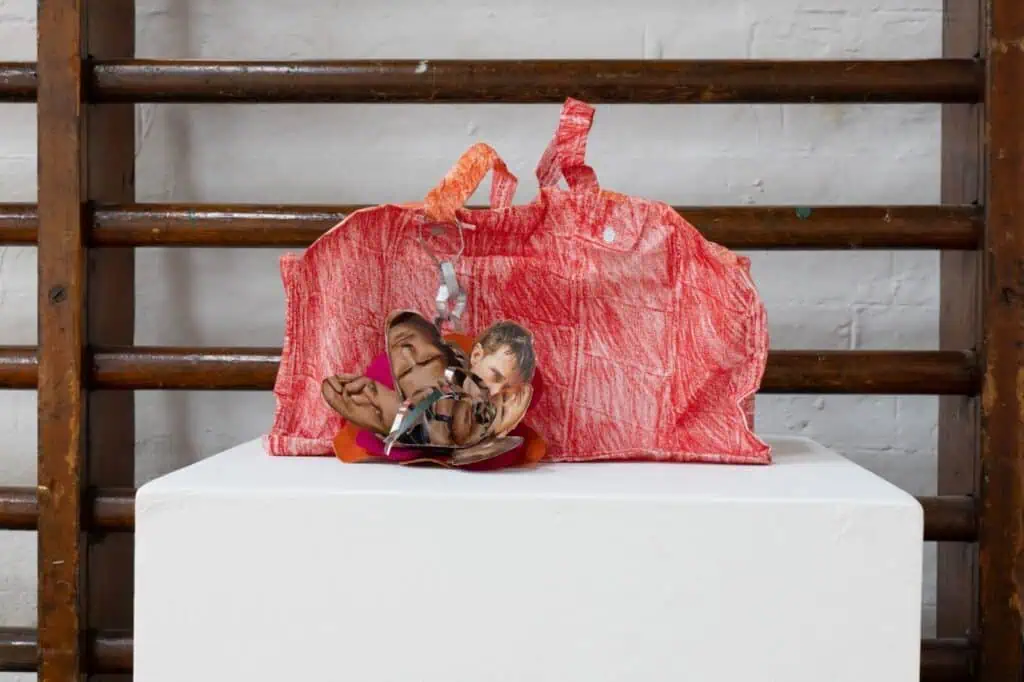
Cecilia Sargent’s paper designer bags (think faux Chanel, Dior, and Birkin) scatter across the space and onto plinths, including one trapped inside Black’s dancefloor. The pairing evokes the nightclub ritual of “dancing round the handbag,” turning separate works into a single immersive installation about community, ritual, and shared space. Their knock-off grandeur is part of the point: Objects that demand respect while openly confessing their own fakeness.
Sargent extends that game in video, playing a tour guide who presents Newcastle as New York: The Tyne Bridge becomes the Brooklyn Bridge; the Angel of the North becomes the Statue of Liberty. The deception is transparent, but no less seductive for it. Like much of the exhibition, it asks how easily we accept a performance when the set is convincing enough.
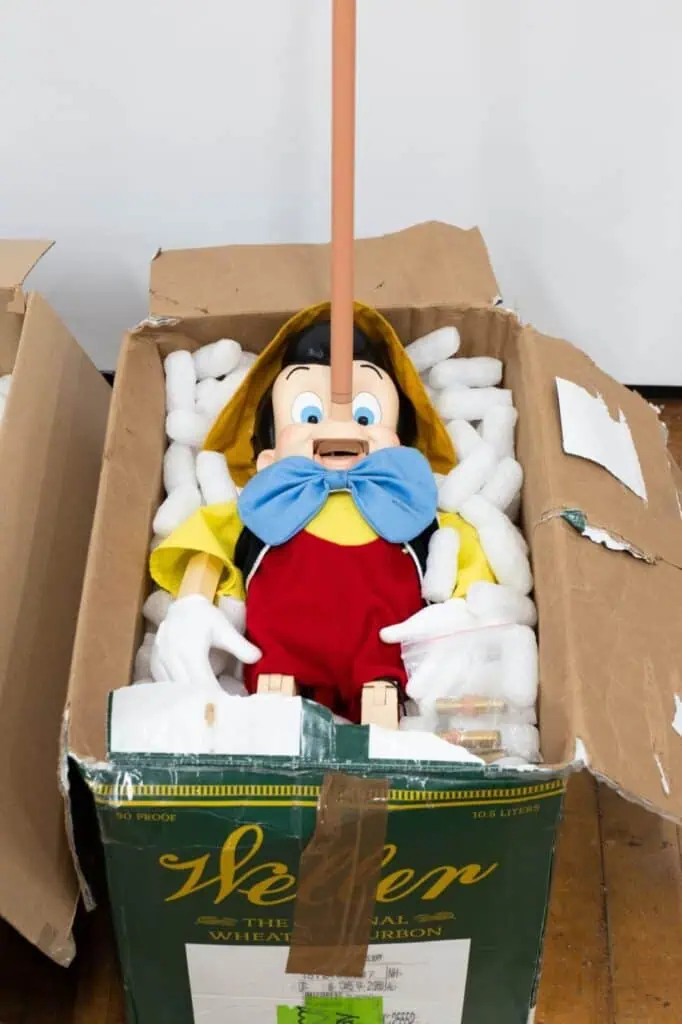
Charlie Howell pushes the cartoon motif further: A deconstructed Pinocchio, a rake suspended in slapstick mid-action, and a reversed Wizard of Oz clip in which Dorothy shuts the door on Technicolour and returns to the world of black and white.
The show’s live element was confined to its opening night, with readings and performances by Jaya Twill. She climbed the bars in the gymnasium and read a text that operated in non-linear time, confusing the audience with the loss of memory evident in the text.
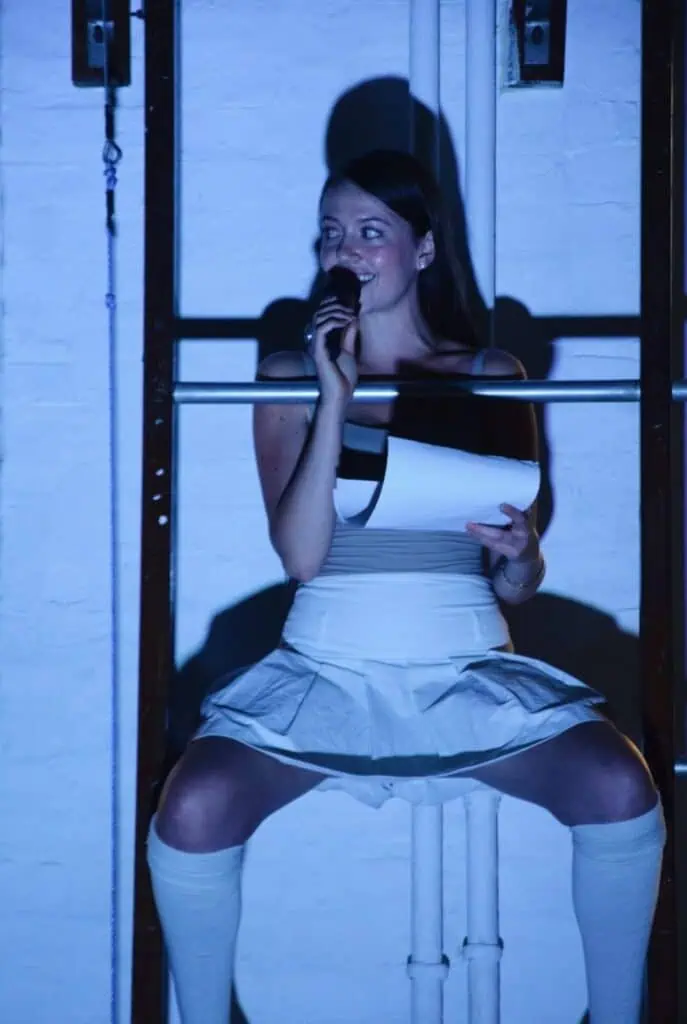
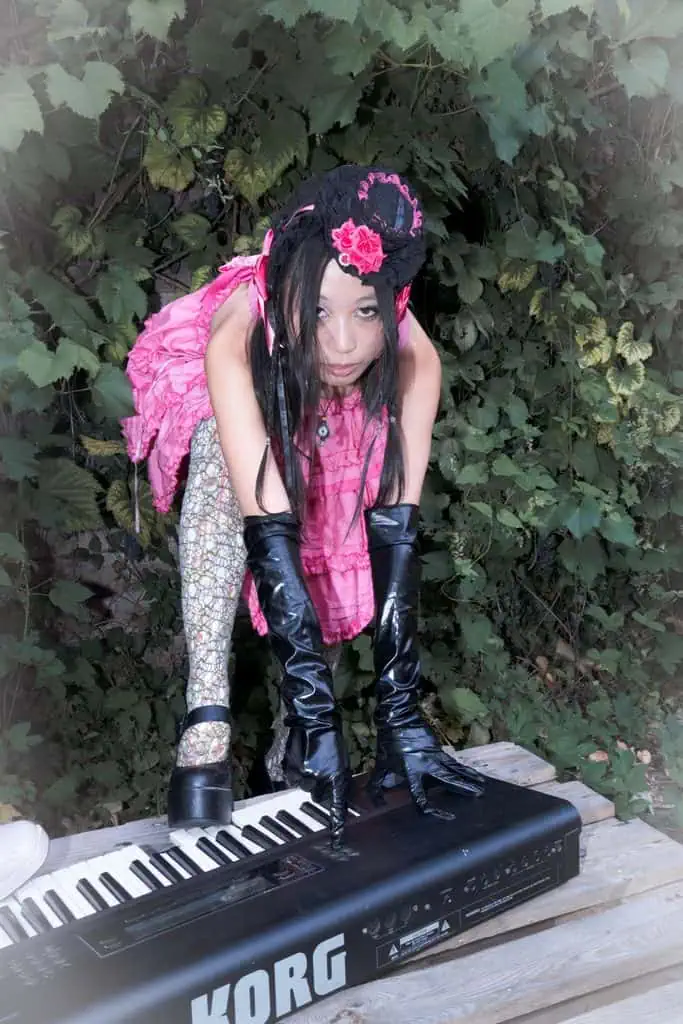
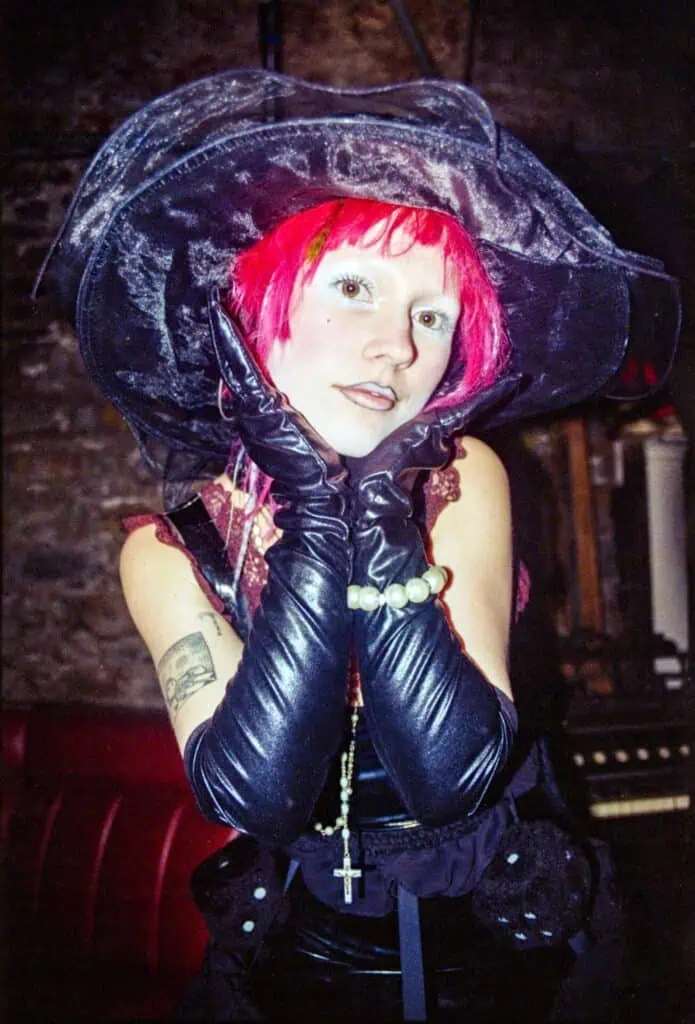
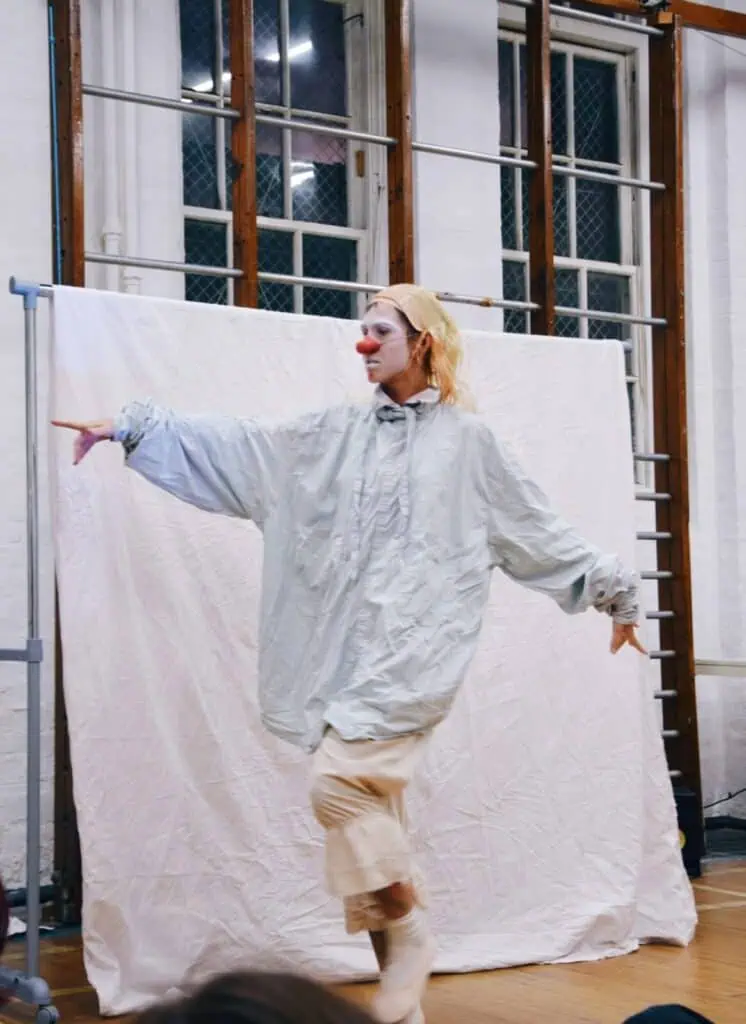
Ballet for Non Dancers read out their manifesto and announced to us all that anyone can be a dancer. And Sally Plowman and Cailin Cummins dressed up as clowns for the opening of the show. Even after the opening night, though, performance saturates the exhibition and leaves its residue: Paper dresses, microphones, a small round dinner table with a pink cloth, and the stage setup itself.
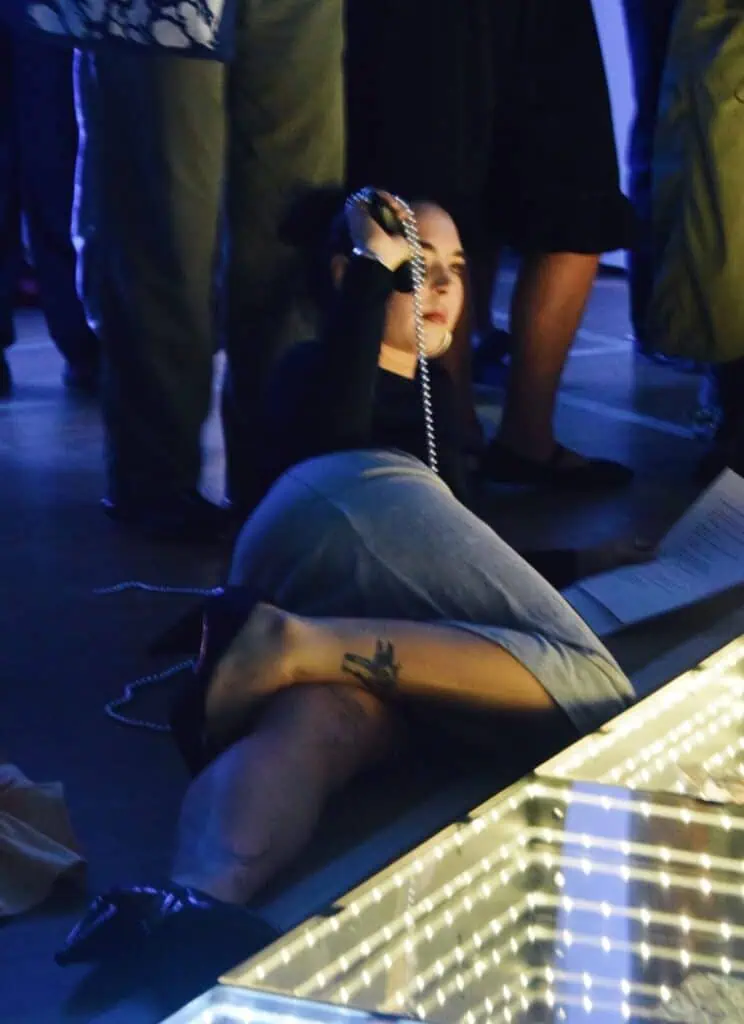
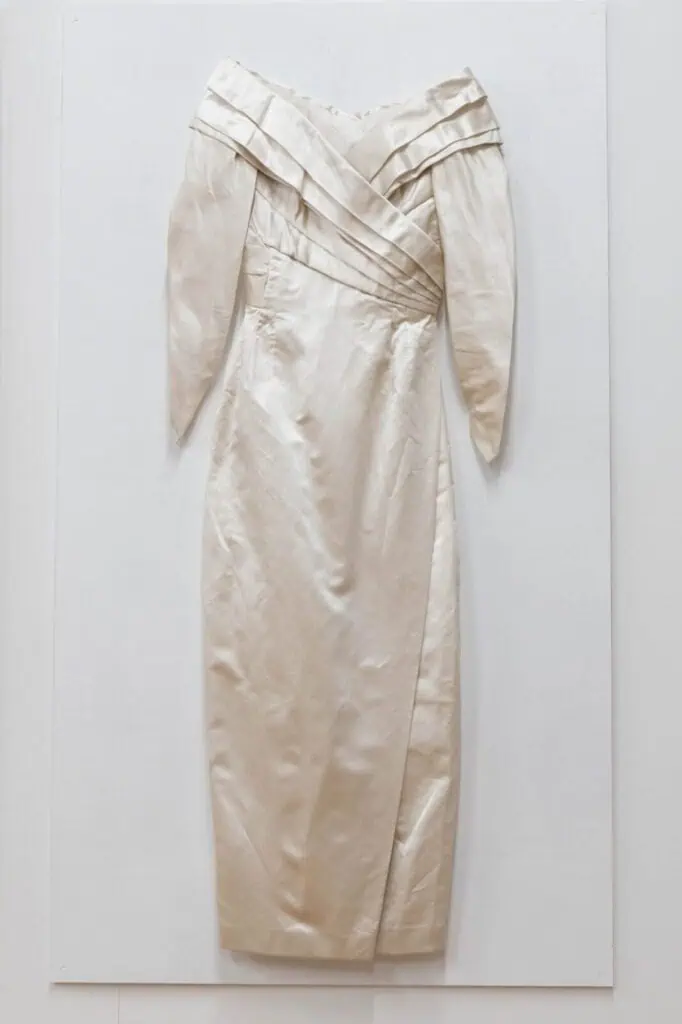
Alex Heard and Mack Pegram’s collaborative text-based paper dresses are the clearest example. Originally made for performances that mimic fashion runway shows, they now stand as artefacts of an event already over. Ataman calls them “relics of a performance that has long happened, displayed for us to view them in a post-performance format.”
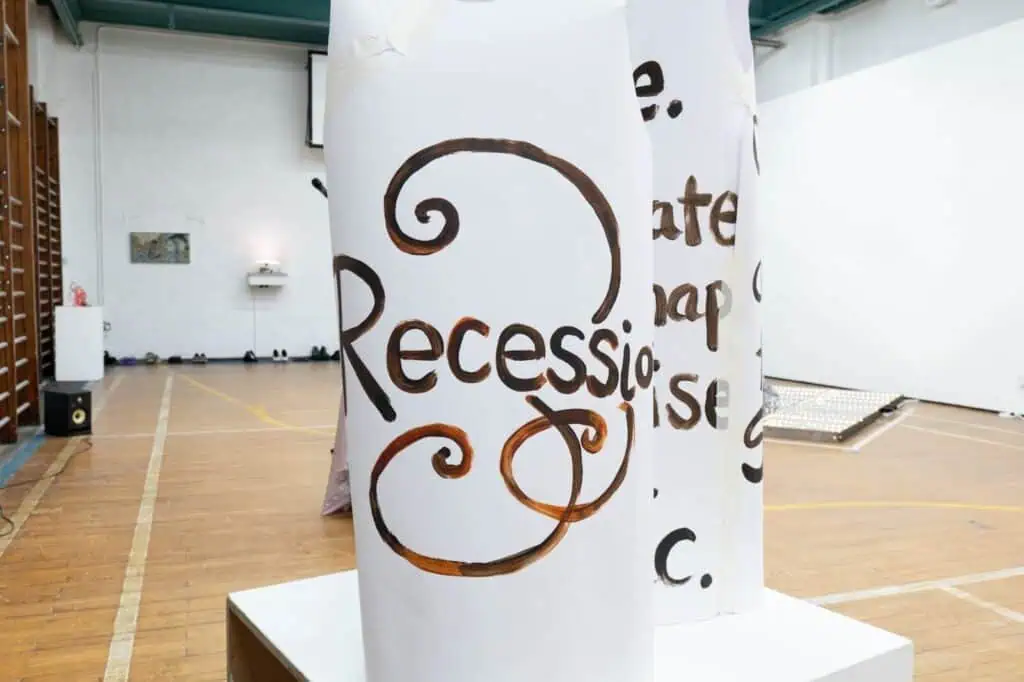
That afterlife gives the exhibition its melancholy edge. The stage remains, but the performers have gone; what survives are props, costumes, and the suggestion of an audience. In Ataman’s framing, this mirrors contemporary life itself: Identities staged online, selves performed for markets, and the constant question of what remains once the performance ends.
Ataman is clear that humour is not an evasion of seriousness, but a way of surviving it. “I used to take things really seriously,” he says. “Even my art practice was just like a lot of data about things… But then, at one point, I think I let go.” That release, they argue, was liberating. It opened the possibility of making “really fun, upbeat, light-hearted work” that could still carry a critical message about the present.
The reference to Glasgow’s Willy Wonka Experience makes that strategy explicit. The event was promoted through “really horrible AI advertisements,” Ataman notes, and families bought into a fantasy that never materialised. For him, the scandal crystallised a wider condition: “We question the truth of things every day… everything is decaying and it’s becoming a tragicomic flop.”
The exhibition’s title was initially going to be Willy’s Chocolate Experience London Edition, before Ataman decided it was “too on the nose.” Even softened, the reference gives the show its conceptual spine: A parody of failed illusion that becomes a commentary on the illusions we continue to buy.
What makes In Days of Heatwave more than a clever project is its relationship to place. This is the second exhibition Ataman has staged in the same Victorian school gymnasium, following Enfant Terrible, which explored childhood, authority, success, and failure. In the previous show, the gym was used to question social engineering in the context of a school, but here, the gym becomes a stage where all aspects of performance and world-building are deconstructed.
“I wanted there to be a hauntological element as a relationship with the show,” Ataman says, describing an ongoing dialogue.
That layering gives the show its best moments: Cartoon rivals briefly at peace; a lost nightclub rebuilt in light and projection; paper luxury goods treated with museum solemnity; a school gym recast as a cabaret. The exhibition does not offer escape so much as expose the desire for it and the strange, comic sadness of discovering that even our fantasies arrive slightly knock-off, slightly late, and faintly shimmering on the wall.