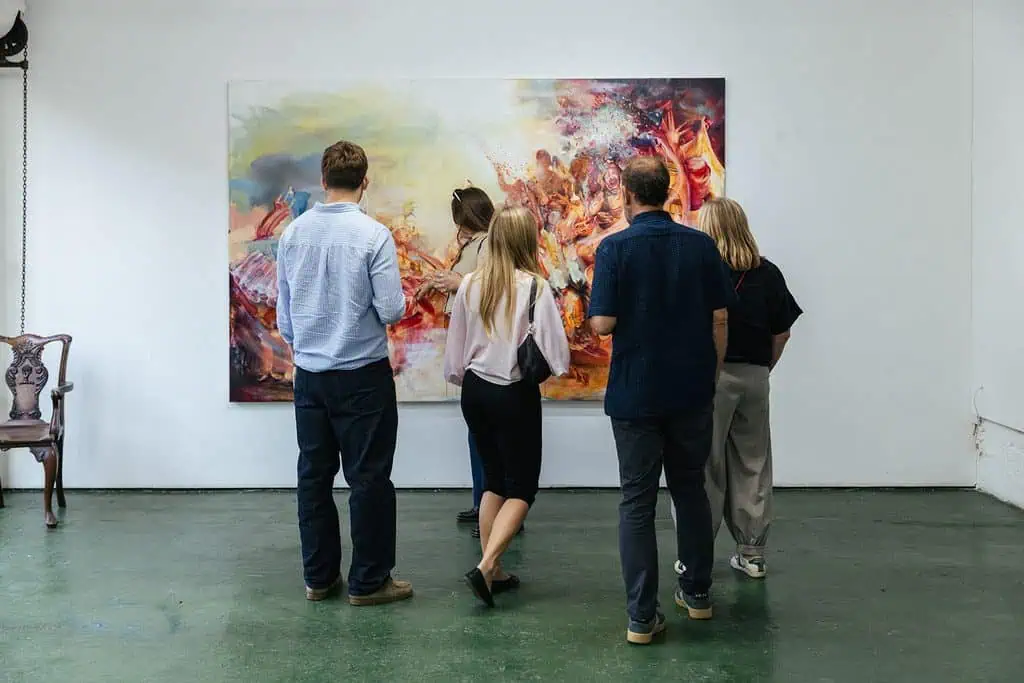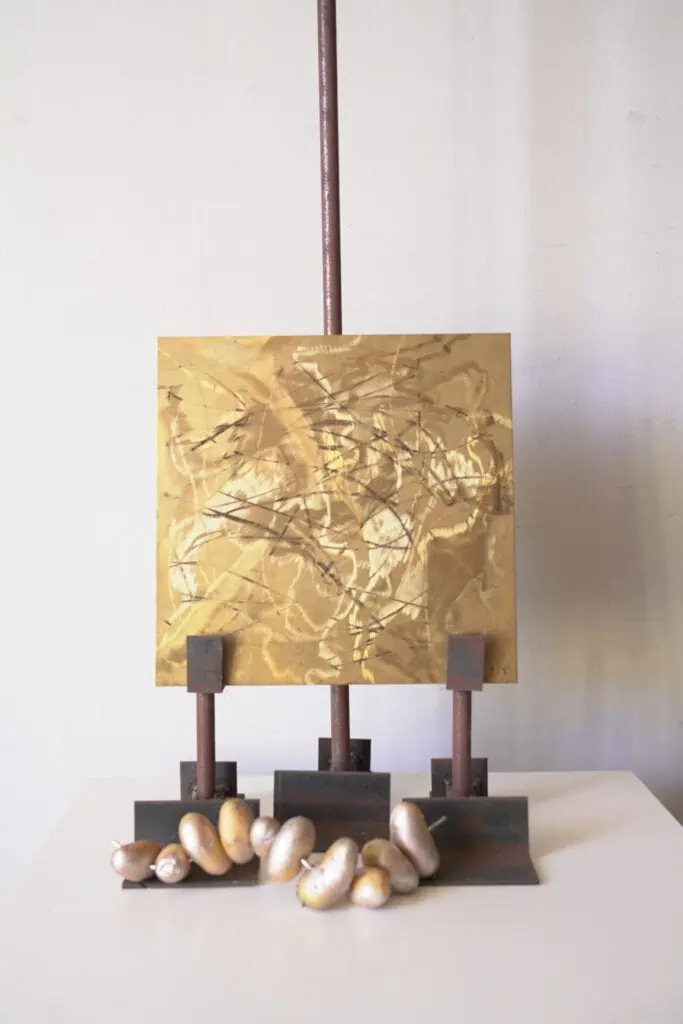
Hailing from the coastal city of Shenzhen, China, Xinyi Xu is a London-based artist who works with materials the average person may pass up as commonplace, defunct, or even waste. In this artist’s case, growing up by the push and pull of the oceanside, tides shifting inward at the coast, clearly influenced the trajectory of her practice.
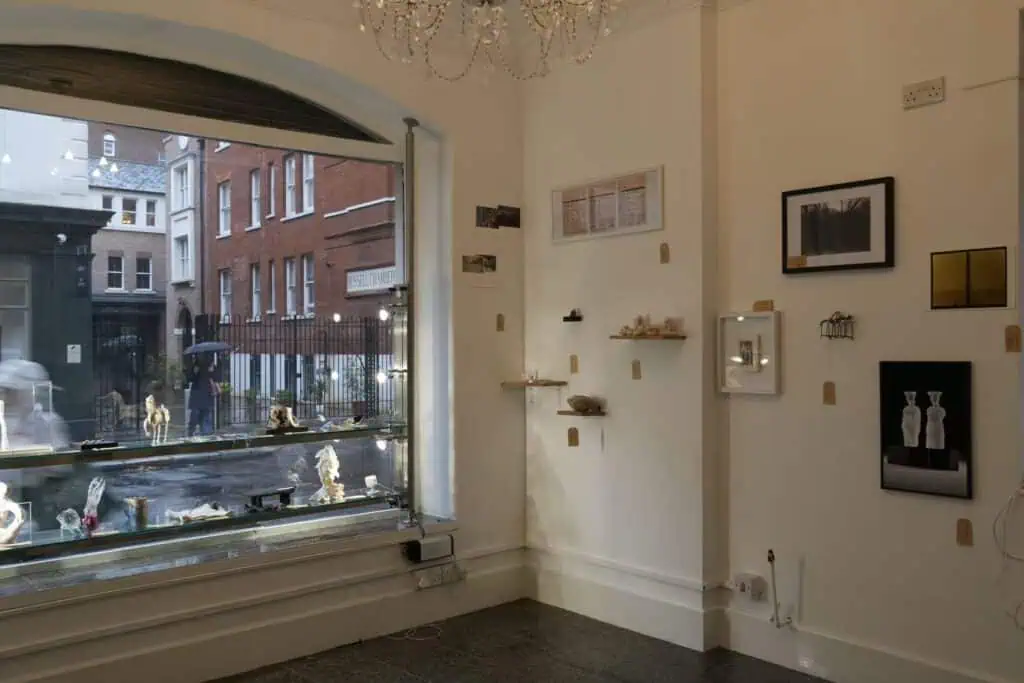
Many of Xu’s works arrive at the convergence of two realities. Seeking to find the connecting point between the precious and the ordinary, her art forces the viewer to interrogate what it really means to find a middle ground between steadiness and fragility. Xu hopes her work encourages viewers to dig into the ever-undulating senses of identity, belonging, and displacement – all of which are made present in her sculptural creations.
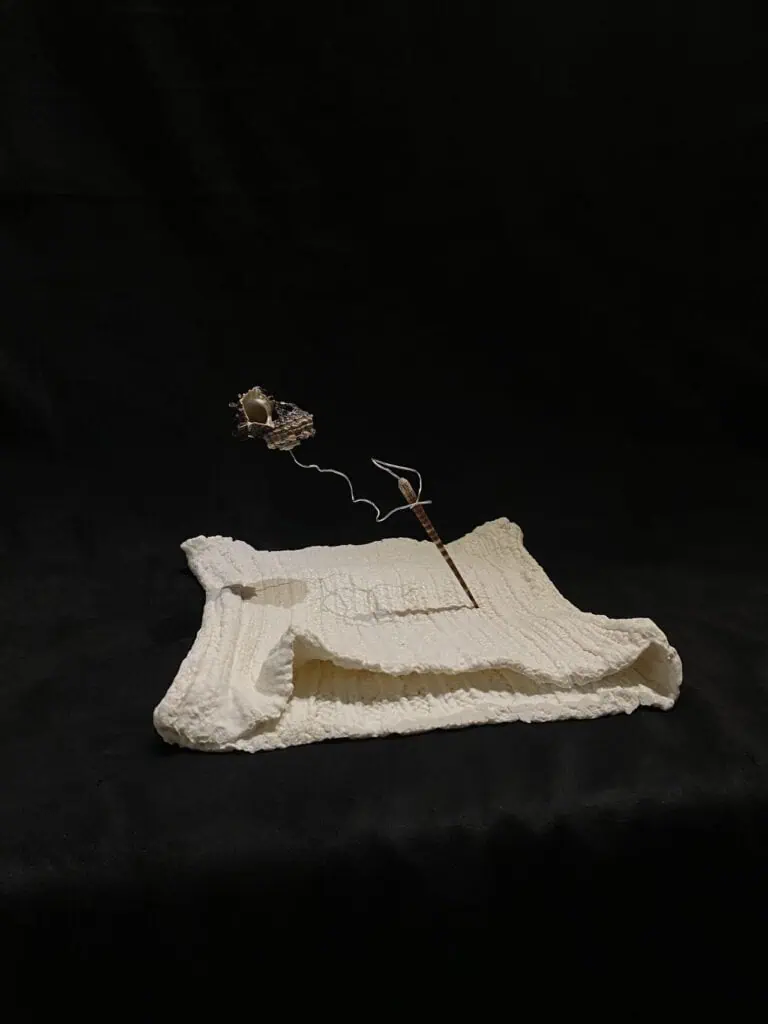
Xu’s materials range from everyday items like shells, bones, food, and discards, to stone and industrial steel. She works with these materials to give them a new lease on life, building each up to showcase narratives that they may not have otherwise been associated with. These unexpected connections encourage the viewer to question what it is they determine to be valuable, and why.
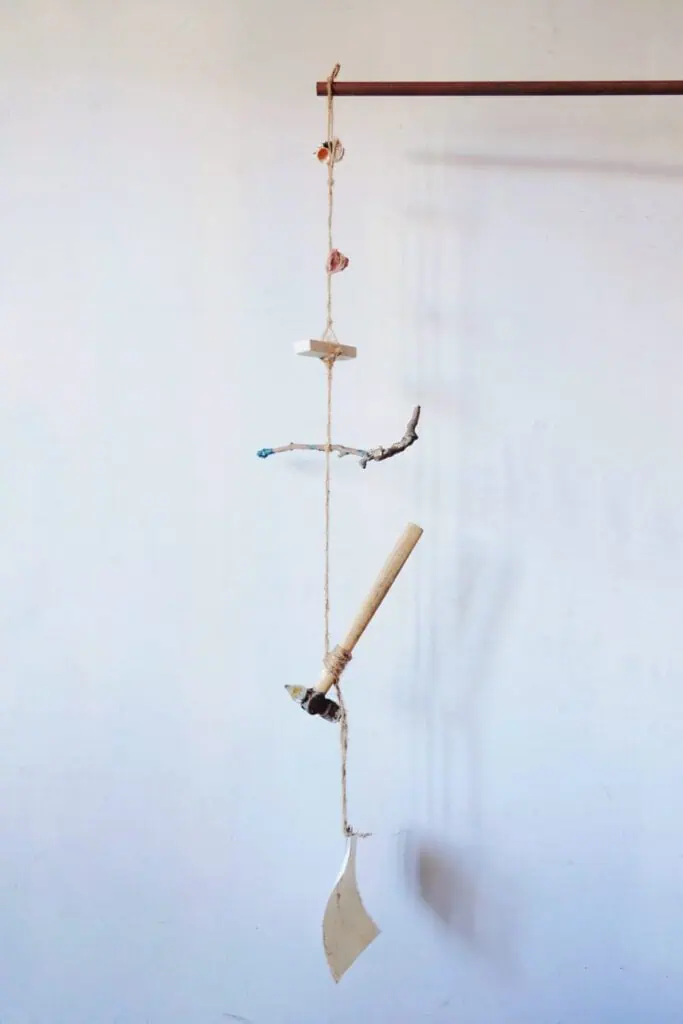
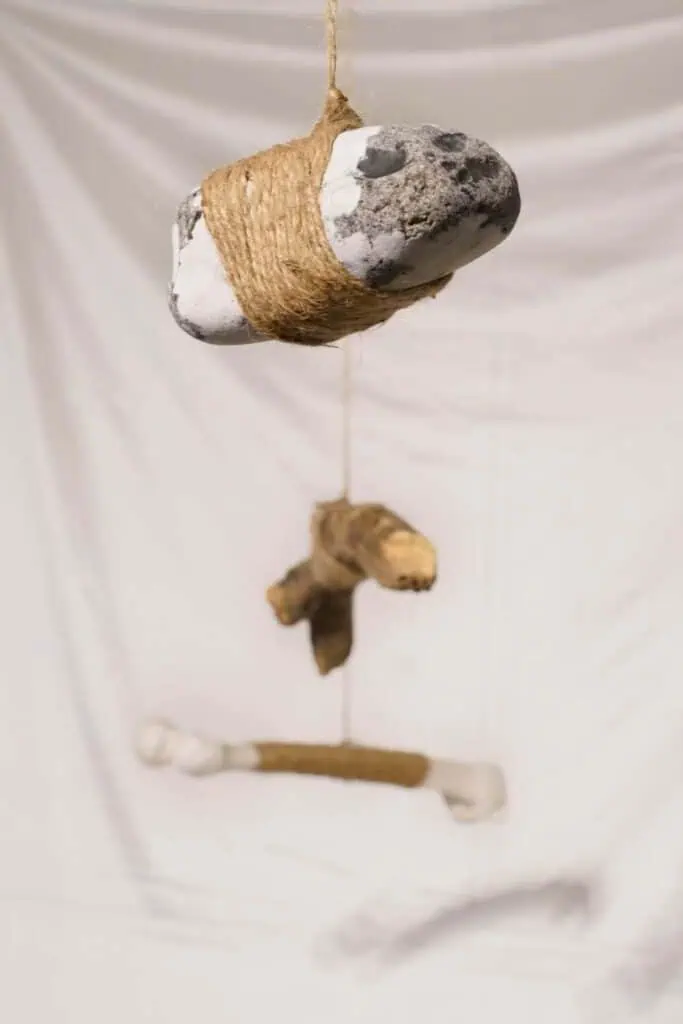
Entering a new home as a migrant is an emotionally loaded experience, with expectations harpooning in from all sides. You must make the most of every encounter, ensuring that every exchange is fruitful and productive. All the while, many migrants find themselves battling internal struggles. It’s easy to wonder if moving countries was the right decision when you’re constantly thinking of those you left behind.
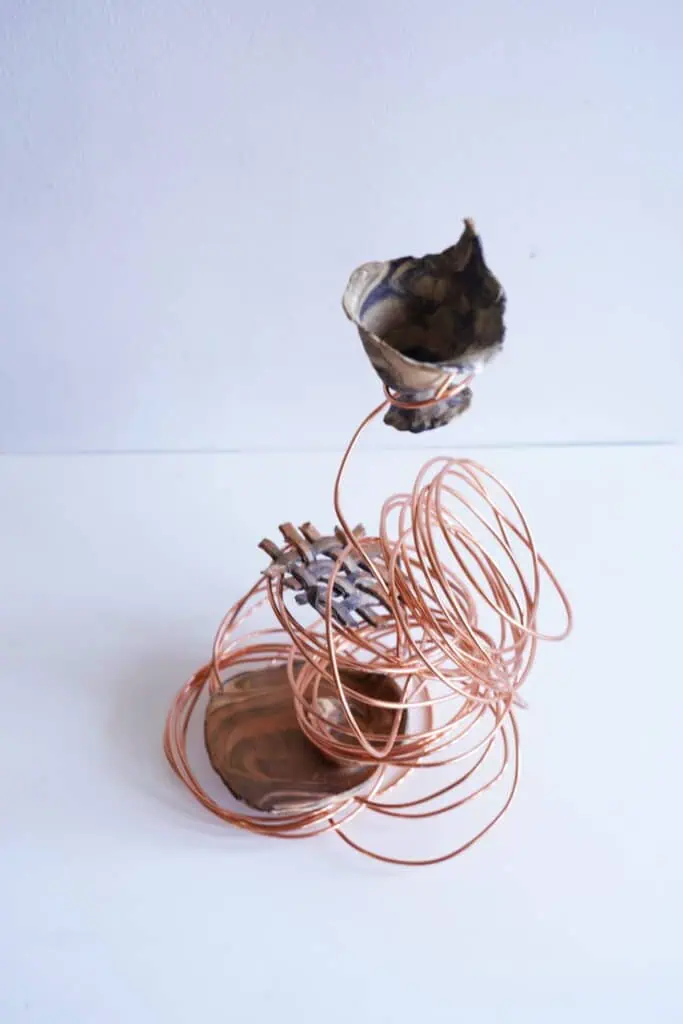
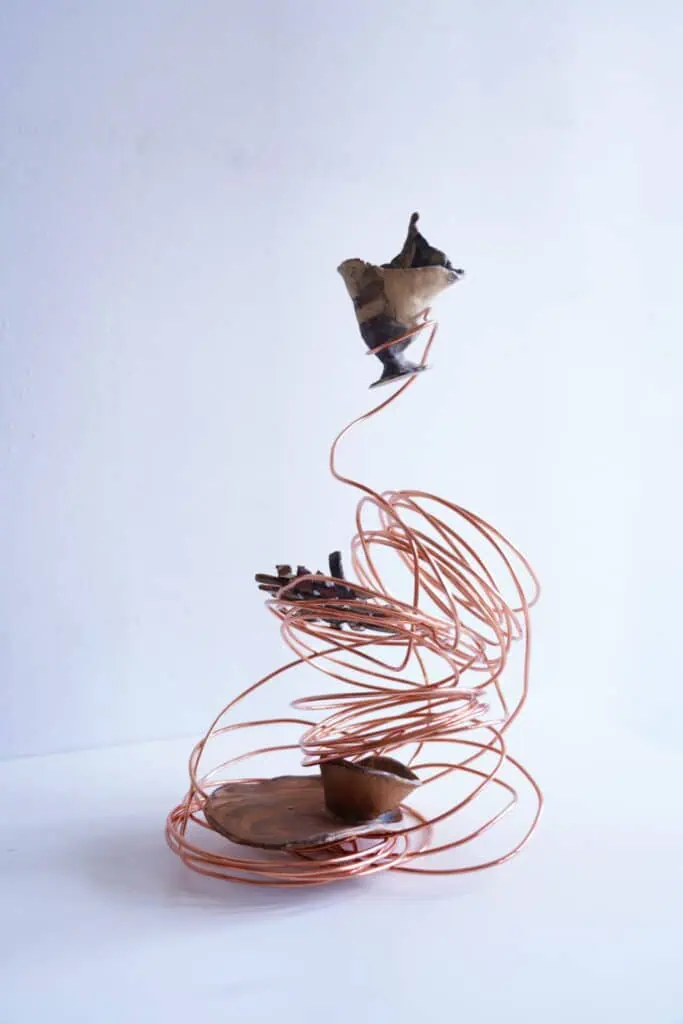
Xu’s piece, Siren’s Homeland (2024), expertly displays the complicated, difficult layers of this experience. Showcased by way of chicken wire, various seashells, dried branches, and plant remnants, this sculpture paints a difficult picture. The piece is inspired by the concept of the “song of the sirens,” which originates from The Odyssey, and presents a sculptural metaphor. Specifically, it calls into question the many ways we may second-guess ourselves into oblivion when it comes to making the “right” decision, ensuring we arrive at the “best” outcome. All the while, this seemingly never-ending cycle continues: The battle between external validation and internal expectation of the self.
We see a continued use of natural found materials in her sculptures Symphony (2025) and Symphony II (2025). Each sculpture is a mobile of sorts, employing found artefacts strung up by hemp cord. The ornaments adorning these structures are simple: Sticks, bones, and rocks. Items one may pass on the street. The first of this pair, Symphony (2025) seeks to showcase the harmonies between new life and nature’s pull. Specifically honing in on notions of permanence and transience, the artist beckons the viewer forward. The sculpture showcases the ways in which we are all connected. This concept is expanded on in Symphony II, which acts as an add-on to the original mobile. Now, the viewer bears witness to a seashell, a hammer, and gold leaf dappled paper, all strung up by the same hemp cord.
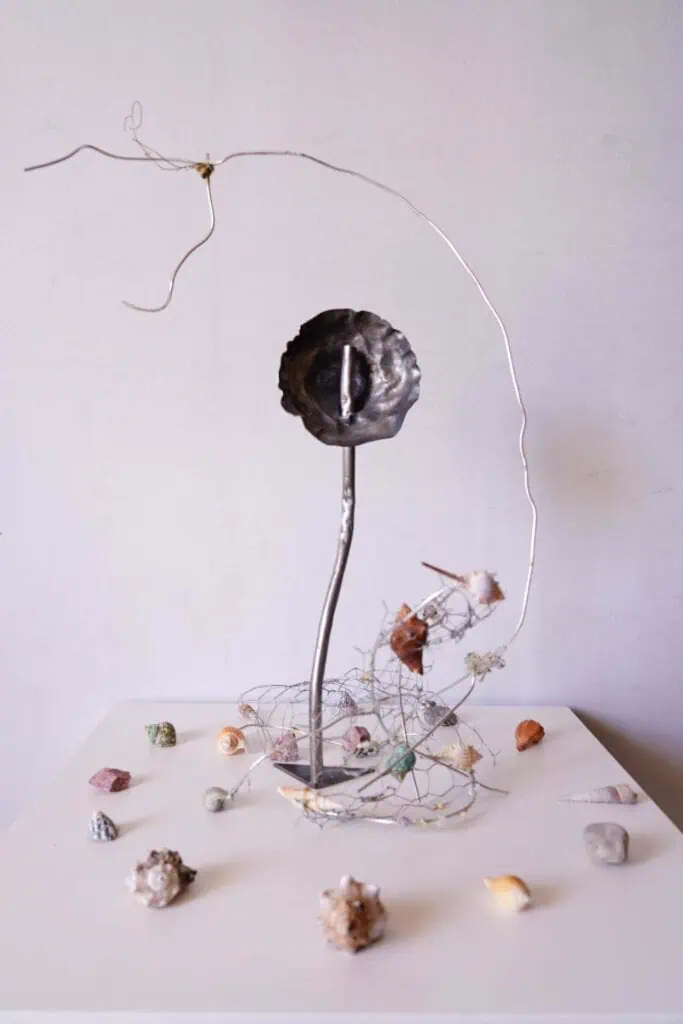
In Xu’s more recent works, we see somewhat of a departure. The artist continues her effort to create conversations between objects, extended into space, held without words. Here, there (2026) draws on similar techniques designed to exhibit a push and pull between materials and narratives.
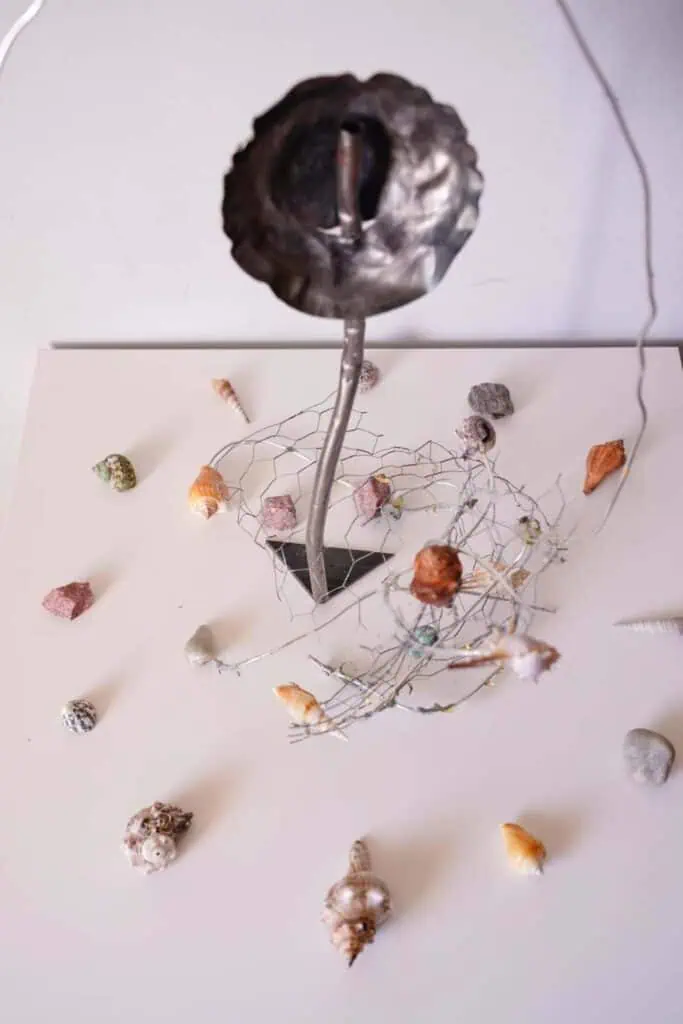
In this piece, however, Xu distinctly utilises heat-conductive copper wire. This is combined with terracotta clay, as well as copper paint, to build a temporary world where realities brush past each other but never quite touch. This sculpture becomes an invitation to view, but not to deconstruct. Here, we see the slippage of meaning. No matter how much effort is made to express one’s inner world, there is always a risk of misinterpretation the second it meets air.
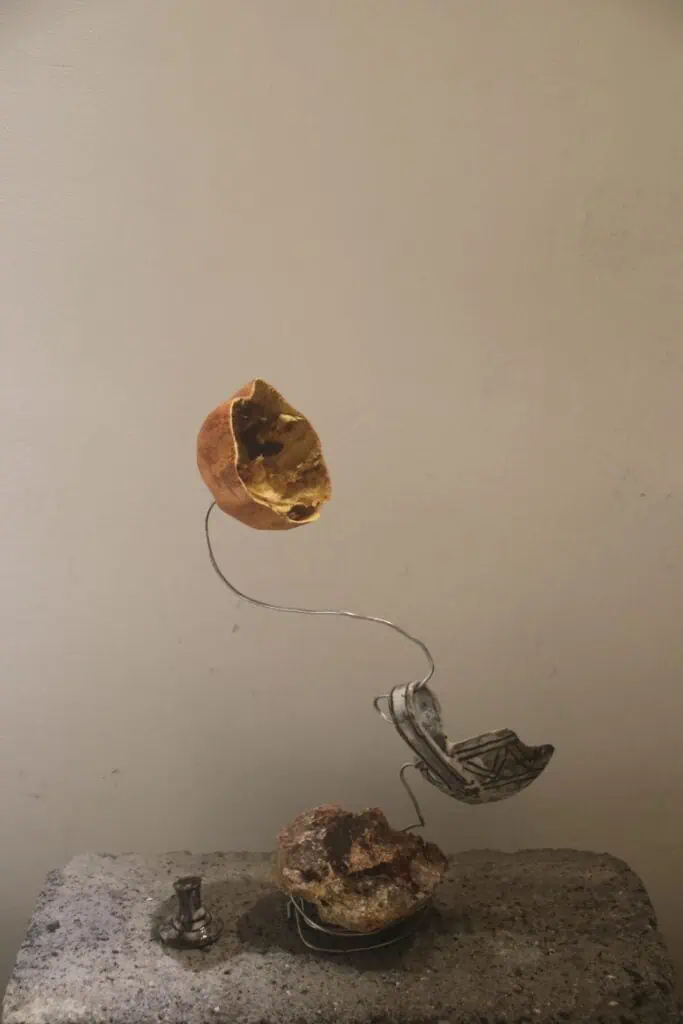
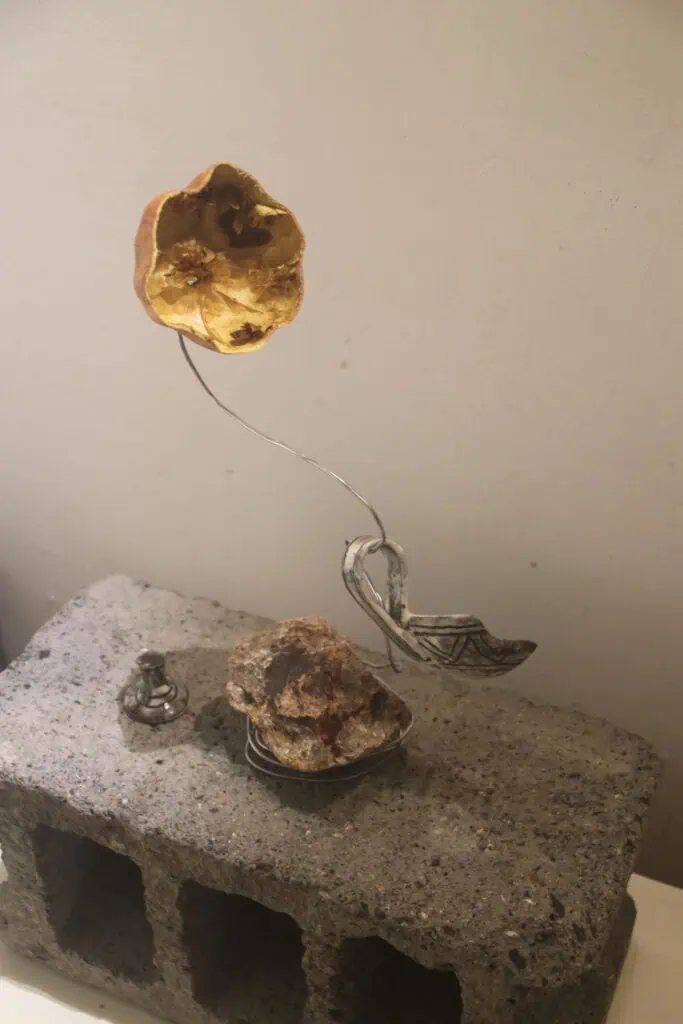
After the Fruit (2026) paints another sculptural image, but this time with food discarded in the form of pomegranate skin, metal, and stone. It plays further into Xu’s tendency to suspend found objects in unnatural contexts. The disused pomegranate skin becomes a symbol of what was. There is a necessary transformation that occurs when we seek growth and newness. Shedding must occur in the same breath that we seek new life. We cannot hold every key to every door concurrently. Therefore, the ability to let go becomes a necessary step in accepting growth where we least expect it.
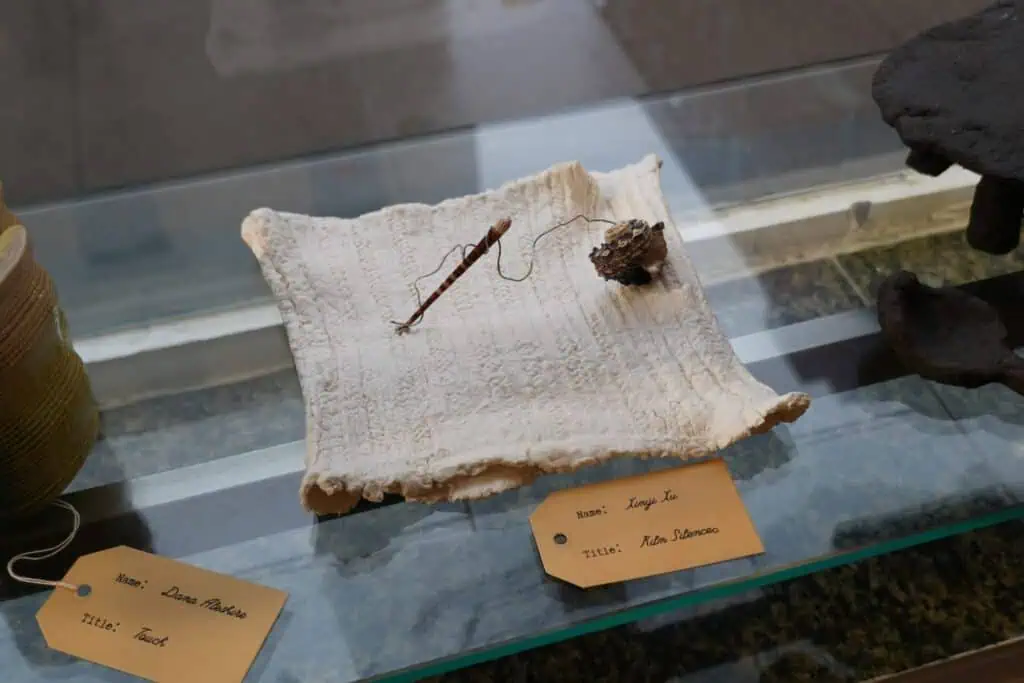
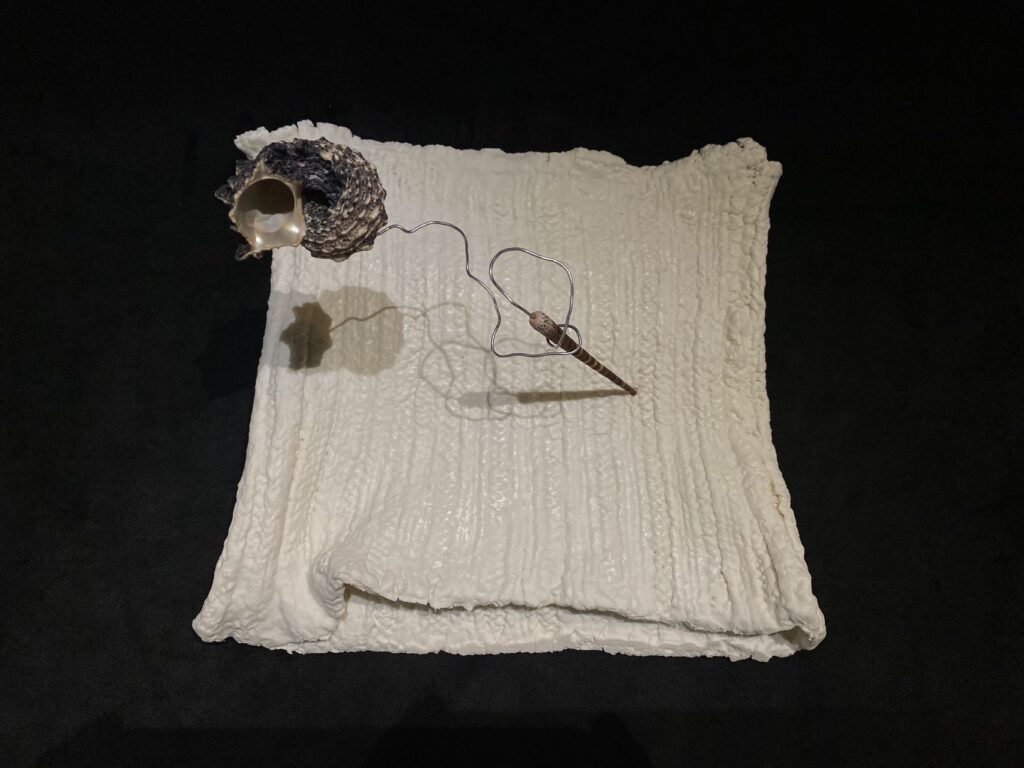
To take up space is to risk belittlement; to speak into existence is to risk willful misunderstanding. And yet, Xinyi Xu showcases, over and over again, that fear, which seeks to keep us confined, is not the aftermath of our choices, no. Fear is the wall itself, not what’s behind it.
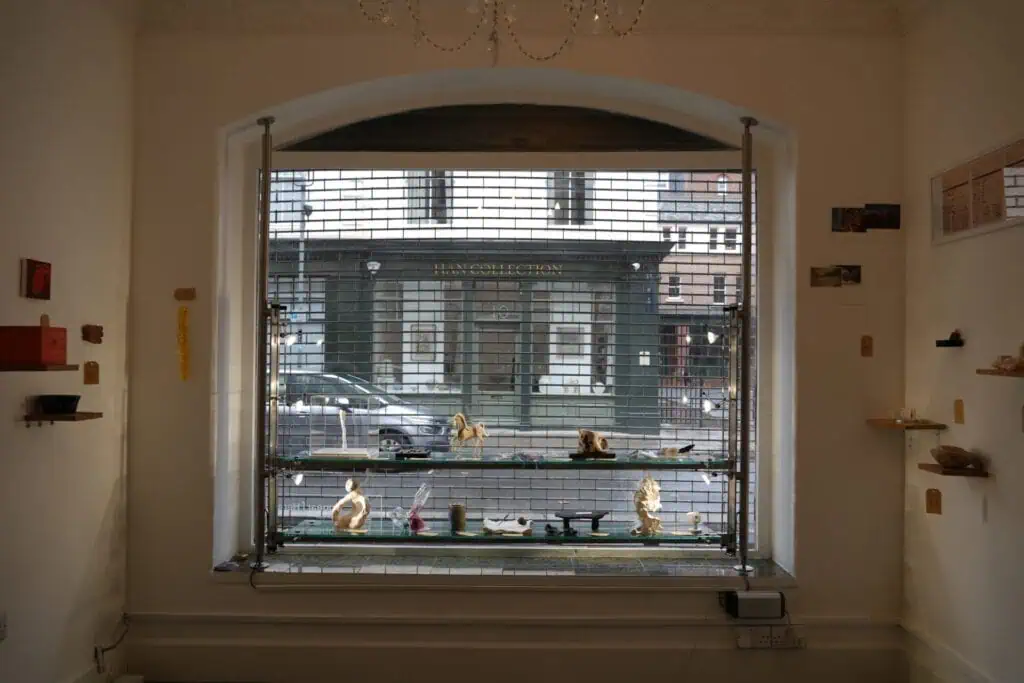
The Archive of Small Things took place at 15 Bury Space from 23 to 25 October 2026. Xinyi’s work Kiln Silence was also exhibited as part of the show.