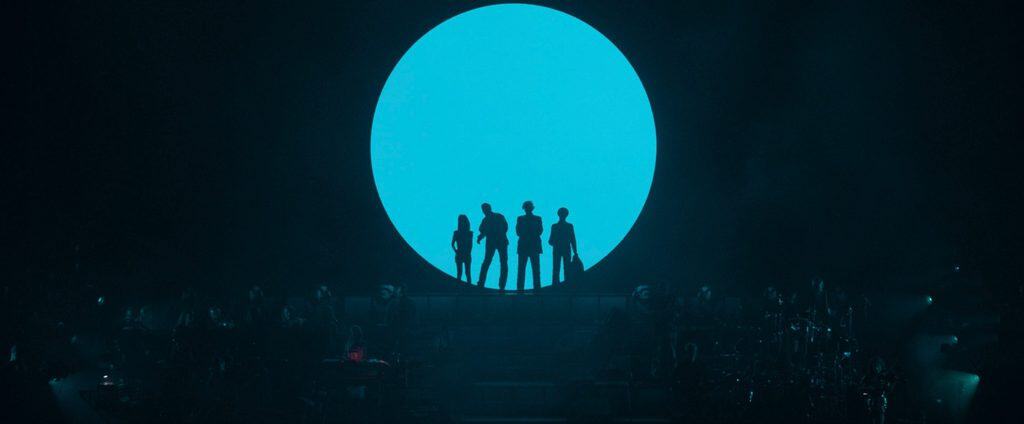
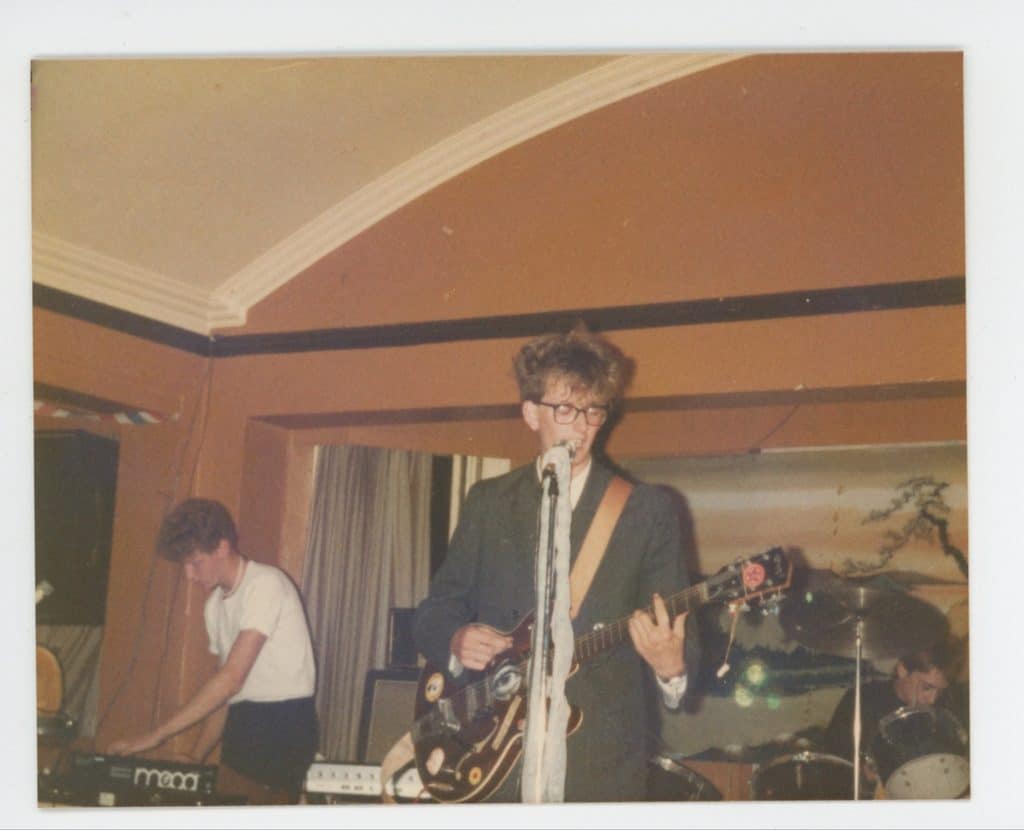
It’s the late 1970s in Sheffield, and Pulp, the legendary Britpop band whose legacy continues to endure nearly five decades later, have just made their debut.
It’s the 1990s, and director Garth Jennings, then an art student in London, first hears Pulp’s cinematic yet raw “Razzmatazz” on DJ John Peel’s iconic radio show. Jennings describes the encounter as an instant “falling in love,” and, completely captivated by the band’s gritty sound, he soon finds himself helming many of Pulp’s iconic music videos, such as “Help the Aged” and “A Little Soul.”
It’s 2026: Pulp’s career-spanning body of work, from dazzling archives of television appearances to intimate records of their daily lives, is threaded together by Jennings in the electric documentary Pulp: What Do You Do For An Encore?
I spoke with Jennings one early morning, he in Paris and I in Vancouver, and we dove into his journey with the band: his first encounter with the beautiful world their music gave him,working closely with the archive team on this documentary, and watching young people today fall in love with Pulp the same way he did decades ago.
Cold Magazine (CM): Before we get into the film itself, can you talk a little bit about how you got into Pulp? What was your first memory of encountering the work of the band and at what point did you fall in love with their music?
Garth Jennings (GJ): Oh god! It was truly falling in love with them because with some bands, you sort of only get into it slowly. But with Pulp, it was a complete love affair.
I first saw Jarvis when I was at art school. There was a coffee bar close to where my school was, and I remembered seeing this guy in a suit waiting tables. I remember asking everyone: “Who was the guy in the suit?” They told me he was friends with the owner, and he just came in to help out today. That blew my mind because he was so extraordinary compared to everyone!
A few years later, I was listening to an end-of-year radio show, hosted by DJ John Peel, who’s also mentioned in the documentary. He rounded up all the best songs, and Pulp was in there with their song ‘Razzmatazz.’ As soon as I heard it, I just played it to death over and over again. From that point on, I became the biggest fan. Luckily, after art school, I got to make some music videos for them, and we stayed in touch.
Now, years and years later, I got to do this documentary, and Jarvis also got me to direct the live shows, which is just pure joy. It’s been truly one of the greatest joys of my career. I have loved every minute of it!
CM: As you mentioned, you’ve worked with them before, from music videos to live shows. But with this documentary, you’re working with such an extensive body of archives: photographs, VHS tapes, and radio shows, which beautifully intertwine with the footage of the live show they did recently. How did you approach using that archive and threading a narrative throughout this film?
GJ: I received so much help because there’s an incredible amount of material out there. When you’re dealing with a band of this calibre, who has been around for so long with such a massive archive, it’s a lot! It’s a lot like moving houses. If you’ve ever done that, you know exactly what it’s like to look through your old photographs. It’s a nightmare because you immediately start going down a memory hole and getting completely caught up in the past. Now, imagine that on a scale this massive, with multiple members in the band. Everyone has their own personal archives, on top of everything that exists on the BBC, foreign television, and beyond.
But I had such an incredible archive team. They were amazing at helping us gather these materials and transfer them. From there, we went through the collection piece by piece to pull out everything we loved and applied it to the structure I’d plotted out. We started building it chunk by chunk, while sketching out what the voiceover would be like, which Jarvis has completely made his own.
It was a playful project and quite different from what I’ve done in animation. When I’m working on an animated film, it’s so meticulous, and each stage must lead perfectly to the next. The process of making this film has been much more playful and spontaneous. Having access to this entire archive allowed us to really play and experiment. Then, right in the middle of it all, Pulp decided to record a live album. Everything was loose and wonderful – I can’t even believe I’m talking to you right now with the documentary completely done.
CM: Was there a specific piece of archive material that made you go, “Wow, I didn’t know that about them”? Or perhaps something that completely changed the way you looked at the band and approached sketching out the narrative, given how open and fluid your process was?
GJ: I don’t think there was a specific piece of archive material that changed my feelings about the band, but diving back into their beginnings and early history really made me appreciate just how extraordinary they were. In the documentary, we went into the story of Jarvis’s accident falling out of a window and recovering in the hospital, and what that experience ultimately led to in terms of his creative journey. That part really resonated with me. I was devastatingly ill back in my twenties, and it was a massive turning point in my life.
Looking back from the age I am now, I realise, “Gosh, there are certain patterns that are deeply familiar, not only to me but to many people I know.” There is always that moment in life where you get crushed, and it feels like the absolute end of the world. Yet, if you can find it, that setback can actually turn out to contain a little shard of opportunity or adventure that is exactly what you needed. I know it sounds cliché, but it is absolutely true.
So, I found looking back at Jarvis’s story reassuring and deeply moving. The emotions in the songs… I just get hit so hard by music when I love it. When you have that kind of love for a song, and then you see the person perform it while knowing everything that led up to that exact moment, it’s just incredible.
CM: There’s a whole history exuding out.
GJ: Totally! I feel a bit like this when I watch the Olympics: you see the swimmers all dive into the pool, and you know every single one of them has spent a lifetime training for this exact moment to be the fastest person in that water. I find it incredibly moving, even if I know nothing about the sport itself. The simple act of watching someone try to do the absolute best they can with the gift they’ve been given, that is a compelling story to be a part of.
CM: One of my favourite moments from this documentary is the conversation between you and Jarvis in the beginning…
GJ: Was that with me and Jarvis in the taxi?
CM: Yes! It was such a great start to the film.
GJ: Oh god I almost forgot that it was there! [Laughs]
CM: That conversation really establishes who Jarvis is leading into the film. There’s this moment when he talks about seeing all these young people and new generations coming to their concerts now. He mentions feeling both touched and mystified by it because the music is able to ripple down through so many generations. As a fan of Pulp and their long-time creative collaborator, how do you feel watching young folks experience that same swell of emotion that you did when you first fell in love with the band?
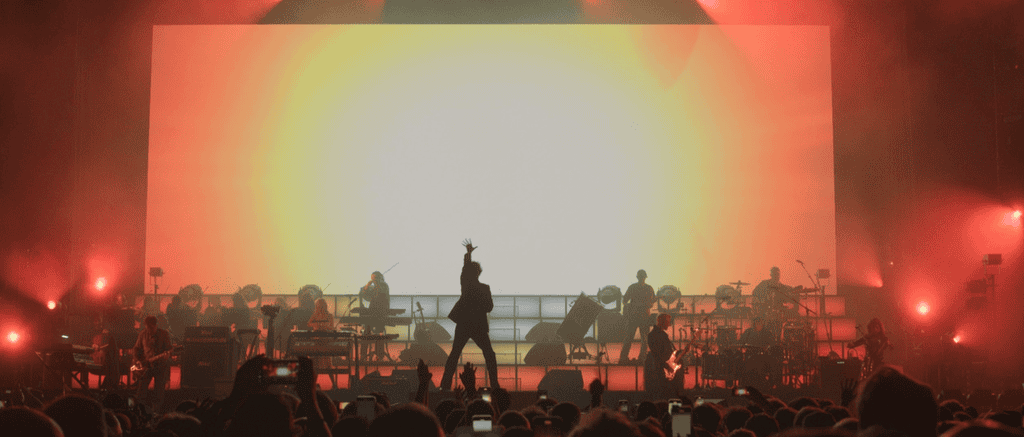
GJ: I love it! I couldn’t believe the front row and the whole audience. The thing is, when we turned our cameras around while taping the live concerts recently, we could only see the front two or three rows, and we just saw all these young people dancing to the music. For me, it was like, “How is this even possible?” I honestly thought we’d just see a lot of men my age standing around with their arms crossed.
But it was beautiful, and I think part of the reason why I still love them so much and want to be a part of this is because it still feels like I’m being swept up in a journey that the world wants me to embark on. It’s so incredibly exciting. It’s an amazing feeling knowing that we’re completely in sync with so many people.
I have four kids, and seeing my own children completely resonate with this story is something else. If I had to boil it down, I think it has something to do with authenticity and uniqueness that really speaks to people, especially right now. But that’s a good question: I’m not entirely sure.
I love how Pulp is a band that can be so gritty and authentic, yet still put on a dazzling, fabulous show. That combination is just out of this world. I’m realizing now that I don’t have a perfect articulation for it; it’s just all in my body, and I just feel it.
CM: I just have one last question before I let you go: having moved in and out of animation, narrative films, and now doing this documentary, has your approach to filmmaking shifted?
GJ: It has made me trust myself more. In the past, I think I was always very enthusiastic, but also a bit nervous about messing up. Now, I completely trust my intuition and my gut. Even if I screw up, I know I’ll be fine. I’ve been through so much over the last few years, so making this film and doing their live shows has taught me to completely trust that everything will work out. The film has exceeded my expectations because I’ve truly learned to trust in myself.