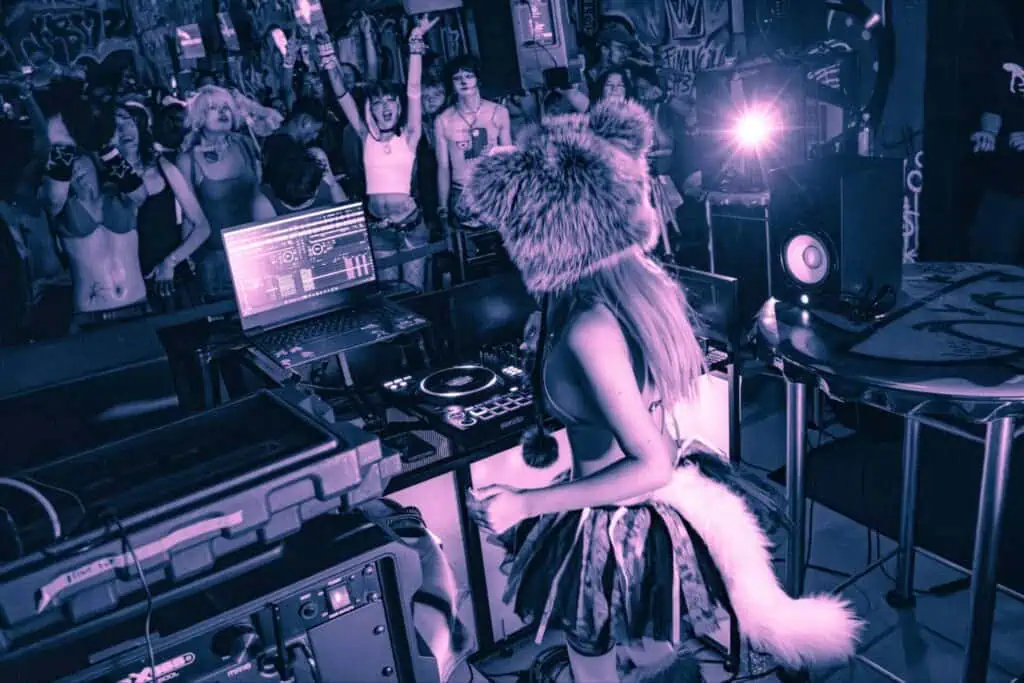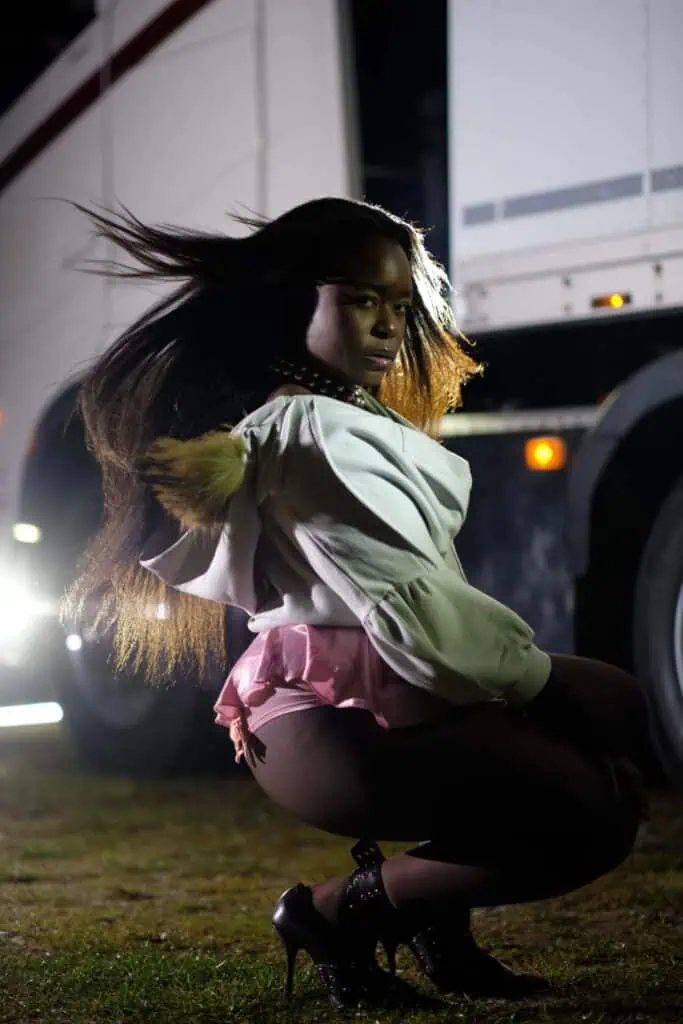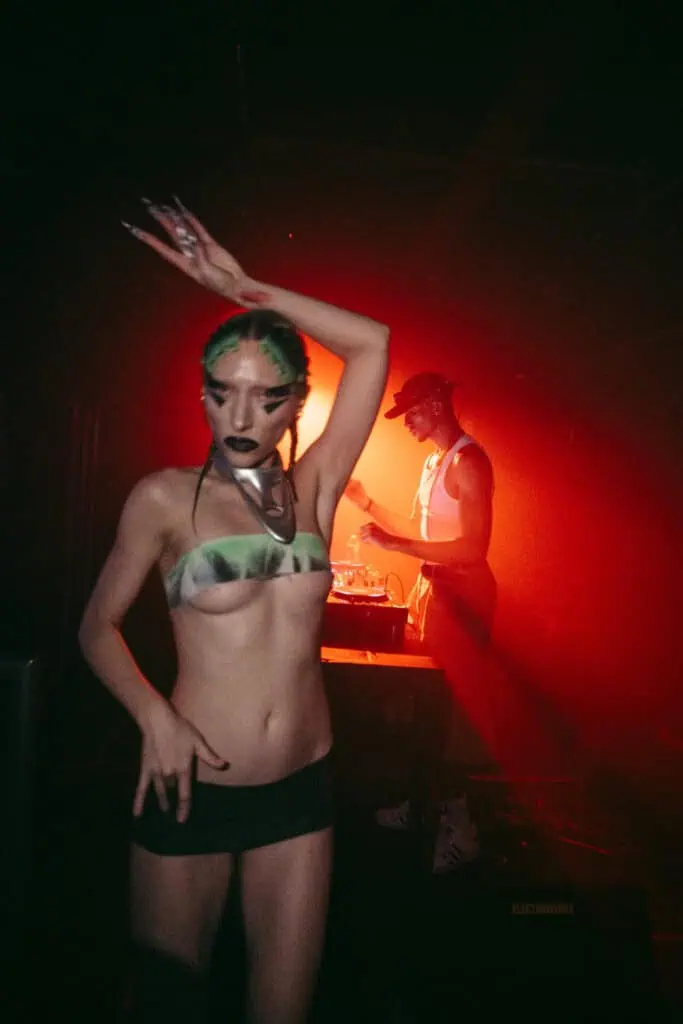
The furry fandom can be traced back to the 1980s, when its members mobilised through circulating self-published zines. Comic and furry conventions soon provided a physical space for members of the fandom to meet and express shared interests in person. With the advent of the internet, furries could now socialise at scale, organise themselves, and become a permanent fixture of cyberspace. In 2026, however, the furry has left its obscure pockets of the internet. What once belonged to a relatively sealed-off digital corner is now turning up in contemporary music and nightlife.
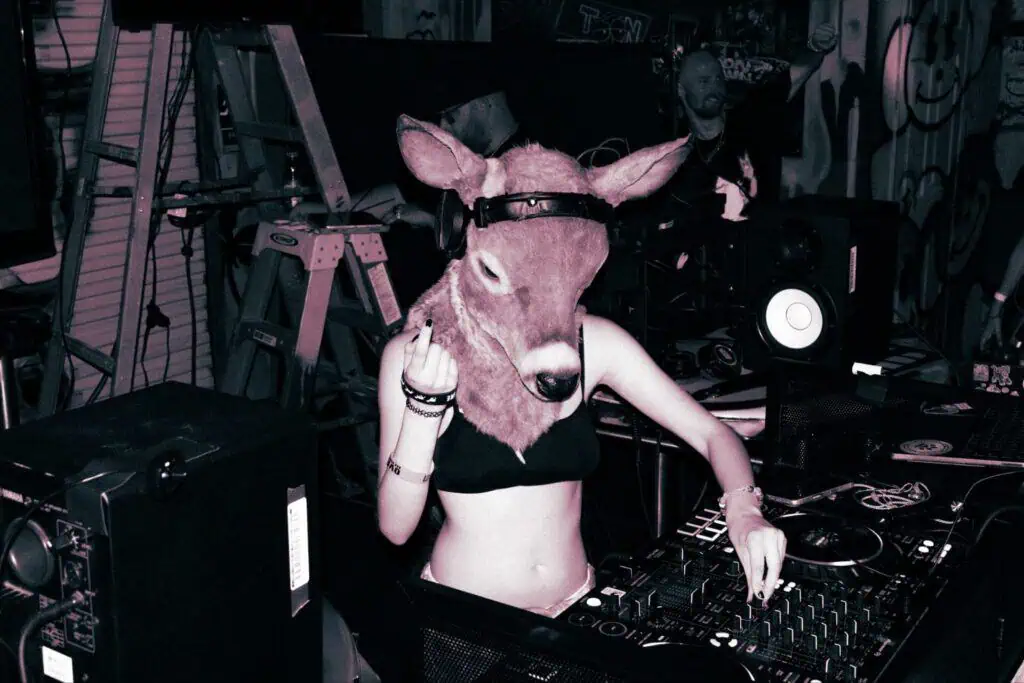
Traversing meme culture, “internet music,” and contemporary nightlife, furry aesthetics are appearing with increasing frequency in the physical world. German DJ horsegiirL, aka Stella Stallion, performs exclusively with a prosthetic horse mask, paving the way for young women in the fandom. Ninajirachi sports furry ears, a tail, and paws. Collina Strada’s ready-to-wear AW23 show featured models with prosthetic makeup that transformed them into humanoid dogs and dolphins, whilst others wore pointed ears and horns.
Furries have broken containment. Within the fandom, this migration into wider culture has been a source of much contention and discourse. Furry spaces have historically offered refuge for queer, disabled, and otherwise marginalised people, and the arrival of a broader audience has inevitably raised the question of who, exactly, is being welcomed in. But perhaps the more interesting question is: What does it mean to go “mainstream” today, and what does a subculture really look like in 2026? The boundaries between pop and fringe have become increasingly porous, and fandom becomes more appealing in a world where privacy and personal freedom are becoming progressively scarce.
Anonymity has long been part of the allure of club spaces and nightlife, and masking takes it further by allowing people full creative freedom to experiment with identity, personal branding, and performance. By going anonymous, fandom allows the self to be something mutable, interpretive, and capable of transformation at any given moment.
I go on my phone and see Martin and Hamzah from Slushy Noobz barefoot on the street, eating Minecraft Crumbl cookies in furry masks. Somewhere else across the digital pond, Ninajirachi is debuting a pair of oversized custom paws in an interview about her new dubstep record, I Love My Computer – an album about screen addiction and an increasingly disconnected society. The record moves through hyperpop, EDM, trance, and complextro, with song titles like “iPod Touch”, “F*ck My Computer” and “ฅ^•ﻌ•^ฅ”.. In other words, a contemporary and personal portrait of growing up online.
To make sense of this new landscape of furry fandom, COLD spoke to New York-based DJ Doecaine and Los Angeles-based DJ purityleech about the underground furry music scene, surveillance, and online authenticity.
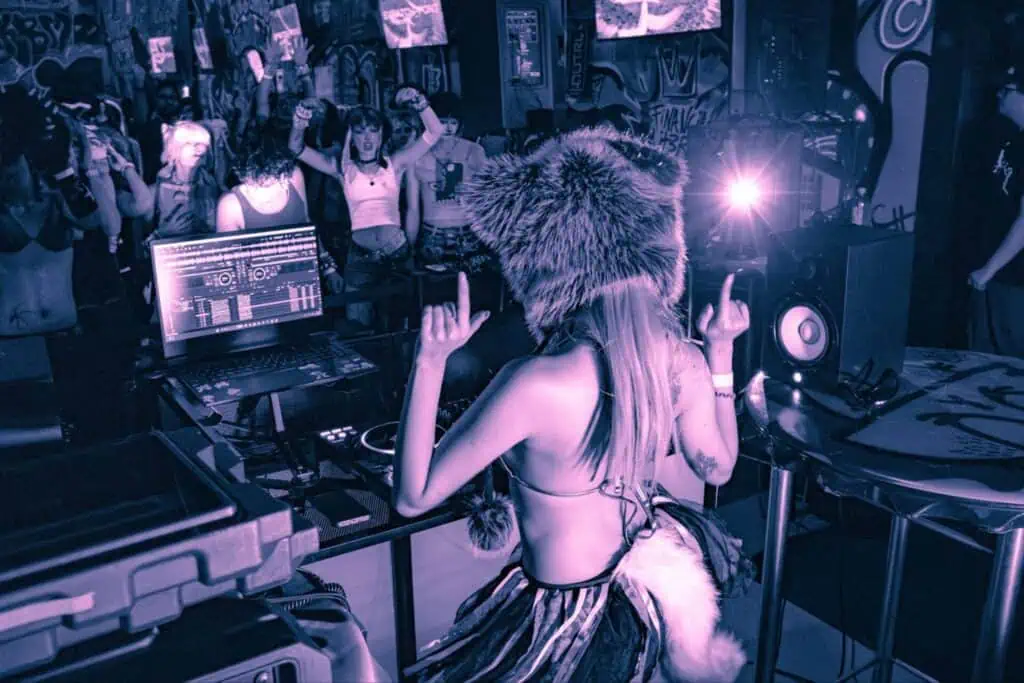
The COLD Magazine (CM): Musicians have long used masks, stage names, alter egos, and other forms of constructed identity. How do you see the fursona in relation to things like drag, stage personas, or pseudonyms?
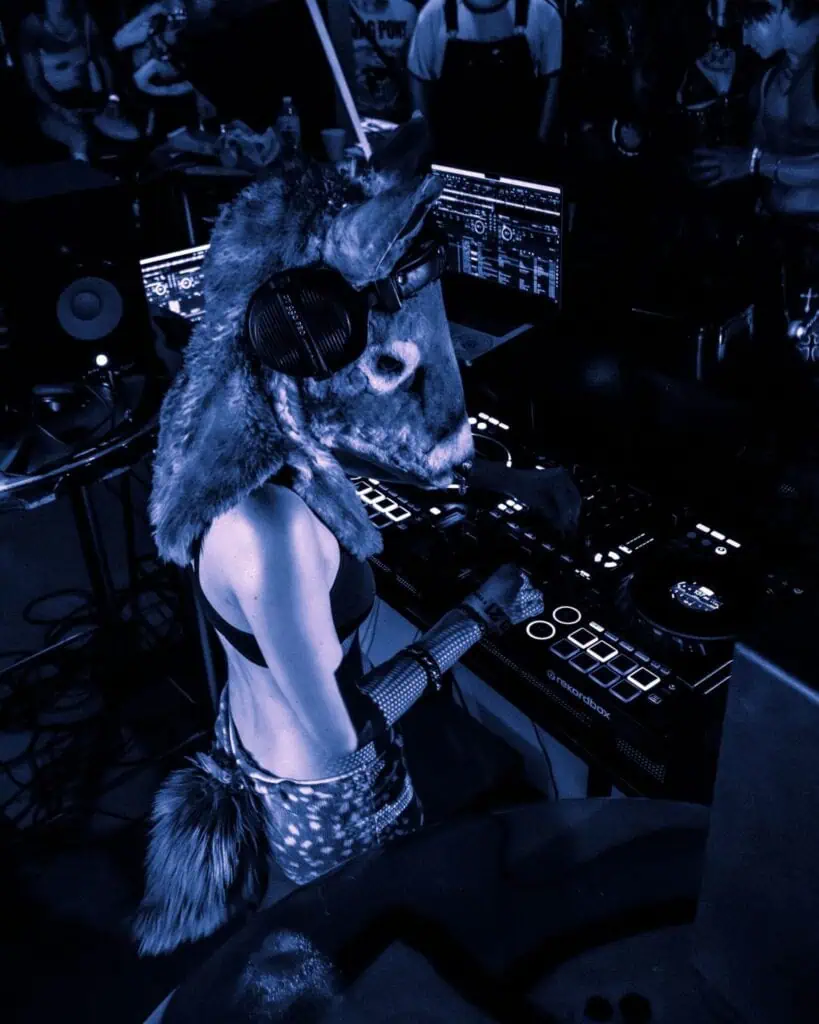
Doecaine: It’s just really fun and different, and alternative styles are becoming way more popular. Everyone wants to feel like themselves – social media puts too much pressure on us to label ourselves. The Doe fursona is really feminine; the visual information can be immediately recognised, as deer are hunted similarly to how women are treated in society.
The Doe is a way to reclaim that. When you have the head on, you can be whoever you want to be – you get to escape and build community, and let your guard down. It gets really playful and vulnerable; the idea of unmasking in front of someone is akin to drag. There’s a level of trust there.
CM: As anonymity becomes harder to maintain online, what happens to identities that were built around anonymity or pseudonymity? How do surveillance and the increasing visibility of our digital lives affect that?
Doecaine: I never really had a big online presence before this project, but there is always a fear that someone is looking harder than I expect. There’s a sort of countdown, as I’m mentally preparing myself to get doxxed. I come to the venue in one outfit and wear the Doe head, but change into another outfit as a leave.
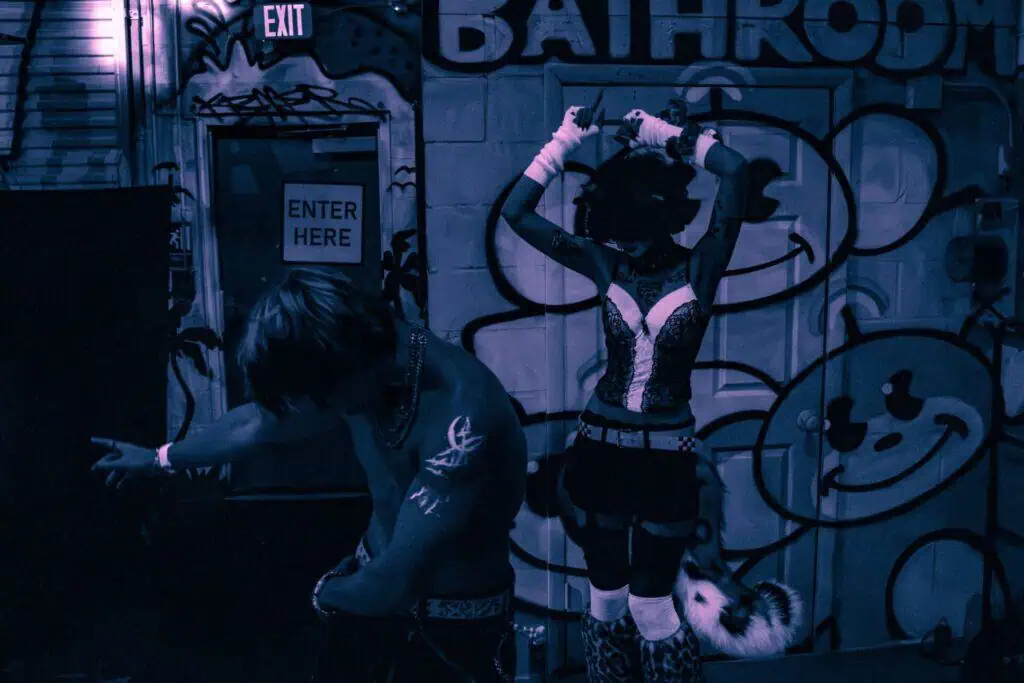
CM: What do you think is driving the crossover between the fandom and music, nightlife, and alternative fashion, and what does it offer those scenes?
Purityleech: It is inherently such a social experience; it’s about coming together. The newer generation of furries grew up online, immersed in genres like dubstep nightcore, happy hardcore, and hyperpop, etc. Hyperpop is a queer-led movement, which is a parallel to the furry community. Fashion has always been an essential part of subculture, and being involved in the furry rave scene exposes you to a range of new styles and ways of expression.
Having that layer of separation between your personal life and your fursona can open doors to more authentic expressions of self through fashion. You can choose to reinvent yourself whenever you want. The community encourages complete freedom of expression and gives full agency and discretion to present as one feels most comfortable – almost like a blank canvas.
CM: What do you think people misunderstand most about the furry subculture, and what would you want them to know about the community?
Purityleech: People are pushed away from it almost by design, but I think that if that’s the case then it isn’t necessary for them to be immersed in it. We’re not begging to prove anything to anyone – the doors are always open for anyone who feels called to them. There’s more exposure to furry than there ever has been in the past. In an era where genuine social connectivity is becoming more valuable, I think that furry spaces will flourish.
Ultimately, this leads to a wider conversation about our understanding of subculture. Culture has undeniably changed dramatically because of the internet, and as a reflection of that, traditional definitions of subculture are no longer applicable to its current form. The desire to create boundaries, identities, and communities outside of the mainstream is deeply human. Although the Teddy Boys have often been credited as the genesis of modern subculture, throughout history there have always been markers of rebellion – whether they be fringe religious movements or other forms of social defiance.
To suggest that subcultures are therefore dead risks coming from a misanthropic assumption that people no longer have the desire to organise themselves around alternative identities and interests. What has changed is not necessarily the impulse towards subculture, but its architecture. The internet has given subculture a new form and a new visual language, allowing people to find one another across geographical boundaries, learn from each other, organise collectively, and challenge misinformation. Subcultures today can also be more decentralised and difficult to see from the outside, meaning that mainstream media would fail to recognise them as subcultures at all.
The furry fandom can be understood as evidence of subcultural evolution. The underlying human desire to find a community, construct identities, and create something distinct from the mainstream remains remarkably consistent. The question is therefore not whether subculture still exists, but whether our understanding of what a subculture can be has kept pace with the culture itself.