
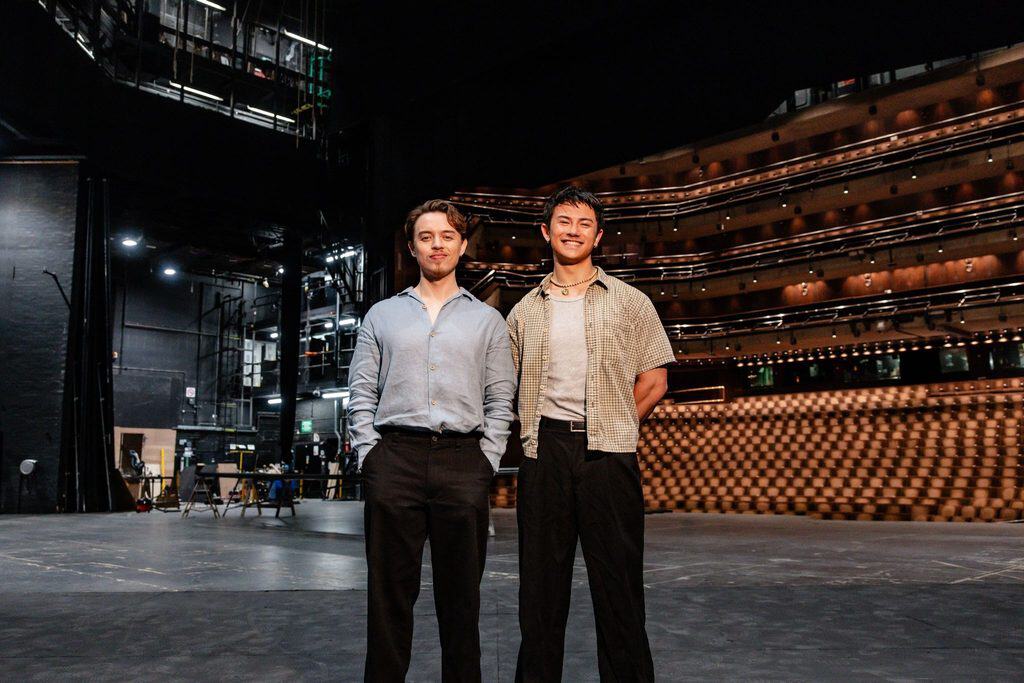
Write a name, picture the face, and forty seconds later they are dead.
The Barbican production of Death Note has all of that out in the open straight away. Sound comes at you from every side of the room, a school student is singing about how many criminals walk free while his ethics teacher tells him off, and I hadn’t even got comfortable in my seat yet. I never did get comfortable, in the seat or otherwise, and I loved the production for it. I was still turning the thing over in my head on the tube home. What is a god of death allowed to feel, and is having no feelings at all the only way to do the job?
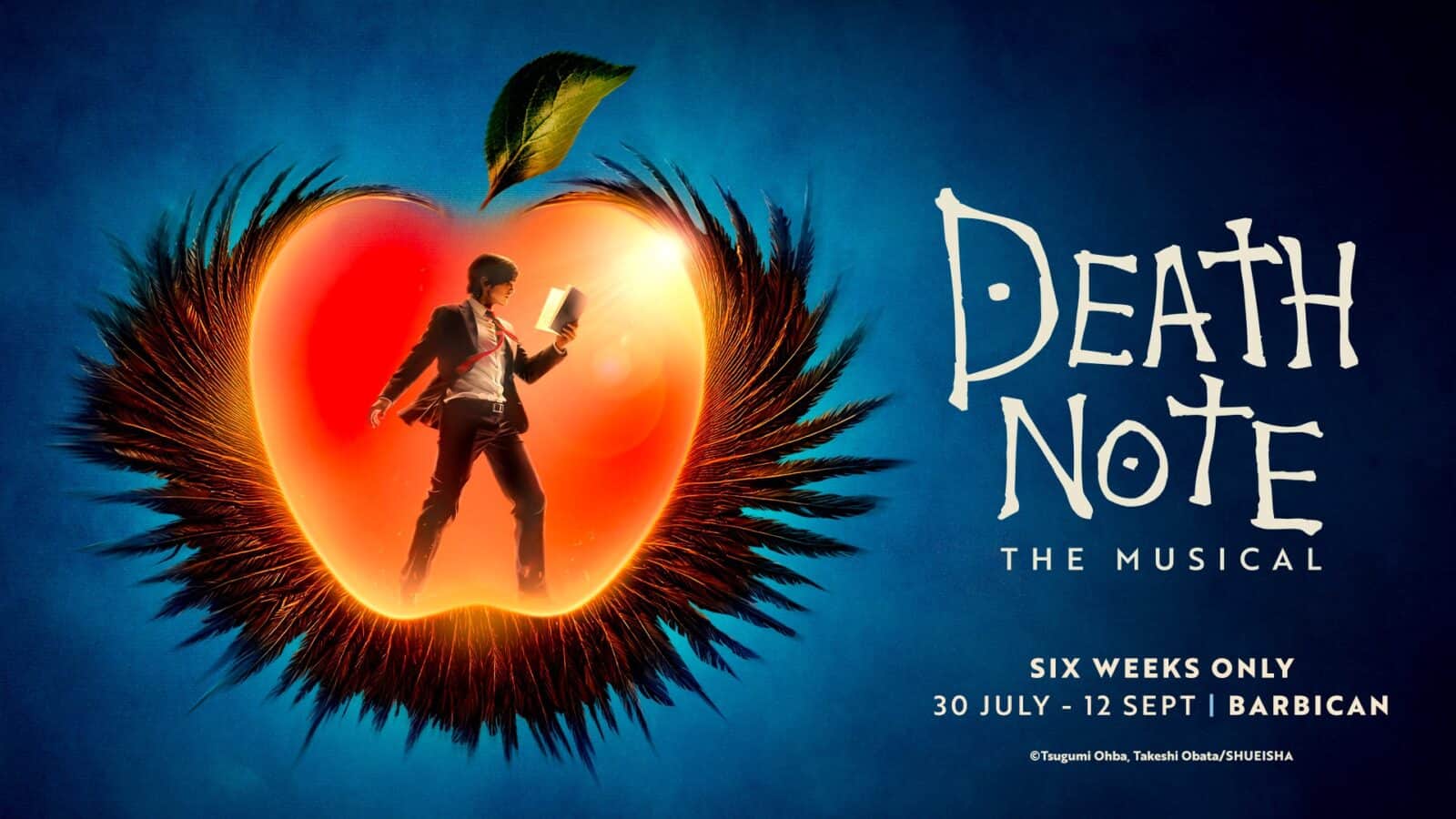
The student is Light Yagami, played by Xander Pang and the notebook lands in his hands not long after, dropped by a god of death who is bored of his own realm. Hardly light reading. Light starts with writing criminals and tells himself quite sincerely that he is finishing a job the courts keep failing to do. He then carries on until the world’s best detective takes an interest. Tsugumi Ohba and Takeshi Obata’s manga has been a musical in Tokyo and Seoul since 2015, but this is its first proper London staging, scored by Frank Wildhorn with lyrics by Jack Murphy, a book by Ivan Menchell and direction by Stephen Whitson.
I could not stop looking at Jon Bausor’s set, mostly because of the diamonds. In the opening number, “Where Is the Justice?”, the ensemble arrange their chairs into a diamond while Light makes his case, and the lighting rig above them repeats the shape. The gods of death don’t get a Romeo and Juliet balcony, they get an enormous angled frame that lowers across the stage like a lid going onto a box. Even Light and L’s final meeting happens inside another lopsided square. A circle would be the obvious shape for a show this preoccupied with death, because a circle says life comes round again and ends where it started. A diamond is a circle somebody has grabbed and pulled until it has corners, which is exactly what Light spends the show doing to a world he finds too messy to manage.
For the most part, Xander Pang sings Light with a soft voice, though never a quiet one. In that first number the ensemble stamp and thump all around him, he never sings louder to get over them, and every word about justice still comes through clean. Near the end he growls, grit on notes that were nowhere near him in that classroom. I liked that a lot. It might be anger, it might be fear of L getting close, or it might be the sound of him rotting from the inside, and it shows the change in him better than the story has time to. One minute he is appalled that murderers walk free, the next he is killing FBI agents he has never met. Breaking Bad took five seasons to walk a man that far. Cramming twelve volumes of manga into two hours leaves the audience very little room to sit with any of it, and Light never really gets the chance either.
Colin Ryan’s L is very clever. He spends a lot of the show sitting alone thinking, and Ryan plays him as somebody whose body moves before his brain has told it to, a shoulder going before the thought has finished. Everyone in this show keeps singing about how brilliant L is, which usually asks an audience to take it on trust. Here you can physically watch it happen. Nothing he figures out looks like work, and it is easy to see why Light spends the whole thing so nervy. He crouches on chairs rather than sitting on them, a la the Ariana Grande album cover chair challenge, and gets through an alarming number of sweets. Both are canon, since in the manga L reckons the posture and the sugar make him think faster. He also looks exactly like the kid from the Green Cross Code adverts with his dark under eyes and no sleep. I could not get that out of my head all night.
Ryuk is funnier than a god of death has any business being. Played by Telly Leung, he was my favourite of the night. Light goes to shake somebody’s hand and Ryuk slides in behind to shake it too, an inside gag with a thousand strangers. Leung watches the events unfold with an amused expression and stalks across the stage in large strides as if desperate to get in on the action. It reminded me of watching a reality show you have no stake in and then suddenly finding yourself with a favourite. So I blame Leung’s ability to make a god of death feel so warm for why the ending felt so devastating.
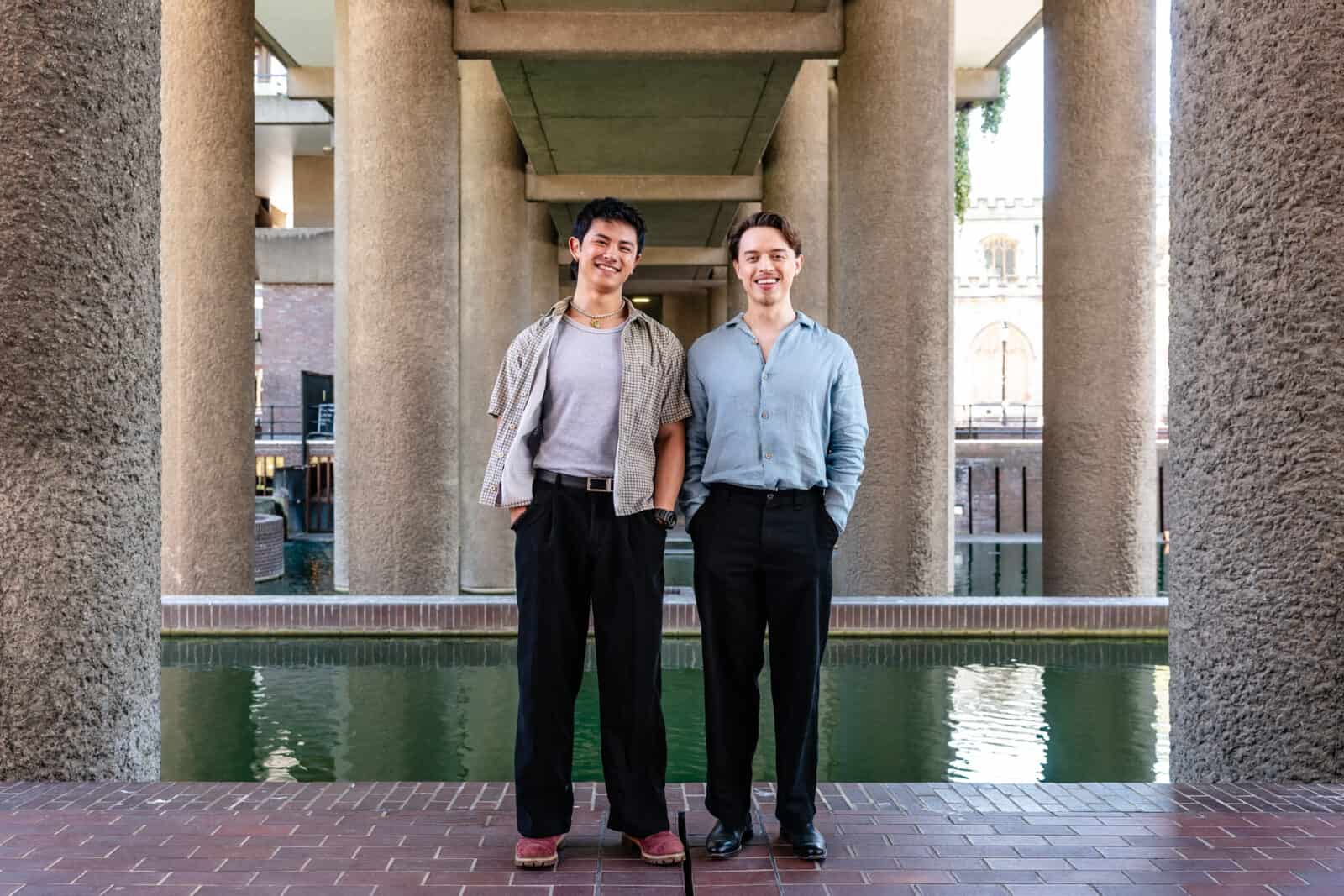
And if we’re talking about the best voice in the building, it has to go to Grace Mouat. Her Rem is remote, white clad and mostly very still, so when she opens up with her voice it takes the top of your head off. It’s most apparent when Rem watches what becomes of another shinigami, Jerasu, played by Chloe Saracco, once he involves himself in a human life. I won’t spoil the mechanics, but a god of death who saves somebody pays for it out of their own account, so empathy here is not a virtue, it is a manufacturing fault. Jerasu has never spoken to Misa either, he has only watched her from another realm, which is about as parasocial as it gets, except that watching humans is literally his job. These are creatures built to observe without caring, and observing is how the caring starts. Mouat’s slower, commanding songs are what tie this tragic paradox together.
Stephanie Zaharis is terrific as Misa and her first number spoke directly to the delusional 10-year-old in me who was convinced they were destined for pop stardom (back when I thought it would involve more sparkles and less death notes). In her boxing kit, she’s kicking and spinning in a girlypop fighting sort of way while she belts as though none of it is happening. I did spend part of the evening wanting to sit her down and explain that a man is not a life plan. The show is more complicated about it than I am being, since Light avenged her murdered parents, but once you see the pattern you can’t stop. Jerasu gives up everything for Misa, Misa gives up everything for Light, Light gives up nothing for anybody.
Hers is also one of the few numbers that actually sticks with me, which brings me to my main gripe. While the music is fantastic and the cast is pitch-perfect, the songs tend to blur together the moment you leave the theatre. This isn’t the Hamilton trick, where melodic callbacks land like a punch, or Wicked, where a returning motif catches you completely off guard. Instead, the show locks into a single setting of frantic urgency early on and rarely changes gears. You get two hours of a very good mood, rather than a soundtrack of individual tracks you’ll be humming on the way to the tube.
None of which stopped me wanting to go straight back in. In a show shifting this much plot, it’s easy for minor characters to feel like they’re just dressing the stage. But not here, everyone earns their spot. The ensemble plays an entire city, shifting from students to government agents effortlessly. The Barbican clearly gave this manga adaptation a proper budget and a brilliant cast, and both elements hit the mark. It only has a few weeks left, Broadway is already calling, and I would happily buy another ticket tomorrow.
Death Note: The Musical, Barbican Theatre until 12th September.
Tickets: www.DeathNoteTheMusical.com


