
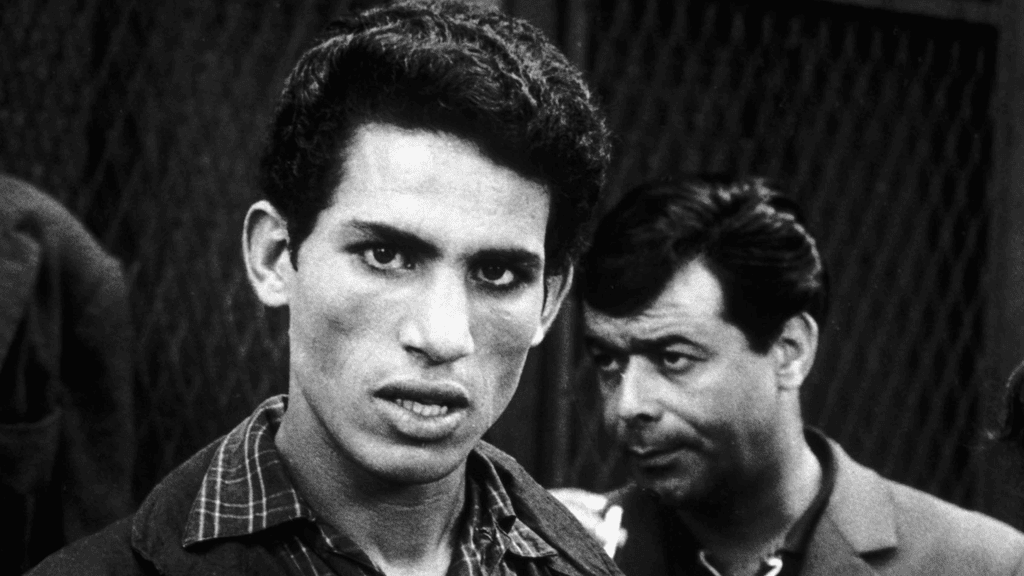
On July 5th 1962, after eight years of fighting and a total of 132 years of occupied colonialisation, Algeria claimed independence from France. Just four years later, in the country’s capital city of Algiers, the Italian Marxist filmmaker Gillo Pontecorvo and former National Liberation Front (FLN) leader Saadi Yacef came together to produce what is now widely considered the greatest anti-colonialist film ever made, The Battle of Algiers.
Since its release, filmmakers and revolutionaries alike have cited The Battle of Algiers as essential viewing to better understand contemporary anti-colonialist filmmaking, a handbook for colonial resistance. Most recently, in the researching for his 2025 film One Battle After Another, Paul Thomas Anderson acknowledged Pontecorvo’s film as “the number one most watched film for many of those groups that we certainly got into looking into, Weather Underground, Black Panthers this was kind of their thing, this was their film.” The Battle of Algiers also makes a direct appearance in Aderson’s film, with Leonardo DiCaprio’s character, Bob Ferguson, watching it from his couch.
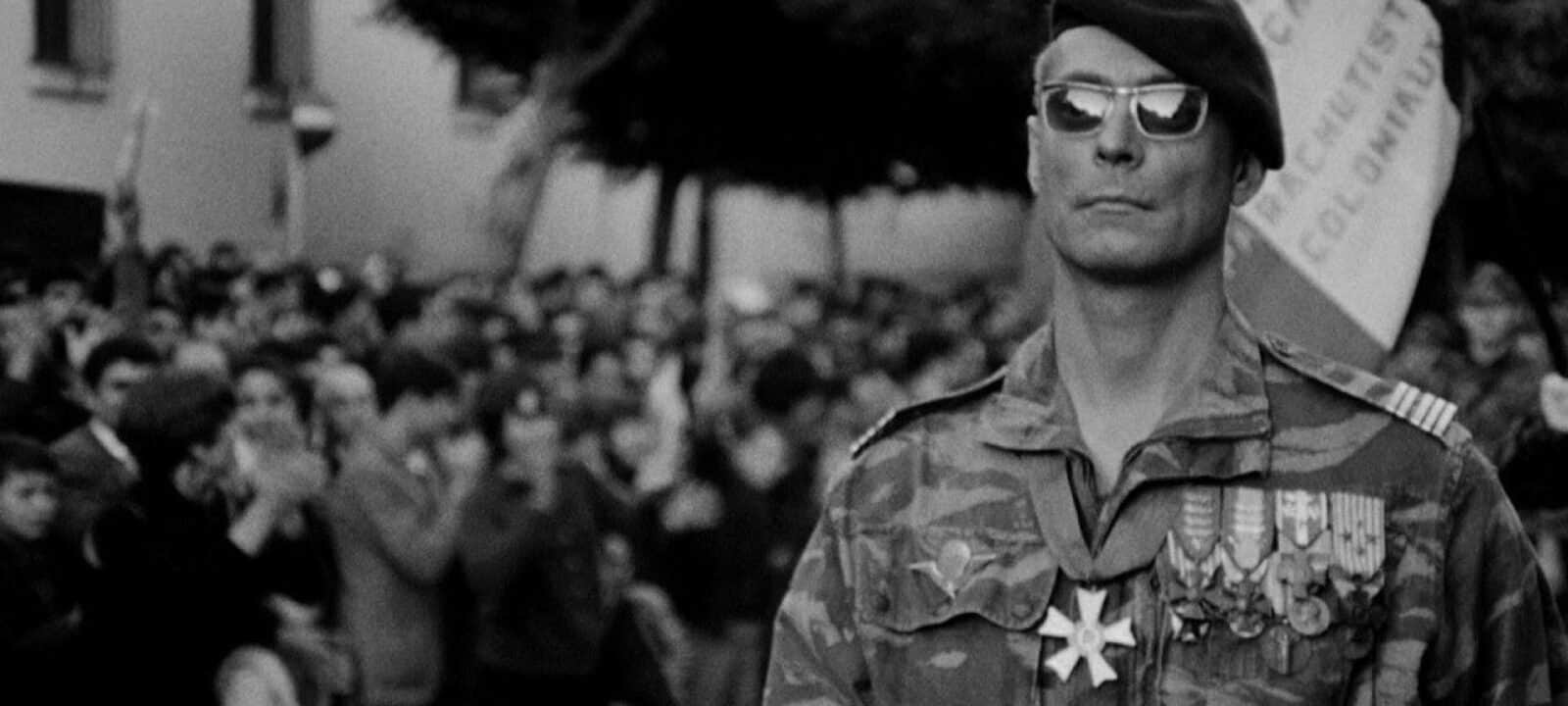
Likewise, Palestine ‘36, released in October of last year and directed by Palestinian filmmaker Annemarie Jacir, demonstrates ties to the anti-colonialist spirit established by Yacef and Pontecrovo in The Battle of Algiers. Jacir’s film follows the Palestinian revolt against British colonial rule between 1936-1939 and interrogates many of the same questions about violence and the cost of freedom that The Battle of Algiers does. Indeed, in a 2012 interview with the Tribeca Film Institute, Jacir cited the film as one of the major influences on Palestine 36. Critics agreed: Middle East Eye’s Imran Mulla went so far as to dub Palestine 36 the “modern day Battle of Algiers”, observing that both films “coolly depicted both colonial and anti-colonial violence without sugar-coating the brutality.”
In The Battle of Algiers this complex depiction of colonial/anti-colonial violence is accomplished by rarely depicting sympathetic close-up shots of the European colonisers. Pontecorvo instead focuses his gaze on the Algerians and the affronts forced upon them daily in their homeland whether they be skirmishes between Algerians and Europeans in the casbah, old men chased away by colonisers, or even the bodies of children being carried down streets to laughs and cheers. Jacir takes a similar approach in Palestine ‘36, and, as The World Decolonialization Forum notes, “interrogates how Palestinian voices, especially those of women and peasants, have been marginalized within modern historiography. By emphasizing these silenced perspectives, Palestine ’36 resists the domination of imperial and zionist archives […] invit[ing] the audience to rethink the politics of storytelling itself.”
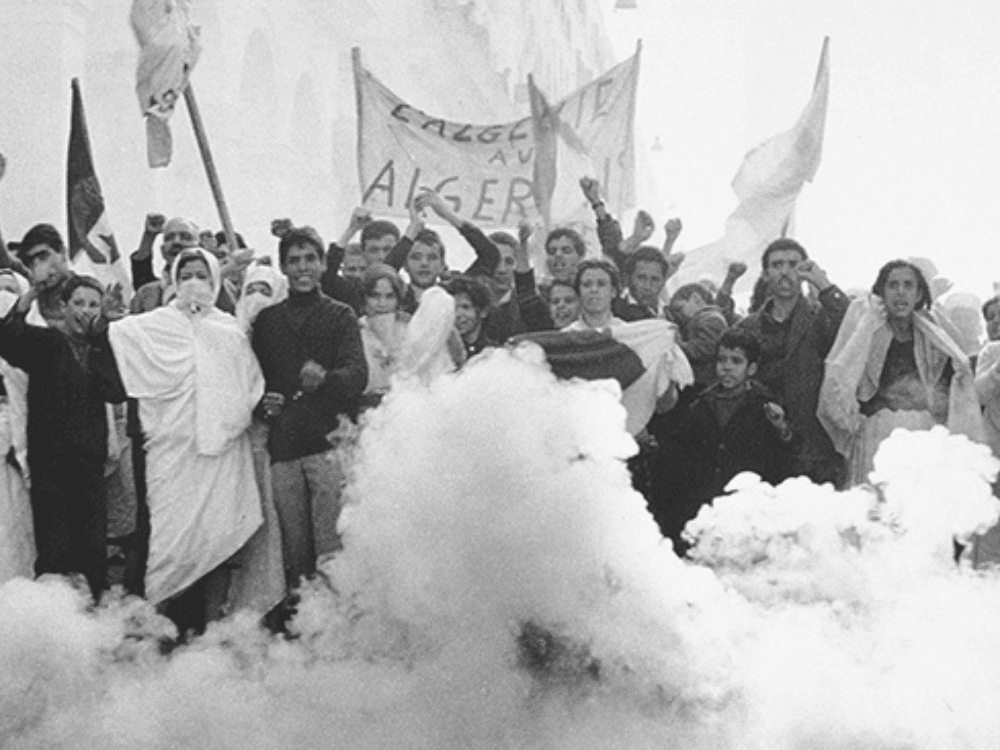
Today The Battle of Algiers is part of the cinematic canon, revered by the likes of Martin Scorsese and Angela Davis; however, when it premiered at the Venice Film Festival in 1966 its reception was not so glowing. Though the film would end up receiving the Golden Lion award, both the screening and the awards ceremony were boycotted by French audiences and critics. In fact, it would take over five years for the film to even make it onto French screens because of how divisive the issue was in the country almost a decade after the end of the war.
Nearly sixty years later, we witness this same censorship of Palestinian voices and artists in solidarity with the Palestinian cause. Earlier this year actor Motaz Malhees was unable to attend the Oscars ceremony for which his film The Voice of Hind Rajab was nominated for Best International Feature because of the United States Palestinian travel ban. “It hurts,” Malhees admitted, “But here is the truth. You can block a passport. You cannot block a voice. I am Palestinian, and I stand with pride and dignity.” Similarly, at the Venice Film Festival this year, Naza, a film by Israeli journalist-filmmakers Yuval Abraham and Rachel Szor about the Israeli military’s use of artificial intelligence and surveillance to target innocent Palestinian civilians, premiered to a 25 minute long standing ovation. Yet despite the positive reception, the filmmakers have been targeted and threatened by the Israeli government for documenting the genocide of the Palestinian people. “They’re talking about revoking their citizenship,” Orly Noy, an editor who first reported on much of the information discussed in Naza, said to Aljazeera. “They’re asking the Shin Bet to investigate them – for making a film.” It is a striking resemblance to the reaction that French audiences had when Pontecorvo’s film premiered at that same festival.
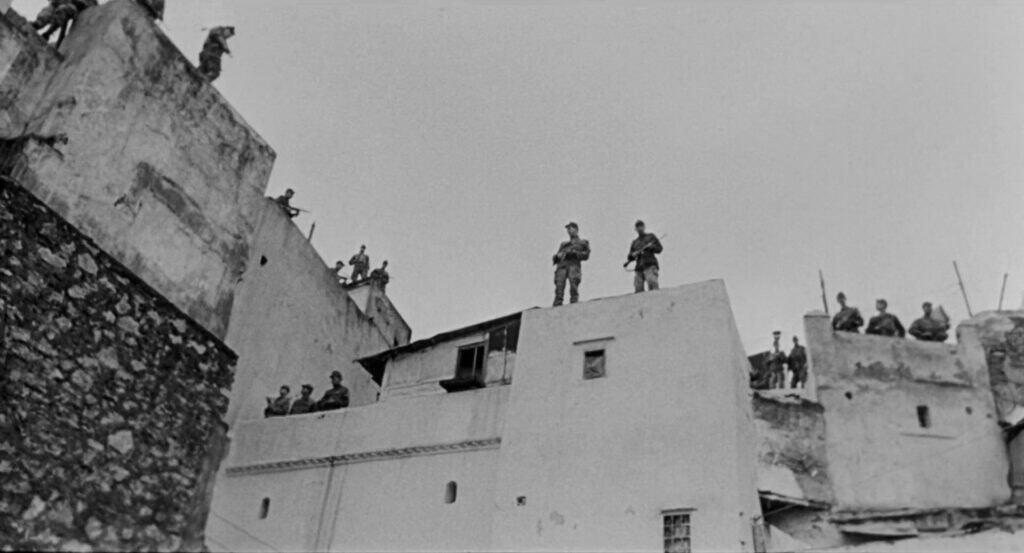
In the decades since The Battle of Algiers its legacy remains more important than ever. Contemporary anti-colonialist filmmakers herald it as the cinematic bible of decolonialisation for its revolutionary techniques that continue to be employed in anti-colonialist filmmaking today. The reception and censorship of the film in France after its initial release echoes today across Hollywood and abroad as we witness how governments and businesses react to the confrontational nature of films like The Voice of Hind Rajab or Naza.
The Battle of Algiers inspired a long legacy of anti-colonialism and solidarity that remains relevant to the struggles we see today. As viewers we can participate in this legacy by supporting the projects of artists who are being silenced or targeted for their activism, seek out cinema made by Palestinian filmmakers, and avoid spending our money on streaming services that are implicated in the genocide. At a time when political censorship of cinema is abundant and actors are blacklisted for their support of Palestine, it is our duty as viewers to resist it with our own attention and solidarity.


