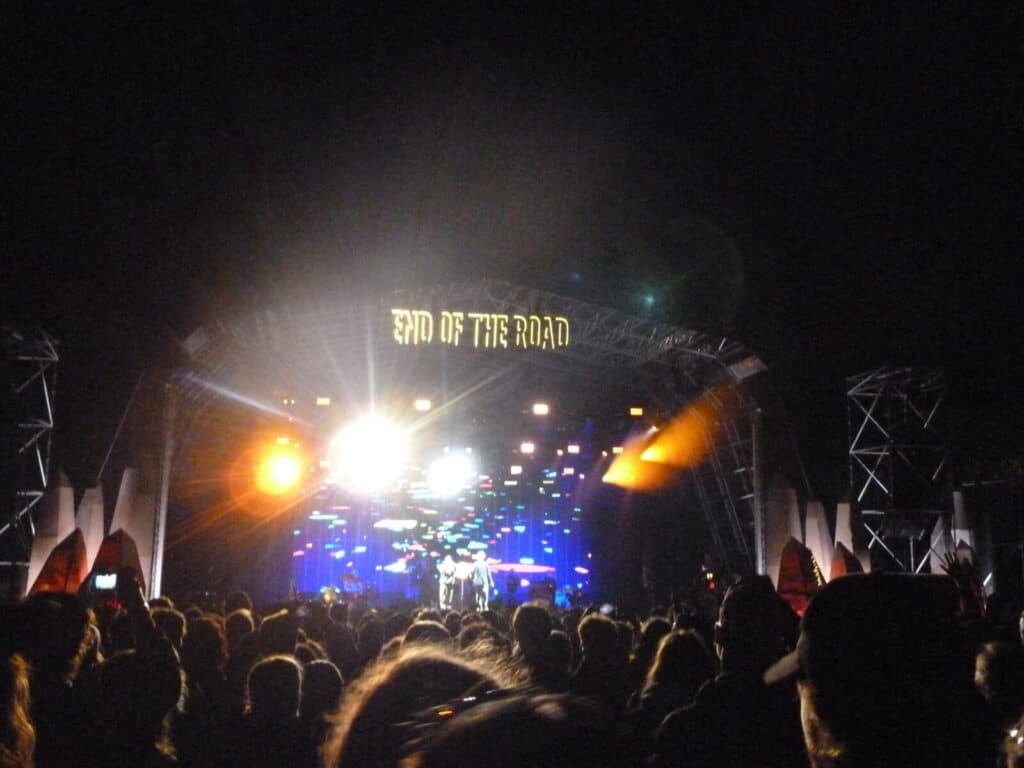
As a stranger to End of the Road, I’d often felt left out. It’s a big independent name on the alternative rock circuit, with a reputation of being resistant to corporatisation and committed to music discovery. Now twenty years old, it’s sold out every year since 2008. So, this year, I decided it was time to finally make my End of the Road debut. I went into the woods at Larmer Tree Gardens on the Dorset-Wiltshire border, hoping to translate the festival onto the page for other curious outsiders.
It didn’t take long to discover that even with a mission, going to a festival alone is an isolating business. An hour after my arrival to the quaint Dorset gardens, faced with unfamiliar grounds, overabundant schedules and milling crowds, I was hit with something like loneliness and overwhelm.
Fortunately, if you’ve ever frequented Brixton’s Windmill, then you’re unlikely to spend long at this festival without finding a familiar face. Swaying to Prewn’s dissociative rock, I bumped into a tenuous mutual friend, and by the time the disjointed groans had come to a close, I’d been adopted by a group of long-term End of the Road punters. Sweet relief.
My new guides were a group of school friends now fully grown and made up of unruly revellers and on-duty musicians, who had been reuniting at End of the Road for years. This loyalty isn’t unusual for the festival’s committed crowds, usually young and fun families, Radio 6 loving veterans, and twenty-somethings in the post-punk scene.
My foster friends were typical of the latter demographic. For one boy, a novelist in an outfit straight out of 2008, eyebrow piercing and all, this was his eleventh year in attendance. That’s almost half his lifetime. In contrast to my cluelessness, this place was a second home to them. I was instantly whisked into their festival, a personal affair built on over a decade of memories. The more people that crossed my path, the clearer it became that End of the Road holds a special place in many hearts, as is the joy of independent festivals. I soon learnt what second-hand nostalgia feels like.
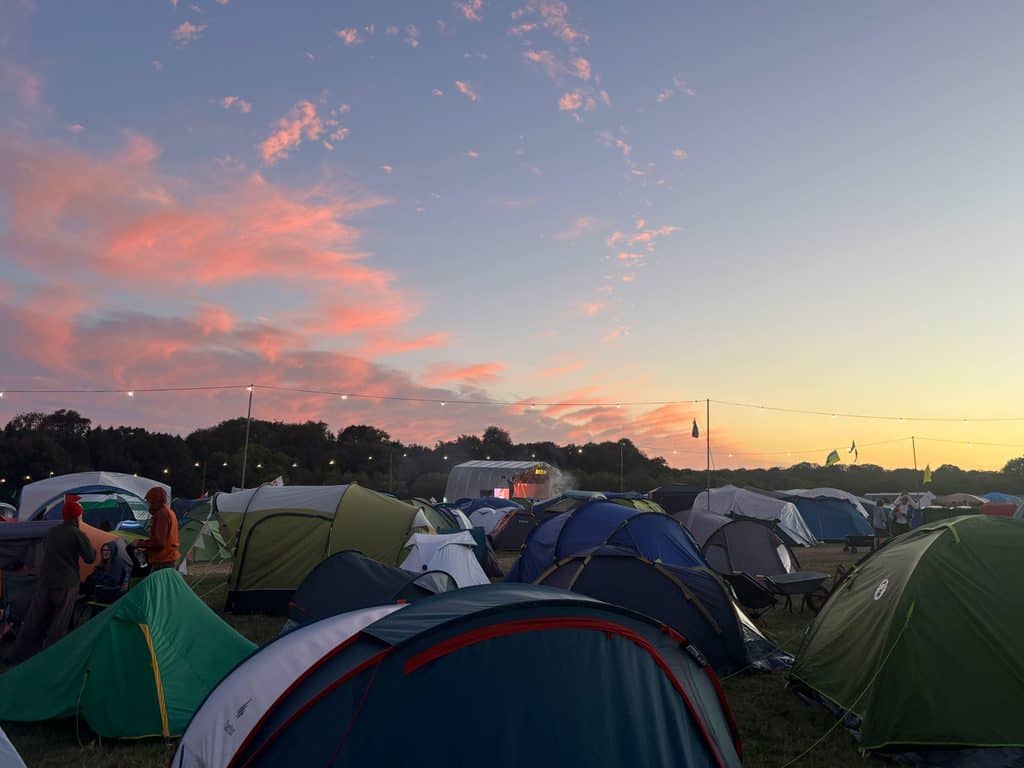
Before long, I was being led down to the Talking Heads stage. Unlike the Woods, a typical mammoth main stage, or the Garden, a slightly more intimate area that hugs the crowd in with ornate bandstands and historic stone walls, Talking Heads is a sweet gem. The audience sits on hay bales along an amphitheatre-like hill, with the architectural wooden stage nestled in a copse of trees below. In the daytime, when it’s populated with literary voices and top comedians, you can watch sheep graze in the neighbouring fields. But that evening, we were there for ninush.
The violinist, aka Nina Lim, made a name for herself as one of London’s finest session musicians through her work with cult favourites Black Country, New Road and Jockstrap. Returning to the festival to make her debut as a solo artist, her performance was like falling headfirst into a forgotten fairytale. ninush’s simple lyrics and magical instrumentals, sometimes twinkling and honeyed, sometimes cinematic and expansive, felt like stepping back into the warmth of a childhood lullaby.
This was not a typical choice for my new guides, but as the set began, a sudden silence fell over them. If I thought nothing could calm their raucous nature, I was wrong. One whispered in my ear that it felt like watching Adventure Time as a kid – a high compliment. As they watched the stage, I watched them. They had the same quiet expressions of stargazers. A few songs later, with each note gently tugging on the crowd’s heartstrings, we shuffled back up the hill, shocked at the level of enchanting beauty we’d just heard.
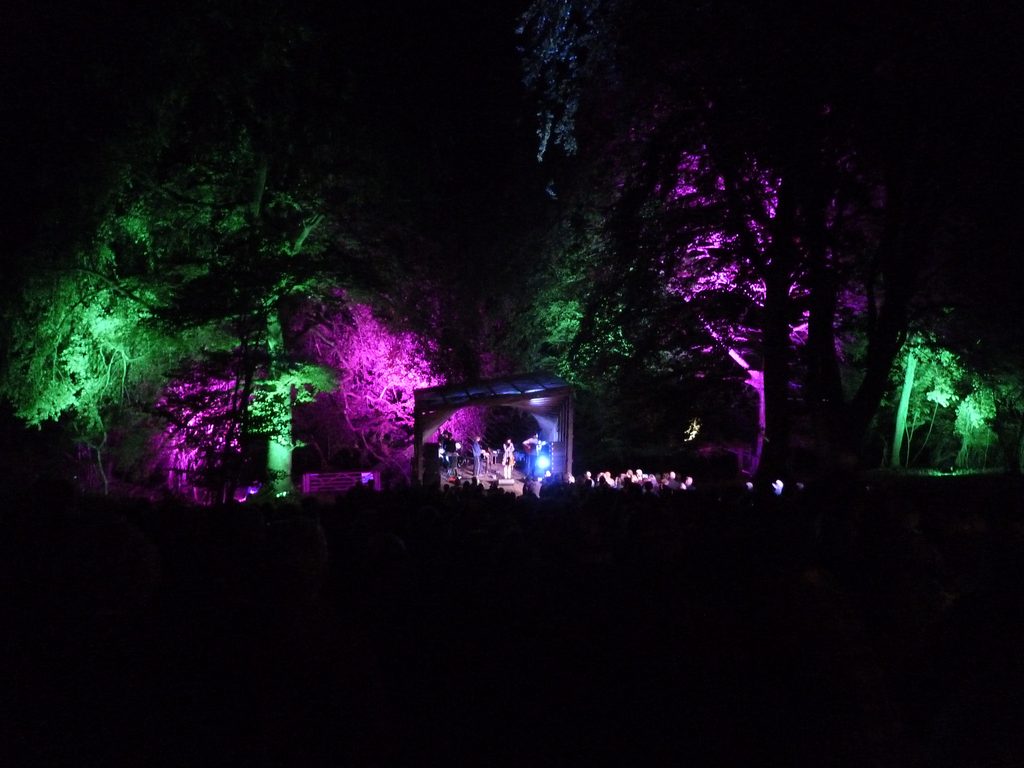
Our next mission was for the night’s headliner, Mac DeMarco. I can’t remember the last time I screamed-sang and headbanged with such abandon, and from my spot in the crowd, I wasn’t alone. Now approaching two decades as a performer, including three appearances at End of the Road, Mac DeMarco is well-versed in riling up a crowd to slacker rock classics like ‘Ode to Viceroy’.
The performance itself was characteristically mellow, punctuated by a dose of Mac’s signature absurdity (namely an impressively sustained handstand), but overall, inoffensively playful. As the synth-drenched chords of ‘Moonlight in the River’ began to play, my head found comfort on the shoulder of a freshly formed friend. Swaying in unison with the thousands of strangers, we softly exchanged mundane teenage memories. Around us, stood teenagers as young as fourteen alongside fans entering into middle age. Nonetheless, there was no generational divide. These lyrics bonded us, etched permanently into our psyches from stoner phases past and present.
Post-headliner, the crowds moved on to the Effing Woods. This magical corner of the grounds takes you through maze-like paths formed from twisting branches, giving the festival an otherworldly aspect that sets it apart from competitors (in other words, Greenman). If you find yourself lively enough to explore during the daytime, there’s a free library, a photobooth where instant photos are replaced by three-minute drawings, and a whimsical marble marathon.
Friday night began with a trek through the woods, my guides leading the way to The Boat. Tucked right next to the karaoke tent, this small stage kept the energy high, constantly blaring singalong classics like Young Hearts Run Free by Candi Staton (always a little tasteful, as expected from this connoisseur crowd).
Before the shift into the after-hours schedule, the Big Top hosts electronic sets from the likes of Kelly Lee Owens and Bassvictim. But as the live acts end, the woods come alive with a wild variety of choices. The lineup was a mix of queer rave classics, drum and bass, and a lot of LCD Soundsystem. All you need for a cardio-heavy early morning.
A few hours of shaking hips, and we were down to the final leg of the night, the silent disco. With the Garden now acting as a dance floor, two DJs compete to keep the crowd plugged into their set. It felt only right, after such a misty-eyed day, to dance to blaring headphones like a preteen in my bedroom. No anxiety came as the birds started to sing, marking the end of the night. My ears were muffled by Carly Rae Jepsen.
After this thorough introduction, there were only a few more classic elements of End of the Road left to discover. There was the tiny Piano stage, where hopeful audiences were surprised by intimate performances by the likes of Australian band Way Dynamic and shoegaze soloist TTSSFU. Then there was the blue Somerset Cider bus, to which I was sternly escorted with a lecture about its iconic status within the festival.
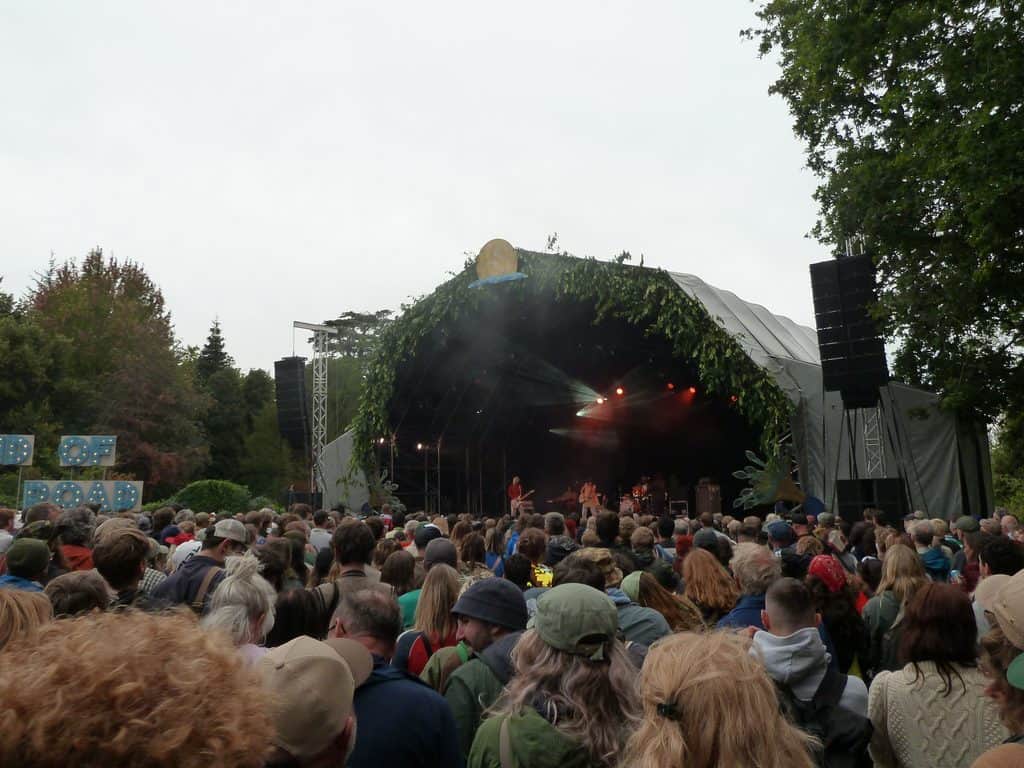
With a refreshing cider in hand, I passed the daytimes horizontally, losing myself in the sort of aimless conversations only possible when you have nothing but time and each other’s company. I let the wild accounts of the previous evening wash over me. A particular saga involving a midnight misadventure with a commandeered sewage pipe, followed by a disguise of a silver wig and psychedelic mini skirt, were repeated to the point of oral tradition.
Drifting from act to act, a favourite of mine was Madra Salach. The six-piece Dublin folk band played three times, firstly during a secret set at the Piano, then for a full-blown performance at the Garden, and later again that night for a secret set at the Folly. You could tell that all those introduced to the band during the first sets had already become vehement fans by the last. The atmosphere was hungry.
It was a hunger felt across the country this year, as Madra Salach’s organic, word-of-mouth popularity on Dublin’s live music circuit suddenly grew into far-reaching admiration. They’ve nailed the eternal appeal of Irish folk, namely strong, stirring vocals from lead Paul Banks, unifying, transgenerational trad ballads, and tin whistle solos.
Headlining Saturday night was Pulp. It was an unusual set, with no bangers to be heard for over an hour. Instead, the art-pop pioneers dusted off some neglected numbers from their discography. Between the songs, Cocker paced the stage and displayed old images and artefacts from the band’s long history (at this point, I was convinced the nostalgic energy was universal, and possibly written in the stars).
By Sunday, the world outside Larmer Tree Gardens felt very far away. The remedy to sleep deficiency came in the form of james K. From the silky darkness of Big Top, her transcendental soundscapes turned delirium into a delicious trip. Grounded by pulsing beats, her siren-song falsetto pierced through experimental sounds. By the time ‘Hypersoft Lovejinx Junkdream’ coasted into a cover of Duvet’s soft-rock classic, ‘Boa’, the crowd had loosened, fully immersed in her surreal bubble. On a festival’s Sunday afternoon, as we lazed on the tent’s floor between brief bouts of energy, it felt like floating.
Evening drew in, and we settled into the Garden’s crowd for Kurt Vile and the Violators. The weekend was almost over. On stage, fuzzy-haired in signature flannel, the American singer-songwriter offered hazy rock alongside a posse of similarly dressed, shoegazing musicians. Just right for those too delicate for CMAT’s high-energy on the Woods stage. Like the rest of the crowd, we were transfixed by Kurt’s mumbling verses and meandering licks.
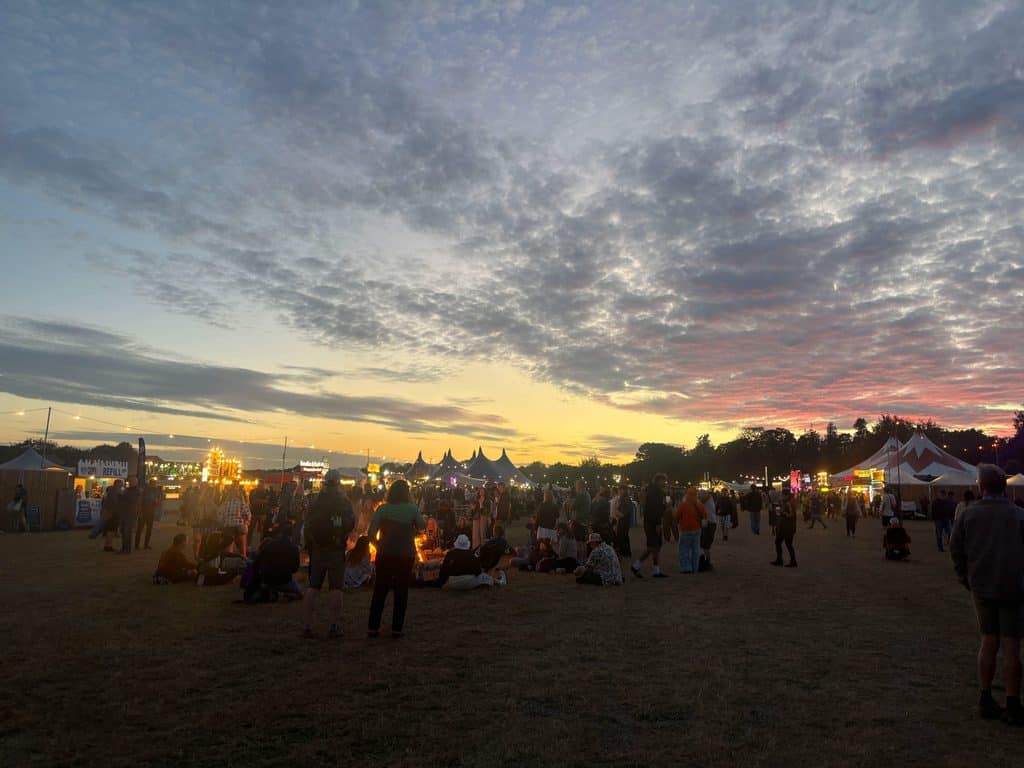
I didn’t have any of my own reasons to be emotional about the festival’s close, but I had adopted my new friend’s bittersweet longing just as they had adopted me. Anyway, a weekend spent dancing, singing, and eating alongside thousands of strangers is enough to make anyone wistful. At the risk of sounding indefensibly twee, independent festivals like End of the Road offer a profound sense of community and shared humanity. I drove home determined to befriend more strangers.