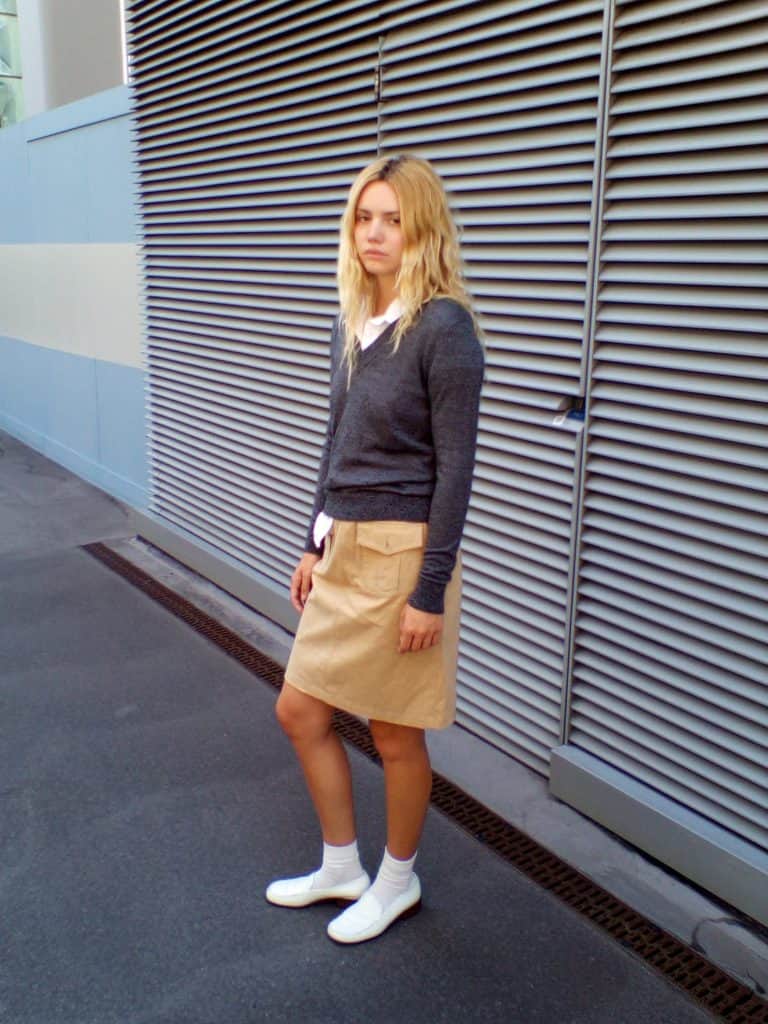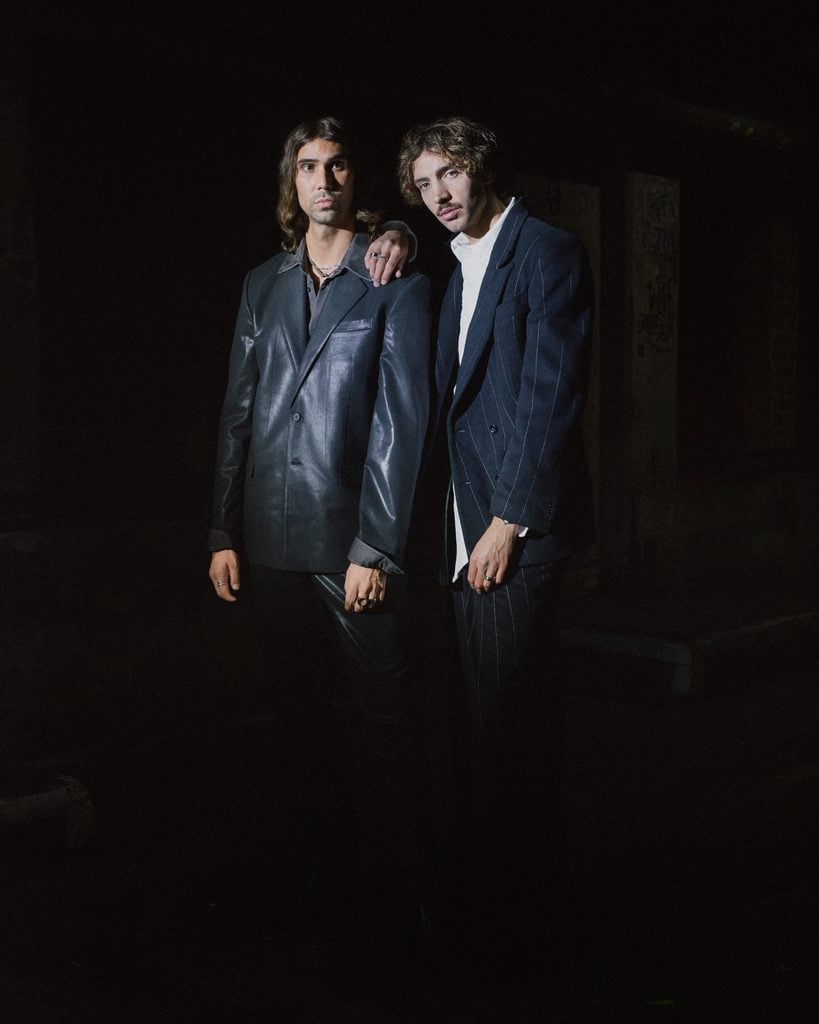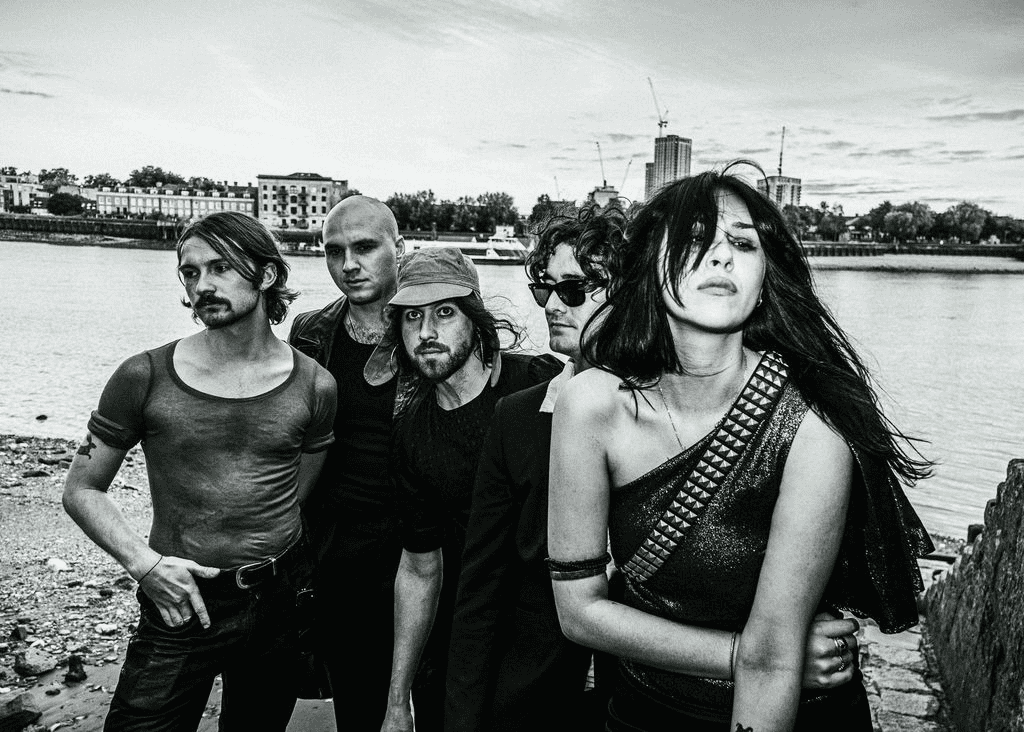
We can’t all have been in Bristol for the 1990s trip-hop era, with the blissful melancholy of Portishead and Massive Attack in its seaside concert halls. Nor were we all in Hackney Wick’s underground warehouse scene of the early 2020s, where Bande á Part was formed through evenings of jamming with friends of friends, who moved in one by one. That era is in the past now – the warehouse unit was a fire hazard, it was decided. But if you google the band, the top result on maps is still a pin dropped on Fish Island. If you imagine the Bristolean sound but accompanied with guitars and a descendant of the brooding low voice and lyricism of PJ Harvey or Patti Smith, then stripped back and composed on an industrial estate, then you’ll be somewhere close to Bande á Part.
I saw them play three years ago at The Shacklewell Arms, then returned to the very same Dalston pub to speak to Sabina Hellstrom, 28, about their debut EP Grit over a cola (her) and a ginger beer (me). She was repping a gig there – her side hustle, when she’s not, obviously, dedicating herself to music – and chatted in between getting the artists organised.
The band is partly named after Jean-Luc Godard’s 1964 film Bande á Part, which in turn is derived from the French expression faire bande à part, meaning to form a separate group that refuses to conform to the main crowd’s collective behaviour. “I was super into French New Wave cinema when I was younger,” says Hellstrom. “I looked up translations in French, and Bande á Part stands for ‘band of outsiders’. At the time, we were all fucking weirdos, so I thought it fit the band really well.”
Her most treasured possessions, I learn, are trinkets: a marble ashtray, a little Picasso print torn from a book that followed her on her travels, and the antique ring that she never takes off. In her bookcase you’ll find a lot of literary rebels. Originally from Sweden, Hellstrom moved to London a decade ago. “I came here because it was the first place where people asked where I was from out of curiosity, not to figure me out.”
The second time I run into Hellstrom, I get another glimpse into her world. It’s 3am on the Sunday of Paris Fashion Week and for some reason we’re both in the bathroom of Pamela nightclub. She is running on four hours’ sleep, having spent the previous day at the Ann Demeulemeester catwalk. But introduces me to a pagan sorcerer who lives in a crypt, and he keeps me entertained after she retires to bed. The third time, I stop by her abode in London. Her bedroom is classic and elegant without being shoes-off. A Velvet Underground vinyl with Andy Warhol’s banana is sitting there, and so is a small Roman sculpture of a woman and an old brass mirror.
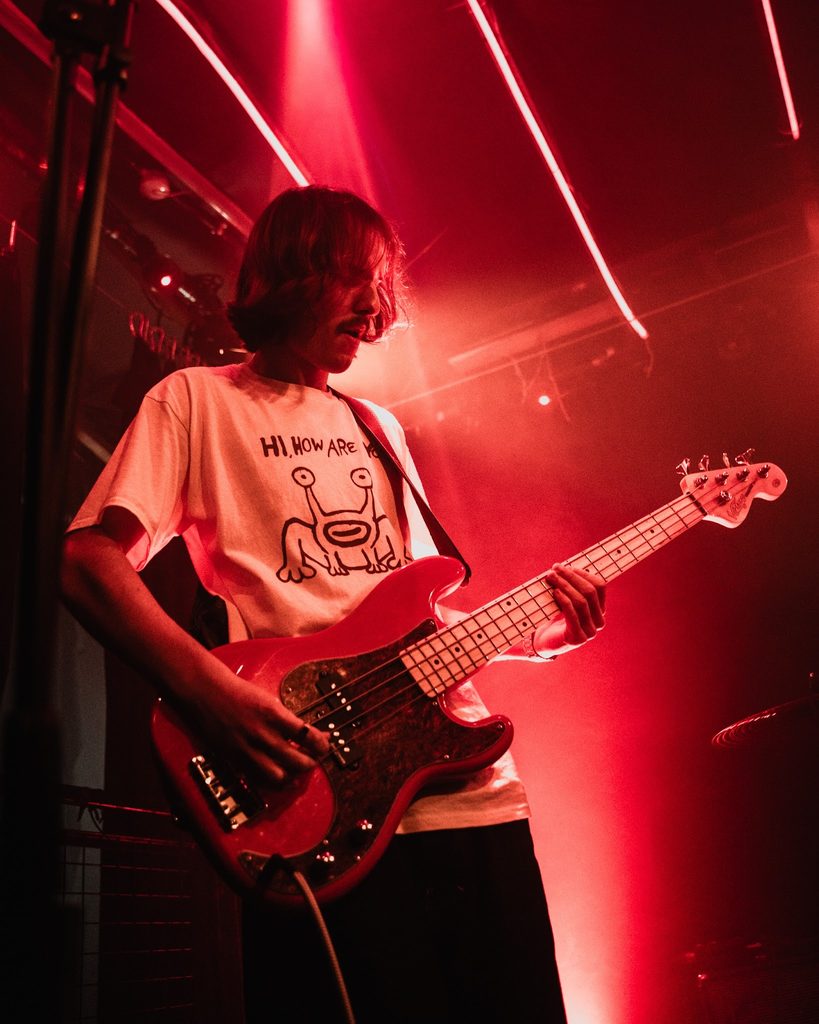
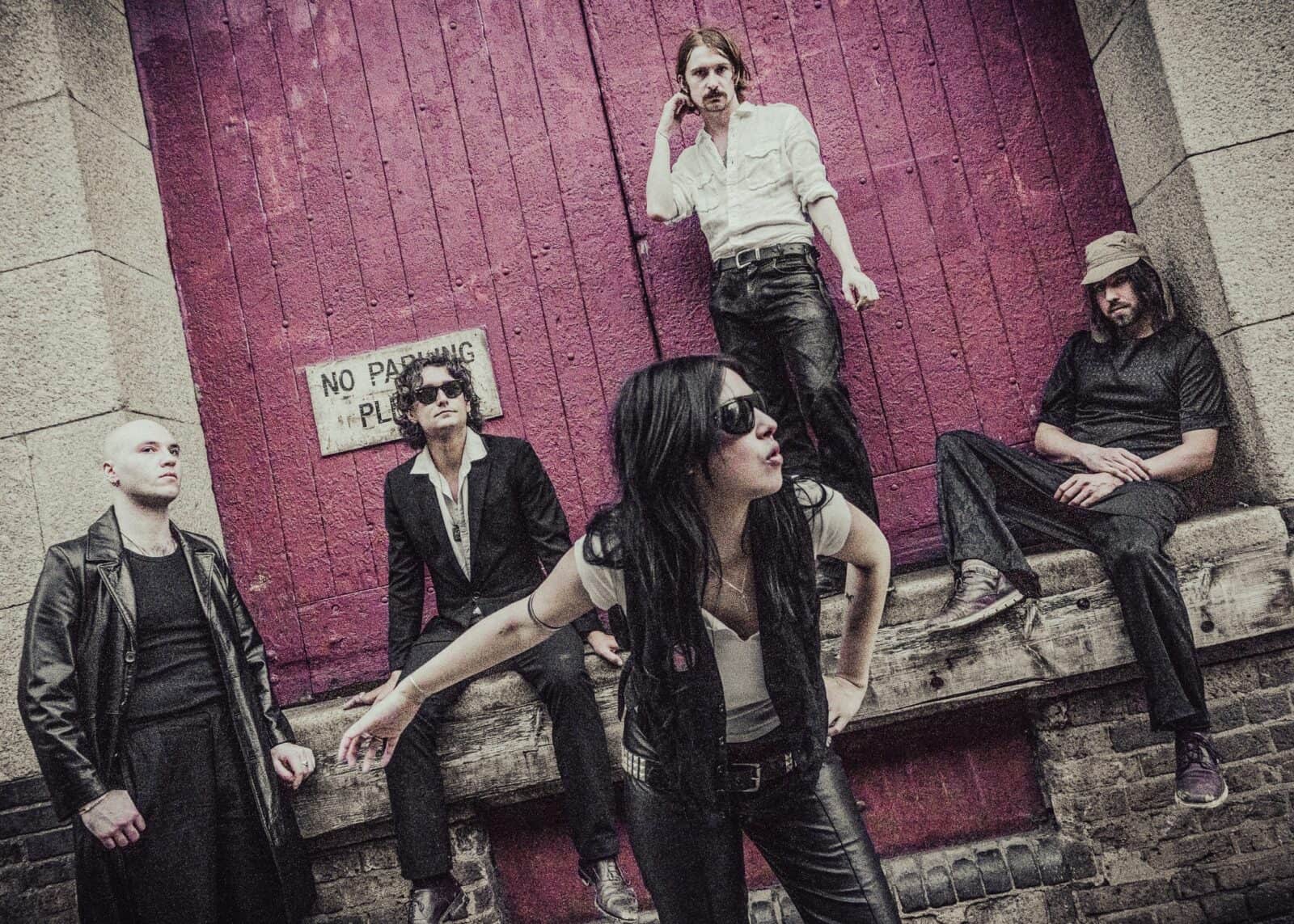
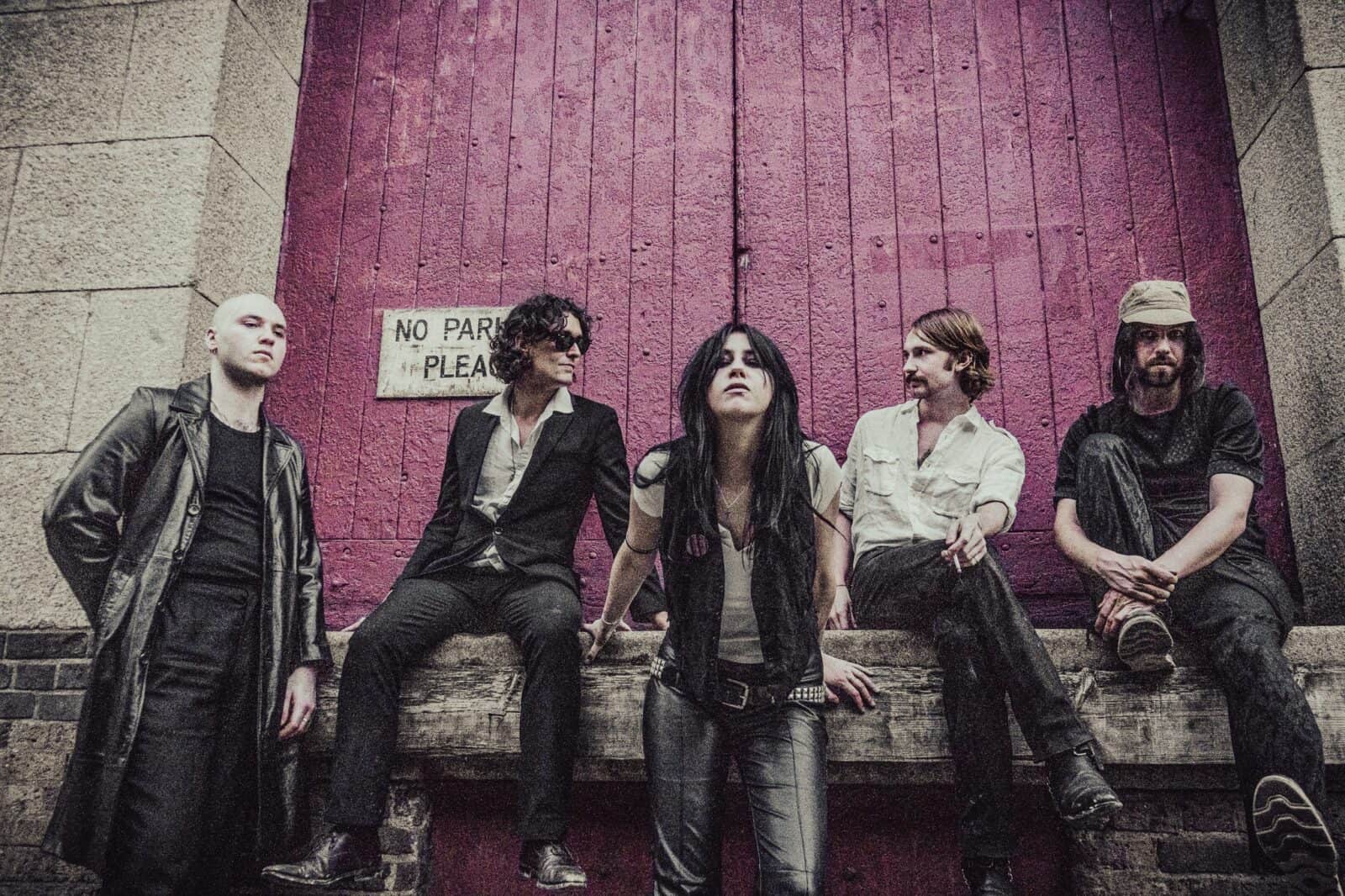
Grit was recorded in a warehouse in Hackney Wick (credits at the bottom). The current band lineup brings together Hellstrom (guitar, vocals), Mary Elizabeth (guitar), Gennaro Romano (bass), Craig Whyte Doporto (drums) and Miles Lavelle-Golding (keys, percussion). Below is our Q&A with Hellstrom.
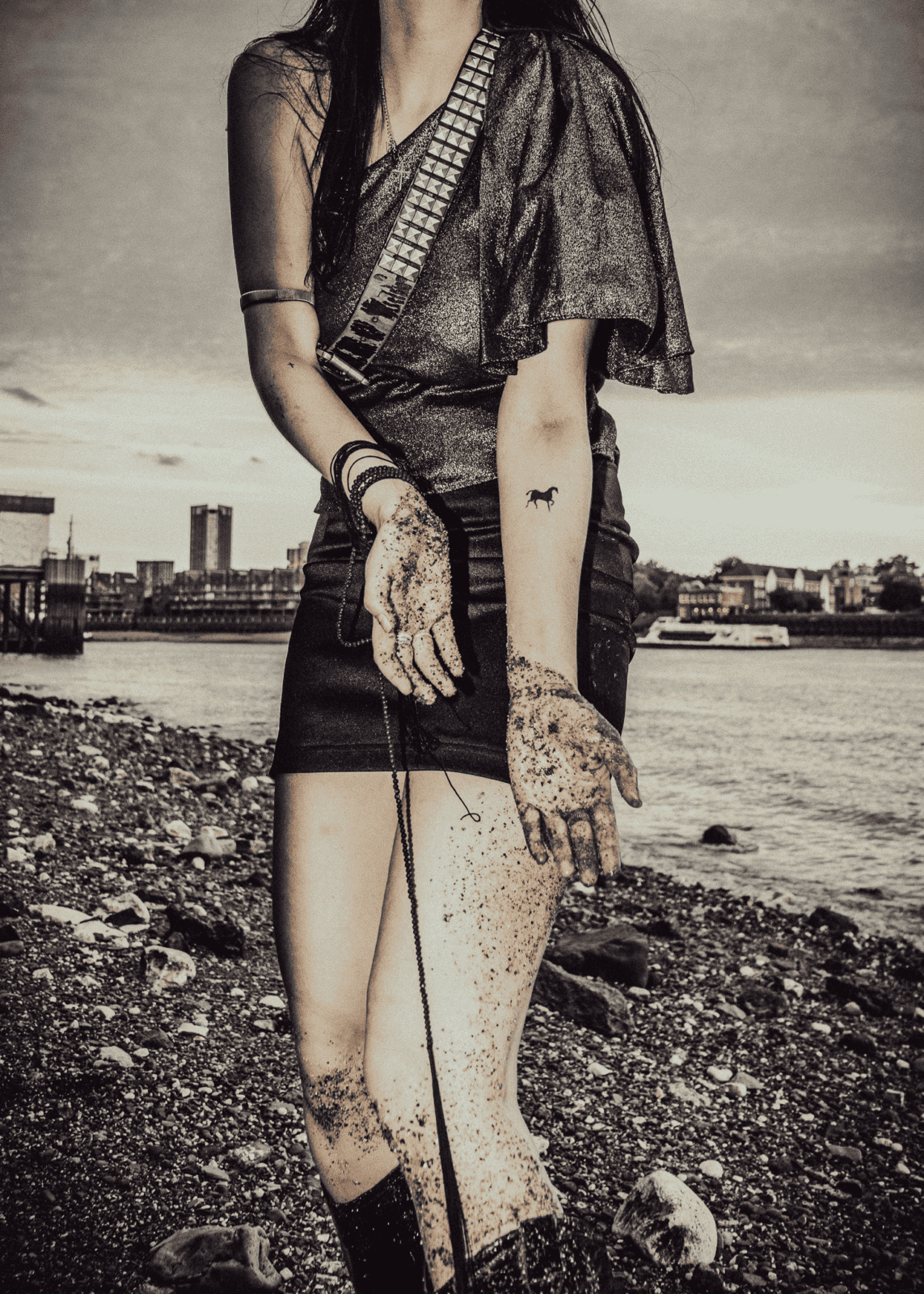
The Cold Magazine (CM): Your debut EP is called Grit. Is there a double meaning there: dirt and perseverance?
SABINA: Yeah, it means both. Grit was the word that came to my mind. I came from a very dark place before I started the band, and the album was a way of going over what I learned from it. Once I was out of the other end – when you’re actually going through it, it’s difficult to create anything at all.
CM: Creating is certainly hard when you’re feeling numb, and a metamorphosis is far off. Is that where the lyric “Teach you how to feel” comes from?
SABINA: Yeah, I think so. “How to Feel” at the time I was reading into the politics of America. And it was very important to me to address how music is the way to show you – not even how to feel, but a way to showcase people’s strengths and faults. I was very obsessed with this idea. I still am in a way, but I think because I have so many mutual friends who play music and make music, we all talked a lot about, who’s going to take over the rock scene? Who’s going to take over this new sound that’s evolving? I think that’s where that came from, where it was all about, this is the new generation. What I can see in my vicinity and the people I have around me. I thought it was really important to me to write something that felt like a very simple rock song with political innuendo.
CM: And with your personal journey, what’s changed since the beginning?
SABINA: When I started, I had this huge hunger. I had been so inside myself for so long that I needed to come out and express myself. Before, I was sitting in my room playing guitar, I was so insular. Then I was at this gig, looking at all these men playing really shit music, and I thought, “I can do this better.”
I’ve played guitar since I was 11, but I fell in and out of love with music. Then it came to a point where I was like, “I have to do it, I can’t do anything else in my life.” I was never afraid on stage. As soon as I got on stage, I knew, “This is exactly where I want to be,” I really respect the sacred moment between someone listening and someone performing. It should be treated with care.
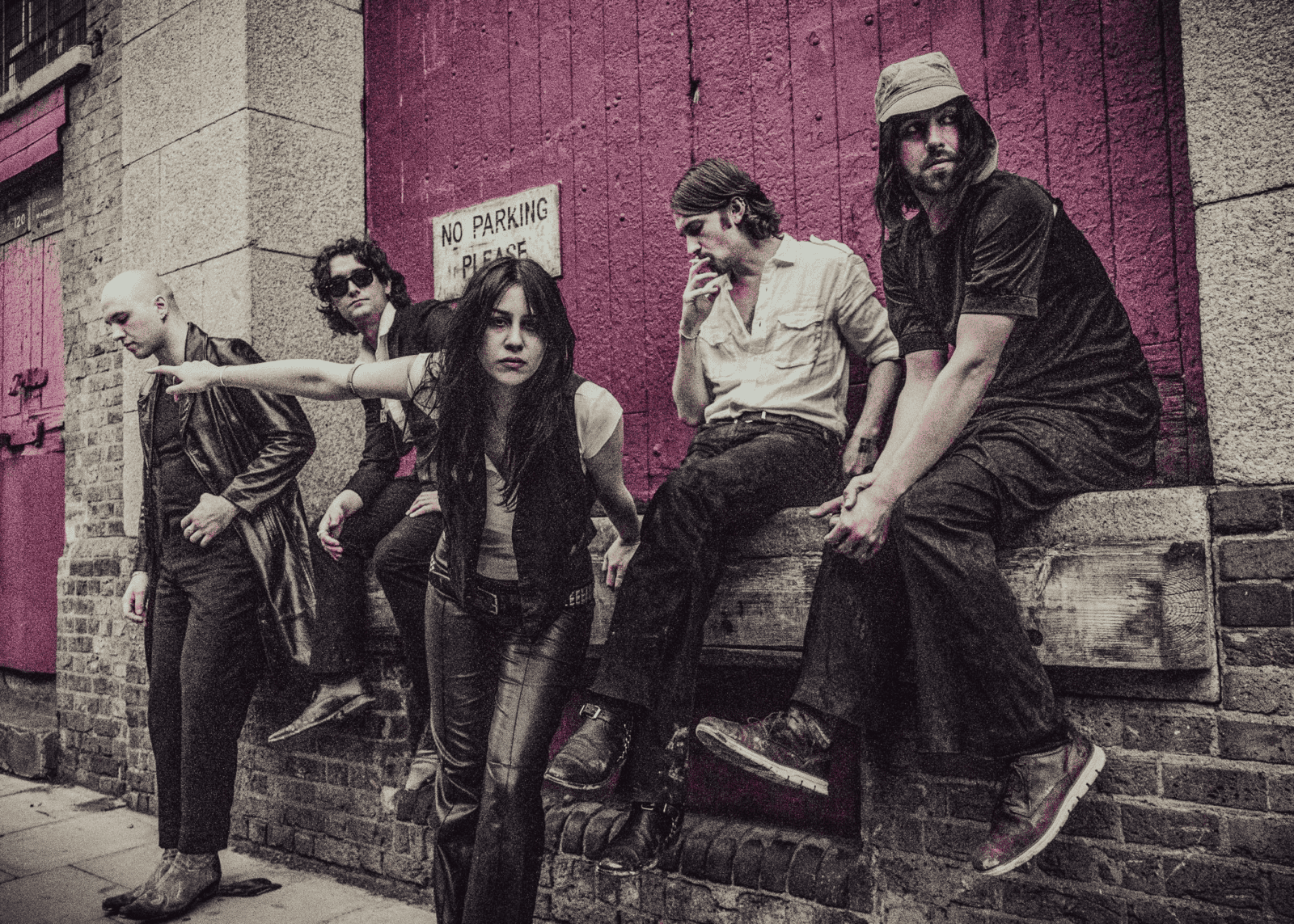
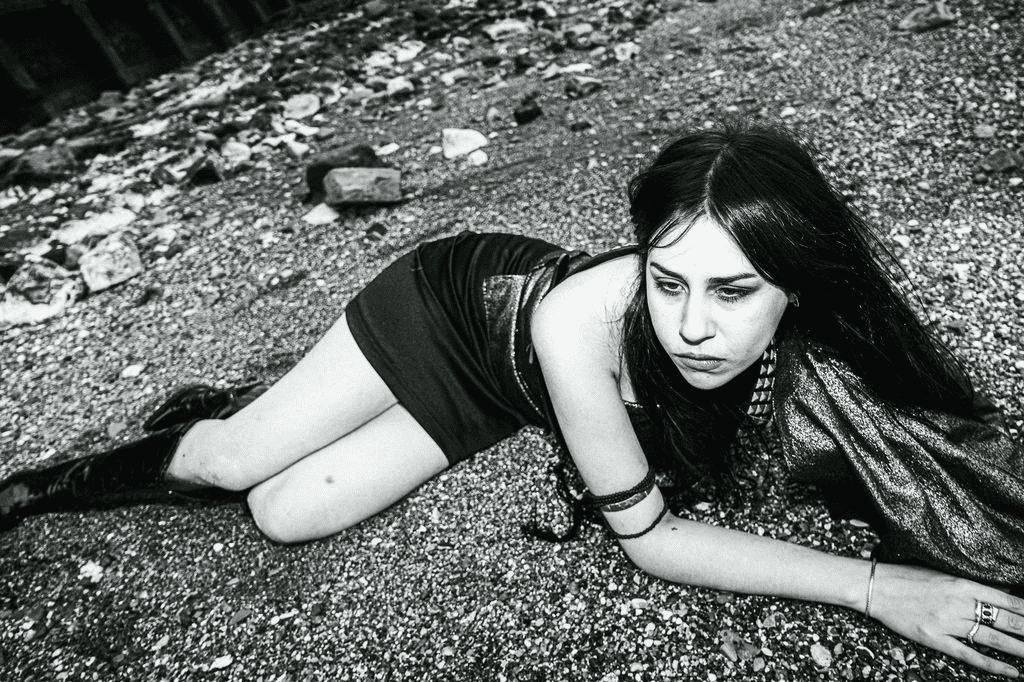
CM: What is your writing process?
SABINA: Musically, if I’m walking around and come up with something, I write it down straight away. Then I’ll bring it to the band, and I’ll start singing or playing over whatever they’re playing. But as a writer, I like to sit at my desk, it’s quite rigorous. I like to be more playful with music, whereas as a writer, I really treasure the moments I have to myself. Those are like the holy hours. If I think about something, I write it down as soon as I’ve thought of it, that’s the best way to catch something.
I enjoy the stream of consciousness a lot. For 10 or 20 minutes, I’ll put a timer and challenge myself to start a sentence and just write whatever comes to mind. With poetry, it’s different – it’s about sitting for a long time thinking about the one word that will fit. I treat poetry as quite a sacred thing.
CM: Who are your favourite writers?
SABINA: My favourite writers? Good question. I read quite a lot of different stuff, some contemporary late classics, some not, but I really like Rainer Maria Rilke, his Letters to a Young Poet is incredible. I really love this book called Maldoror, which is written by this French young man who had a very difficult past, and Maldoror is about a demon running around the streets of Paris. And Henry Miller, I think he’s a funny guy.
CM: Miller is a favourite of mine too, although I wouldn’t have wanted to be on the receiving end.
SABINA: It’s like a look into a world that was probably serving him very well, but maybe not the women in it. As a reader he’s entertaining. I found him as a writer incredibly enriching with vocabulary, because he has this really dry humor, and he’s quite arrogant in a sense.
CM: Are you drawn to Paris as a setting?
SABINA: Maybe. Paris is beautiful, but I also really much enjoy New York. I also really love Allen Ginsberg as a poet, he’s probably one of my favorites. You gotta love Patti Smith, I think she’s a great storyteller. Devotion by her is one of my favourites and part of it is her drifting through Paris.


CM: So you’re into literary rebels, and writers who drift through places as outsiders.
SABINA: I really like Roberto Bolaño, a Chilean writer. And I really enjoy Dostoyevsky as well. I love Russian literature. But it’s quite a long read sometimes, even Tolstoy.
Also, I’ve started Joan Didion’s The White Album. It’s a very fun, interesting moment in time she managed to capture. It starts off about how she’s a reporter and ends up becoming part of this scene in America’s time, during the Black Panther era and stuff. And then she also talks about how she’s sitting in a recording room with The Doors, and everyone’s waiting for Jim Morrison to show up, and he doesn’t show.
CM: Have you been to his grave?
SABINA: I have, yes. They sealed it off, ’cause people used to climb over. So we kind of did.
CM: What about your most treasured possessions?
I love trinkets, I’m a big sucker for trinkets. Things I grab from traveling, little antique markets. I have this marble ashtray that I got somewhere I can’t remember now, but anytime I move, I have that.
I think my most treasured possession is a ripped-out photo – it’s actually a painting, a Picasso painting from a book that got ripped out years ago. It has a red background with black outlines, it’s Picasso’s bullfights. Early sketches of Spanish bullfights. I framed it. For a very long period when I was solo traveling around Greece and Spain, I brought that with me. So in any hotel room, I’d just hang up that photo, so that was home.
The other one is probably this ring, which was a birthday present, an old antique silver ring with red garnets. I never take it off. So that photo, that ashtray, and this ring.
CM: How did you spend the solar eclipse the other day?
SABINA: With the band in Hampstead. We didn’t have glasses, so we borrowed a colander and looked at the shadow cast on a sheet of paper. Our keyboard player Miles tried to stare straight at it, saying, “I can see the sun in my eyes!” while his eyes were closed.
CM: What’s your relationship with your phone?
It’s work. If the band ever took off, the first thing I would do is get someone in charge of all social media so I wouldn’t have a phone. It’s an incredible luxury not to have one.
My dream is, if a calendar has 365 days, to play 300 of those days on tour. After a few years of that, take a year off far away.
Grit EP credits
Composer, Lyricist, Vocals, Guitar & Percussion — Sabina Hellstrom
Keyboard & Percussion — Billy Rubin
Guitar — Pedro Soler
Guitar “Chaos” track — Fred Bird
Bass — Milo Stapleton-Brister
Drums — Sebastian Bloom
Saxophones — Morgan Wallace, Max Florez
Trumpet — Vincent Curson-Smith
Producer — Alberto De Torre
Producer “Chaos” track — Patrick James-Fitzroy
Additional Producer — Sabina Hellstrom
Additional Engineer — Zilcho Hamblin
Mastered by — Téo Leduc