In 2015, Adam Fazackerley spent his own money on a record for the first time. He walked out with Joy Division’s Unknown Pleasures on vinyl. Eleven years on, he owns 95 albums and six singles, where most live in a cube shelving unit. The chosen few go on the wall, where the artwork can earn its keep, and his picks for display duty are Blink-182’s Enema of the State and Kylie Minogue’s Aphrodite. That’s range.
Growing up on his mum and dad’s records, he listened to a mix of Haçienda-era Manchester and Britpop. And yes, he uses streaming and admits it’s convenient. But for Fazackerley, a record is about more than just having the songs. He’ll pick one up for a track he already loves and come away with new favourites from the same album, then work his way through the rest of that artist’s back catalogue. Even the inner sleeves are worth a look, and he thinks records simply sound better. Most importantly, a record can’t vanish when a licence runs out. “With vinyl, I decide what music I can have at any time,” he says, “as opposed to the artist or licensing company.”
Fazackerley may have been doing this for more than a decade, but in 2026 the internet gave it a name: friction-maxxing.
The term belongs to Kathryn Jezer-Morton, whose January essay for The Cut announced ‘In 2026, We Are Friction-Maxxing’. The gist is picking the less convenient option on purpose and learning to enjoy it. Navigate by road signs instead of Google Maps, meet your mates without sharing your location or, in music terms, go to a shop, buy a physical record, carry it home and listen to all of it.

“Maxxing” might sound familiar. Maybe you’ve met it through the mouth tape and magnesium mocktails of sleepmaxxing, or the jawline exercises and endless mirror-staring of looksmaxxing. Like those two, the name sounds like it was dreamt up in a group chat at 2am. The suffix actually grew out of ‘min-maxing’ in role-playing games and found its first big audience on incel forums in the 2010s, where looksmaxxing was born. It has since made it all the way to Sadiq Khan’s social media bio via ‘Londonmaxxing’, the trend for squeezing everything out of life in the capital, which is quite the journey.
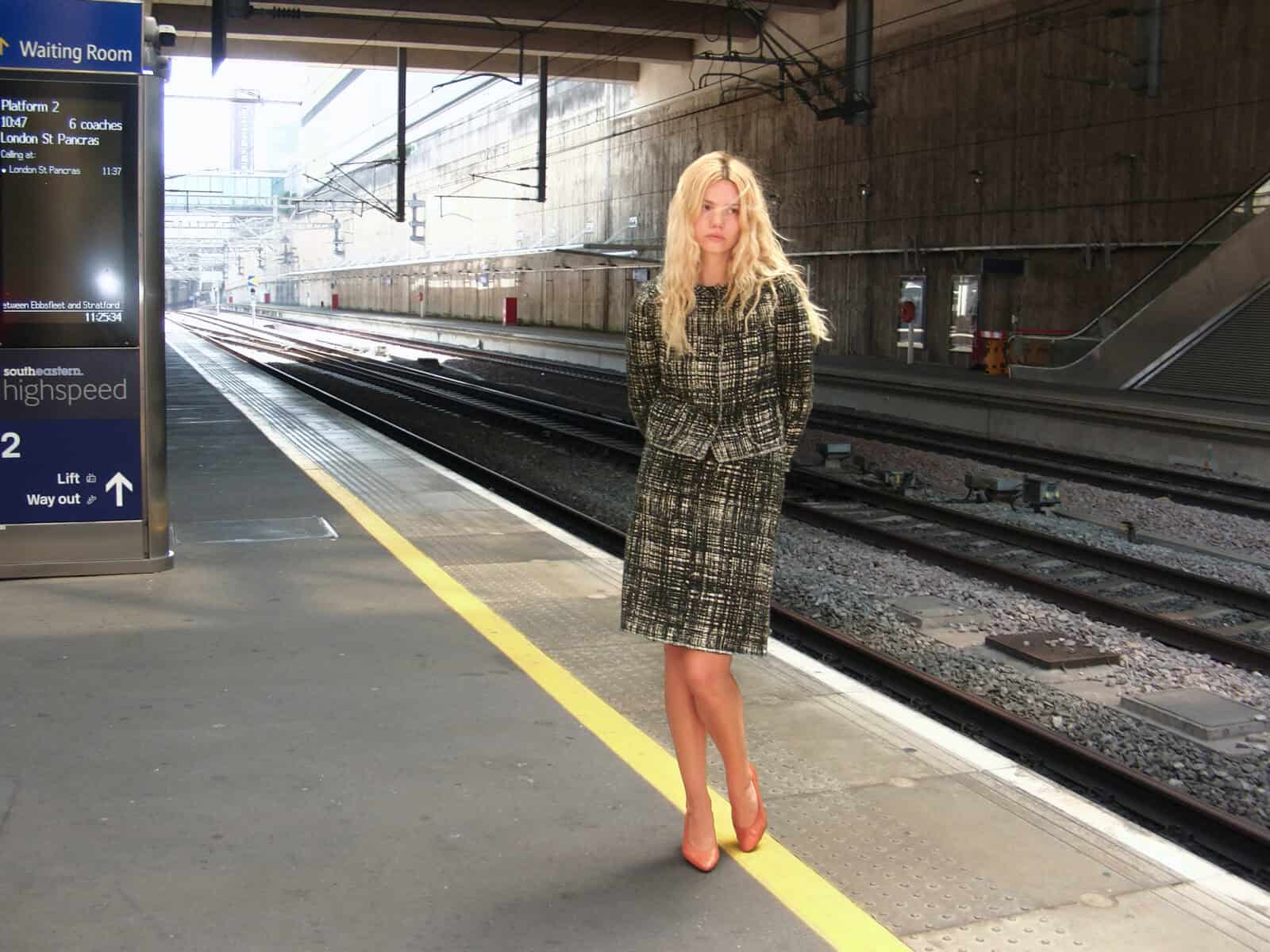
Swap Spotify for a record player, or your phone camera for an old Nintendo DS (which is exactly what our photographer did for this shoot and resisted a game of Nintendogs, grain and all). It might sound like a gimmick, but Dr Ruth Herbert, a music psychologist, Lecturer in Performing Arts at City St George’s, University of London, and author of Everyday Music Listening, thinks there’s something real behind it. “People’s own experience is perhaps getting a little bit impoverished,” she tells me. “So there’s that desire to try and make things special.”
She points the finger at the feed. “We’ve got a problem with the attention economy,” she says. “So much competing [for our attention]. And so attention is very fractured at the moment.” In evolutionary terms, she explains, we’re primed to turn our heads towards danger or anything new around us, and scrolling is “really, really playing havoc with that”, wearing out what psychologists call the attentional orientation response.
She also sees it close to home. Her daughter is a professional saxophonist, and like most musicians now she has to keep up an Instagram to get her name out there. The trouble is that “10 seconds is almost too long now”, and that decides what kind of music gets heard at all. “She actually writes stuff that goes across different musical genres, and you’re not going to get that in 10 seconds,” Herbert says. “You’re not going to hear the different genres or hear the different tones.”
Streaming hasn’t helped. Growing up, Herbert could hear her brother’s radio and record player and whatever her mum had on drifting through the house. Now listening is much more solitary, she says, and the suggestions never stop. “I talk to a lot of musicians and they say, ‘Oh, it’s just awful, I’m not even listening to music the way I used to,’” she says. “So it’s making people very superficial in their listening, I’m afraid. And also there isn’t that thing of going into a record shop, or just having a physical artefact, the CD, in your hands.”
Ask Fazackerley what else bugs him about streaming and he’ll tell you that “the price only seems to go up.”. He has a point. Spotify Premium in the UK rose to £12.99 a month last autumn, its second £1 increase in 18 months. And these days, it isn’t always clear who, or what, you’re actually paying to listen to.
Take The Velvet Sundown. In June 2025, a shaggy-haired retro psych-rock band with four named members appeared on Spotify, put out two albums in a month and pulled in around a million monthly listeners. When people noticed the band photos looked suspiciously smooth, accounts claiming to speak for the band denied any AI. Then a man calling himself Andrew Frelon told Rolling Stone it was all made with the AI tool Suno, before admitting he had nothing to do with the band and had been pranking journalists. Frelon, fittingly, is French for hornet. In the end the band’s own Spotify bio settled it, calling the project ‘a synthetic music project guided by human creative direction’.

Real bands aren’t safe either. Australian psych rockers King Gizzard & the Lizard Wizard pulled their music from Spotify in July 2025. By December, an account called King Lizard Wizard had appeared in their place, with AI-generated versions of their songs under the same titles. It picked up more than 35,000 listeners and even turned up in some fans’ Release Radar playlists before Spotify removed it, saying it ‘strictly prohibits any form of artist impersonation’ and that no royalties were paid. Frontman Stu Mackenzie said in a statement to The Music that he was “trying to see the irony in this situation”, before concluding, “But seriously wtf we are truly doomed.”
For Fazackerley, that’s exactly the appeal. “With vinyl, I decide what music I can have at any time,” he says. On an app, songs can disappear when a licence lapses, the monthly price goes up, and it can’t always tell you whether a person made what you’re hearing. A record on the wall can’t be delisted, repriced or swapped for a clone. It’s his, for good.
He isn’t alone. In the UK, vinyl sales grew for the 18th year in a row in 2025, according to the BPI, even though streaming now makes up 89.3 per cent of everything we listen to. In the US, the RIAA counted 17.5 million CDs sold in the first half of 2026, up 45.7 per cent on the year before, while vinyl rose by nearly 21 per cent to 26.5 million records. Streaming revenue grew by just 4.7 per cent over the same period. Physical music is still a small slice of how we listen, but it’s growing far faster than the apps, which suggests people are paying for something streaming can’t give them.
It isn’t quite as simple as everyone rediscovering the joy of pressing play, though. Data firm Luminate found that the CD boom was driven largely by BTS’ album ARIRANG, and that around half of the Gen Z and millennial fans who bought a CD in the first half of 2026 don’t actually own a CD player. Luminate’s own conclusion is that the CD has been ‘recontextualised from a functional audio format into an affordable collectible’. For a lot of fans, the disc is something to own and display, and the listening is presumably still happening on their phones.
The industry has also noticed. Taylor Swift’s The Life of a Showgirl came in 34 different versions. There were 18 CDs, eight vinyl LPs, a cassette and seven download editions, some on sale for just 24 hours, with bonus acoustic tracks and voice memos spread across them. It helped the album set the modern US record for single-week sales. Owning music used to mean choosing an album and living with it. Now it can mean buying the same 12 songs several times over.
Even Spotify wants in. In March it opened a Listening Lounge at its London HQ, borrowing the look of Japanese vinyl bars. There’s dim lighting, slippers at the door, just 30 seats, and a pair of giant custom horn speakers on a raised platform its architect describes as ‘an altar or a shrine to sound’. Invitations go to Premium subscribers and artists’ ‘top fans’. There isn’t a record in sight, though. The room exists to show off Spotify’s lossless streaming, which only launched in September 2025. Friction maxxing, minus the friction.
The idea that there’s a proper way to listen goes back at least to the writer Vernon Lee, whose 1932 book Music and Its Lovers, based on questionnaires about how people responded to music, split audiences in two. ‘Listeners’ followed the music itself, while ‘hearers’ drifted off into their own feelings and associations, or, as Herbert puts it, ended up looking out of the window. Herbert’s research pushes back on that split. “I’ve made the case, and other people have, that it’s not a binary thing, that there are lots of modes of listening,” she says. Music on a commute can matter enormously to someone. “You can’t really call it superficial.” Her real concern is what has changed since she started studying listening. “It’s the technologies and the age at which people have them,” she says, “and the streaming particularly, and the algorithms. It’s really quite aggressive now.”
What gets lost, she says, is the grain. Music writers borrowed the word from the French theorist Roland Barthes, whose 1972 essay ‘The Grain of the Voice’ described it as ‘the body in the voice as it sings’. Herbert puts it more simply, saying: “It’s just that thing that makes something real. In the old days, when the recordings were not perfect, it seemed more real.”

There are whole nights out devoted to that idea. DJ Colleen ‘Cosmo’ Murphy started Classic Album Sundays in 2010, playing albums in full on audiophile sound systems, and in King’s Cross Spiritland plays an album start to finish at 6pm every day. Herbert calls this a listening ritual. One woman in her original study who was then 85, had her ritual nailed, with a special armchair and listened to Radio 3 at the same time every day. She had even read a 1930s guide on how to listen to music properly. Headphones baffled her. “I can’t understand why these people put things over their ears,” she told Herbert. “They can’t hear the birds.”
The other ritual is live music, the friction to end all friction. Phoebe Bridgers plays The O2 this December on a completely phone-free tour, devices locked in Yondr pouches. Reviewing a Boston date this month, one Gen Z critic admitted they’d never stood in a crowd that size with nobody looking at a phone.
Friction-maxxing is a daft name for an old habit, but does it beat letting an algorithm choose your next song?
Shoot Credits:
Photographer: George Cabré
Stylist: Tiamani Howard-Jones
Model: Florence Rose