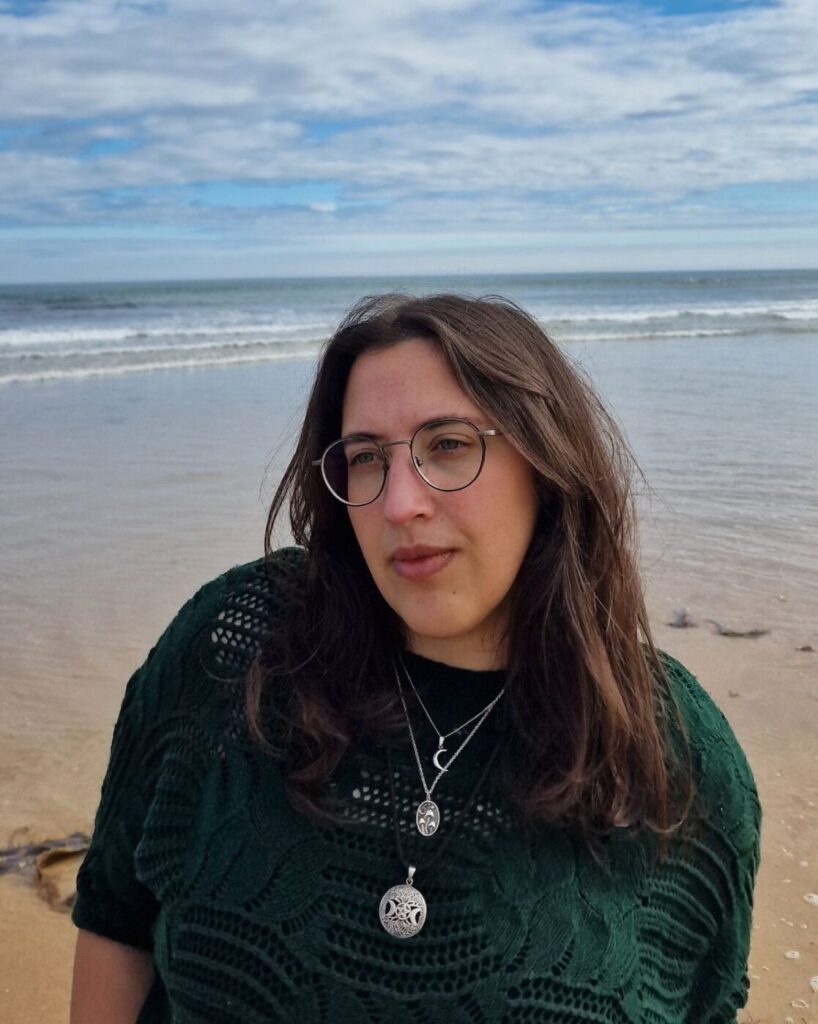
With a community-forward ethos and many independent, queer-owned bookshops lining the streets, it’s no surprise that many writers choose to call Berlin home. One such author is Jane Flett, the Scottish author of two novels who also leads workshops and writing retreats. Her first novel, the queer literary horror Freakslaw, follows “a travelling carnival of deviant queers and architects of mayhem” as they descend upon a small Scottish town.
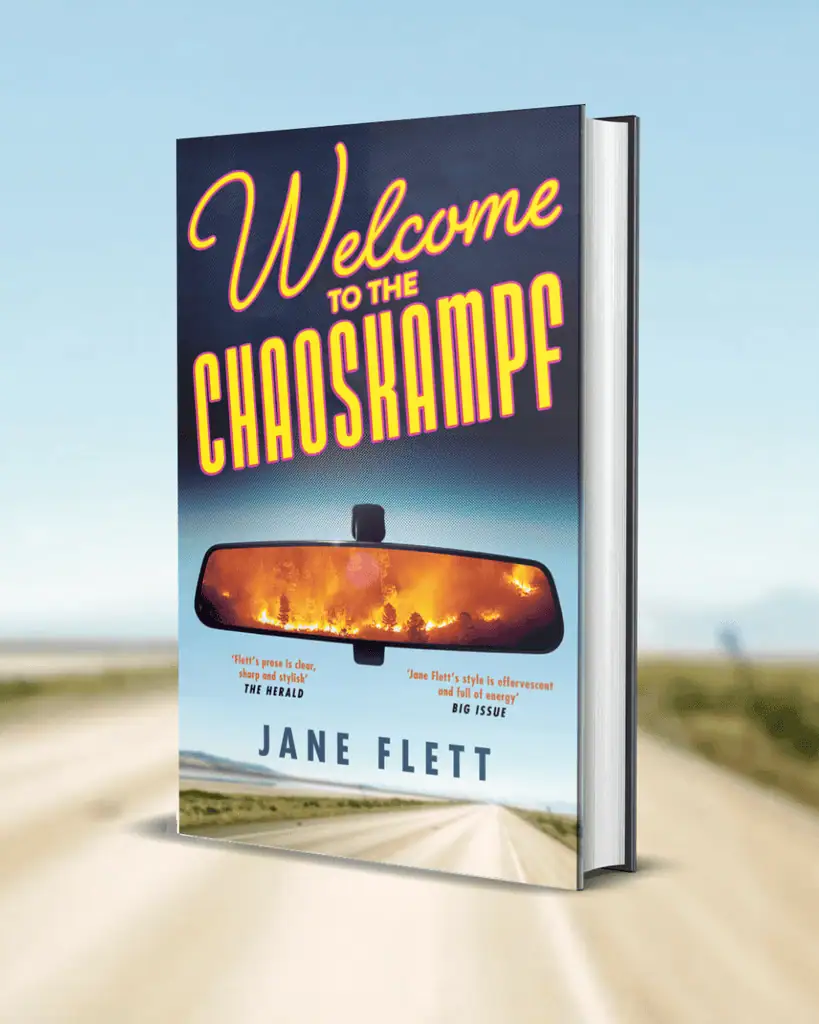
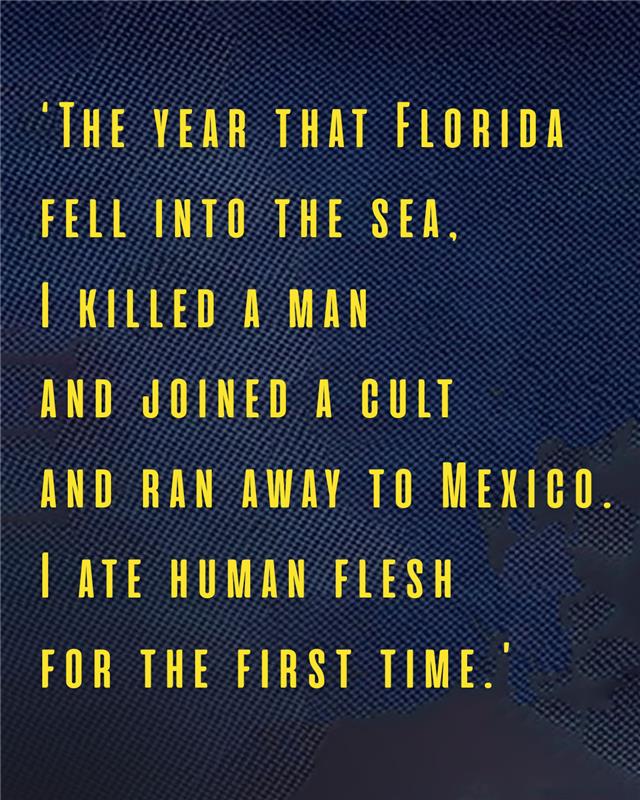
Welcome to the Chaoskampf, her second novel, was published in May of 2026. Focusing on climate collapse, cults, and chaos, the novel unfolds over the course of one hot New Orleans summer and follows the headstrong yet frustrated Marcy, who is stuck in a bland marriage. When Marcy discovers a cult that might offer the freedom she’s been craving for years, her life begins to unravel, in both freeing and frightening ways.
I found myself instantly rooting for this strong yet stuck character, enjoying her recklessness as she begins to destroy the life she once thought was all she ever wanted. Allured by the cult members’ certainty that there’s something special about her, Marcy falls headfirst into the cult, embracing its odd customs, which may be more dangerous than they initially appear.
Flett is fascinated by cults, and wonderfully balances the allure of the Chaoskampf believers with their danger. She tells me, “It’s easy to look at where they end up and think only a fool would get embroiled in such a thing. But the place most of them start out is very different. If you listen to Jim Jones’s early speeches, he’s advocating for greater racial equality and an end to white supremacy. To dismiss his followers as crazy and suicidal is to miss something real, which is that almost all of us are looking to find other humans who make us feel like we belong and who share our beliefs about how to make the world a better place.”
As Marcy dances closer and closer to the cult, she also needles her husband more and more. Owen, her irritatingly clean and mild-mannered husband, becomes gradually more sinister as he imposes his version of an ideal wife onto Marcy.
“Owen was so much fun to write,” Flett tells me. “There’s something shiny and slippery about him – he has that particular rich man confidence where he never doubts his own actions, no matter how unhinged they become. Like Marcy, it made me want to needle him until he blew up. When I first started writing novels, I was drawn to characters who overthought everything, because that’s what I was doing in my own head as I wrote. But at some point I realised that self-belief is a much more interesting plot driver, because it makes characters act upon the world.”
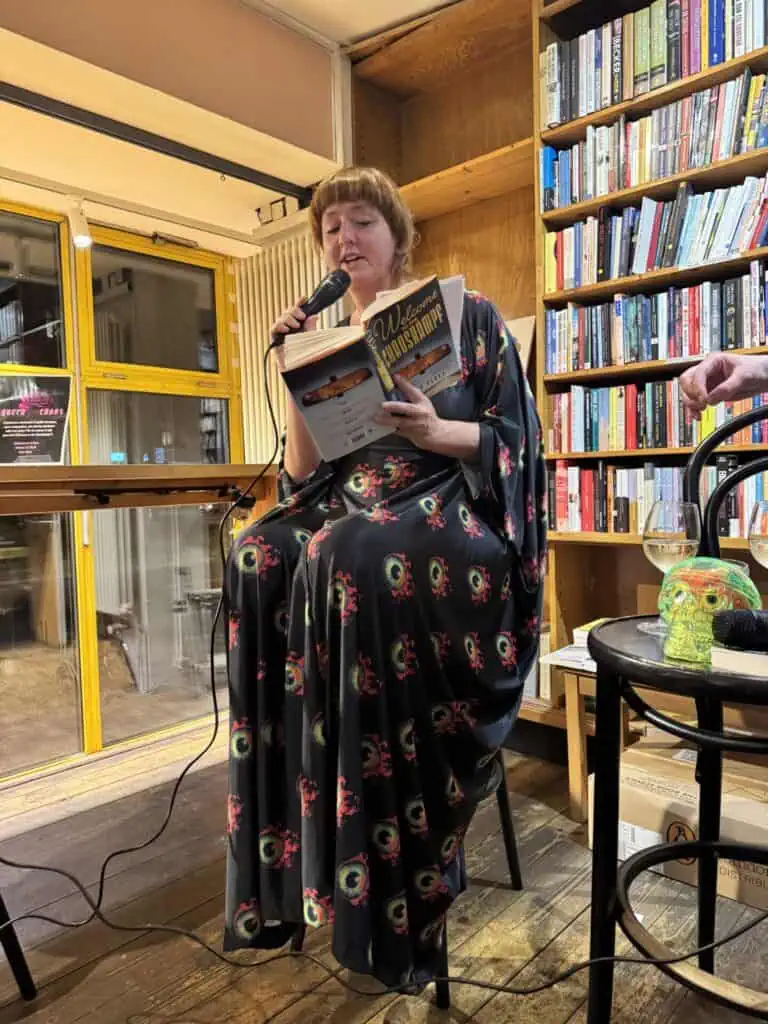
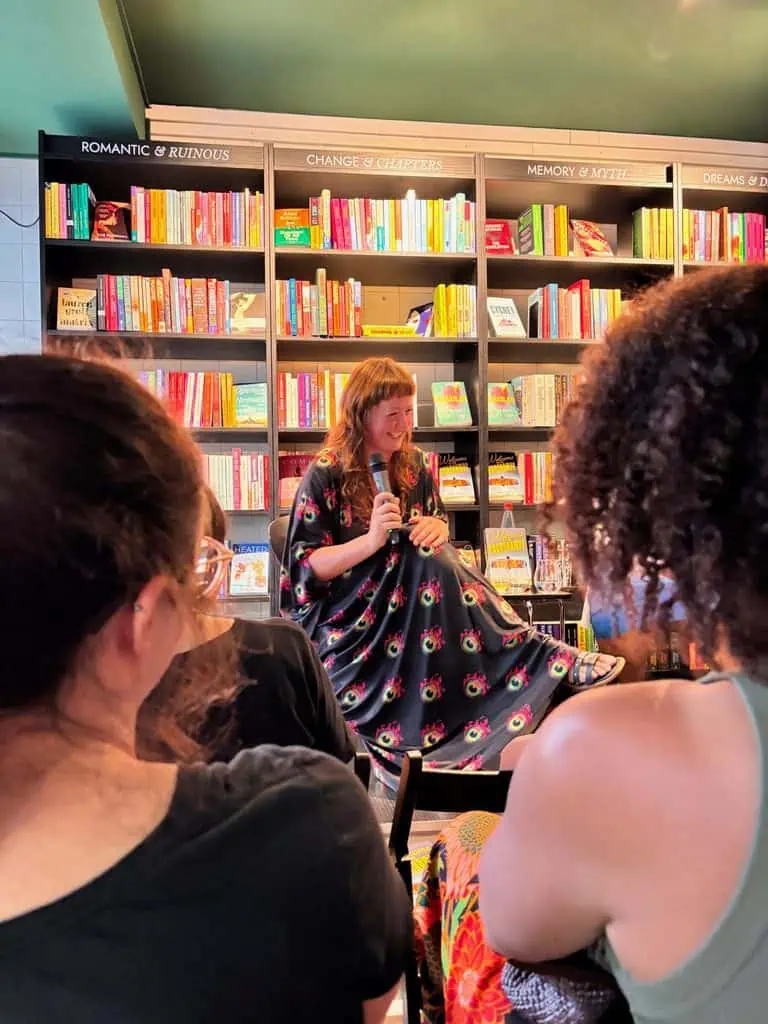
Flett’s is a world very much in the throes of climate change and degradation. The novel’s setting of New Orleans puts its characters face-to-face with extreme heat and rain, causing great disruption. At a hot, sweaty, and packed reading in Berlin’s beloved Ivallans, a queer-run bookshop crammed with literary eccentricities and local writers’ work, Flett spoke about how writers no longer imagine a future apocalypse because the end of the world (or at least a version of it) has already arrived. For this author, the apocalypse is not a singular cataclysmic event, but a slow, degrading process. I asked her how she goes about writing within this kind of timeline.
Flett says she wrote the first half of Welcome to the Chaoskampf through the pandemic. And yet, “the reality didn’t involve me personally working the ICU wards or burying the bodies. In some ways, it affected everything, but also I was so removed from the worst of what was going on. I felt anxious and helpless, but also bored and horny and preoccupied with soaking my little borlotti beans. It made me think about how climate change is manifesting and what the early reality is for many of us in the western world: Inconvenience and existential dread and consuming far too much media about terrible things happening to other people.”
In the book, Marcy spends time in Mexico with the cult, enjoying the sandy beaches and supposed freedom. I wondered about the choice of country and if Flett was making a statement about passport privilege.
“Absolutely,” she says. “Something I wanted to explore was how people are capable of seeing themselves as oppressed while being blind to the ways in which they hold privilege. You see this with cis white women a lot – the J.K. Rowlings who think they represent the ultimate victims. The cult talks a lot of good talk about mixing up the paradigms of power, but they have their own blind spots. Gentrification, tourism, and travel sit in a complicated ethical space: On one hand, I believe in open borders and the right to live where we want, but it’s also true that we change a place by being there, and not always for the best.”
During the novel-writing process, Flett completed a residency at the New Orleans Writing Residency. She describes the experience as magical: “That city is a maximalist swamp packed with witchcraft and jazz and tequila and so much history. I’ve always been drawn to port towns: These liminal spaces of arrivals and departures. New Orleans in particular feels like somewhere people have been through the hardest things – a legacy of slavery, racism, and natural disasters – and forged a place from that which feels more alive than anywhere else.”
We circle back to Berlin, where she’s lived for 14 years. She loves it still, and ponders what makes it a wonderful place to be. “Maybe it’s because, living in Germany, we’re already a step outside the mainstream publishing industry, but I’ve never felt a sense of competitiveness or professional jealousy among the writers here. People do what they can to lift each other up, and it feels like there’s space to make art that is weird and specific and entirely our own.” Her novels are just that: Entirely her own, weird and specific, and totally captivating.
Jane Flett’s Welcome to the Chaoskampf was published by Transworld Publishers Ltd on 14 May 2026.
The Cold Magazine may earn a commission from some links on this page. Learn more