Comedy became fireworks and obsession for me when I was 10 years old and the alternative comedy revolution began. I had always loved TV shows like The Goodies and legends like Laurel and Hardy, but Rik Mayall and Alexei Sayle were incendiary to my developing mind.
What was often considered the mantra was that it was non-sexist and non-racist, but it was much more than that. It had an energy and an anarchy that had faded from most of the club comedians. They felt safe and a little old. That’s nearly 50 years ago now, and what was once called alternative grew and transformed into the banality of quiz show hosts. The alternative is not dead, but it is a subcategory and often ignored by the gatekeepers.
The notion of non-sexist and non-racist comedy has steeply declined too, though these jokes are often given the glaze: “It is all ironic.” Another change is the notion of rebellious comedy. Much of early alternative comedy saw comedians attacking what they interpreted as the status quo. Now, we have a breed of comedians who uphold the status quo. They prey on the outsiders of society, but market themselves as edgy.
Free speech has been their fig leaf for promoting hatred for quite a while now.
It is a way of giving dull slurs and punching down at already marginalised groups the veneer of nobility and rebellion.
You’re not a lazy hack, you’re Lenny Bruce.
You’re not Bernard Manning, you’re Mark Twain.
With this comes the second level of elevation, which is to deliberately confuse being criticised with being cancelled. In this strange paradox, free speech is your alibi. Simultaneously, you cry that people using their free speech to disagree with you is censorship.
A comedian like Jimmy Carr is keen to talk of his imminent cancellation while being one of the most omnipresent comedians on television.
He has performed at The British Museum for the Israeli government in the middle of the genocide in Gaza, performed for the Saudi Arabian regime, the government that murdered and dismembered a dissident journalist, and, according to the festival publicity, shared a bill with Louis CK, who briefly had his career removed due to surprising young women by masturbating in front of them. CK’s career, awards, and arena gigs were soon returned to him, as making the comedy circuit an unsafe place for women is just one of those things.
Carr has easily sidestepped outrage over jokes about the extermination of Romany gypsies, and a host of other topics that dehumanise people who are often already victims of brutal treatment in the world.
It’s all just a game. His other alibi is that by confronting dark topics, we are somehow dealing with them, but the dark topics are very rarely confronted. Instead, they are bullying dressed up as something more sophisticated in post-show interviews. The words of the “never actually cancelled” cancelled comedian are rarely without a platform and a mainstream megaphone.
It is so much easier to cry censorship or “I’m the real victim” than actually take on the challenge of explaining what we mean.
How quickly we hear people proclaim, “you can’t say anything nowadays” while our media and our politics is thick with regressive voices spouting extremist rhetoric. We still hear about the threat of the woke as we watch brutality enacted in the name of Donald Trump and lifeboat stations being threatened with violence.
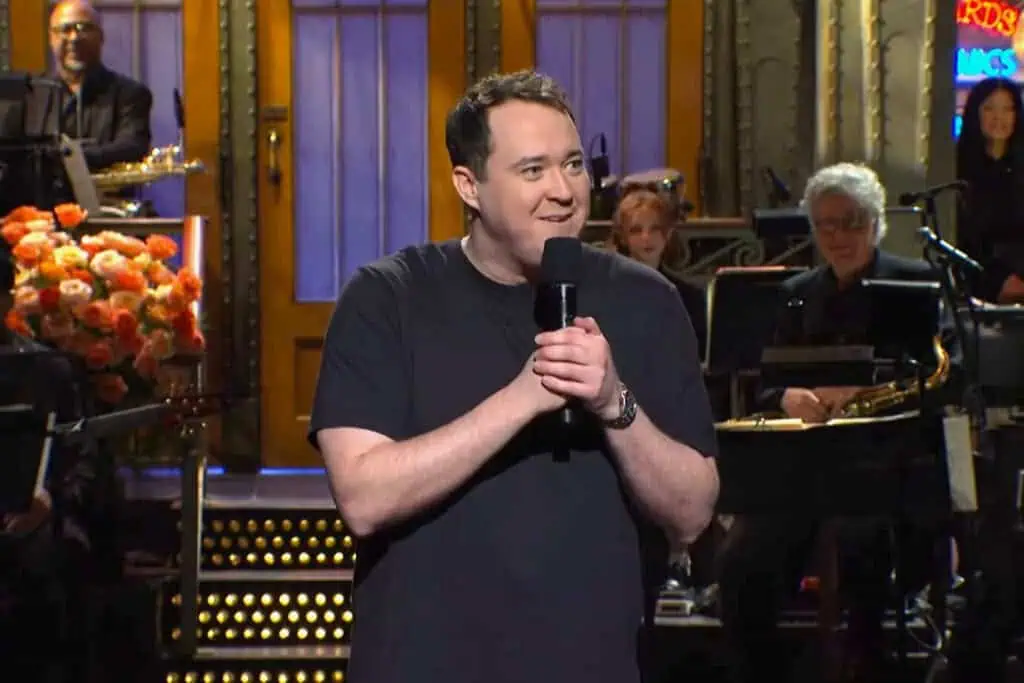
In October, NBC’s Saturday Night Live, the revered US comedy show that has been on the air for five decades, was hosted by Shane Gillis. His opening monologue was about being fat and trying to lose weight. When he saw himself so fat he thought, “oh no, I look like a lesbian.”
He tried going to the gym, but he hadn’t been for so long that he “didn’t know women dressed like whores now.” He was also frustrated that men are not allowed to just stare at women.
And now the free speech advocates (that is, free speech if it matches their politics obviously) can furiously declare “you can’t even call women whores anymore.”
Before I go on, I must be clear in saying that comedy is subjective.
The comedian I find hilarious may be the one that buckles your face into disdain, and vice-versa. When I say, “I don’t get the joke,” this is not an edict from on high, but at best, I think Gillis’s “women dress as whores in the gym” routine is lacking in punchlines, especially considering this monologue must have been looked over by some of SNL’s many comedy writers and possibly a producer or two.
It doesn’t travel anywhere after the initial premise of “women wear very tight and skimpy clothes when exercising.” It is an observation without development. The monologue is lazy.
The real issue here is that the President of the USA has been found liable for sexual assault in a civil court, no man who abused the children that Jeffrey Epstein trafficked has been prosecuted, young women comedians on the comedy circuit continue to face predatory behaviour in unsafe surroundings, and most high-profile men seem to maintain lucrative careers while their abuse victims are silenced or just not believed.
As Margaret Atwood wrote, “men are scared women will laugh at them. Women are scared men will kill them.”
Gillis’s routine will have, for some men, sanctioned the idea that calling a woman in gym gear a whore is okay. If it is good enough for a comedy institution, then it’s good enough for the office.
This is where the “it’s just a joke” defence weakens.
The reason top comedians get paid so much and play to so many people is not because a joke is just a frippery. It can be so more than that.
A joke can be something that rejects you or connects with you.
It is something that can empower you or crush you.
It is something that can justify your beliefs and embolden how you deal with others in the world.
The people who sneer at others for not being able to handle a little mockery are very often the same people who lash out when they are the victim of a punchline. It’s open season until it is you, then it is “so unfair.”
Free speech should not immediately lead to thoughtless speech.
It is important to know why you are aiming at who you are aiming at.
When people say, “you can’t make jokes about anything nowadays,” it is worth following up with “what would you like to hear jokes about that you currently can’t?”
This leads to one of two things:
- They either name something that you can quickly say “oh, you’ll find jokes about that on Ricky Gervais’s Netflix special.”
- They go silent because what they really mean is jokes about things that enough of their brain knows are rum, at best. One person who I responded to looked perplexed for while and then blurted out, “the disabled!”
The week after Gillis was on SNL, a story about a roast episode of the Have a Word podcast came out. I find roasts quite ugly spectacles. What worked for Dean Martin and Sammy Davis Jr may not work with a lot of modern comedians, especially when they don’t have the dynamic that the Rat Pack built up. Comedian Vittorio Angelone insulted co-host Freddy Quine by saying, “if you’re here, who’s raping Rebecca Goodwin?”
The roast occurred a few months after Goodwin reported a sexual assault to the police and spoke openly about it. (The case is ongoing).
The problem with a roast is that each comedian gets caught up in a feverish panic to go further than the other. Ethics scurry out of the window and can remain outside in the editing process and beyond (see: The BBC’s decision when Jonathan Ross and Russell Brand decided to ring up elderly actor Andrew Sachs and leave messages about Brand having had sex with his granddaughter. This was a prerecord that was considered so funny by the organisation that it had no choice but to go to broadcast). Goodwin only knew about this joke after the podcast made its way out from behind a paywall.
Goodwin has said, “I am grateful I never saw it sooner because it would have just been weeks after (the assault) happened and I was in a different state to what I am now.”
The real question is what is the cost of your joke.
I know when I was a comedian, I failed the test at times.
I can look back with regret and look forward with the knowledge that we need to advance and evolve. For a certain breed of comic, the prime motivation is shock. Remove the shock and there is little being said.
Lenny Bruce was driven by fierce beliefs and progress.
I agree with those who say “jokes can be made about any subject,” but that shouldn’t mean any joke on that subject will do.
As my late friend, activist, and comedian Barry Crimmins told me, he never made jokes about cancer because he had never thought of one so funny that it would have made up for the upset it might have caused. He was prepared to fight the truly powerful, which was costly to his career.
Some of the rich, bully comics will say “offence is taken not given,” but this is a wispy defence. It’s clear these comedians are aiming to cause offence, as it makes them feel nice and also generates lots of lovely money for them.
I think the best comedy has empathy, whereas the edgy comic is more psychopathic in their attitudes.
Offence is very easy to create – originality, even love, a little harder.
Let’s stop pretending your aggressive anti-trans jokes and misogyny make you Voltaire. Let’s make comedy whose edginess is about challenging the powerful, not the powerless.
All the best,
An old woke man.
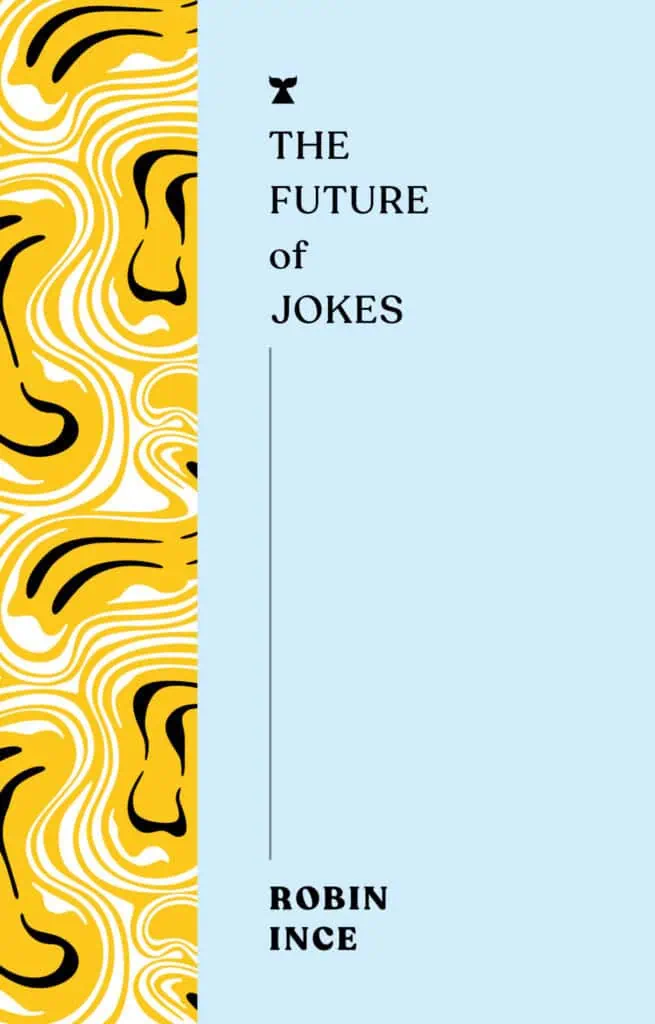
The Future of Jokes by Robin Ince is out now from Melville House UK
The Cold Magazine may earn a commission from some links on this page. Learn more