
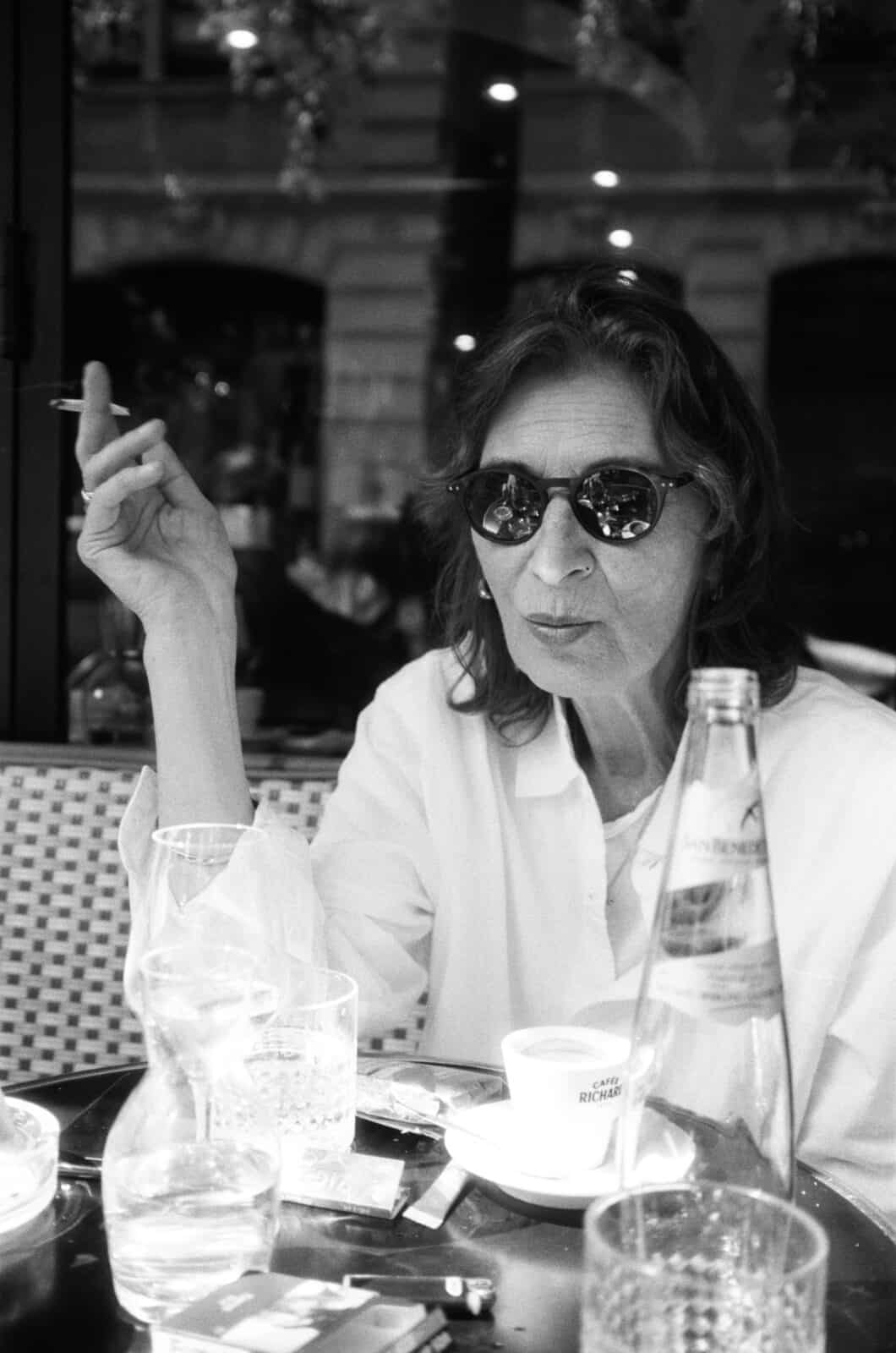
When Ruth Novaczek was in her 60s, she had her heart broken by a woman in her 20s. After a short love affair, Ruth found herself ghosted, unable to get closure. Wrongness, the new novella from the filmmaker and artist, is a series of unsent letters to the ex that asks: where does love go when communication breaks down? Between ghosting, gaslighting, red flags – how do we talk about broken relationships when both parties are women?
Wrongness is a lament, not only for a lost romance, but for a bygone age: when exes became old friends rather than blocked numbers and relationships were lived in, not broadcasted on social media.
In my conversation with Ruth, we talk about the politics of making art out of one’s real life, love in the digital age, cross-generational dynamics, and what happens when lesbian love turns toxic.
The Cold Magazine (CM): Wrongness is such a unique body of work. It doesn’t quite feel like a conventional collection of stories. How do you describe it?
Ruth Novaczek (RN): I’d call it a novella. It’s sort of autofiction, but not. It’s a variation on a number of experiences of breakup. It’s a breakup novella.
When I have breakups, I need to read other people’s breakup novellas. I wanted to write my own because the intergenerational aspect is very different, especially a queer intergenerational relationship, which isn’t often talked about. The power issues are different when it’s two women.
CM: How did it feel to be in a relationship with someone over 30 years your junior?
RN: When that relationship began we really were on the same page about lots of things. Because her mum was my age, she got my references and I got hers. She was really smart. We had a really great moment.
But she was constantly asking her generation, “What do you think?” There are whole different demands on relationships now. For her, the ideal couple was almost one where you ignored each other. You’d get through understanding that you were attracted to each other, then you more or less got on with your own lives.
You didn’t have to sleep in the same bed. You just had someone to come home to and take for granted. I think the psychology in the book is really important. And I think the unsent letters are important.
CM: Are these real letters that you included in the book?
RN: They were written for the book. They weren’t letters I was going to send, but they might have been things I would have sent.
As you may have noticed, what happened was a kind of sudden ghosting. In my generation we tend to stay friends with our exes, on the whole. So it became a kind of writing to a brick wall.
CM: Yes, the ghosting in the book feels especially painful because there isn’t really an ending.
RN: Exactly. There isn’t. At my age, you don’t really have to care what people think any more. You’re pretty established. My therapist said to me the other day, “Maybe now’s the time to let yourself be hated. Otherwise you won’t be loved”.
I thought that was really interesting. I’ve spent a lot of my life wondering whether I’ve been a people pleaser. I don’t know. But I think you get to a point where you have to stop worrying so much about how you’re perceived.
CM: Was writing the book also a way of understanding your own patterns in relationships?
RN: Yes. I really needed to think about what my logic had been.
I never approached relationships strategically. I wasn’t thinking, I need a child, or, I need to settle down, or, I need somebody financially secure so we can build a life together.
Sometimes I look back and think, maybe I should have done that. But I was always looking for perfect compatibility, and of course that doesn’t exist. You can be incredibly compatible with somebody intellectually or sexually or politically, but life changes people.
The main point of it is that I don’t think I’ve done a character assassination on the ex. I’ve tried to identify some of the psychological dynamics in all my relationships and tried to take on my responsibility – my anxious attachment. So it’s not a question of “pick a side”.
CM: It felt more like you’d been made to feel like the wrong person, or like a villain in somebody else’s story, and this was your testimony to that.
RN: I also think it’s the way that millennials break up. In a way I could sort of understand it. I was pretty unclear in my 20s.
I deliberately didn’t want to do a hit job. It was more like trying to understand – hence all these letters that were unsent. It’s all the things I wanted to say that she didn’t want to talk about.
I can see that with the younger people I know. They’re always blocking people. One friend’s always blocking her mum and then unblocking, blocking a friend. Even some friends my own age have done a lot of blocking and ghosting and shutting down and shunning.
CM: One thing I found fascinating was the way you paint the relationship as sometimes taking on a mother-daughter dynamic.
RN: I think that’s really important. The ex in the book had an intense relationship with her mother and there was tension. In a way she jumped to me in order to leave her mother, who she could never really leave.
I know a lot of lesbians who have very complicated relationships with their mothers. We spend so much time talking about heteronormativity because that’s the model we’ve inherited, but I think we also need to think much more about mothers and daughters. That’s not to blame mothers. It’s just that they’re often the primary relationship.
CM: The title, “Wrongness”, seems to tap into not just your feelings about the relationship but also a wider feeling about the world.
RN: Yes. The title just came to me. It was written during COVID. I’d moved house. I’d survived cancer. There was just an accumulation of things. You get to a certain age and think you’ve finally worked things out, and then suddenly you’re back at ground zero again.
CM: Were there particular books you were reading while writing Wrongness in lockdown?
RN: Melissa Febos’ Abandon Me (2017) and Carmen Maria Machado’s In the Dream House (2019). Chris Kraus and Ariana Reines were also influences.
Mine’s a sort of old-school heartbreak novel. I think my generation is probably quite romantic. I grew up as a hippie. We were wild and free. We didn’t really go to school – we went to the park and talked about books and music and smoked weed. It was a completely different thing.
Now we’ve become peons to consumerism. I’m really sick of fucking ads. I’m sick of how the algorithm sees me. It offers me end-of-life care homes and wrinkle treatments. I don’t think I look like I’m quite ready to drop dead. I think I might have a few years left.
CM: Your reflections on the generational gap between you and your ex captures something about a sort of old-school lesbian world that no longer exists, but it also resists nostalgia for it.
RN: Oh, absolutely. When I first came out I started going to lesbian bars and clubs and realised they weren’t necessarily my people. There were very rigid butch-femme roles in some places, and there were class differences and political differences.
Eventually I realised I couldn’t just be one thing. I wasn’t only a lesbian. I wasn’t only Jewish. I wasn’t only an experimental filmmaker. You have to find your own people, and they don’t always belong to one community.
What has been lovely is that straight women have read Wrongness and really responded to it. Men have too. People have said they read it in one sitting. Because ultimately it’s about heartbreak. It’s about loneliness and aging and desire and anxiety.
I don’t really want to be reduced to being a lesbian artist or a Jewish artist. I just want to be an artist. The relationship is specific, but the emotions aren’t.
CM: What’s next for you? Is there a second book in the works?
RN Yeah. It’s really long. I think it’s really about maturity. I think it’s like my bandwidth has gone beyond the kind of one-liner in the three-minute song, or the short poem, and the abstraction of films. The other stuff that I do, like poetry, is much more abstract – at least mine is. And I do think it’s like Eileen Myles’s Poet’s Novel. I love that book. I think my book is a poet’s novel.
CM: I wanted to ask you about one of the final lines in the book. You say, “Violette Leduc first taught me that happy endings aren’t very queer”. What do you mean by that?
RN: Have you read La Bâtarde?
CM: I haven’t.
RN: You’ve got to. Violette Leduc, probably one of the first out lesbian French novelists. La Bâtarde is a classic of early lesbian literature. It’s full of the misery of being a lesbian in a really homophobic, heteronormative, Catholic France, and being in love with women.
One of her early books, Thérèse and Isabelle, is also about two girls who are sort of closet lovers in a Catholic boarding school. I read it when I was really young. It’s an amazing book. I think every lesbian should read La Bâtarde. It’s so fucking miserable.
There’s one moment that stuck with me where she’s walking across the bridge in Paris and there’s a group of people and they look at her and they go, “What a fucking ugly person”. She goes into a complete spin. She took that book to Simone de Beauvoir, and Simone de Beauvoir championed her, but wasn’t in love with her and didn’t fancy her.
CM: Did Violette fancy Simone?
RN: I think so. I think they felt a real sort of power imbalance. That’s what I really get from La Bâtarde: that she feels so disempowered, and that her life is so impossible. But yeah, I think everyone should read La Bâtarde.
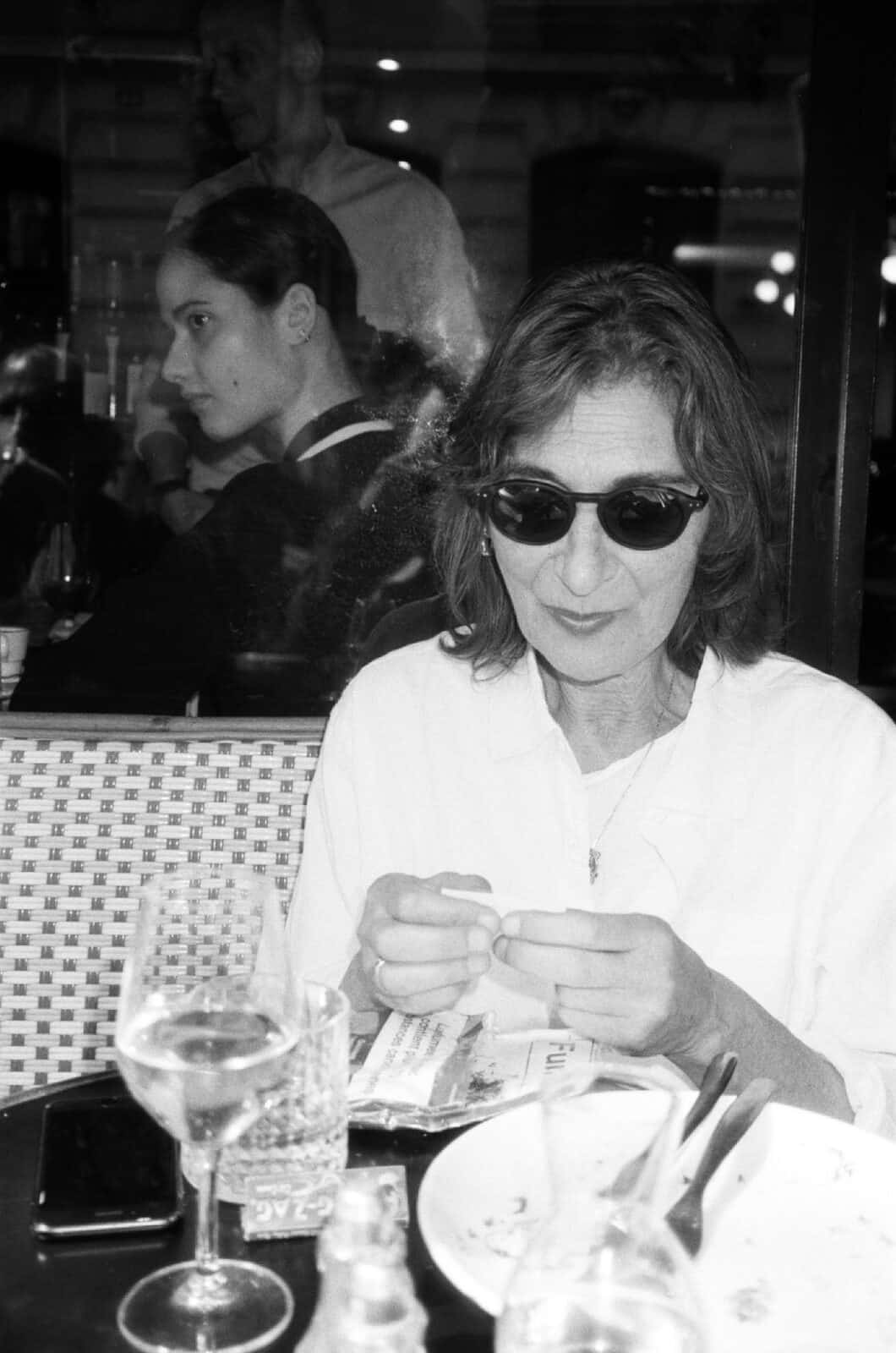
Photo © 020-DESK-ZERO
CM: Do you find that sentence – “happy endings aren’t very queer” – to be the thesis of Wrongness?
RN: In a way, yeah. But I think I’m just being pessimistic. I say right after that line, “I’m Russian.” You know, tapping into the idea of the Russian ending versus the Hollywood ending.
I don’t think queer stories have Hollywood endings, but that might just be me being jaded.
CM: There’s often a lack of nuance. Sometimes, when people talk about “queer aesthetics” or “queer sensibilities” what they really mean is gay male sensibilities, often orientated around camp and drag culture.
RN: Absolutely. So I really do think Wrongness is my attempt to kind of remedy that.
Nobody talks about lesbian violence. It kind of goes back to the idea that lesbians are really good and men are really bad, and there is no violence. We need to talk about it.
I think Wrongness is quite violent. Sadly, I wish it wasn’t. In fact, a straight friend of mine said to me the other day, “Oh, straight women always say this: I wish I was a lesbian because it would be so much nicer”.
It’s like, no. Love is love throughout history. It’s tricky. There are tragedies, there are happy endings, there are people that work out perfectly good relationship structures. It is much harder for lesbians because we just have so few models.
I’m always reading novels that I have to sort of – I sometimes identify with the male characters in books.
CM: The lack of real representation can be painful.
RN: It’s a really difficult lens to try and contort yourself into.
CM: What would you say is at the heart of Wrongness?
RN: My anger, about both the personal and political. The tech. And the generational things I can’t control.
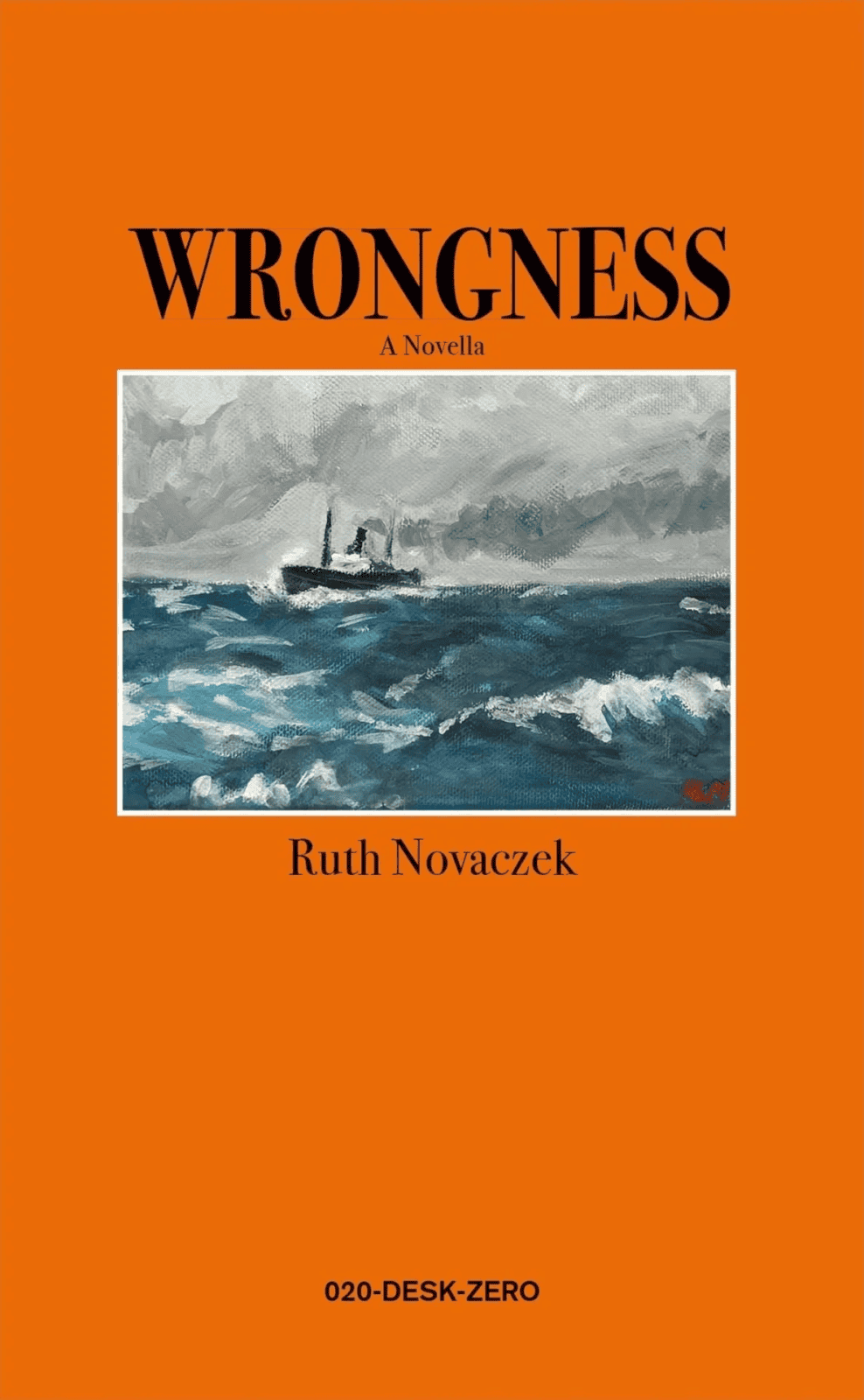
Wrongness by Ruth Novaczek was published by 020-DESK-ZERO on 13 April 2026


